People say “bless you,” “God bless you,” or “Gesundheit” (German for “health”) when you sneeze out of an old custom. The most widely repeated origin credits Pope Gregory I, who is said to have urged the blessing during a plague in Rome in 590 AD, since a sneeze could signal illness. Other accounts tie it to the ancient belief that a sneeze could expel your soul.
We humans may boast of being the most intelligent species on the planet, but we do have some truly strange customs and superstitions that don’t seem to have any scientific explanation. Although the list of such customs is practically endless, in this article, we’ll discuss only one – the custom of saying “God bless you” when someone sneezes.

The Custom Of Saying “Gesundheit” Or “God Bless”
People often say “God bless you!” or “Gesundheit” – a German word which basically means “health” – when someone in their vicinity goes Aaachoo!
While there is no particular, universally accepted reason why people ask for God’s blessing when someone sneezes, one of the most common reasons that people think this custom exists is because plenty of folks believe that one’s heart stops momentarily when they sneeze.
However, that notion is scientifically incorrect.

You can read all about it here: Does Your Heart Stop When You Sneeze?
Different Stories As To Why People Say “God Bless You!” When Someone Sneezes
The phrase “God bless you!” is found in the Old Testament’s Book of Numbers (Number 6:24) and was used in Christian prayers.
The most widely repeated account traces the custom back to 590 AD, during a plague outbreak in Rome. Pope Pelagius II had died of the plague, and therefore, his successor, Pope Gregory I (also known as Pope Gregory the Great) is said to have urged everyone to beg for the Lord’s mercy when someone sneezed around them, since a sneeze or cough might indicate the initial stages of imminent illness. Historians regard this Pope Gregory story as a popular tradition rather than firmly documented history, but it remains the version most people know.

As years passed and decades rolled into centuries, the custom of saying “God bless you” following a sneeze became ingrained in people’s cultural lives. In fact, during the 13th and 14th centuries, popes even proclaimed that this custom was “an authentic prayer against the effects” of a plague (Source).
Another account of the origin of this custom pertains to a superstition that people used to have in ancient times. It was believed that an individual’s soul resided in his head in a gaseous form. Therefore, if a person sneezed, they ran the risk of involuntarily expelling their soul from their body.
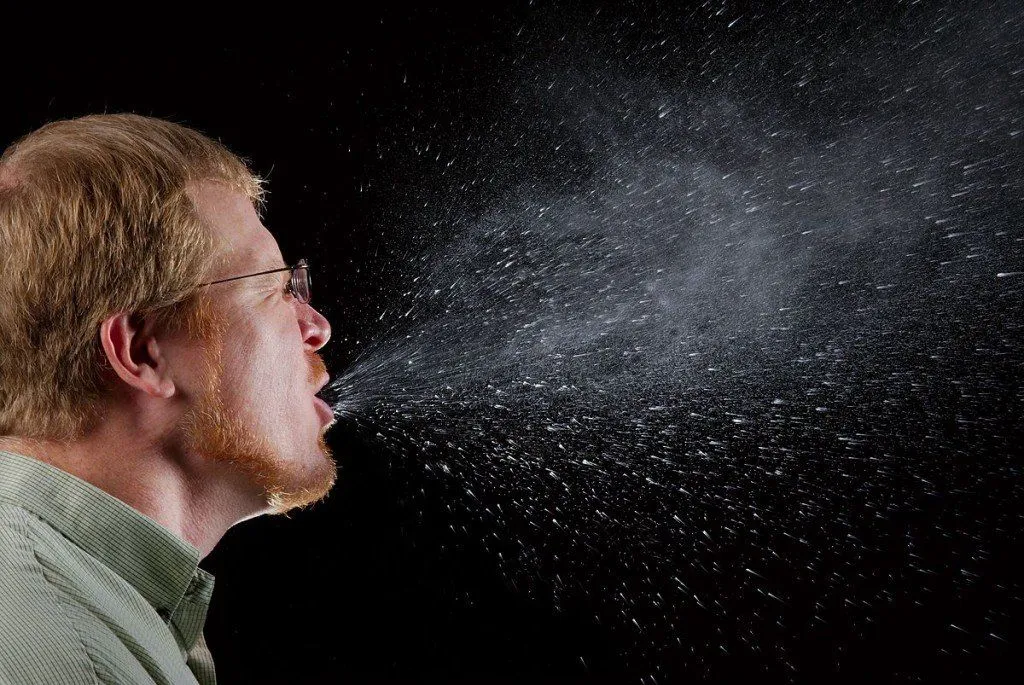
In a bid to prevent that from happening, people present in their vicinity would pray for God’s blessing by saying ‘God bless you’ aloud.
There is yet another reason, which is slightly similar to the one mentioned above. Some ancient cultures thought that sneezing was a way for a body to forcefully expel evil spirits from inside it. Uttering ‘God bless you’ protected the subject so that the evil spirits didn’t re-enter their body; it was also believed to protect others in the subject’s vicinity from the expelled evil spirits that lingered in the surroundings.
What Actually Happens In Your Body When You Sneeze?
Long before anyone worried about souls or evil spirits, a sneeze was simply your nose doing its job. Doctors call it sternutation, and it is a protective reflex: a sudden, forceful burst of air that clears irritants out of your airway. It usually kicks off when something tickles the lining of your nose, whether that is dust, pollen, a fleck of pepper, or even a sudden flash of bright light.
From there, your body runs the whole show automatically. Sensory nerve endings in your nose fire a signal along the trigeminal nerve to a dedicated “sneeze center” in your brainstem. In 2021, researchers writing in the journal Cell pinpointed this sneeze-evoking region, along with the chemical messenger (a peptide called neuromedin B) that switches the reflex on. Once that center fires, you take a deep breath, pressure builds in your chest, and the air is released in an explosive rush through your nose and mouth, sweeping the irritant out with it.
That housekeeping burst is also why sneezes are so good at spreading illness, which is exactly what frightened people during the plagues that gave us “God bless you.” Using high-speed imaging, MIT researcher Lydia Bourouiba showed that the warm, moist gas cloud from a sneeze can carry droplets as far as 7 to 8 meters (roughly 23 to 27 feet). The popular claim that a sneeze rockets out at 100 mph, though, is overblown: careful measurements clock even the fastest droplets at about 15 to 20 meters per second (roughly 35 to 45 mph). And for the record, your heart does not stop when you sneeze, and your eyes reflexively snap shut while it happens.
What Do People Say When Someone Sneezes In Other Languages?
English speakers reach for “bless you,” “God bless you,” or the borrowed German Gesundheit, but those are only a few entries in a very long global list. Look around the world and most sneeze responses fall into one of two camps: wishing the sneezer good health, or wishing them a long life.
The health wishes are everywhere. Gesundheit literally means “health” in German, and the same idea turns up in Spanish salud, Italian salute, French santé, and Polish na zdrowie (“to your health”). The French also like à tes souhaits, which means “to your wishes.” The long-life camp is just as common: Turkish speakers say çok yaşa (“live long”), while Polish offers sto lat, a wish for the sneezer to enjoy “a hundred years.”
Some responses come with a whole script. In Arabic and across many Muslim communities, the sneezer first says Alhamdulillah (“praise be to God”), and a listener replies Yarhamuk Allah (“may God have mercy on you”), an exchange recorded in the sayings of the Prophet Muhammad. In much of East Asia, including China, Japan, and Korea, the polite move is often to say nothing at all, and a sneeze passes without comment. However you phrase it, the instinct is the same one Pope Gregory’s Romans had: when someone sneezes nearby, you wish them well.
References (click to expand)
- SXU's Graziano Marcheschi recalls history of saying 'God .... Saint Xavier University
- NN18 - Dictionary of American Regional English - UW-Madison. The University of Wisconsin–Madison
- Why do people say “bless you” after sneezing? | Newhouse - newhousesocialmedia.syr.edu
- Sneeze reflex: facts and fiction. Therapeutic Advances in Respiratory Disease (PubMed).
- Sneezing reflex is mediated by a peptidergic pathway from nose to brainstem. Cell.
- Turbulent Gas Clouds and Respiratory Pathogen Emissions. Bourouiba Group, MIT.
- Flow dynamics of droplets expelled during sneezing. Physics of Fluids (PMC).
- Response to sneezing. Wikipedia.
- How To Respond To A Sneeze In 6 Different Languages. Babbel.
- Sahih al-Bukhari 6223 (Al-Adab). Sunnah.com.