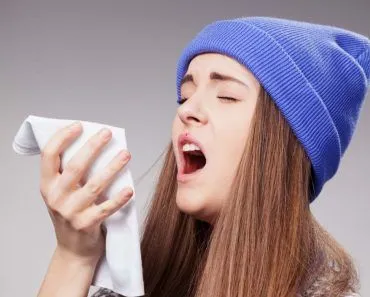
Sneezing feels good mainly because the built-up pressure in your chest suddenly releases and the irritating nasal tickle vanishes all at once. Despite the popular claim, no peer-reviewed study has shown that sneezing releases endorphins or that it resembles an orgasm physiologically.
Have you ever felt that irritating tickle in your nose? You know the feeling, it’s like an itch under the bridge of your nose, that tingles your sinuses in a very uncomfortable manner, but then suddenly, with a loud and satisfying blast, a sneeze takes it all away. It’s a feeling of gnawing discomfort until you finally expel the air. You instantly feel relieved. Free from the wretched sensation of that itch. Life is great again!
What Is That Irritating Tickle You Feel Before You Sneeze?
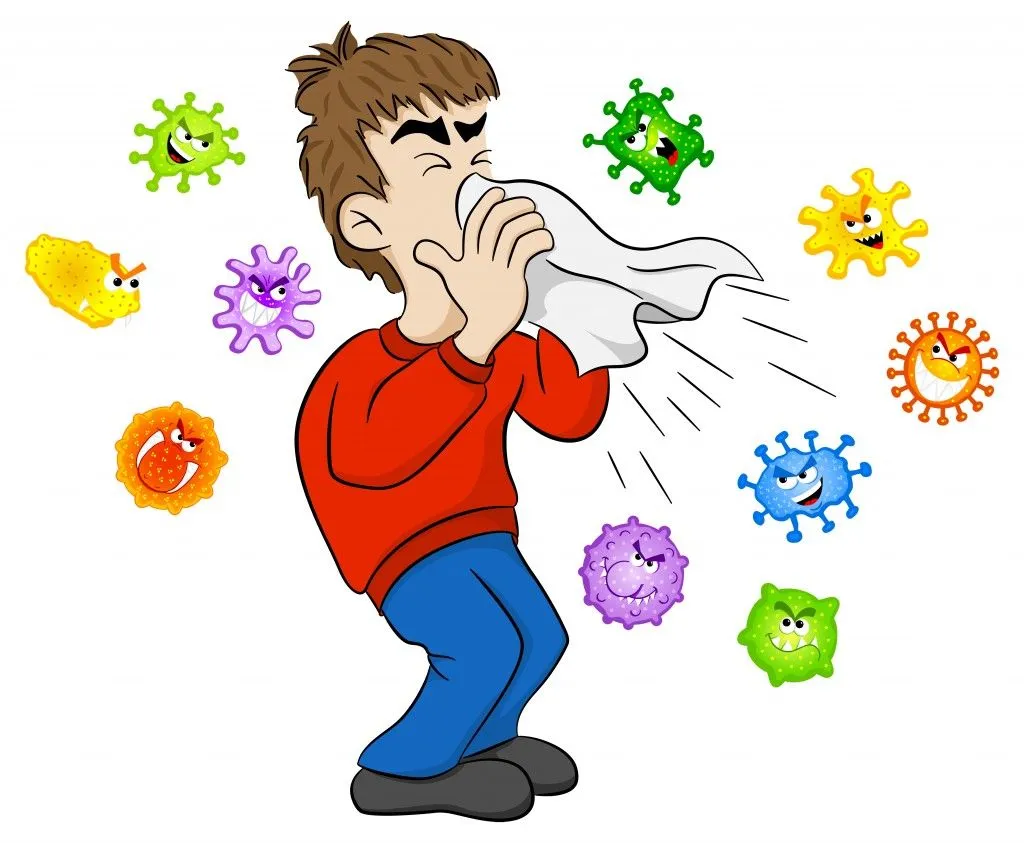
Sneezing occurs because of foreign irritants in your nasal passage. As a natural response, your body expels this air, thus protecting your body from foreign entities like dirt, mold and bacteria. The signaling of this irritation occurs inside the nerves, which communicate the information to the brain.
It should be noted that people who are sensitive to sunlight may also sneeze when they step into bright sunlight. This is called the photic sneeze reflex (also nicknamed ACHOO syndrome, a tongue-in-cheek acronym for Autosomal-dominant Compelling Helio-Ophthalmic Outburst), and it affects roughly 18 to 35% of people. The sensitivity is inherited in an autosomal dominant pattern, so if one parent has it, a child has about a 50% chance of inheriting it too. It just goes to show how whatever the body is sensitive towards, be it dirt, microbes or even sunlight, it will work to expel the irritant through sneezing.
At times, sneezing can help remove the fluid in your nose when you’re experiencing a cold. In this way, it aids you in clearing out the excess fluid in your nasal passage. A single sneeze can release tens of thousands of droplets, and high-speed imaging work from Lydia Bourouiba’s lab at MIT has shown that the resulting cloud of moist air can travel up to about 8 meters (26 feet) from the sneezer. At the end of the day, it’s just a hygienic bodily reflex doing exactly what it should!
Why Do You Feel Amazing Just After You Sneeze?
You’ll often hear that sneezing releases a rush of endorphins, the brain’s pleasure hormones. It’s a popular explanation, but here’s the catch: no peer-reviewed study has actually measured an endorphin spike during sneezing. The same goes for dopamine, the brain’s reward chemical, which is often blamed for the buzz: no study has recorded a dopamine surge during a sneeze either. The neurotransmitters that scientists have actually tied to the sneeze reflex, such as glutamate and GABA, are the ones wiring up the reflex circuit, not a chemical reward handed out for pulling it off. The same applies to the comparison with an orgasm. A 2008 paper in the Journal of the Royal Society of Medicine does discuss sneezing and sex, but in reverse: it documents people who sneeze in response to sexual arousal or orgasm, not the idea that a sneeze itself feels orgasmic.
Physically speaking, sneezing causes muscle tension that develops in the chest, causing pressure. Upon sneezing, this pressure is released, causing the muscles to relax. This relaxation, in conjunction with releasing pressure, causes physical relief and also makes you feel good/better. It’s similar to the high a person may get upon completion of an intense workout; however, whilst sneezing, chemical reactions also take place. You go into a mild adrenaline rush when you sneeze, causing excitement and adding to that “feel good” factor.
Ancient people seemed to have reaped the benefits of cleaning through sneezing by purposely causing this expulsion by the use of feathers and grass to trigger the lining of the nose. It obviously cleans you and gives you a feeling of euphoria when you’re done. Think of it as the anticipation one may have when they’re going through something difficult, and after it’s over, you feel relieved and happy. It is similar with a sneeze; you suddenly feel the whiff of irritation in your nose, but after you’re done sneezing, you’re instantly satisfied.
Why Does Sneezing Feel So Good When You Have A Cold?
If a single sneeze is satisfying, sneezing while you have a cold can feel positively glorious, and there is a good reason for that. When a virus infects your upper airway, it sets off an inflammatory response that floods your nasal lining with histamine and other irritant chemicals. This inflammation directly over-stimulates the sensory neurons in your nasal cavity, which is exactly why a cold leaves you sneezing far more often than usual. Histamine, in particular, fires up the trigeminal nerve, the very same nerve behind that maddening pre-sneeze tickle.

Because your nose is already swollen, congested and packed with mucus, there is simply a lot more built-up irritation waiting to be cleared out. So when the sneeze finally arrives, it evacuates a much bigger load of that gunk in one explosive burst, and the wave of relief afterwards feels correspondingly bigger. It is the same pressure-release mechanism as an everyday sneeze, just turned up to full volume.
There is one honest caveat, though. A sneeze clears mucus, but it does not cure the congestion itself. That blocked-up feeling comes mostly from swollen, inflamed blood vessels and tissues in the lining of your nose, not just the mucus sitting on top, so the stuffiness usually creeps back within minutes. Still, for those few glorious seconds, your nose feels clear and your whole head feels lighter.
Interesting Beliefs About Sneezing
Social tendencies and superstitions are closely linked to making you feel emotionally better; for example, sneezing is commonly associated with positive events, such as “someone thinking of you”.
Does Your Heart Stop When You Sneeze?
However, going down into the actual facts of why you feel better from a sneeze stems from the anatomical process that occurs. The social behavior is filled with myths, some of which are superstitions, while others are simply false. A commonly known myth is that your heart skips a beat upon sneezing. It doesn’t. What actually happens is that the pressure spike inside your chest briefly stimulates the vagus nerve, which can slow the heart for a beat or two before it bounces right back to normal. The electrical activity of your heart never pauses.
Besides the relief you feel, some people also believe that all their worries end with a sneeze. Every time you go Achoo!, someone “blesses you”, which has its own merit in many cultures.
Thanks to constantly giving our noses a reset with our sneezes, we can protect our bodies from dirt and other foreign entities. The body is very protective of the contents that enter it, and through this process of sneezing, it also allows for the expulsion of said entities with a mix of pleasure and contentment. Beautiful, isn’t it? A win-win situation either way, as our bodies remain hygienic and do so in a pleasing process.
That being said, we mustn’t forget that each sneeze expels these microbes and bacteria that cause illnesses, and in doing so, we must be aware of our surroundings. When other people are exposed to the same bacteria, they may fall sick! Therefore, it is your responsibility to cover your nose and mouth with a tissue, or at least the crook of your arm. Happy sneezing!
References (click to expand)
- The sneeze reflex in physiological and pathological states: a mini review. Frontiers in Neuroscience (2025).
- Li F. et al. Sneezing reflex is mediated by a peptidergic pathway from nose to brainstem. Cell (2021).
- Han M. et al. An experimental framework to capture the flow dynamics of droplets expelled by a sneeze. Experiments in Fluids (2020).
- ACHOO Syndrome. Medical Genetics Summaries. NCBI Bookshelf.
- Bhutta M. F., Maxwell H. Sneezing induced by sexual ideation or orgasm: an under-reported phenomenon. Journal of the Royal Society of Medicine (2008).
- Does Your Heart Really Stop When You Sneeze? Cleveland Clinic.
- Akhouri S., House S. A. Allergic Rhinitis. StatPearls. NCBI Bookshelf.
- Nasal Congestion (Stuffy Nose): What It Is, Causes and Treatment. Cleveland Clinic.