Seedless grapes are not made by removing seeds. They are produced through a natural mutation called stenospermocarpy, in which the grape is fertilized normally but the developing seed aborts very early, leaving only tiny soft seed traces. Because such vines can\xe2\x80\x99t be reliably grown from those seeds, every seedless grapevine is propagated by cuttings, making every modern seedless plant a clone of an earlier seedless vine. Seedless grapes are not genetically modified.
Slumped in their thrones, being fanned by two comely damsels, kings used to eat grapes by plucking them from a dense, glowing bunch. Their life was lavish and peaceful, but several grapes had seeds, which might lead a king to choke, and thus result in the fall of an entire empire.
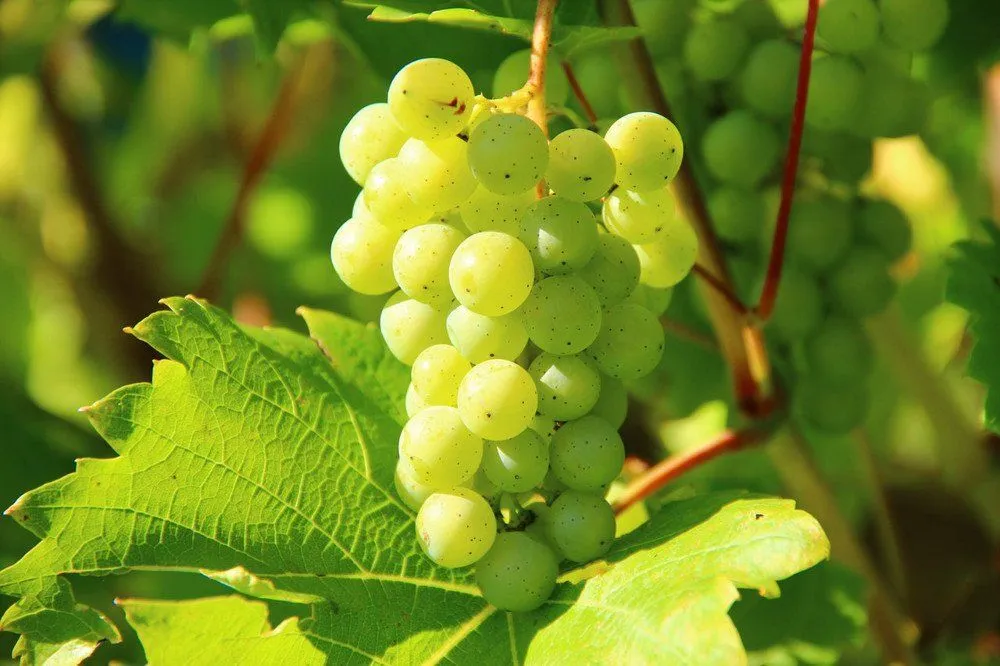
So, yes, seedless grapes have truly redefined our understanding of convenience and genetics. However, “seedless grapes” or “seedless fruits” are two words that contradict each other – how can a “sterile” plant exist, since it cannot reproduce any further? How can it exist since procreation is the entire purpose of its biological existence?
The Contradiction
Such a plant is sterile because fruits are nothing more than mature ovaries protecting embryos — the seeds. A seed actually starts out as an ovule, which eventually undergoes pollination — it is fertilized with a sperm to form an embryo or zygote. As this zygote gradually develops into a seed, the ovary ripens and matures and its walls either turn fleshy (berries or drupes) or transform into a hard shell (nuts).
Thus, a flower transforms into a fruit when the ovary becomes a fruit and the ovule growing inside it becomes a seed. The plant then sustains the species as agents like wind, water or animals help disseminate the seeds at a distance from its parent. For instance, animals consume the fruit and defecate the seeds, thereby proliferating them and providing them with a nutritious environment to grow in, simultaneously.
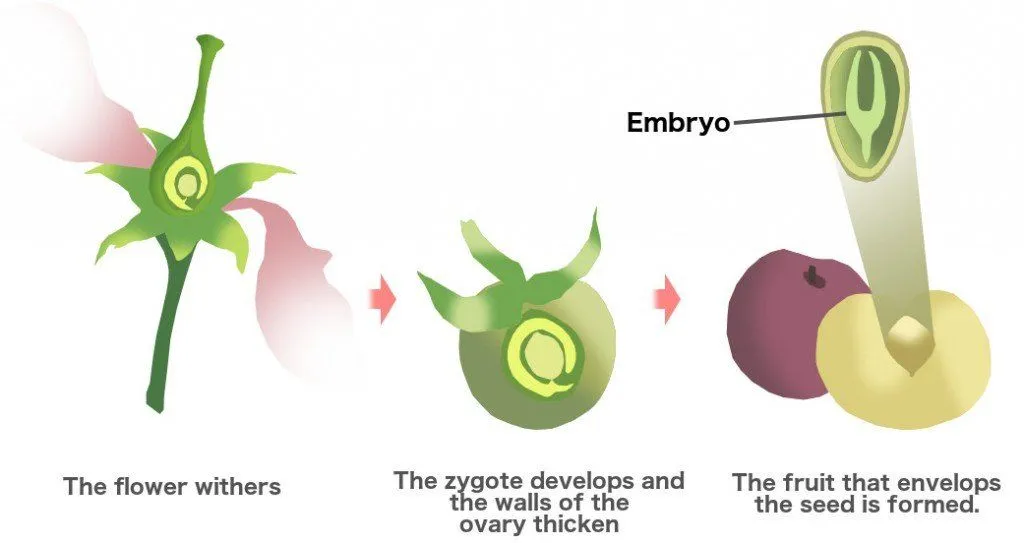
A seedless fruit would, therefore, mean the end of its plant’s generation. It is incapable of bearing any children. Yet, there are plants that often grow seedless fruits, but nature would never permit the birth of such a plant knowingly. These fruits are actually products of unfortunate mutations, their sterility is essentially a genetic defect. However, it is a fortuitous defect because they are more convenient to consume. Now, how can we sustain the continuation of this anomalous species? Quite simply, by opting for an alternative method of reproduction – cloning.
Clones
The biological term for fruit that develops without fertilization is parthenocarpy; the slightly different (and more accurate) term for what happens in seedless grapes is stenospermocarpy. In stenospermocarpy the flower is pollinated and fertilized, but the embryo aborts very early and the seed coat never hardens, so what you end up biting into are just soft, vestigial seed remnants. Either way, because the vine can’t produce viable seeds, it can only be perpetuated through cuttings, short lengths cut from an existing seedless vine that carry the same genetic quirk.
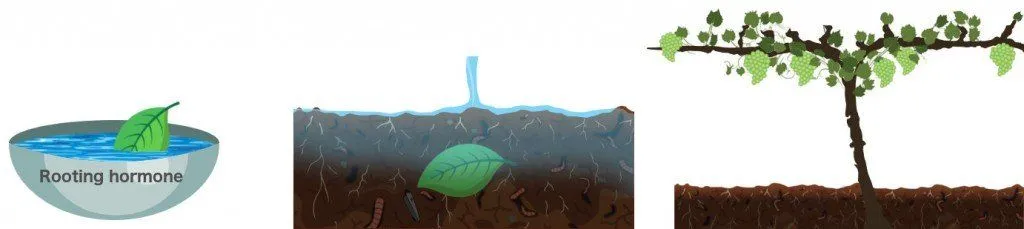
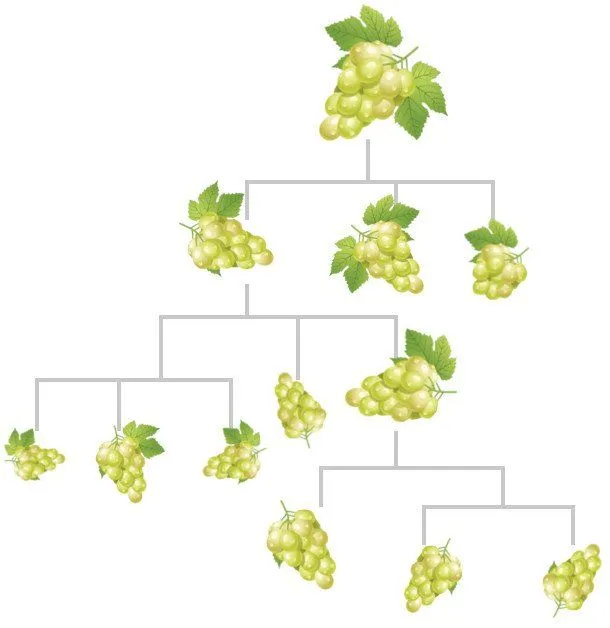
This cutting is then planted in moist soil (often after a spell of cool, damp storage to encourage rooting). Showered with moisture, the cutting proceeds to grow like any other grapevine, except that its grapes, like its parent’s, are seedless. The new vine is an exact duplicate or clone of the original vine! This compels us to ask which was the first or the original seedless grape to be cloned?
Propagating grapevines by cuttings is itself ancient (the Romans and earlier Mediterranean cultures did it routinely), so once a seedless mutation showed up in a vineyard, farmers had a ready-made way to preserve it. The most famous seedless variety, Sultanina (also called Thompson Seedless), can be traced back at least 500 years to vineyards in present-day Iran and Turkey, and was popularized in California in the 1870s after William Thompson planted vines imported from the Mediterranean. Today’s commercial seedless varieties (Flame Seedless, Crimson Seedless, Autumn Royal, Cotton Candy, and so on) are typically newer cultivars bred from those originals.
Lastly, seedless grapes aren’t truly seedless. The grapes technically do contain seeds; the mutation just arrests their development before they harden. You can usually feel the tiny soft remnants if you bite carefully. And one common worry that comes up in searches: seedless grapes are not GMOs. They are produced by a natural mutation and traditional plant propagation, the same way humans have improved crops for thousands of years. If it weren’t for some long-ago farmer who chose to keep cloning that first seedless vine, we’d still be hunting for a bowl to spit the seeds into. The inconvenience!
How Do Seedless Grapes Reproduce?
Here is the riddle that sends so many people searching: if the grapes carry no usable seeds, how does the plant make more of itself? The short answer is that it doesn’t reproduce the way you would expect. It is cloned. Instead of relying on seeds, growers snip off a length of an existing seedless vine and coax it to grow roots of its own. Botanists call this vegetative (or asexual) propagation, and it has been the standard way to multiply grapevines for thousands of years.

The trick works because a plant doesn’t need seeds to copy itself. Every cell in the vine already carries the full genetic blueprint, so a cutting taken from a seedless plant will faithfully grow into another seedless plant. That is the crucial difference between sexual reproduction (two parents, pollen meets ovule, seeds carry a shuffled mix of genes) and asexual reproduction (one parent, an exact genetic copy). A seedless grapevine has effectively traded the lottery of sex for the certainty of the photocopier. Every Thompson Seedless vine in the world is, genetically, the same individual that first appeared centuries ago, kept alive cutting by cutting ever since.
How To Grow Seedless Grapes From Cuttings
Because seeds aren’t an option, growing seedless grapes means rooting a piece of a parent vine. The wood of choice is a dormant hardwood cutting, taken in winter from a cane that grew the previous season, according to New Mexico State University’s Extension guide. Here is roughly how it goes:
- Take cuttings in the dead of the dormant season (December or January) from healthy, one-year-old wood about as thick as a pencil.
- Cut each cane into pieces roughly 35 to 40 cm (14 to 16 inches) long, each with about three to six buds.
- Mark which end is up. Growers make a straight cut across the bottom (the end that will root) and a slanted cut at the top, so a cutting planted upside down doesn’t waste a season.
- Keep the cuttings cool and moist (just above freezing) until spring, then plant them once the soil warms past about 13 °C (55 °F), with the slanted top exposed.
At the buried end, the plant first forms a pale, lumpy mass of unspecialized cells called a callus, and the new roots emerge from there, as the University of Florida’s IFAS propagation resource describes. One detail surprises home gardeners: NMSU notes that rooting hormones can actually reduce success in grapes, so the popular “dip it in hormone powder” step isn’t the help many people assume. Give a cutting a full year in a nursery bed and it becomes a young vine, ready to fruit a couple of seasons later, producing the same seedless grapes as its parent.
Which Gene Makes Grapes Seedless (And Are They GMO)?
Seedlessness isn’t random luck repeated over and over. It traces back to a single, well-mapped genetic change. Researchers have pinned the seedlessness of most table grapes to a MADS-box gene called VviAGL11, sitting in a region of chromosome 18 that breeders nicknamed the SEED DEVELOPMENT INHIBITOR (SDI) locus. A 2018 study in Plant Physiology traced the “major origin” of seedless grapes to a tiny missense mutation in that gene (an arginine swapped for a leucine at position 197), which throws off the protein’s normal job of building and hardening the seed coat.

Handily for breeders, the seedless allele is dominant, so a vine only needs to inherit one copy to produce seedless berries, which makes the trait fairly easy to carry forward when crossing varieties. And this brings us to the question that fills the search bars: are seedless grapes a GMO? No. The VviAGL11 mutation arose naturally and spread centuries ago, long before anyone could edit a genome in a lab. Today’s seedless grapes are the product of an old natural accident, kept going by cuttings and conventional crossbreeding, not genetic engineering. They are about as “modified” as any crop humans have selectively bred over the last several thousand years.
References (click to expand)
- Parthenocarpy - Wikipedia. Wikipedia
- BrainStuff - HowStuffWorks (2013). How Can There Be Seedless Grapes?. Youtube
- Fruit development - Bioimages. Vanderbilt University
- The Major Origin of Seedless Grapes Is Associated with a Missense Mutation in the MADS-Box Gene VviAGL11. Plant Physiology (PMC)
- Propagation of Grape Vine Cuttings: A Practical Guide. New Mexico State University Extension
- Hardwood Cuttings. UF/IFAS, University of Florida