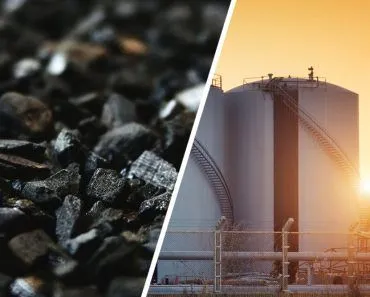
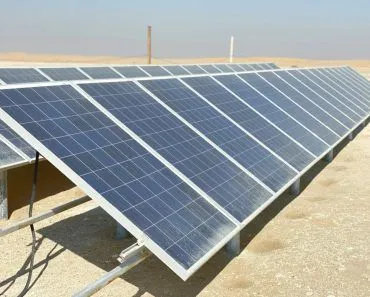
Bitcoin mining uses a lot of electricity. Cambridge University estimates the network draws roughly 140 TWh a year, about as much as a mid-sized country, and emits about 40 million tons of CO2. Just over half of that power now comes from renewable or nuclear sources, and the rest from fossil fuels, which drive global warming. The mining industry argues its flexible power use can help grids and cut methane; critics say it mostly follows cheap power, which is often fossil power.
Crypto is the future! Many of us believe this, and it may even be true. Bitcoin’s meteoric rise was unforeseen, and many of us probably have crypto in our investment portfolios by this point, right? But every one of those coins was created by a machine somewhere, burning electricity around the clock, and that is where the environmental questions begin.
I’m not simply talking about a higher electricity bill, although that is a worry. The influence and impact of Bitcoin mining reach further than that, and deserve to be discussed honestly, including the arguments from the mining industry that its energy use can be put to good work. Bitcoin mining is similar to oil drilling, in that both involve the human pursuit of valuable resources while also causing environmental damage.
As Bitcoin’s popularity grows, so does its environmental impact, but don’t worry! There are remedies on the way to make this digital gold rush more environmentally friendly.

What Is Bitcoin And How Is It Mined?
Bitcoin was proposed in a 2008 white paper and went live in January 2009 as a form of digital money; it is similar to cash, but it only exists online. It is just like other cryptocurrencies, but it’s the most valuable digital money. It is not controlled by any government or bank, so it is decentralized and accessible to anyone.
Bitcoin mining is a digital process that generates new Bitcoins. Miners are special computers that solve complicated arithmetic puzzles to validate and add new transactions to the Bitcoin network. Miners collaborate in order to group transactions into blocks and connect them to previous blocks, forming a chain of blocks known as the blockchain.
Consider mining to be a race in which miners compete to solve the puzzle first. The winner is awarded newly produced Bitcoins and gets to add a new block to the blockchain. This method also contributes to the security of the Bitcoin network by ensuring that all transactions are authentic.
Now, let’s get into some numbers… It is believed that about one million Bitcoin miners are active and competing. Bitcoin miners collectively process thousands of transactions every minute, and as of 2026 they’ve mined more than 20 million Bitcoins out of a finite supply of 21 million, with the 20 millionth coin mined in March 2026. Mining farms have sprung up all over the world to create new Bitcoins, taking up enormous areas of land and consuming electricity from local power plants.

Alarming Consumption Of Electricity By Bitcoin Miners
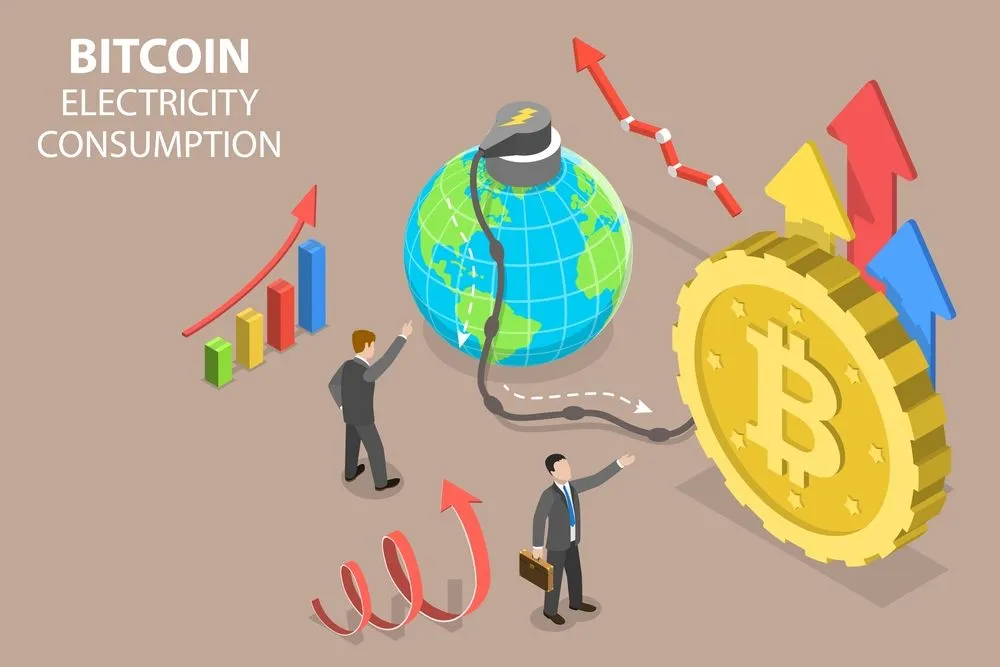
Electricity consumption for Bitcoin mining is expanding at an alarming rate. Mining Bitcoin is the process of confirming and adding transactions to the blockchain, which requires a significant amount of computer power. This power is generated via electricity. The issue is that as more individuals mine Bitcoin, their demand for electricity increases, which can have catastrophic effects.
Just how much electricity are we talking about? Estimates vary by methodology, so it matters whose number you use. The Cambridge Bitcoin Electricity Consumption Index, which a 2024 systematic review of the field rated as one of the more carefully done analyses, put the network’s annual appetite at about 138 TWh in its 2025 report. That is comparable to the yearly electricity use of an entire mid-sized country, and it works out to roughly 0.5% of all the electricity consumed on the planet. Other trackers, such as the Digiconomist index, run higher, around 200 TWh, but the same review judged that model’s methodology to be of questionable rigor, so we treat the Cambridge figure as the anchor.
You may have seen a scarier-sounding statistic: that a single Bitcoin transaction “uses” hundreds of kilowatt-hours, enough to run a home for weeks. An earlier version of this article quoted that figure too. We have removed it, because it is misleading. Bitcoin’s miners burn the same electricity whether a block holds one transaction or three thousand, since the energy goes into the mining race itself, not into processing payments. Dividing the network’s total energy by its transaction count therefore says nothing about the cost of a payment. Peer-reviewed analyses, including Sedlmeir and colleagues (2020) and Sai and Vranken (2024), have rejected the per-transaction metric for exactly this reason. The honest way to think about it is that Bitcoin’s energy use is driven by what the coin is worth and what miners can earn, not by how many people use it.
Bitcoin mining on a global scale is a large and growing draw on the world’s electricity, similar to how leaving the lights on all the time at home might result in a large electricity bill. Whether that draw adds up to environmental harm depends on where the electricity comes from and what else it could have powered, which is the subject of the next two sections.
Unmasking The Carbon Footprint Of Bitcoin Mining
Bitcoin mining’s impact extends far beyond the electricity it consumes, just as a ripple effect causes waves that persist outwards. In various disturbing ways, Bitcoin mining indirectly contributes to climate change. Bitcoin mining necessitates a large number of powerful machines that consume a significant amount of electricity.
We know that the needed electricity is typically generated by the combustion of fossil fuels, which releases a significant amount of harmful greenhouse gases and increases our carbon footprint. Consider Bitcoin mining to be a factory that emits tons of greenhouse gases into the atmosphere. These gases, such as carbon dioxide, accumulate in the atmosphere, trapping heat and driving climate change. It’s like putting fuel on the fire, and we all know what that does…
How much carbon are we talking about? The numbers depend on where the electricity comes from. The 2025 Cambridge Digital Mining Industry Report estimated about 39.8 million tons of CO2-equivalent a year. Higher estimates exist, up to around 115 million tons, but they rest on the less rigorous energy models described above. Even the lower number is the carbon footprint of a small country, all in the name of digital coins.
Geography matters here too. In mid-2021, China (long the world’s mining heartland) banned the practice outright, and the machines scattered. The United States quickly became the single largest hub, and by the Cambridge team’s 2025 survey it accounted for about three-quarters of reported mining activity. That migration was a mixed bag for the planet: it pushed miners toward grids with more natural gas in some places, but also toward more hydropower, wind, and nuclear in others. Encouragingly, the same Cambridge report found that 52.4% of mining’s energy now comes from sustainable sources (42.6% renewables plus 9.8% nuclear), a meaningful jump from 36% in 2022.
That global average hides a lot of local variation, though. A 2025 study in Nature Communications traced the electricity used by the 34 largest US mines over a year from mid-2022 to mid-2023. They drew 32.3 TWh, a third more than the city of Los Angeles, and the researchers found that 85% of it came from fossil-fuel plants. The extra pollution from those plants, mostly fine particulate matter, reached an estimated 1.9 million Americans, often hundreds of miles from the mines themselves. Cleaner grids elsewhere pull the global average up, but the biggest US operations were, at least in that period, largely fossil-powered.
Can Bitcoin Mining Ever Help The Grid?
Here is where the debate gets genuinely interesting, and where an earlier version of this article fell short by not mentioning it at all. The mining industry, and a growing body of academic papers, argue that Bitcoin mining’s energy use is not like other energy use, for one reason: a mine can switch off in seconds without anyone noticing. A hospital or a steel mill cannot. That makes miners an unusually flexible customer for a power grid.
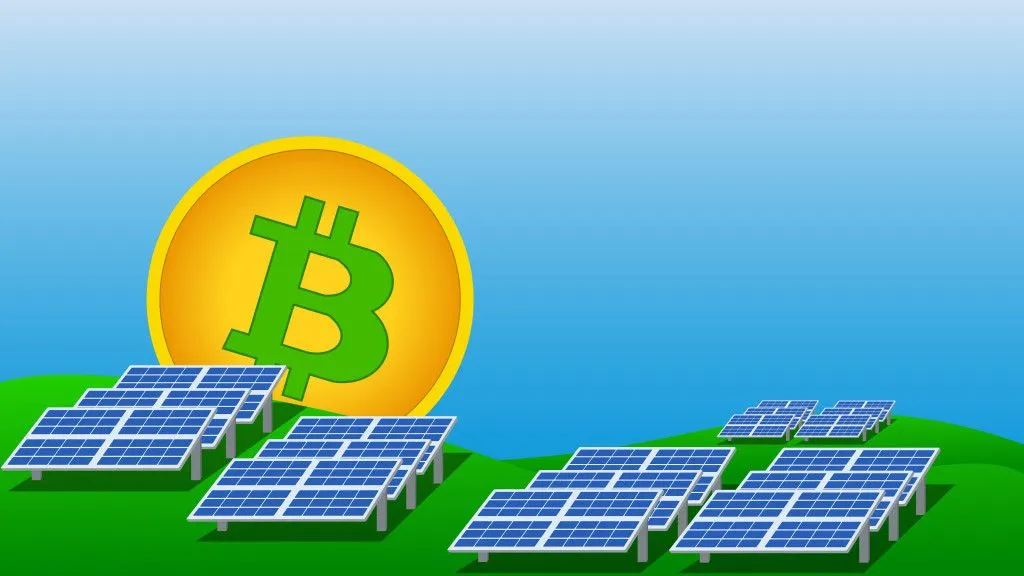
The showcase example is Texas. During the August 2023 heat wave, the mining company Riot Platforms reported cutting its power use by more than 95% at peak demand and collecting $31.7 million in power and demand-response credits from the Texas grid operator, worth more than the 333 Bitcoin it mined that month. A 2023 Cornell study in ACS Sustainable Chemistry & Engineering proposed another use: new wind and solar farms often generate power for months before their grid connection is ready, and mining with that stranded power could earn money to fund more renewables. The authors estimated 32 planned Texas projects could have made a combined $47 million this way, while cautioning that mining hardware goes obsolete in a few years and carries its own material footprint. A 2024 paper in the Journal of Cleaner Production, several of whose authors work in or invest in Bitcoin mining, modeled using landfill methane, a greenhouse gas far more potent than CO2, to power small mines that would otherwise not be economical to capture.
Critics make three points in reply. First, the money Riot earned for switching off is ultimately paid by other Texas electricity customers, and the same flexible mines add to overall demand the rest of the year; the US Energy Information Administration estimated in 2024 that crypto mining already accounted for 0.6% to 2.3% of all US electricity use. Second, mines go where power is cheap, not where it is clean, which is how the largest US mines in the Nature Communications study ended up 85% fossil-fueled. Third, turning flared gas or landfill methane into Bitcoin gives fossil infrastructure a new revenue stream, which critics argue slows the day it gets shut down.
Where does that leave us? The physics is not in dispute: the network uses a mid-sized country’s worth of electricity. The dispute is over whether a large, mobile, switch-off-able demand for power is, on balance, a help or a hindrance to the energy transition. The evidence so far is mixed, much of it comes from parties with a financial stake on one side or the other, and it varies enormously by location. A mine soaking up surplus hydropower and a mine plugged into a coal-heavy grid are both “Bitcoin mining,” with very different footprints.
A Final Word: Seeking Solutions For A Sustainable Future
While Bitcoin is sometimes referred to as “digital gold,” it has the very real negative side effect of impacting climate change. Just as gold mining causes deforestation and environmental catastrophe, Bitcoin mining generates its own ecological tragedy. While the environmental impact of Bitcoin mining is concerning, there is reason to be hopeful about the future. The footprint can shrink in three ways: cleaner power for the mines, more energy-efficient hardware, or a shift towards other cryptocurrencies that use less electricity.
Which of those happens will depend on economics and regulation more than on goodwill. We can nudge it along by demanding transparency about where mining power comes from and by supporting operations that can show their energy is genuinely surplus or genuinely clean. Some forward-thinking miners are already exploring renewable energy options, such as solar, wind, and hydroelectric power for mining operations. These environmentally conscious miners are leading the way to a cleaner Bitcoin mining industry.
There is also a powerful proof that change is possible. Ethereum, the second-biggest cryptocurrency, used to rely on the same energy-hungry mining as Bitcoin. Then, in September 2022, it switched to a system called proof-of-stake in an event nicknamed "the Merge," which slashed its energy use by roughly 99.9% almost overnight. Bitcoin has so far resisted such a change, since proof-of-work is central to how its supporters think about its security, but the Ethereum example shows that a cryptocurrency does not have to cost the Earth.
Let’s hope that the currency of the future won’t harm the future itself!
Editor’s note (September 2026): This article was revised to remove a per-transaction energy figure that peer-reviewed research considers misleading, to anchor its estimates to the Cambridge index rather than a range of trackers, to drop an unsourced comparison with paper money, and to add a section on the grid-flexibility debate.
References (click to expand)
- B Ren. (2022) Do clean and dirty cryptocurrency markets herd differently?. ScienceDirect
- Godsiff, P. (2015). Bitcoin: Bubble or Blockchain. Agent and Multi-Agent Systems: Technologies and Applications. Springer International Publishing.
- Stoll, C., Klaaßen, L., & Gallersdörfer, U. (2019). The Carbon Footprint of Bitcoin. Joule. Cell Press
- Cambridge Bitcoin Electricity Consumption Index (CBECI). Cambridge Centre for Alternative Finance.
- Cambridge study: sustainable energy rising in Bitcoin mining (2025). Cambridge Judge Business School.
- The Merge. ethereum.org.
- Sai, A. R., & Vranken, H. (2024). Promoting rigor in blockchain energy and environmental footprint research: A systematic literature review. Blockchain: Research and Applications.
- Sedlmeir, J., Buhl, H. U., Fridgen, G., & Keller, R. (2020). The Energy Consumption of Blockchain Technology: Beyond Myth. Business & Information Systems Engineering.
- Guidi, G., Dominici, F., et al. (2025). The environmental burden of the United States’ bitcoin mining boom. Nature Communications.
- Lal, A., Zhu, J., & You, F. (2023). From Mining to Mitigation: How Bitcoin Can Support Renewable Energy Development and Climate Action. ACS Sustainable Chemistry & Engineering.
- Rudd, M. A., Jones, M., Sechrest, D., Batten, D., & Porter, D. (2024). An integrated landfill gas-to-energy and Bitcoin mining framework. Journal of Cleaner Production.
- Tracking electricity consumption from U.S. cryptocurrency mining operations (2024). U.S. Energy Information Administration.
- Riot Platforms, Inc. August 2023 Production and Operations Update. U.S. Securities and Exchange Commission (Form 8-K exhibit).