Table of Contents (click to expand)
Not really, at least not as an energy-saving measure. Studies find Earth Hour cuts electricity use by only about 4% on average during the hour, and the dip is largely cancelled out when everyone switches back on. Its true value lies in raising awareness about energy use and climate change, not in the power it saves.
Nearly 30,000 terawatt-hours (30,000 TWh)
This is roughly how much electricity our world population consumes every year, and that figure keeps climbing.
If that statistic is hard to wrap your head around, think of it this way: just 1 TWh is equivalent to burning around 180,000 tons of coal or 600,000 barrels of oil. Multiply that by tens of thousands and you begin to grasp the scale of fuel we feed into our power plants.
Imagine the prodigious amount of greenhouse gases being pumped into our atmosphere at such a rate, trapping heat in the lower atmosphere and steadily warming the planet. Is Mother Earth capable of handling such pressure? Will we lead ourselves to our own doom, along with the several million animal and plant species that share this planet with us?
These are exactly the kinds of threats that prompted the WWF (World Wide Fund for Nature, still known as the World Wildlife Fund in the US and Canada) to come up with the idea for Earth Hour.

What Is Earth Hour?
Earth Hour started in 2007 as a “lights-off” event in Sydney, Australia, when an estimated 2.2 million people and 2,000 businesses switched off their lights for an hour. Since then, it has grown into one of the world’s largest grassroots movements for the environment, observed in more than 190 countries and territories. In 2026, on its 20th anniversary, Earth Hour fell on Saturday, 28 March.
Each year it takes place on the last Saturday of March, when millions across the globe choose to turn off their non-essential lights from 8:30 p.m. to 9:30 p.m. local time. Small as that effort may seem, it has provided pivotal support for raising world awareness of the threats we are creating for ourselves.
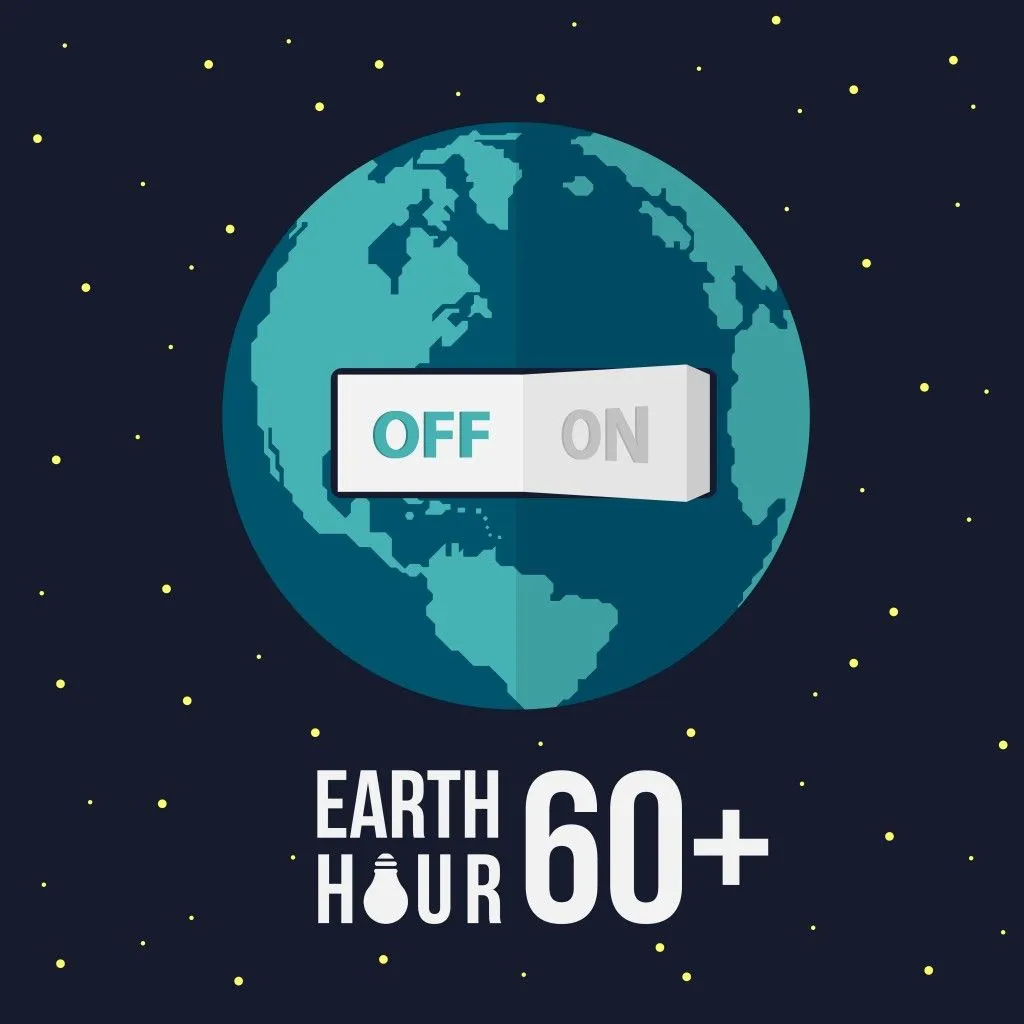
Whether it is air pollution caused by the gases released in electricity production (burning fuels) or light pollution preventing the inhabitants of this planet from enjoying the cosmic canvas, pollution is a serious issue. Cutting down humanity’s carbon footprint to practicable levels to create a robust green environment is what this movement aims to achieve.
Let’s take a look at how the universe might appear if all the lights on Earth were turned off.
Kill The Lights And Enjoy The Sights
The glare of urban living all but eliminates the cosmic show playing overhead, keeping most people oblivious to the enthralling sight of dazzling stellar beauty.
Light pollution might sound like a somewhat “safe” variety of pollution, but it has still been successful in blocking the light of billions of galaxies and other stellar enigmas from reaching our retinas.
This limitation is because of our inefficient and gravely unskilled usage and positioning of light-emitting equipment, such as bulbs, neon billboards, street lamps and all other poorly oriented and improperly shielded artificial light sources. Their light and the electricity consumed in sourcing that light is being wasted by spilling it into the atmosphere, rather than selectively focusing it on areas or specific objects that need to be illuminated.
If Earth Hour was truly taken up as a global mantra and the inhabitants of our global society decided to switch off their lights, even for an hour, here’s what the cosmos would look like…
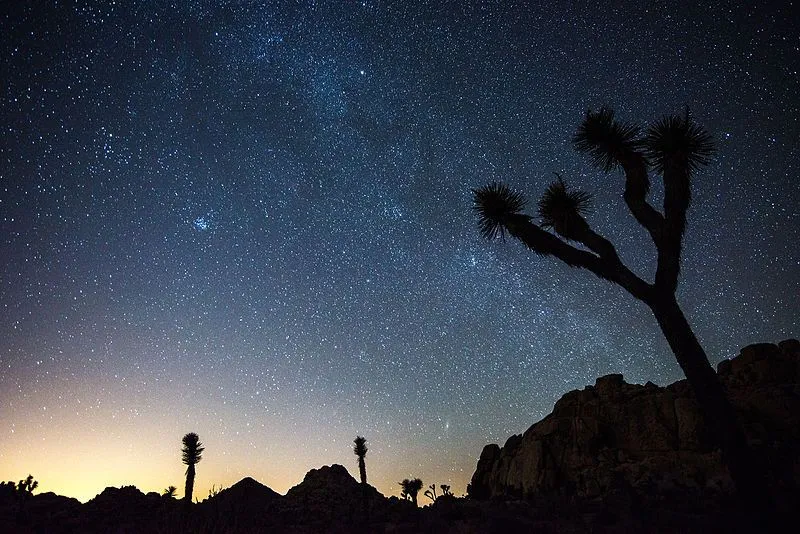
However, does this imply that cutting off electricity would benefit humans in cutting down greenhouse emissions?
It’s Actually Not A Good Idea, After All…
The main motive behind shutting down all electrical devices is to give our power plants a break, thus reducing CO2 emissions on a global level. What an ingenious way to battle climate change! Or is it?
As it turns out, this situation has layers of complexity hiding beneath its exciting surface. If Earth Hour caught on worldwide, the skies would indeed glimmer under the shining stars of our Milky Way, but would it be enough to guide you through the near pitch-black Earth?
Definitely not.

A single candle throws out only a fraction of the light of a modern bulb, perhaps a hundred times less per unit of energy than even an old incandescent and far less than an LED, so candles would be a poor substitute. And guess what? Candles emit CO2 too, and because their glow is so dim, you would probably end up lighting several, nudging those emissions right back up.
Instead, perhaps you decide not to burn any wax and just enjoy the starry night. You’re satisfied with yourself now, as you did cut down on greenhouse emissions and contributed to a greener environment, right? Well, no… you’re wrong again, as power plants don’t quite work this way.
The coal-powered generators would, no doubt, emit a little less CO2 during that dark hour. The trouble is what happens next. When everyone flips their lights back on at once, the sudden jump in demand forces operators to ramp generators back up quickly, and ramping fossil plants up and down is itself inefficient and emissions-heavy. Much of the CO2 you saved in the dark gets clawed back in the rush to switch on.
The numbers bear this out. A 2014 study in Energy Research & Social Science pooled 274 measurements of Earth Hour across 10 countries and six years and found the event cut electricity use by only about 4% on average, with results ranging from a 28% drop in one Canadian region to a slight 2% increase in New Zealand. Once the post-event rebound is taken into account, the net saving in climate terms is tiny, and in some cases close to zero.

The post-event surge in demand can strain grids and largely cancel out the CO2 saved during the dark hour.
Conclusion
Earth Hour is an initiative with good intentions, and a clever means of spreading awareness among both young and old. It deserves real credit for helping global citizens grasp the importance of conservation and the millions of species we share the planet with. However, good intentions can mask a more complicated reality.
The honest answer is that a single hour of darkness, once a year, barely moves the needle on emissions. That was never really the point. Earth Hour works best as a symbol, an annual nudge that gets people, businesses and governments talking about energy and climate change. The heavy lifting still has to happen the other 8,759 hours of the year, through steadier, more mindful energy use and a long-term shift toward cleaner sources of power.
References (click to expand)
- Our Mission | Earth Hour. Earth Hour
- Earth Hour: small actions can make a big difference - WWF-UK. The World Wide Fund for Nature Inc.
- Olexsak, S. J., & Meier, A. (2014). The electricity impacts of Earth Hour. Energy Research & Social Science. Lawrence Berkeley National Laboratory.
- What is light pollution? - DarkSky International. DarkSky International
- What is an electric overload? - Energuide. energuide.be
- Energy units and calculators explained - EIA. The U.S. Energy Information Administration
- How much coal, natural gas, or petroleum is used to ... - EIA. The U.S. Energy Information Administration