When it rains, most flies and small insects don't go anywhere exotic; they shelter in dry crevices, under leaves, beneath bark or rocks, and inside cavities like the eaves of buildings, gaps in tree trunks, and the undersides of stones. Larger, stronger fliers (like dragonflies and beetles) can keep flying; mosquitoes ride out raindrop impacts; and a few species (rain beetles, leafcutter ants) actually emerge specifically when storms hit, to mate.
A good thunderstorm is always welcome amid a hot and sticky summer, bringing much-needed relief from the sweltering heat. Humans react to precipitation in a number of ways (umbrellas, waterproof clothing, and staying indoors), but most other creatures on the planet don’t have a little umbrella to carry around. In particular, there are hundreds of billions of insects on this planet, many of which are used to flying through the air, that must occasionally deal with falling droplets of death from above!
So… how do insects handle rainy weather? Where do flies and insects go during storms?
Unique Challenges Of Insects
Being tiny, agile, and able to fly are advantages of insects, but in the case of inclement weather, such as a storm or cold weather, those same characteristics don’t reap the same rewards. Insects are ectothermic, meaning that the temperature of their small bodies reacts to the outside surroundings; when the weather is cold, the metabolism of insects slows down, as do their activity levels; on the other hand, in warm temperatures, insects are energized and highly active.
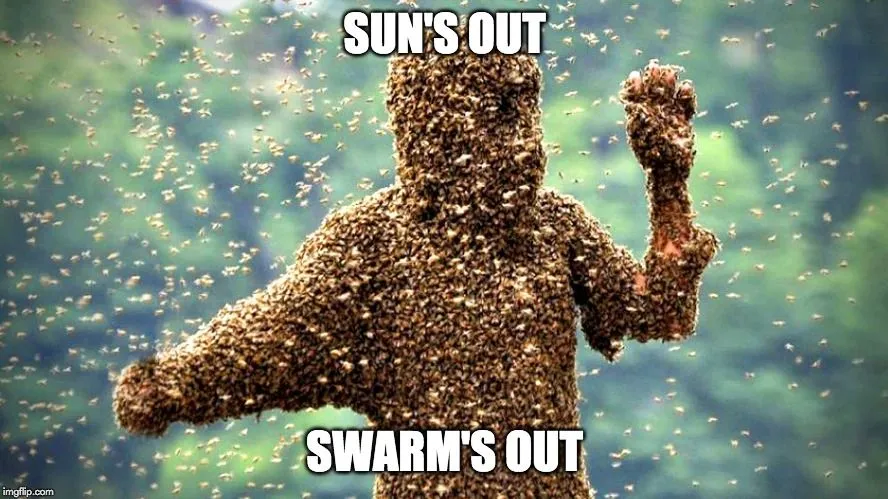
When an insect gets wet, the water adds additional weight, meaning it takes more energy to fly its heavier body around. Water can also cause the wings of some insects to stick together. Combined with lethargy from the cold, insects become vulnerable, and decidedly less agile, during storms. And add to all this the energy it takes to fly as strong gusts of wind threaten to drag you off course.
The strong exoskeleton of most insects will allow them to be buffeted into objects without any critical damage, but it is probably an exhausting process.
Finally, raindrops fall at an average speed of 10 meters per second (about 22 miles per hour). This is insignificant for us, but this is a massive amount for most insects the size of a rice grain or a grape. For small insects, a raindrop the same size as it is a very dangerous thing.
But, observe nature and you’ll see that, though small, insects have ways, sometimes very ingenious ways, to deal with rain and storms.
Taking Cover Vs Taking Advantage
In the face of rain, many insects do the logical thing and seek shelter. A multitude of species have shown a sensitivity to changes in air pressure, allowing them to predict when rain or bad weather is going to strike. In anticipation of this, they can find shelter by burrowing into logs or underground or taking a respite underneath leaves, undergrowth, rocks, or the eaves of buildings. Get out of the sky and under a safe log.
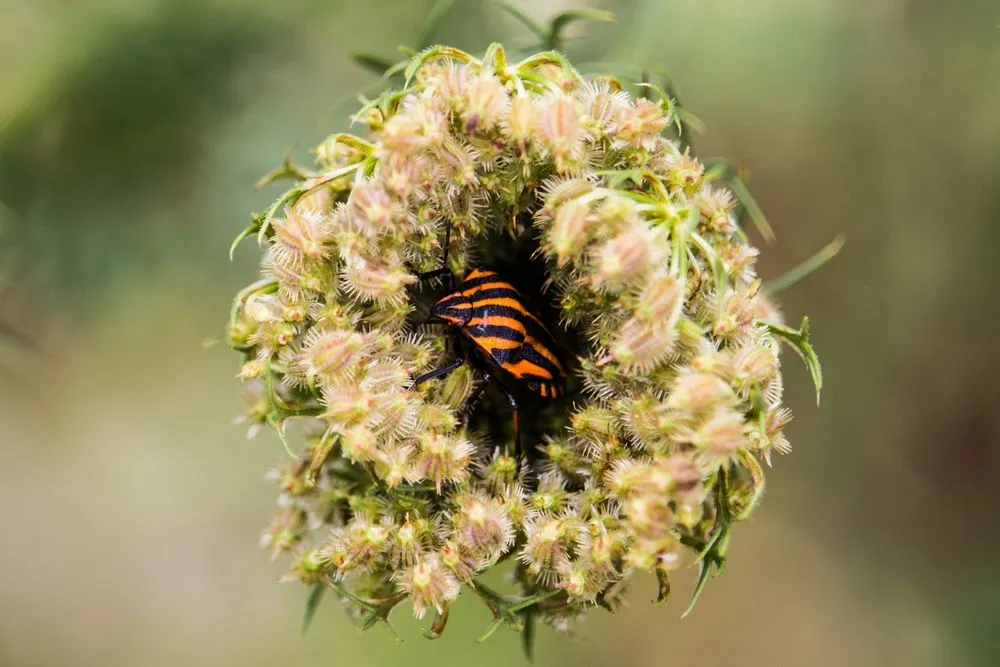
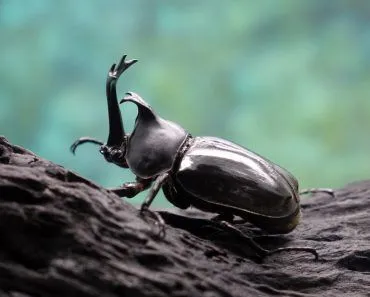
However, this isn’t the case for all insects, as some are better equipped to withstand the harsh winds and violent impacts from raindrops. Larger insects, such as beetles and dragonflies, are hardier and more capable of withstanding the impact of raindrops and have greater control over their flight patterns in the wind.
For some insects, the rains bring on their mating season.
For the leafcutter ants, the mating season comes after storms that usually occur in late summer or early fall. The queens and the males emerge from their nest to fly and mate. If it doesn’t rain, they don’t mate.
Unlike the leafcutter ants, the rain beetles emerge in the early morning during the rain. The males and females live their whole lives underground. With the rain, the females come closer to the surface and release their pheromones. The male beetles leave their underground abode and fly in the rain to find a female.
Mosquitoes Can Fly Despite The Rain
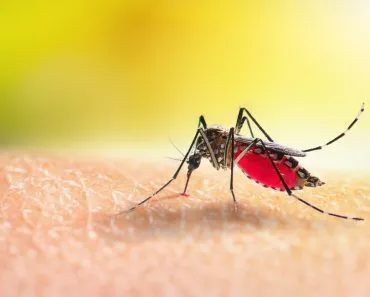
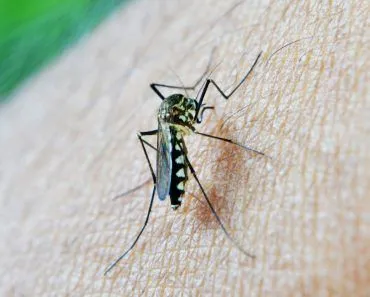
Annoyingly, mosquitoes also seem uniquely capable of surviving downpours of rain, despite their minuscule size and weight. Research has shown that mosquitoes don’t actually slow the impact of raindrops considerably, and therefore take less of an impact from the raindrop. Rather than resisting the impact, a mosquito will “ride the wave”, so to speak, and may plummet a few dozen feet before escaping out from beneath the raindrop.
Uniquely water-resistant hairs all over the insect’s body repel the water and the mosquito is light enough to slide out from under the drop and continue on its flight toward the nearest blood-filled creature.
While being constantly bombarded and plunged toward the ground may seem frustrating, with so many other insects hiding or biding their time, mosquitoes can take advantage of a cleared playing field in their search for food.
Dealing With The Cold
With the rain comes the cold. Honeybees shiver and huddle together to tackle the cold. They also flutter their wings at high frequencies. The motor muscles in the wings generate heat which keeps the bees warm. The snow flea, meanwhile, has anti-freeze protein in its blood (or more accurately hemolymph) that keeps it from freezing over in the winter!
Can Flies Fly With Wet Wings?
Here is the good news for the humble housefly: its body and wings are not just water-repellent, they are superhydrophobic. The outer cuticle is coated in a microscopic layer of wax and bristling with tiny hairs and bumps, a combination that forces water to bead up into round droplets and roll straight off instead of soaking in. On the snipe fly pictured here, every bead of dew sits up like a marble rather than wetting the surface.

This matters because a film of water clinging to a wing adds weight and can effectively glue the wings together, and both of those wreck an insect's ability to fly. By keeping the wing surface dry, the waxy, textured cuticle stops water from loading up in the first place. Researchers who studied butterfly and moth wings found that the same micro-bumps behave almost like a bed of needles: when a raindrop lands, it shatters into smaller fragments and bounces away, slashing the time it stays in contact with the wing. Sunghwan Jung's team at Cornell, who published the work in PNAS in 2020, likened a single raindrop striking a butterfly to a bowling ball dropping on a person, yet the shattering trick lets the wing shrug it off. Shedding the water quickly also stops the insect from losing precious body heat.
So can a fly fly with wet wings? Heavily soaked wings will ground most flies, which is exactly why you rarely see one airborne in a downpour. But because the water rarely sticks for long, a quick shake or a bout of grooming usually clears the wings, and the fly is back in the air the moment the worst of the rain has passed.
Do Flies And Bugs Die In The Rain, Or Can They Drown?
Mostly, no. As the mosquito research shows, a tiny insect is usually so light that a raindrop carries it along rather than crushing it, and the same water-repellent cuticle that keeps a fly's wings dry also makes it very hard to trap an insect underwater. For most flies and bugs, an ordinary shower is an inconvenience, not a death sentence.

That said, rain is not entirely harmless. The smallest insects, and especially soft-bodied young, are genuinely at risk. In a 2019 study published in Ecology, simulated downpours killed roughly 36% of diamondback moth caterpillars after a single daily soaking, rising to about 64% when the rain fell three times a day. The larvae were knocked off their plants and could not haul themselves back up the slick, rain-battered leaves. Tellingly, large white butterfly caterpillars in the same experiment barely suffered, because they anchor themselves to the leaf with a tight bed of silk.
Drowning is possible too, but it takes a lot. The surface tension that an insect can normally stand on flips into a trap once a bug is small enough, so very tiny insects and freshly hatched nymphs can be pinned inside a droplet and washed away. In one study of tea green leafhoppers, the nimble adults flicked water off and jumped clear in about three-hundredths of a second, while the youngest nymphs, which lack the same water-repellent coating, were simply swept off the leaf. Heavy rain can also chill a leaf surface by around 5 °C (9 °F), slowing insects down and leaving the unlucky ones exposed.
A Final Word
Most humans try to avoid walking around in the rain, though there are those who truly enjoy it, and make the most of the downpour. Similarly, most insects will try to seek cover and avoid getting wet or cold until the rains pass, but there are certain species who revel in the advantage (and potential mating) that a good rainfall can bring!
References (click to expand)
- Dickerson, A. K., Shankles, P. G., Madhavan, N. M., & Hu, D. L. (2012, June 4). Mosquitoes survive raindrop collisions by virtue of their low mass. Proceedings of the National Academy of Sciences. Proceedings of the National Academy of Sciences.
- Wolda, H. (1978, June). Seasonal Fluctuations in Rainfall, Food and Abundance of Tropical Insects. The Journal of Animal Ecology. JSTOR.
- Chown, S. L., & Terblanche, J. S. (2006). Physiological Diversity in Insects: Ecological and Evolutionary Contexts. Advances in Insect Physiology. Elsevier.
- Dickerson, A. K., Shankles, P. G., Madhavan, N. M., & Hu, D. L. (2012, June 4). Mosquitoes survive raindrop collisions by virtue of their low mass. Proceedings of the National Academy of Sciences. Proceedings of the National Academy of Sciences.
- Kim, S., Wu, Z., Esmaili, E., Dombroskie, J. J., & Jung, S. (2020). How a raindrop gets shattered on biological surfaces. Proceedings of the National Academy of Sciences.
- Chen, C., Harvey, J. A., Biere, A., & Gols, R. (2019). Rain downpours affect survival and development of insect herbivores: the specter of climate change? Ecology.
- Lin, M., Vasseur, L., Yang, G., Gurr, G. M., & You, M. (2016). Avoidance, escape and microstructural adaptations of the tea green leafhopper to water droplets. Scientific Reports.