A drinking straw has one hole, not two. Topologically a straw is just a cylinder, the product of a single circle and a length. Squash it flat and you get a washer with one obvious hole. The two openings are ends of the same hole, not separate holes; cutting the straw once along its length leaves it in a single piece, which by Riemann’s rule means it has exactly one hole.
There are certain questions that seem to summon answers with very opinionated supporters on each side. Whether you’re chatting over drinks or debating in Reddit forums, these questions seem to bring out the debating fire in everyone.
Which came first, the chicken or the egg? Are zebras black or white? How many holes does a drinking straw have?
The answer to that last question is simpler to think through than the others, but we need to turn to mathematics for clarity.
The Drinking Straw Debate
So… how many holes does a straw have? The question might seem confusing to some, while the answer might seem obvious to others. Even if an answer seems obvious, we need to get there scientifically.
Are there one or two holes in a straw? There are those who passionately defend both answers. Some even say that a straw has an infinite number of holes. Others have gone so far as to claim that a straw has zero holes.
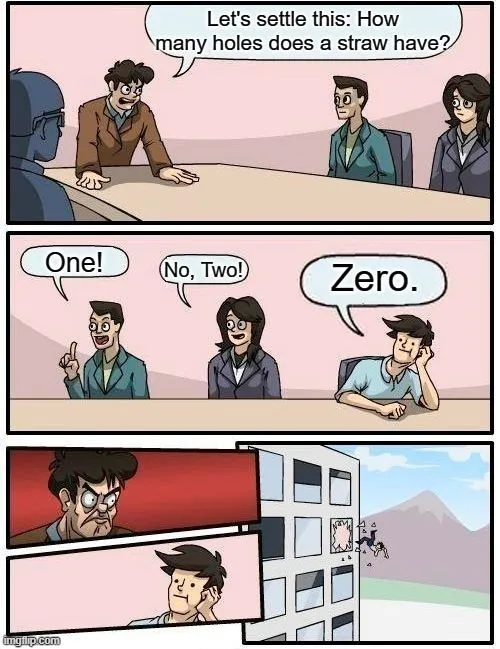
The zero hole group might argue that a straw is simply a bent plane. Since the plane doesn’t have any holes, and you can bring the edges together to make a straw, the straw has no holes. However, by bringing the edges together, you are making a hole, so that argument doesn’t hold up too well, unless you’re questioning the very existence of holes themselves.
Assuming you believe in holes, the other variations in counting holes can mostly be traced to the basics of the argument: how one defines a hole.
What Is A Hole?
Defining a hole is a “whole” other heated debate in itself. There are questions of whether a hole is a presence or an absence, or whether they are things that can be physically defined at all. However, let’s not get too deep into that today.
When we talk about holes, we could be talking about something that could be filled or something through which something else could pass. We have blind holes (a hole in the ground or the hole in a vase) and through holes. Topologically, when we talk about holes, we’re only considering the second kind.
You could say that a glass has one hole in it, which we fill with coffee or any other liquid. However, if we flatten the glass down, it would ultimately become a plate. We can all agree that an undamaged plate does not have a hole. Thus, if a glass has a hole, we would have to define some point in the flattening process when the hole stops existing.

The topological definition of a hole is that it’s a structure that prevents an object from being shrunk to a point.
If we took a circle and shrunk it down, it would never become a point. The space inside the boundary prevents it from doing so. Hence, a circle has one hole.
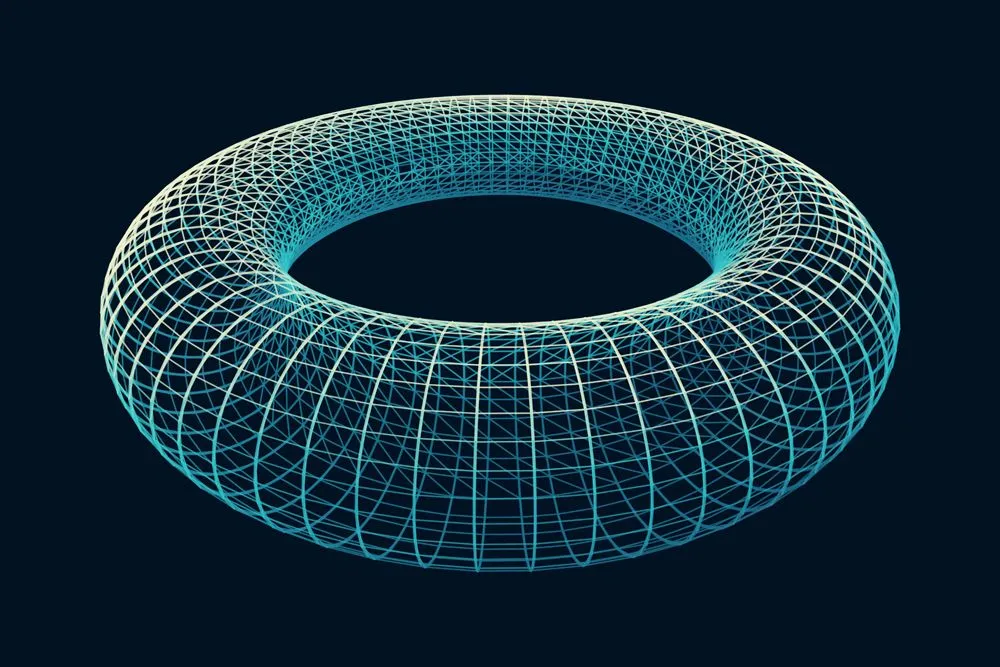
A donut, similarly, would have one hole. A hollow torus, which is something like a hollow donut, will have two holes. These correspond to two independent loops (one going around the ring and one going through the tube), both of which prevent the torus from being shrunk to a single point.
Let’s look at the “number of holes” debate, while staying inside this topological definition.
Counting Holes
We’ve established that a circle has one hole. From here, we can see the one-hole camp and the two-hole camp.
Does A Straw Have Two Holes?
This is the argument claiming that a drinking straw has two holes. A straw is a cylinder, in which two circles at each end can be traced. Two openings = two circles = two holes. A hole through which stuff goes in, and another through which stuff comes out.

Going by the topological definition of a hole, this argument is invalid, as it is treating an opening as a hole. The number of openings does not define the number of holes.
We’ve established that the hollow space inside the torus is a hole, even though it has no openings. The hole is the space enclosed in the boundary, not the boundary itself.
We’ve also said that topologically, a glass or a cup doesn’t have a hole. In order to go with the thinking that a drinking straw has two holes, we would need to negate this. If a straw has two holes, then a glass has one.
Does A Straw Have Just One Hole?
Topologically, a straw is the product of a unit circle and an interval. The interval is the length of the straw. The circle has one hole, and the interval has no holes. Therefore, a straw has a single hole.
It’s not two circles at each end of the straw, but rather, the same circle!
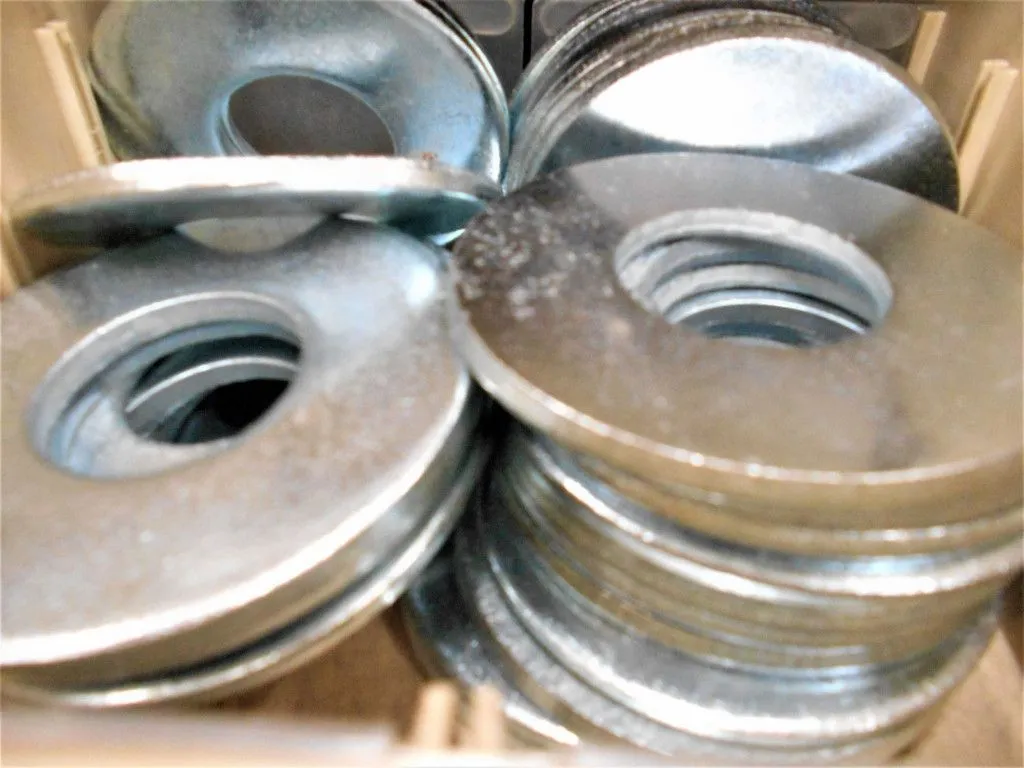
To envision this, imagine squishing down the straw. Its length will shrink until, at some point, it looks more like a ring or a washer. At this point, it should be clear that it only has one hole. If it had more than one, there would have to be some indescribable point where the other hole disappears, which doesn’t seem probable.
Let’s look at it a different way. According to mathematician Bernhard Riemann, the number of holes equals the number of times an object can be cut without resulting in two separate pieces. For a torus, you can cut it twice with it still remaining a single piece. For a circle or a ring, you can make just one cut along the boundary without causing separation.
Similarly, for a straw, you can make a single cut along its length. Any further cuts would separate it. Hence, a straw has a single hole.
Building on these ideas, topologists now use Betti numbers (named after Enrico Betti, who first developed the concept in 1871, and later formalized by Henri Poincaré) to define the number of holes. All answers double down on one result: a straw has exactly one hole.
Is A Straw A Torus Or A Cylinder?
If you have spent any time reading about this debate, you have probably seen people insist that a straw is “basically a donut,” and others insist it is a cylinder. Both shapes keep coming up, so which one actually describes a straw?
The honest answer is that an open drinking straw is a cylinder, not a torus. In the language of topology, a cylinder is a surface with boundary: it has those two open rims at the ends. A torus, the doughnut shape, is a closed surface with no edges at all. Because one shape has boundary rims and the other has none, you cannot smoothly deform a straw into a torus, so the two are not the same object.

So where does the doughnut comparison come from? It comes from a different idea called genus, the count of holes in a surface. A doughnut and a coffee mug with a handle both have a genus of one, which is why a topologist can morph one into the other without tearing or gluing. A straw shares the family resemblance because it, too, wraps around a single hole, but it stops short of being a true doughnut: pinching the straw’s two rims together to “close it up” into a torus requires gluing, and gluing is not allowed in topology.
The practical upshot is reassuring for the one-hole camp. Whether you describe a straw as a cylinder or compare it loosely to a doughnut, the hole count lands in the same place: one. The torus only differs by having a second independent loop, the one that runs through its hollow tube, and a plain straw simply does not have that second loop.
Can A Straw Ever Have Zero Holes?
Every now and then the “zero holes” crowd has a point, and it is worth taking seriously rather than waving away. A normal, open-ended straw has one hole. But seal one end of it, and the hole genuinely vanishes.
Here is why. The topological test for a hole is whether you can draw a loop on the object that cannot be tightened down to a single point. On a flat disk, or on the surface of a ball, every loop you draw can slide and shrink until it collapses to a point, which is the topologist’s way of saying these shapes have zero holes. A bowl is in exactly the same category: scoop it as deep as you like, and it is still just a dented disk with no hole.
A straw with one end capped behaves like that bowl. Once an end is closed, any loop you trace on it can be slid off the open rim and shrunk away to nothing, so there is no hole left to count. This is also why a drinking cup or a tumbler scores zero holes even though it can clearly hold liquid: the cavity that holds your drink is a dent, not a through-hole. The single hole of a straw only exists while both ends stay open and the tube goes all the way through.
That distinction is the quiet resolution to a lot of the online shouting. The people saying “one hole” and the people saying “zero holes” are often picturing two different objects, an open tube versus a sealed one, and both are right about the object they have in mind.
How Many Holes Do Other Everyday Objects Have?
Once you have the topological rule in hand, it is oddly satisfying to point it at the rest of your kitchen and wardrobe. The rule stays the same throughout: count loops that cannot shrink to a point, not the number of openings you can see.

- A coffee mug: one hole, the loop of the handle. This is the famous case of a mug and a doughnut being the “same” shape to a topologist, since both have a genus of one.
- A doughnut: one hole, just like the straw and the mug.
- A cup, glass or bowl: zero holes. The hollow simply holds your drink; there is nothing to thread a string through.
- A solid ball: zero holes, the simplest case of all.
- A pair of spectacle frames (lenses removed): two holes, one for each lens.
- A pretzel: three holes, one for each of its looping gaps.
Clothes are where the counting gets genuinely interesting, because the number of openings you can see is not the same as the number of topological holes. A pair of pants, for instance, has three openings, the waist and the two leg cuffs; mathematicians describe it as a surface with three boundary circles. A T-shirt has four openings: the neck, the waist and the two sleeves.
Because they are built from a different number of these loops, a pair of pants and a T-shirt are genuinely different shapes to a topologist. As Quanta Magazine puts it, if you want a mathematical justification that a T-shirt and a pair of pants are different objects, you turn to a topologist rather than a geometer, because the two have a different number of holes. The same logic that gives a humble straw exactly one hole is what tells your shirt and your trousers apart.
A Settled Debate
Mathematics tells us that a straw has only one hole. The supporters of the two holes theory may not be so easily appeased, as we can see in those heated debates on Reddit. It seems as if there is enough proof to disregard them, so the debate is settled!
References (click to expand)
- Topology 101: The Hole Truth | Quanta Magazine. Quanta Magazine
- What We Talk about When We Talk about Holes. Scientific American
- Hole -- from Wolfram MathWorld. Wolfram Research, Inc.
- (2002) Betti Number -- from Wolfram MathWorld. Wolfram Research, Inc.
- Betti number - Wikipedia
- Maths in a minute: Topology. Plus Magazine, University of Cambridge
- Torus - Wikipedia
- Pair of pants (mathematics) - Wikipedia
- Enrico Betti (1823 - 1892) - Biography. MacTutor History of Mathematics, University of St Andrews