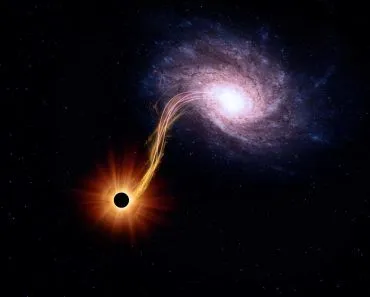
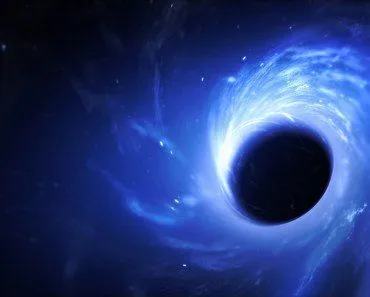
A black hole is a 3D object whose event horizon is a sphere, because gravity pulls equally in every direction. That spherical shape is mandatory in our familiar three spatial dimensions (plus time). But if extra dimensions exist, Einstein’s equations also allow black holes shaped like rings and even multi-ringed “black Saturns”.
This question has taken scientists on an incredible journey through theoretical physics and mathematical exploration. Currently, the most common belief is that black holes are spherical due to gravity and the laws of physics. However, it does make one wonder about the possibility of black holes with different shapes that have not been explored yet.
So first, the basics: is a black hole 2D or 3D? It’s 3D. A black hole occupies a region of three-dimensional space, and its event horizon (the famous “point of no return”) is the 2D spherical surface that bounds that region. So when astronomers picture a black hole as a perfect sphere, they really mean its event horizon is a 2-sphere wrapped around a 3D volume.
The conventional idea in astrophysics is that this event horizon is spherical. Gravity pulls everything towards the center of mass, forming a sphere. This idea applies to black holes at least in a universe with three dimensions of space and one of time, and in fact Stephen Hawking proved in the 1970s that in 3+1 dimensions a stationary black hole’s horizon must have spherical topology. This is what we similarly observe in planets and stars, as molecular clouds of gas and dust accumulate towards the center, forming a core.
However, in the world of theoretical physics, things have evolved. The possibility of dimensions beyond the known three dimensions of space and one of time has been introduced. In these extra dimensions, physicists are now considering whether black holes could have different shapes.
Are Black Holes Perfect Spheres?
Here is the honest answer to the question most people are really asking: a black hole is only a perfect sphere when it sits perfectly still. Real black holes almost never do. They spin, and many of them spin extremely fast, dragging the space around them as they turn.

A spinning black hole is described by the Kerr solution, worked out by the mathematician Roy Kerr in 1963. Its event horizon is not a true sphere but an oblate spheroid, which means it bulges at the equator and flattens at the poles. This is the same thing rotation does to a planet: Earth and Jupiter are both slightly squashed balls for exactly this reason, and Jupiter, which spins once every ten hours, is noticeably flattened. The faster a black hole spins, the more its horizon flattens.
Push the spin high enough and the shape stops being a gentle squash. Larry Smarr showed in 1973 that for the fastest-spinning black holes the horizon becomes so distorted that you cannot even draw it as an ordinary rounded surface in everyday three-dimensional space. So when astronomers call a black hole a sphere, they are picturing a still one. A realistic, rapidly rotating black hole wears a flattened, non-spherical horizon instead. You can read more about how fast they manage to turn in our piece on whether black holes can rotate at the speed of light.
What Is The Structure Of A Black Hole?
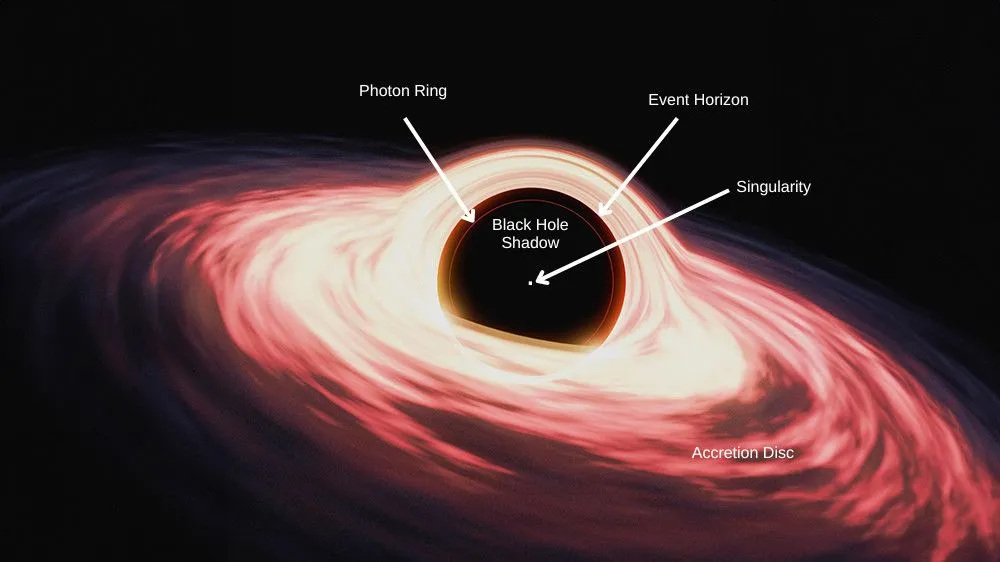
A black hole is not a solid object with a surface you could stand on. It is better pictured as a set of invisible boundaries nested around a center. Working from the middle outward, here is what makes up a black hole.
- Singularity: the center, where general relativity predicts that all the mass is crushed into a region of essentially zero size and staggering density. For a spinning black hole, this is thought to take the form of a tiny ring rather than a single point.
- Event horizon: the famous point of no return. It is the boundary from within which nothing, not even light, can escape. This is the closest thing a black hole has to a surface, and it is what sets the object's size.
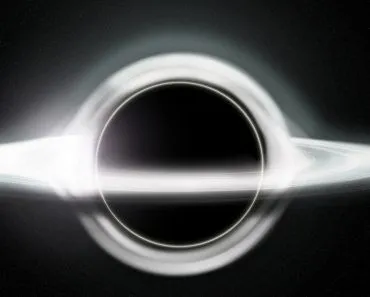
- Photon sphere: a thin shell just outside the horizon where gravity is strong enough to bend light into circular orbits. Light that strays here can loop around the black hole one or more times, which is part of why the object looks ringed in photographs. We dig into this in our article on whether photons can form orbits around a black hole.
- Ergosphere: found only around spinning black holes, this is a region outside the horizon where the black hole drags spacetime itself around with it, an effect called frame dragging.
- Accretion disk: the flat, glowing disk of gas and dust spiraling inward. Friction heats it to millions of degrees, so it shines brightly and is usually the only part of the whole system that we can actually see.
Do Black Holes Have Rings, And Why?
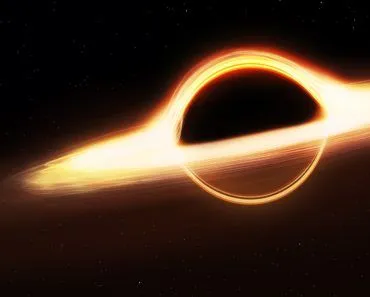
When most people picture a black hole today, they picture the glowing orange ring that the Event Horizon Telescope released in 2019, the first ever image of a black hole, sitting at the heart of the galaxy M87. A second ring, this time around the black hole at the center of our own Milky Way, followed in 2022. So do black holes really have rings?

Not in the way Saturn does. The ring is not part of the black hole, and it is not solid. It is light. Two things create it. First, the accretion disk of superheated gas swirling around the black hole glows fiercely. Second, the black hole's enormous gravity bends some of that light around itself before it reaches us, wrapping the glow into a sharp ring. NASA describes the M87 picture as a bright ring formed as light bends in the intense gravity around the black hole.
The dark patch in the middle is the black hole's shadow. It marks the region where light heading toward us was captured by the event horizon and never came back out. So a black hole does not wear a ring of its own. The rings in these historic images are hot gas and bent light, while the black hole itself hides in the dark center.
Exploring Higher Dimensions
Scientists, especially theoretical physicists, are curious about the universe’s basic nature. They have come up with the idea that there might be more than just the three spatial dimensions we know (up-down, left-right, forward-backward), along with the dimension of time. These extra dimensions, even though we can’t see or touch them, could have serious effects on how things work in space.
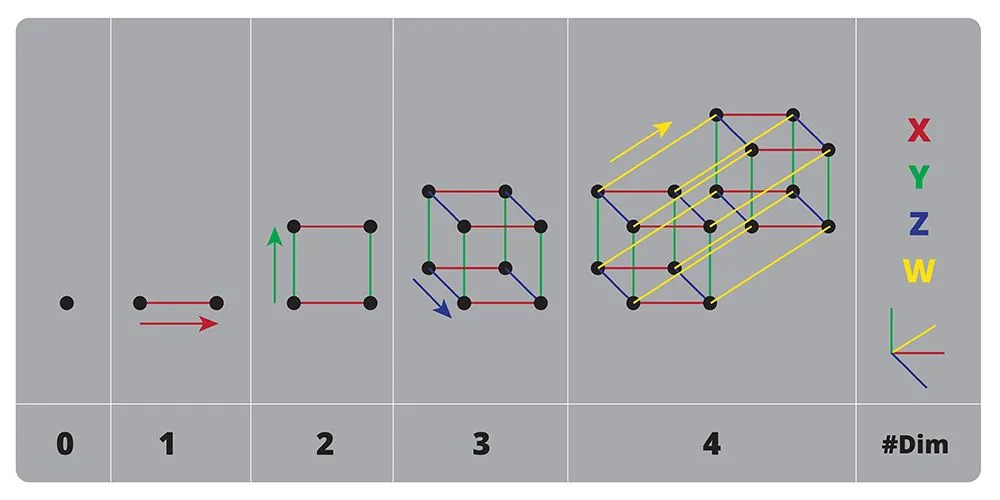
In these extra dimensions, the usual rule that black holes are spherical might not be entirely true. Scientists have been using math to figure out what shapes black holes might have in these extra dimensions, and guess what? They’ve found some interesting possibilities. Maybe black holes can have different shapes than we have always thought.
Black holes not being round in shape is a new way of thinking about the universe, even though it doesn’t have any direct real-world effects right now. It’s like opening a door to new possibilities in our understanding of space.
Particle Physics And The Theories It Includes
This field isn’t just theoretical science; it also presents the exciting possibility of real-world discovery. Particle physicists have considered the idea that microscopic black holes could be produced by generating high-energy collisions within particle accelerators. If we could detect these tiny black holes during their brief existence (they would evaporate almost instantly through Hawking radiation), it might offer evidence for the existence of higher dimensions in our universe. To be clear, though, the ATLAS and CMS experiments at the Large Hadron Collider have run multiple searches for these signatures and so far found nothing, ruling them out up to roughly 4.5 TeV. The hunt continues, but no microscopic black hole has been spotted yet.
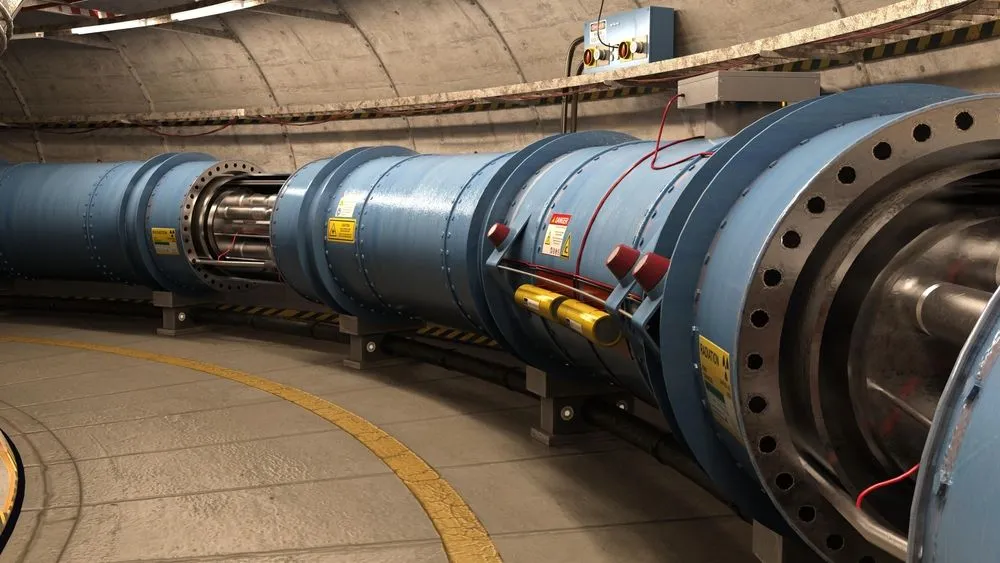
This intersection of theoretical physics and experimental science is fascinating. Our understanding of non-spherical black holes, while still theoretical, might someday become a reality. In this ongoing search to understand black holes, we are not merely expanding our knowledge of black holes, but also pushing the boundaries of our understanding of the universe itself.
For a long time, experts have assumed that black holes are spherically shaped. However, our exploration of higher dimensions and the mathematical revelations regarding non-spherical black holes encourage us to rethink our cosmic beliefs. Although these theoretical findings may not have direct implications for the real world (yet), they open up a world of possibilities that could change our understanding of the cosmos.
Mathematics For Non-spherical Black Holes
For more than two decades (ever since Roberto Emparan and Harvey Reall published their famous “black ring” solution in 2001), scientists have known that not all black holes are spherical, especially in higher dimensions. Recent work in theoretical physics has shown (through math) that black holes existing in dimensions beyond the usual three can have various shapes, including rings with the topology of a doughnut (S2×S1) and even multi-horizon “black Saturns”. This is quite different from what we’ve always thought about these mysterious, star-eating objects.
This discovery is based on the math created by Albert Einstein. He developed equations that help us understand how space and time curve around supermassive objects like black holes. In simpler terms, these equations tell us what the shape of a black hole looks like. In normal dimensions, there are round black holes, but in higher dimensions, things get more interesting and complicated.
As we continue our scientific exploration of the cosmos, the perspective people have on black holes, gravity, and the structure of the universe keeps evolving. The search for non-spherical black holes is evidence of the curiosity we humans hold for the most mysterious objects in the Universe. Whether or not these unique shapes exist in the universe, the journey to understand and unravel the mysteries of black holes will undoubtedly lead to more astonishing discoveries in the future.
Summary
The question of why we assume black holes are spherical in shape has taken us through theoretical physics and mathematical exploration. While our current belief in spherical black holes is based on gravity and the laws of physics, we’re now considering the possibility of non-spherical black holes in dimensions beyond our perception. This exciting idea challenges our preconceptions and encourages us to keep pushing the boundaries of our knowledge. Black holes may yet reveal more of their intricate and mysterious designs in the grand tapestry of the universe, reminding us that the cosmos is a stage for endless discovery and exploration.
References (click to expand)
- Black holes, explained - UChicago News.
- Ansoldi, S. (2008). Spherical black holes with regular center: a review of existing models including a recent realization with Gaussian sources (Version 1). arXiv.
- Is a black hole a 2D or a 3D object? - Science Questions with Surprising Answers, West Texas A&M University.
- Emparan, R., & Reall, H. S. (2002). A Rotating Black Ring in Five Dimensions. Physical Review Letters, 88(10), 101101. arXiv:hep-th/0110260.
- Search for microscopic black hole signatures at the Large Hadron Collider - CMS Experiment, CERN.
- Smarr, L. (1973). Surface Geometry of Charged Rotating Black Holes. Physical Review D, 7(2), 289. OSTI.gov.
- Miller, M. C. Kerr Black Holes (ASTR 350 lecture notes). University of Maryland.
- Anatomy of a Black Hole - NASA Universe Exploration.
- Black Hole Image Makes History - NASA Jet Propulsion Laboratory.
- How Scientists Captured the First Image of a Black Hole - NASA JPL Edu.