The stomach adds hydrochloric acid (pH about 1.5 to 3.5) to digest food, but once that acidic mush reaches the small intestine, the pancreas floods it with bicarbonate, a base that neutralizes the acid. By the time the leftovers leave the body, the poop of a healthy person has a pH of roughly 6.6, only mildly acidic.
The year was 1822. Dr. William Beaumont, a surgeon in the army, was called upon to treat a voyager and fur trader named Alexis St. Martin, who had been accidentally shot through the stomach.
Despite grim odds, St. Martin survived, but as his wound healed, the stomach lining fused with his outer skin, leaving a direct portal to his stomach. Dr. Beaumont recognized that the hole in this man’s stomach might boost his scientific career.

Dr. Beaumont employed St. Martin as his house servant (the wound no longer allowing St. Martin to voyage) by day, and made him a guinea pig by night.
Through vials of gastric juices collected, the world discovered that the stomach’s contents can dissolve metal and bones, while also helping us digest our food, thanks to hydrochloric acid or HCl!
If this is the case, then why isn’t poop (the food waste that the body couldn’t absorb) highly acidic?
A Brief Overview Of The Digestive System
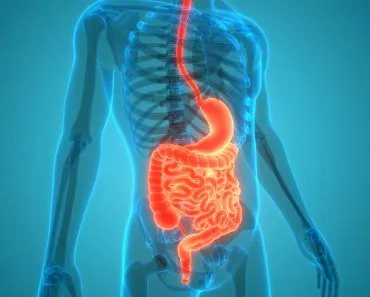
The digestive system is an efficient multi-process factory. It works in stages to break down our large food items into minuscule molecules that the body’s cells can absorb and use to create energy.
It begins with the mouth, where chewing and saliva make the food into a paste. From here, through the esophagus, the food (now called a bolus) makes its way to the stomach.
From the stomach onwards, most digestion is chemical in nature. Enzymes chemically break down larger molecules into smaller ones, while the acid in the stomach helps to sever chemical bonds (and kill any unwanted bacteria).
The small intestine is the next stop. Here, even more enzymes break up molecules and, importantly, the intestinal cells absorb the nutrients.
Whatever can’t be broken down and absorbed by the small intestine ends up in the large intestine. This unabsorbed stuff is waste, which now resembles poop, and it reaches the rectum before heading out the anus to be flushed away!
Digestive System Diagram(Vecton)s” class=”wp-image-35416 size-full” height=”1000″ src=”https://uploads.scienceabc.com/2020/05/Medical-Education-Chart-of-Biology-for-Digestive-System-DiagramVectons.webp” width=”1000″/> An overview of the digestive system (Photo Credit : Vecton/Shutterstock)
The Stomach Adds Hydrochloric Acid To Help Digest Food
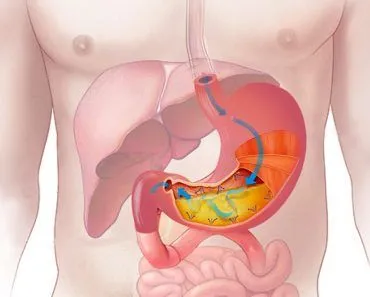
The stomach adds gastric juices to digest the food. Part of the gastric juice is HCl, which chemically burns the bolus. This makes the pH inside the stomach a sour 1.5 to 3.5.
A little astonishingly, the HCl is manufactured in-house. Certain cells of the stomach, the parietal cells, secrete HCl into the stomach.
To make sure every part gets digested, the powerful muscles of the stomach push the food around in the stomach. Think of how you toss your french fries with seasoning to get each fry coated.
To protect itself from its own acerbic self, the stomach produces a thick lining of mucus on its walls. Think of this like a goopy barrier to the actual skin of the stomach.
The Small Intestine Adds Bases To Help Neutralize The Acid
This acidic mixture makes its way, little by little, into the first stretch of the small intestine, the duodenum.
The small intestine has no thick mucus armor like the stomach, and the enzymes produced here cannot do their jobs at such a low pH.
The solution? Simply add a little base!
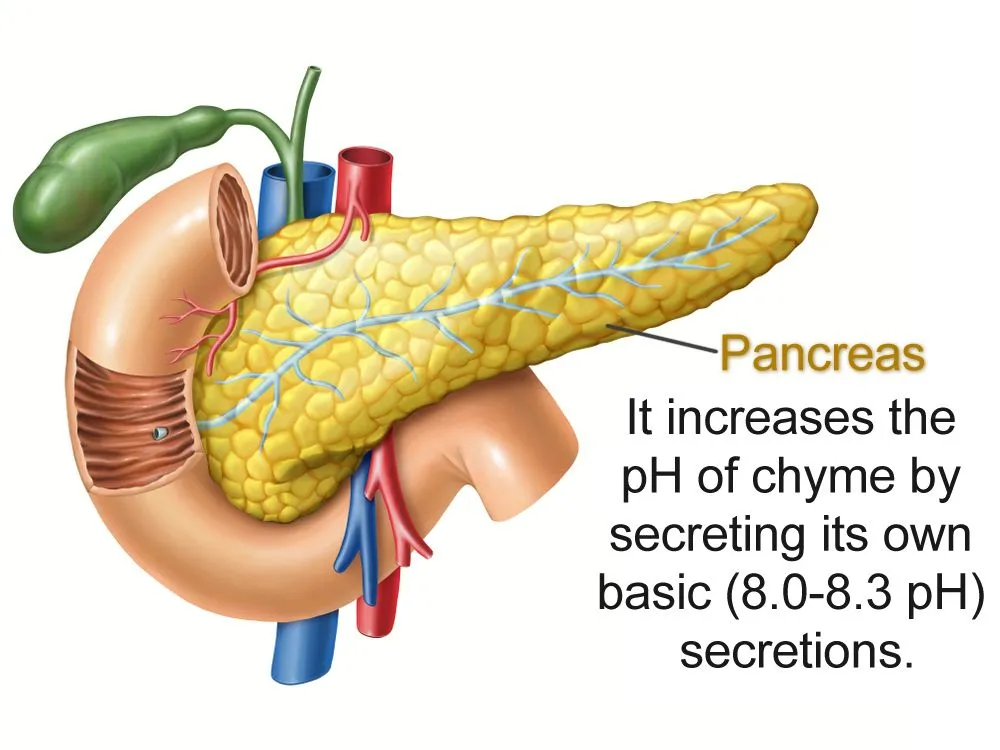
The pancreas helps the small intestine out by pumping in an alkaline potion rich in sodium bicarbonate. These pancreatic juices have a pH of about 8.0-8.3. Secreted along with bile (which is mildly alkaline, with a pH of roughly 7.5 to 8.0), these two fluids neutralize the incoming acid and nudge the pH of the small intestine to a balmy, near-neutral state.
As different nutrients get absorbed, the chyme (as the “food” substance is called after it leaves the stomach) changes pH as it progresses through the small intestine.
Enzymes And Water Also Help Increase The pH
Gastric juices, pancreatic juices and bile all have copious amounts of water, other enzymes, and salts in them. More water is secreted by the small intestine. The total secretion can be 7-9 liters!
All that water dilutes the acid and helps maintain the pH balance in the small intestine.
Most of the water and salts get reabsorbed in the small and large intestines. This means that most of the chloride ions that make up HCl have been reabsorbed by the small intestine.
The pH Of Poop
This leaves our poop at a mild pH, averaging around 6.6 in a healthy adult and usually sitting somewhere between 6.0 and 7.5. Drift too far outside that window and it can be a clue that something is off in your gut.
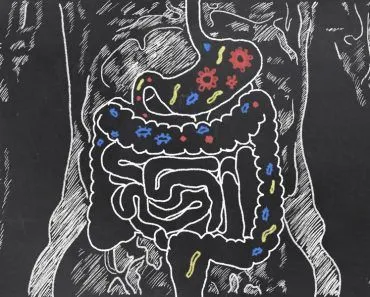
That mild acidity has another source too. As food waste reaches the large intestine, the bacteria living there ferment leftover fiber and produce organic acids (the short-chain fatty acids), which nudge the pH down. A change in the gut microbiota can shift how much of these acids are made, and that, in turn, shifts the pH of your poop.
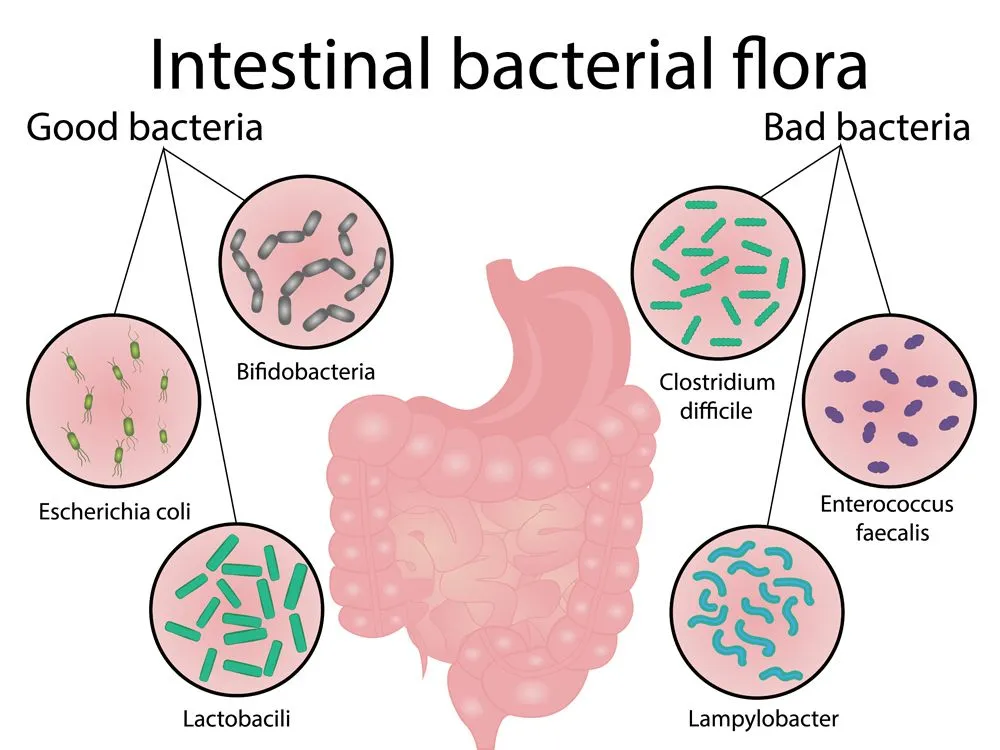
Additionally, an inflamed small intestine cannot absorb nutrients well. Unabsorbed nutrients can alter the pH of poop to be either more acidic or more basic. Diarrhea might also cause changes in the poop pH.
Medical professionals often use the pH of poop to determine a patient’s health status.
A Final Word
Dr. William Beaumont’s methods are ethically dubious (considering that Alexis St. Martin tried to run away home to Canada twice), but across roughly 200 experiments he drew 51 conclusions about digestion that had never been pinned down before on a living human subject. Through this work, the world found out about the mucus lining the stomach and how long different foods take to dissolve in it!
References (click to expand)
- Baron, J. H. (1979, May). The Discovery of Gastric Acid. Gastroenterology. Elsevier BV.
- Osuka, A., Shimizu, K., Ogura, H., Tasaki, O., Hamasaki, T., Asahara, T., … Shimazu, T. (2012). Prognostic impact of fecal pH in critically ill patients. Critical Care. Springer Science and Business Media LLC.
- Physiology, Gastrointestinal. StatPearls. NCBI Bookshelf.
- Physiology, Secretin. StatPearls. NCBI Bookshelf.