There are several reasons why it is important to keep a victim conscious after a serious injury. First, it allows the victim to provide vital information to medical professionals that can help optimize their strategy for helping the patient. Second, it helps ensure that the victim’s airway is clear and functioning properly. Third, it allows people next to the victim to track any changes in mental function. Finally, it allows the victim to generate body heat, which is essential for survival in low-temperature conditions.
In the 1998 war movie Saving Private Ryan, there’s a scene where a soldier (the medic, Irwin Wade) is shot. He lies on the ground, surrounded by his fellow army men, who hold him while he bleeds profusely. They keep urging him to stay awake, reassuring him that he will be taken to a hospital soon, and that he would be alright.
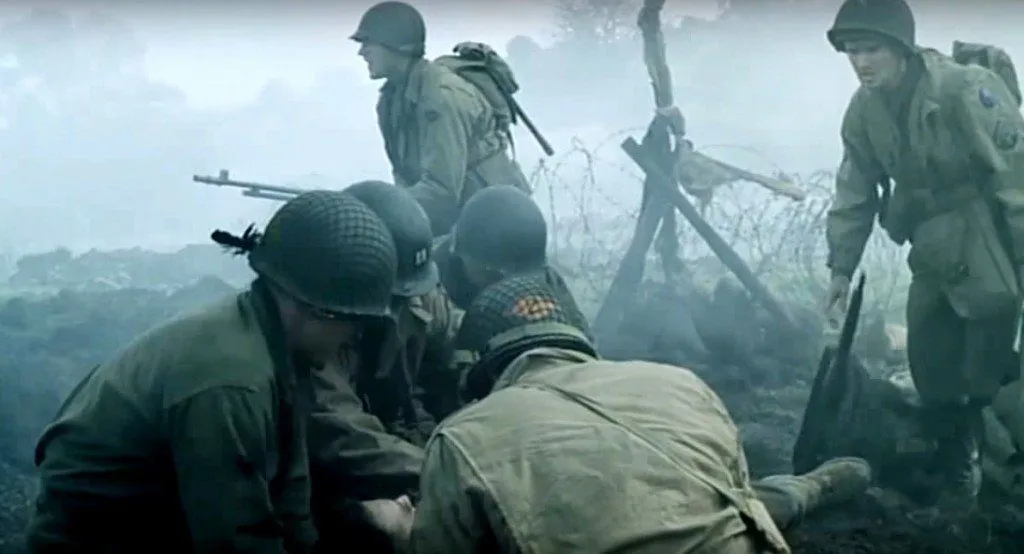
That’s something you may have seen in a lot of movies, and maybe even in real life. It’s generally believed that it’s important or even essential to keep a severely injured individual conscious, or that they should be prevented from falling asleep. The common belief is that if a severely injured person closes their eyes and dozes off, it means that they are going to die.
However, is that true? If not, why is it generally advised to keep an injured person conscious?
More Than Just a Movie Trope
The dramatic urgency of keeping a wounded person awake -- as seen in countless movies -- is sometimes dismissed as pure Hollywood fiction. While the old advice to “never let them fall asleep” was oversimplified, there are genuine medical benefits to keeping an injury victim conscious. A conscious person's sympathetic nervous system is actively releasing catecholamines (adrenaline and noradrenaline), which help sustain blood pressure -- a critical factor when someone is losing blood. However, it's worth noting that the body's stress response releases these hormones during injury regardless of consciousness, and in cases of severe bleeding, excessive agitation can actually be counterproductive by raising blood pressure and increasing blood loss. Consciousness also protects the airway from aspiration, since an unconscious person’s tongue and relaxed throat muscles can obstruct breathing or allow fluids to enter the lungs.
That said, the way this advice is portrayed in movies and popular culture can be misleading. Someone urging a wounded man to “hold on” by saying “Come on! Stay with me!” makes for a dramatic scene, but injuries come in many forms, and there are certain situations where falling unconscious is simply not under the injured person’s control. For instance, if a wounded person is losing consciousness due to rapid blood loss, there’s no way they can stay awake past a certain point.
So, while keeping someone awake is not always possible or sufficient on its own, it does offer real medical advantages beyond what many people realize.
There Are Some Benefits….
The first and most obvious benefit is reassurance, i.e., when an injured person is awake and talking to you, you know with 100% confidence that they are still alive. This sounds a bit odd at first, but for an average rescuer/helper, someone who doesn’t really know what to do to help the patient until the ambulance arrives, keeping the patient awake is the best way to ensure that their airway and vital organs are working fine.

Furthermore, a fully conscious patient can provide vital information to the medical professional (like, how did they injure themselves, where it hurts the most etc.), which can significantly assist the latter in optimizing their strategy for helping the patient. In simple words, the scenario wherein a conscious, wounded man tells the doctor where and how they got injured (especially if it’s an internal injury) is always better than the one where the doctor has no ‘ready-information’ to go with.
Airway
In the case of an unconscious victim, the medical professional must also ensure that their airway is protected, in addition to tending to the primary condition/injury. However, if the victim is conscious, the doctor can safely conclude that the victim’s airway is working fine, and can therefore focus on the original injury.
A Sign Of Good Mental Function
In the case of head injuries, people often show signs of deteriorating cognitive abilities as time passes before the patient receives dedicated medical treatment.
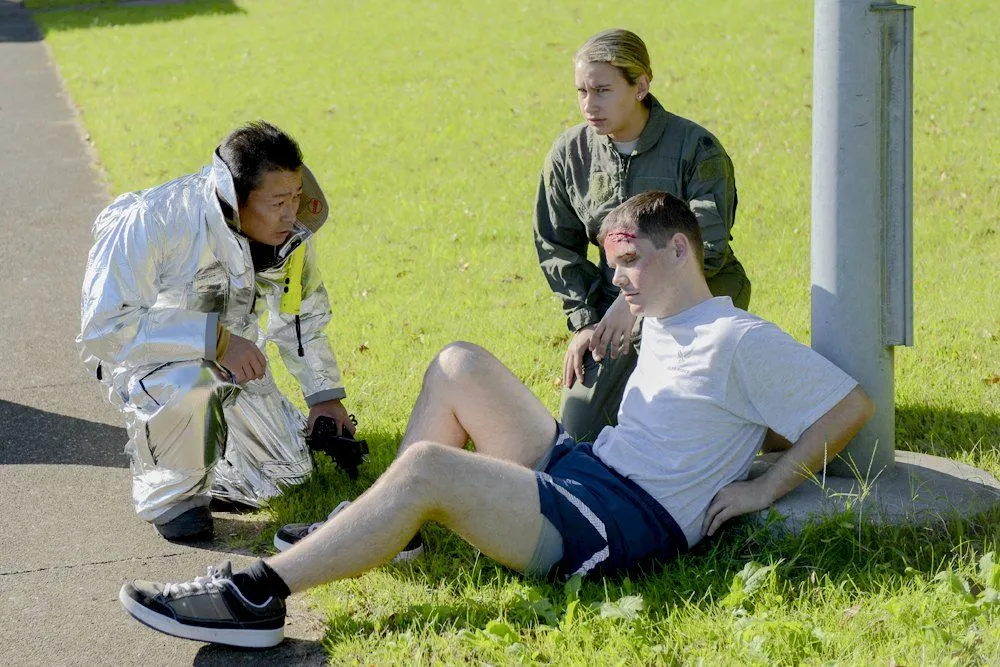
In such cases, the people next to the victim can ask basic questions (e.g., what’s your name? What day is today?) to track any changes in mental function.
Generating Body Heat
If an injured victim is stranded in a place with low-temperature conditions, staying awake can be the difference between life and death. Staying awake allows a victim to keep moving their body, which in turn generates body heat. An unconscious/sleeping victim wouldn’t be able to do that, so their chances of survival get slimmer, especially if they’re stranded in that place for a long time.
Why Do Paramedics Want You To Stay Awake?
When a paramedic kneels beside an accident victim and keeps asking, “Can you hear me? What’s your name?”, they aren’t just making conversation. To a trained responder, your level of consciousness is itself a vital sign, every bit as informative as your pulse or your breathing rate, and one of the strongest early warnings that a patient is deteriorating.
Out in the field, responders grade that level of consciousness with a quick mnemonic called the AVPU scale: is the patient Alert, responsive only to Voice, responsive only to Pain, or completely Unresponsive? An alert, talking patient sits at the top of the scale; anything below “Alert” is treated as abnormal and prompts a closer look. In a hospital, this is refined into the more detailed Glasgow Coma Scale (GCS), which scores eye-opening, verbal and movement responses from a total of 3 (deeply unconscious) up to 15 (fully conscious).
The reason your responder keeps checking is that a single reading tells them far less than a trend. A victim who was chatting normally but is now slow to answer, or who has slipped from “Alert” to “responds only to voice”, may be bleeding internally or swelling inside the skull. By keeping you talking, the crew effectively turns your brain into a live monitor, and the moment that monitor dims, they know to escalate.
Do You Really Have To Keep A Concussion Patient Awake?
Here’s the part of the “don’t fall asleep” advice that is mostly a myth. The old rule that someone who has banged their head must be kept awake all night, in case they slip into a coma, dates back to an era before CT and MRI scanners, when keeping a patient awake to watch for warning signs was one of the few monitoring tools available. Medical centers today are clear that, once a person with a suspected concussion has been awake, talking and behaving normally, it is generally safe to let them sleep, and rest is actually an important part of recovery.
What matters is not blocking sleep, but watching for red-flag symptoms in the hours afterward. Mayo Clinic and university medical centers advise seeking emergency care if an injured person shows a loss of consciousness, repeated vomiting, a worsening headache, seizures, slurred speech, dilated or unequal pupils, increasing confusion or agitation, or any difficulty walking, speaking or being woken. Bleeding or clear fluid leaking from the nose or ears after a head blow is another reason to call emergency services straight away. Sleep itself isn’t the enemy; an unnoticed brain bleed is, so the modern advice is to let them rest but stay nearby and keep checking that they can be roused.
The Real Danger Behind a Fading Victim: Shock
So if simply nodding off isn’t usually fatal on its own, what is the dangerous process people are really worried about? In a serious injury with heavy blood loss, the answer is often hypovolemic shock, the state in which there isn’t enough circulating blood to supply the body’s organs.
At first the body compensates impressively. The sympathetic nervous system speeds the heart, makes it pump harder, and clamps down on peripheral blood vessels to keep blood pressure up, which is why an injured person can look pale, feel cold and clammy, and have a racing pulse while their blood pressure still reads close to normal. The trouble is that this is only a holding action. As blood loss continues and those compensations are overwhelmed, the brain starts to be starved of oxygen, and that is when the victim becomes restless, confused, lethargic and finally unresponsive. A falling blood pressure is actually a late sign, meaning a drowsy, “fading” victim may already be deep into shock. This is exactly why responders treat a slide toward unconsciousness as an emergency, and why staying calm and reassuring matters: panic and agitation drive the heart rate and blood pressure up and can worsen bleeding.
What Should You Do While Waiting For The Ambulance?
Knowing all this, what can an ordinary bystander actually do before professional help arrives? The single most useful thing is to call emergency services first (911 in the US, 999 in the UK, 000 in Australia, 911 in Canada) and then stay with the casualty. If you can see serious bleeding, press firmly on the wound with a clean cloth or your hands and keep that pressure on until help takes over. Keep talking to the person and reassuring them; gently encouraging someone to respond can genuinely help stave off a loss of consciousness, and a calm voice lowers the stress response we just described.

What you should not do is try to force someone to stay awake at all costs, or shake or slap them. And if, despite everything, the person does become unconscious but is still breathing, the correct move is not to prop them upright but to place them in the recovery position: rolled gently onto their side with the head tilted back, so the tongue can’t block the throat and any vomit drains away rather than causing them to choke. The one big exception is a suspected spinal or neck injury, where you should avoid moving the person unless their airway is at immediate risk, and wait for the professionals instead.
References (click to expand)
- Coma - Diagnosis and treatment - Mayo Clinic. The Mayo Clinic
- What happens when you faint? - Harvard Health. Harvard University
- Laureys, S., Berré, J., & Goldman, S. (2001). Cerebral Function in Coma, Vegetative State, Minimally Conscious State, Locked-in Syndrome, and Brain Death. Yearbook of Intensive Care and Emergency Medicine 2001. Springer Berlin Heidelberg.
- Why Do Head Injuries Bleed so Much?. The University of Utah
- AVPU Scale. StatPearls. NCBI Bookshelf.
- Can You Sleep with a Concussion? University of Rochester Medical Center.
- Head trauma: First aid. Mayo Clinic.
- Hypovolemia. StatPearls. NCBI Bookshelf.
- First aid - Recovery position. NHS.