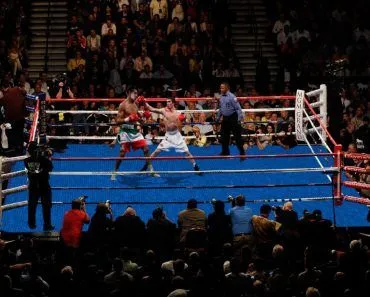
A knockout happens when a hard blow, usually to the chin, jaw or side of the head, causes the head to rotate violently. The brain sloshes inside the skull, stretching nerves and blood vessels, and the resulting concussion briefly shuts down consciousness. Most KOs last a few seconds to a minute; repeated knockouts are linked to long-term brain injury.
I was all geared up to watch the highlights of the fight between challenger Conor McGregor and champion Jose Aldo for the UFC featherweight title. With a sandwich and ice tea in one hand and the remote in the other, I sat down to watch history being made.
Bang! All it took was 13 seconds for the fight to finish. After a few positioning movements, Jose committed to a left jab and before he could complete it, McGregor was able to land a swift left punch to the jaw. The commentator screamed, “It is all over!” I sat up with my jaw dropped. I was looking forward to a long and intriguing battle, but all I got was 13 seconds of sparing and one precise left hook. I hadn’t even started on my sandwich.
How can someone who has been preparing for a fight for over 6 months be laid out in just 13 seconds? That’s what is called a KO or ‘Knockout’ in combat sport. The fight is stopped by the referee because you’re as good as dead!
What Is A ‘Knock Out’?
A ‘knock out’ can be described as a sensation of disorientation. It may be blurry vision, loss of limb coordination, disordered balance or numbness of the body. These sensations intensify when a person is being hit with a series of punches, kicks, elbow or knee shots, until the knockout hit is delivered and finally lose consciousness.
In technical terms, this is called a concussion. The concussion may be mild or severe depending on the force and location of the strike on the head.
Your brain is a soft and mushy organ present inside the skull. It is covered with three meninges (tissue that cover, protect, and nourish the brain), the outmost of which is connected to the skull. It is a very delicate, fragile part of your body and the reasons why you’re able to read and understand this post.
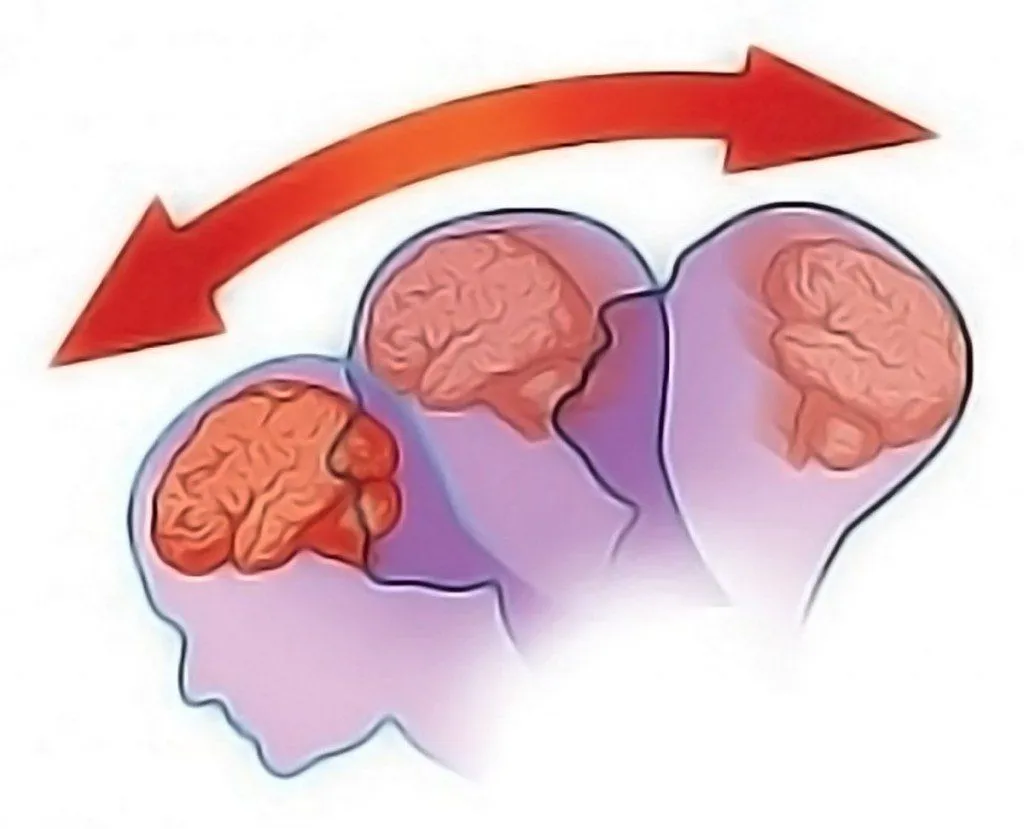
Take a piece of jelly and put it in a tumbler. Shake it around a bit. You will find out that the jelly would have lost some its shape, maybe even split into a few pieces. That loosely describes what your brain goes through when your head takes a big blow.
When a fighter is hit with a heavy blow, the brain shakes inside the head. The grid of nerves and blood vessels that are connected to the brain also moves around, which can cause them to tear. It may not be just one blow which causes this movement. It can also be a series of blows which results in significant movement of the brain inside your skull, like the jelly inside the tumbler.

This resulting injury from the tear can cause certain functions to freeze. If you were to drop your console or your phone, it may hang and you have to reboot it. Your brain does much the same thing. It shuts off for a while, causing you to lose all bodily movement, and then “reboots.” Most boxing knockouts last only a few seconds to a minute, although a fighter can stay disoriented for much longer; longer or repeated KOs are linked to long-term brain injuries like chronic traumatic encephalopathy (CTE).
You don’t need to have big muscles or enormous power to knock someone out. As Conor McGregor says, ‘precision over power, timing over speed’. The key factor for a knockout is the rotation of the head after the hit. So you can punch someone straight on the head, but it won’t result in a loss of consciousness. You need to hit the right areas.
The most effective spot to hit a person and result in a knockout is the chin or the jaw area. Simple reason: hitting the jaw of a person with sufficient power and the perfect angle will cause the head to rotate around. This causes maximum movement of the skull, thus affecting the brain. A blow to the side of the head can also be harmful. Hitting someone on the side of the head will cause the head to spin about, causing movement in the brain. The exact neurological underpinnings of this is still being debated.
Now professionals aren’t the only ones subjected to loss of consciousness. It also happens to common people on a nice beautiful day. Suppose one gets in an accident while driving or one slips on the floor while walking, the head hitting the hard surface can cause movement in the brain which will lead to one losing consciousness.
What Actually Happens In Your Brain When You Get Knocked Out?
So what is actually going on inside your skull in that split second? Picture your brain as a blob of firm jello with two heavy halves (the cerebral hemispheres) sitting on top of a thin stalk, the brainstem. When a blow whips your head around, those heavy hemispheres lurch out of place and yank and twist that narrow stalk underneath them.

That matters because the brainstem is home to the reticular activating system, the network of nerves that keeps you awake and aware. As the brain is thrown around, the long nerve fibers running through this region get stretched and sheared, and, in the words of one neuroscientist, can “break, or lose their insulation, or get kinked up.” When that happens to the circuits that run consciousness, the lights simply switch off. It is the same broad idea that lets a strong enough spin in a cockpit make a fighter pilot black out without a single punch being thrown.
The good news is that this shutdown is usually temporary. Most people are out for only a few seconds to a minute before the brain “reboots,” though a foggy, disoriented feeling and a patchy memory of the moment can linger far longer. According to Christopher Giza, a pediatric neurologist at UCLA, when the loss of consciousness is brief, roughly 75 to 90 percent of people fully recover within a few months. A knockout that drags on much longer, however, is a warning sign of a more serious injury and needs emergency evaluation.
Why Does A Punch To The Jaw Or Chin Knock You Out?
Ever noticed that fighters aim for the chin, not the forehead? There is solid science behind it. When researchers went back and analyzed real boxing knockouts, they found a clear pattern: the classic KO comes from a hook to the side of the jaw that snaps the head rotating sideways in the horizontal plane.

The reason is pure leverage. Your lower jaw, the mandible, is a long bone that hinges on the skull at the temporomandibular joints, the two pivots sitting just in front of your ears. Hit the end of that lever (the chin) and you generate a large twisting, or rotational, force on the whole head. A straight punch to the forehead mostly shoves the head backward in a straight line, and that kind of linear acceleration is far less effective, because it is the rapid rotation that wrings and shears the soft brain tissue and the consciousness-running fibers inside it.
This is exactly why, as Conor McGregor put it, it is “precision over power, timing over speed.” A perfectly angled shot to the jaw spins the head and rattles the brain far more efficiently than a heavier punch landing flat and square. The hardest hitter does not always win; the one who lands on the right spot, at the right angle, does.
Is Getting Knocked Out The Same As A Concussion?
Short answer: yes, a knockout is a concussion, but the relationship only runs one way. A concussion is defined by the CDC as a traumatic brain injury caused by a bump, blow, or jolt to the head (or a hit to the body) that makes the head and brain move rapidly back and forth. Getting knocked out is simply the most dramatic version of that, where the brain is jostled hard enough to switch off consciousness.
What surprises a lot of people is the flip side: you do not have to be knocked out to have a concussion. In fact, losing consciousness is the exception, not the rule. About 90% of concussions happen with no loss of consciousness at all, showing up instead as confusion, dizziness, headache, blurred vision, or a memory gap. So every knockout is a concussion, but the vast majority of concussions are not knockouts.
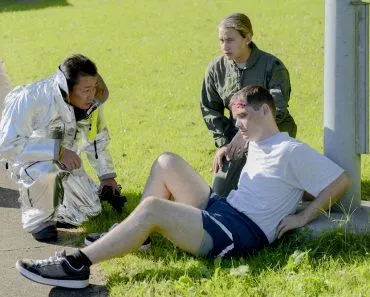
That also means the length of the blackout is a rough gauge of severity. A brief KO followed by a quick recovery is usually a milder injury, while a long stretch of unconsciousness, repeated vomiting, or worsening confusion points to something more serious. It is one of the reasons first responders work so hard to keep an injured person conscious and talking until help arrives.
How To Avoid Getting ‘Knocked Out’?
If you are in a fight, try to keep your chin tucked in and keep your hands close to your head, just like the boxers. That will help you to minimize the effect of the blows aimed at your head. It may leave you with a few heavy bruises on your hands and sides of your head, but with some luck you can defend yourself enough to run away or get some blows in of your own.
If you get knocked out for any other reason, that’s just bad luck….
References (click to expand)
- What Is a Concussion? | HEADS UP | CDC Injury Center. The Centers for Disease Control and Prevention
- Hånell, A., & Rostami, E. (2020, October 26). How Can a Punch Knock You Out?. Frontiers in Neurology. Frontiers Media SA.
- How a knockout punch works | The Economist. economist.com
- What Happens When You're Knocked Unconscious? BrainFacts.org. Society for Neuroscience.
- 12 Concussion Myths Debunked. UT Southwestern Medical Center.