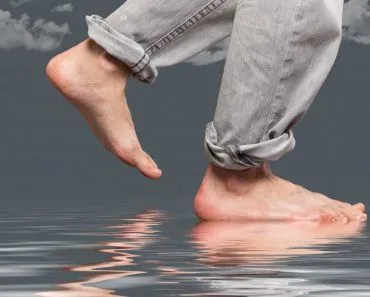
Yes, you can run across a pool of a shear-thickening non-Newtonian fluid, such as oobleck (a mix of cornstarch and water). These fluids break Newton’s law of viscosity: the harder and faster you push, the more they stiffen, so quick, forceful steps turn the surface solid just long enough to carry your weight.
While browsing through my social media, I saw videos of people walking and running over a liquid disguised as something quite normal. Those videos immediately caught my attention and got me curious.
After some searching around on the internet, I found an answer to my question. The secret to this viral trick is known as a Non-Newtonian Fluid. Let’s dig deeper into the science behind it!
Some Useful Terms Related To Fluid Dynamics
We first need to refresh ourselves on three terms before we can understand the significance of Non-Newtonian Fluids.
Viscosity: We know that water flows faster than honey, because the viscosity of water is less than that of honey. The viscosity of a fluid is the measure of the amount of resistance it provides to its own flow. It arises due to the relative motion between the different layers of the fluid. This determines how thick the fluid is and how fast it can flow.
Stress: Stress is defined as the force per unit area applied to a material. It is useful in determining fluid behavior.
Strain: Strain is an outcome of applied stress. It is the measure of the amount of deformation in the body, in the direction of the applied force, divided by its original dimensions.
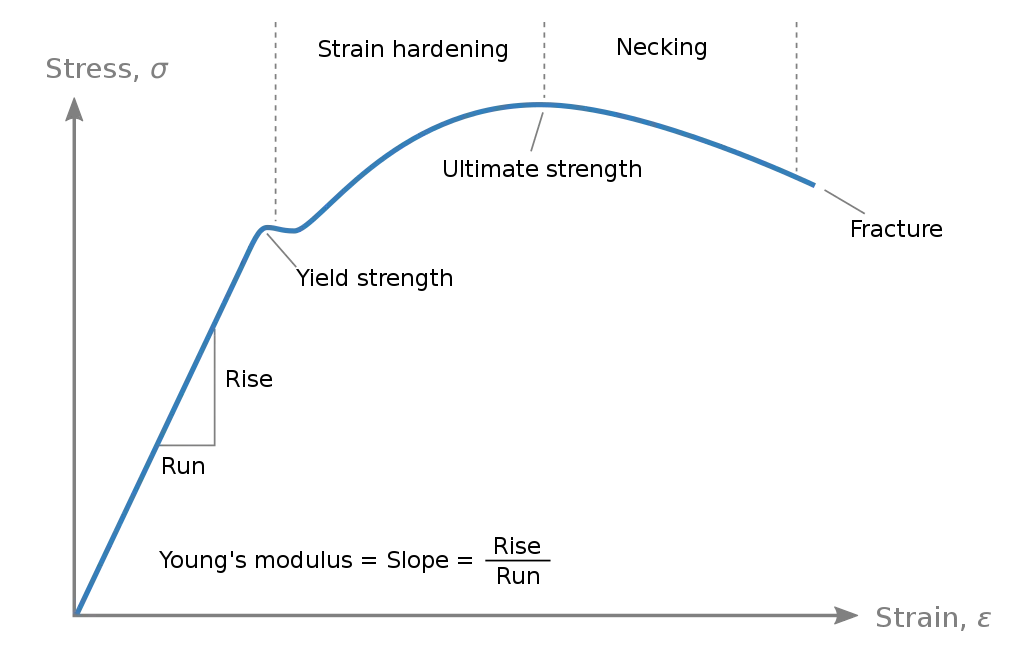
Viscosity and the abnormal behavior of stress and strain within a Non-Newtonian Fluid are what set these apart from other fluids.
Newton’s Law Of Viscosity
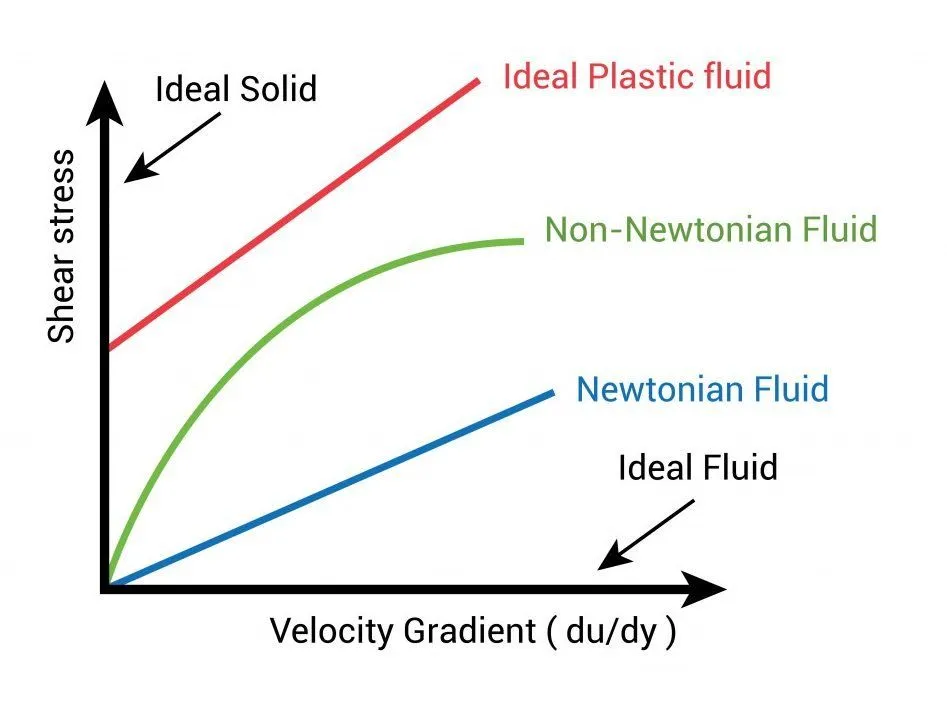
Newton’s Law of Viscosity is the defining factor for the characteristic behavior of fluids. It states that the shear stress is directly proportional to the velocity gradient between the two adjacent layers of the fluid.
Therefore, fluids that follow Newton’s law of viscosity are known as Newtonian fluids. The viscosity of these fluids remains constant, even under the application of stress. Common fluids like water, alcohol, and mineral oil fall under this category.
On the other hand, Non-Newtonian fluids got their name from the fact that they do not follow Newton’s law of viscosity. The viscosity of these fluids changes under the application of stress, so they can flow like a liquid one moment and resist like a near-solid the next. Quicksand, ketchup, and paint fall under this category.
Is It Possible To Run On A Non-Newtonian Fluid?
Having defined the Non-Newtonian fluid, let’s try to understand how exactly it behaves and why.
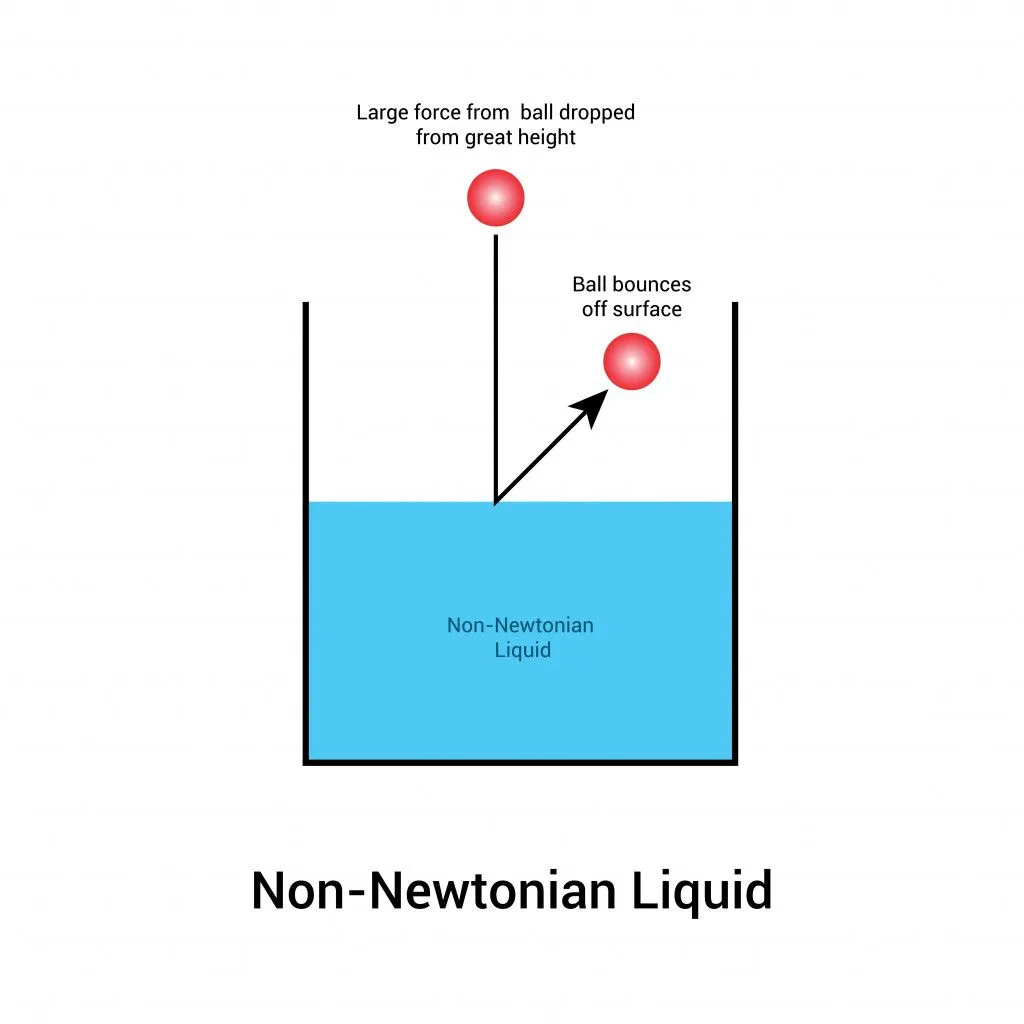
Since viscosity is not constant for Non-Newtonian fluids, applying stress (force) can shift them toward a temporarily stiffer, more solid-like form or, in other cases, a thinner, more liquid one. As soon as the stress is removed, the fluid returns to its original consistency. The kind that lets you run on it is the first type, a “shear-thickening” fluid that gets stiffer the harder you hit it.
Imagine you have a container full of a Non-Newtonian Fluid that feels like a liquid. As soon as you punch the liquid and your hand touches the surface of it, the area of the liquid beneath your fist turns into a semi-solid. It returns to its original form as soon as the force is released. Interesting, right!?
For example, when your ketchup bottle is almost empty, you need to tap the bottom of the bottle to squirt the rest out, but why? Because ketchup is a type of Non-Newtonian fluid; when force is applied to it in the form of a tap at the bottom of its bottle, it turns into a more liquid consistency, and it can then flow out of the bottle more easily.
Similarly, when you slam your foot down on a shear-thickening fluid while running over it, the fluid just beneath your foot stiffens into a solid for a split second, giving you something to push off and move forward. Thus, YES, you can run over this kind of Non-Newtonian fluid, but you have to be quick: each step needs a hard, fast impact, and you can’t pause, or you’ll start to sink!
Interestingly, scientists have only fairly recently pinned down why a cornstarch mixture stiffens like this. Research now points to the suspended particles jamming together and rubbing against one another under sudden force, locking up the flow for an instant. There is still plenty left to untangle, though, especially for more complex fluids: what we know is only the tip of the iceberg.
Types Of Non-Newtonian Fluids
According to our present understanding of these fluids, Non-Newtonian fluids have been divided into four categories, as follows:
1) Dilatant
In this type, the viscosity of the fluid increases when stress is applied, but is time-independent. This means that viscosity will increase according to how much stress is applied, not for how long.
An example of Dilatant is Oobleck, a mixture of water and cornstarch. You might have seen people walking over Oobleck in videos, where at first it seems like a liquid, but as soon as you put your feet on it, it turns into a solid.
2) Pseudoplastic
This is the opposite of Dilatant. When stress is applied, it becomes less viscous, independent of time. An example of a Pseudoplastic is ketchup.

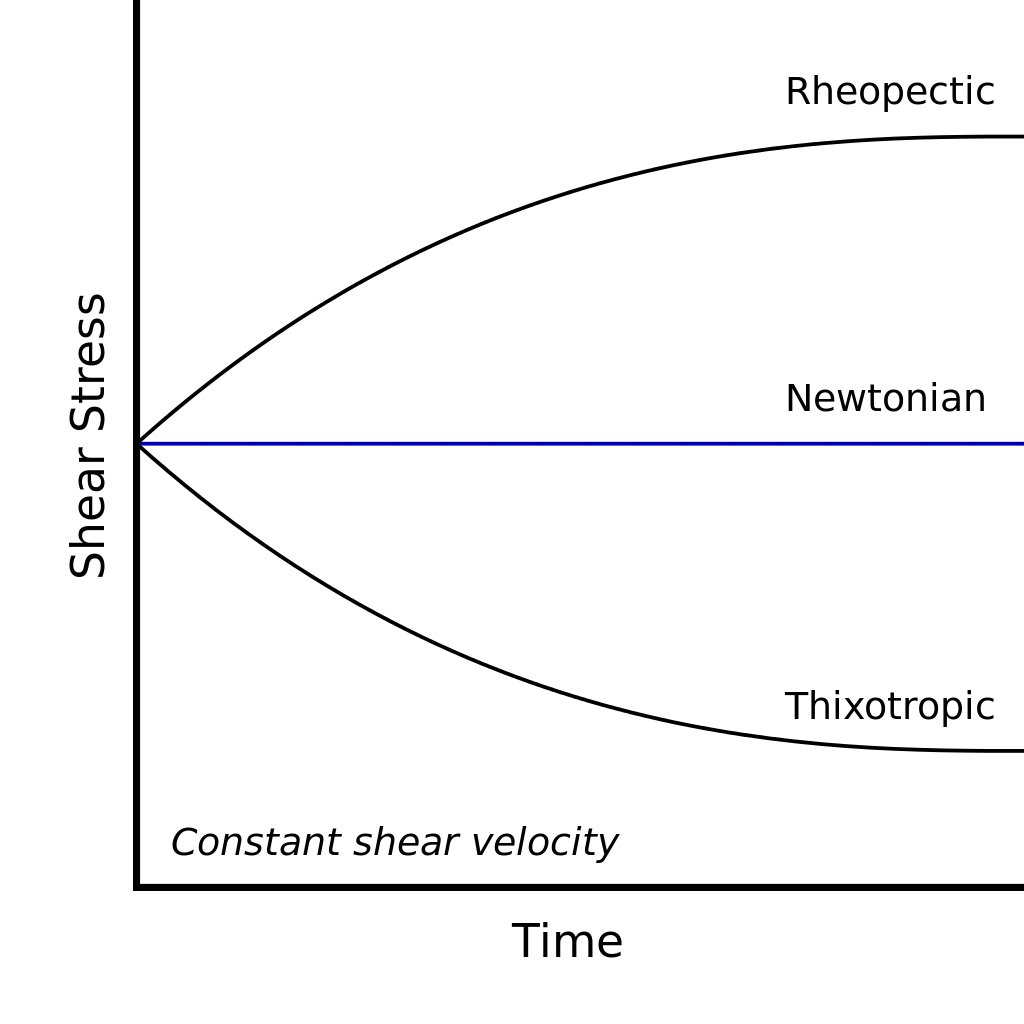
3) Rheopectic
This is similar to Dilatant, except for the fact that the increase in viscosity is time-dependent.
A common example is cream. When you first stir cream, nothing much happens, but if you keep stirring, the cream gradually thickens.
4) Thixotropic
This is the opposite of Rheopectic. When stress is applied, its viscosity decreases and is dependent on time.
Yogurt is a good example of a Thixotropic fluid. Give a tub of set yogurt a good stir and it gradually turns runnier, and it stays that way for a while before slowly thickening up again once you leave it alone.
A Recipe For Non-Newtonian Fluid
It’s always cool to gain knowledge about something interesting, but even cooler to put that knowledge into practical use. So let’s go ahead and try a recipe for Non-Newtonian fluid that we can easily make at home. Put on your gloves and lab coat!
CAUTION: No Expert Supervision is Required!
Things you’ll require:
1. Corn starch (about 1/4 cup)
2. Water (as much as required)
3. A bowl for mixing
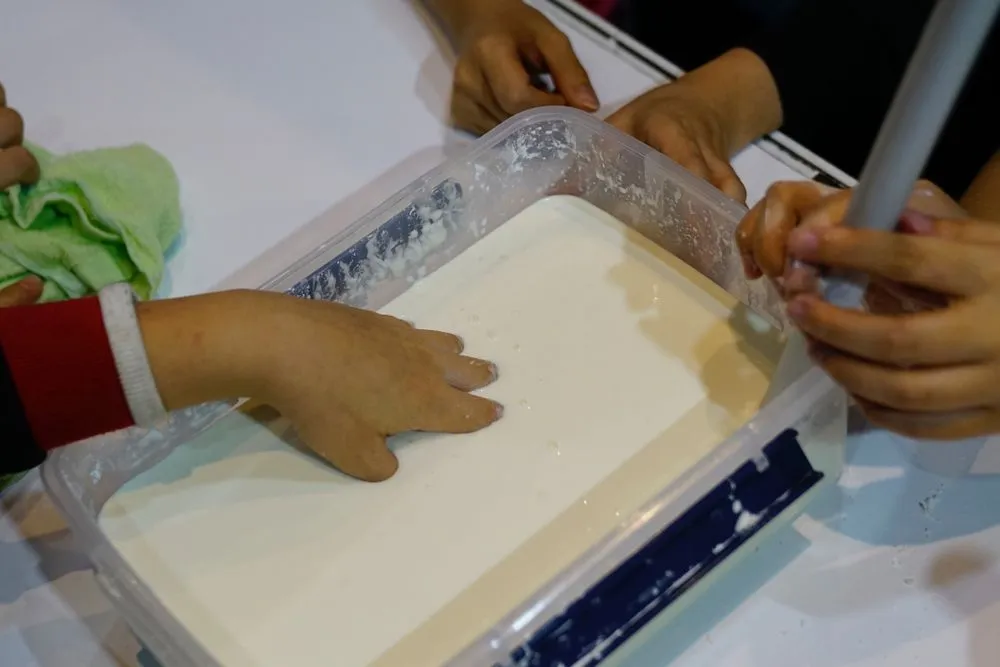
Place a clean bowl on a table in your backyard. Add 1/4 cup of corn starch into the bowl and a small amount of water to make it wet. Slowly stir the mixture. Continue to add more water until the consistency of the mixture turns to that of liquid upon slow stirring.
Now, to check if the recipe is ready, tap on the mixture. It should feel like a solid! If it’s too liquidy, add more corn starch. Once the mixture reaches the desired consistency, it’s time to show it off to your family and friends. Put on a magic show where you turn a liquid into a solid with just a touch!
The Future Awaits
The unique properties of Non-Newtonian fluids can be put to various uses. Gelled rocket propellants, which sit thick and safe in the tank but thin out when forced through an injector, are already used to give engineers better control and easier handling. Researchers are also weaving shear-thickening fluids into Kevlar to make lighter, more flexible body armor that stiffens on impact to resist a bullet or a blade.
The industrial sector is also well on its way to exploiting the benefits of Non-Newtonian fluids.
Clearly, Non-Newtonian fluids are not just a cool concept or a science class experiment; they will likely play an important role in humanity’s future!

References (click to expand)
- CHAPTER 3 THE CONCEPT OF VISCOSITY. Columbia University
- Eberhard, U., Seybold, H. J., Floriancic, M., Bertsch, P., Jiménez-Martínez, J., Andrade, J. S., Jr., & Holzner, M. (2019, May 30). Determination of the Effective Viscosity of Non-newtonian Fluids Flowing Through Porous Media. Frontiers in Physics. Frontiers Media SA.
- Non-Newtonian fluids - Science Learning Hub. sciencelearn.org.nz
- Chinyoka, T. (2021, April 24). Comparative Response of Newtonian and Non-Newtonian Fluids Subjected to Exothermic Reactions in Shear Flow. International Journal of Applied and Computational Mathematics. Springer Science and Business Media LLC.
- Chapter 3 Non-Newtonian fluid. Mustansiriyah University
- How to make a batch of non-Newtonian Oobleck | WIRED UK. Wired