Table of Contents (click to expand)
Glass is a solid, specifically an amorphous solid. It is rigid and holds its shape, but its atoms are frozen in the disordered, non-crystalline arrangement of the liquid it cooled from, so it has no long-range crystalline structure. Glass does not flow at room temperature, and old windows are thicker at the bottom because of how they were made, not because the glass dripped.
“It’s pretty straightforward, isn’t it? Glass is obviously a solid. “
That’s what a lot of people probably think after reading this title; but the fact that you’re here and actually reading the post shows that there must be at least an iota of doubt in your head about it.
So, what’s the confusion here? More importantly, should there even be any confusion regarding such an obvious fact?
The fact that glass is a solid may seem quite obvious to many, but it’s not that “clear” to everyone – not to scientists studying it, at least.

Is Glass A Liquid?
The idea that ‘glass is a liquid’ actually has some logical basis to it. The idea stems from a very queer yet fascinating phenomenon that can be observed in ancient cathedrals and many other old buildings. The window panes in such buildings appear somewhat strange; they are thicker at the bottom than they are at the top. It gives the impression that glass is actually a liquid, which is why it has ‘flowed’ towards the bottom due to the effects of gravity.
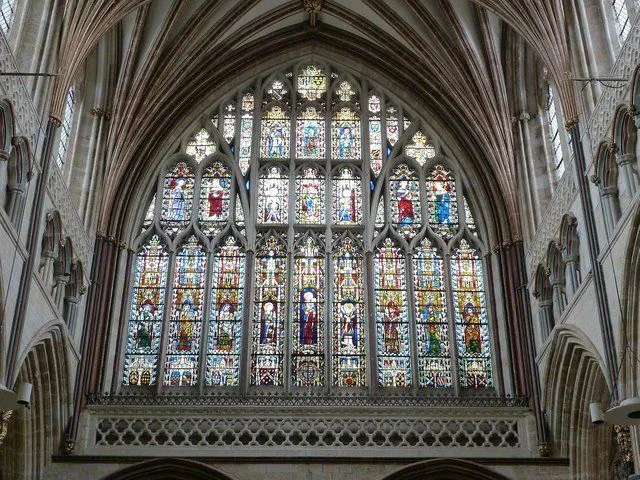
It’s an appealing story, and you’ll still hear it repeated as fact. As we’ll see, though, the strange appearance of these windows is not proof that glass is a liquid. The real explanation has nothing to do with glass flowing, and the science of why turns out to be far more interesting than the myth.
So, Is Glass Solid?
To answer that, it’s important to know what qualifies something as being solid and what doesn’t.
What Makes A Solid ‘Solid’?
Look around you. There must be at least a hundred solid objects in one form or another. A pen, chair, cupboard, frying pan, computer, ants… this list could go on forever, as there are countless solid objects that usually surround us in ‘standard’ environmental conditions.
These things may appear different due to their different shapes and sizes, but on an atomic level, they all have the same basic structure. Solids are highly compact and organized and have a crystalline structure at the microscopic level.
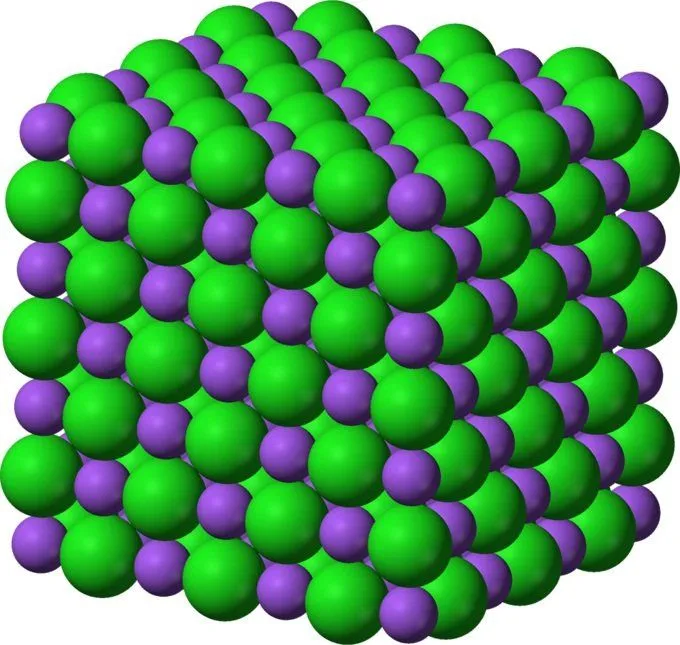
They contain millions of minuscule particles (known as atoms) lined up in a disciplined fashion. The closeness and tightness of the atoms’ arrangement gives solids their strength and ability to stay in a definite, incompressible shape. That’s the reason it takes so much force and pressure to break, mould and compress solid objects.
Here’s the twist, though: glass is rigid, and it does hold a definite shape. Pick up a drinking glass and it behaves exactly like the solids above. The catch is that its atoms are not lined up in the neat, repeating, crystalline grid that defines a ‘textbook’ solid. They’re jumbled, much like in a liquid. So glass is rigid like a solid but disordered like a liquid, which is why it gets its own special category.
So, What Is Glass?
Glass is an amorphous solid. It is a genuine solid (rigid, stable, holding its shape), but it lacks the orderly, repeating crystal lattice of a ‘classic’ solid like salt or quartz. Instead, its atoms are locked in the same random arrangement they had as a liquid. Now, let’s see why this is so.
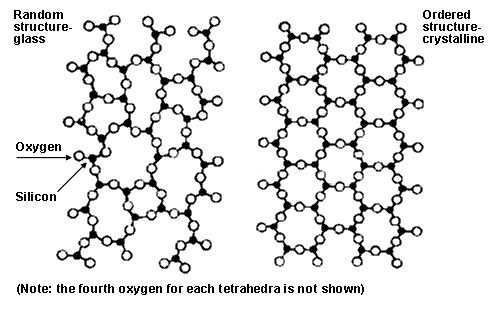
The material (often containing silica) used to make glass is quickly cooled from its liquid state, but it doesn’t take a solid shape when it continues to cool below its melting point. Just below its melting point, the material is a ‘supercooled liquid’: still liquid, but cooled below the temperature at which it would normally crystallize. As it cools further and passes the glass-transition temperature, the atoms slow down so dramatically that they effectively freeze in place before they ever get the chance to line up into a crystal. At that point the material is an amorphous solid: rigid and fixed, but with a liquid-like, disordered atomic arrangement.
This is the key point: the atoms in glass are frozen in roughly the same jumbled pattern they had as a liquid, so glass never gains the orderly, repeating structure of a crystal. That’s why glass isn’t a liquid (it’s rigid and holds its shape) and isn’t a crystalline solid either. It’s a solid of its own kind, an amorphous solid.
You may have heard that glass keeps flowing, just extremely slowly, and that this is what thickens the bottoms of old windows. It’s a myth. Materials scientist Edgar Zanotto worked out the numbers: for ordinary window glass to flow visibly at room temperature would take on the order of 1023 years, which is around a trillion times the current age of the universe (roughly 1.4 × 10¹⁰ years). In other words, glass does not flow on any human, or even cosmic, timescale. And contrary to another common claim, glass does not slowly turn crystalline as it ages either. Left at room temperature, it stays locked in its amorphous structure essentially forever.

So why are so many old windows thicker at the bottom? The answer lies in how the glass was made, not in how it behaves over time. Before modern float glass, medieval glaziers used the crown-glass method: a blob of molten glass was spun into a large, roughly circular disc that came out naturally uneven, thinner in the middle and thicker toward the rim. When these discs were cut into panes, the panes ended up with one edge heavier than the other. Glaziers then installed them the sensible way, with the thick, heavy edge at the bottom for stability. Plenty of medieval windows are actually thicker at the top or sides instead, exactly what you’d expect from uneven panes set by hand, and not what gravity-driven flow would ever produce.
There’s so many things that we think we understand perfectly and find so ridiculously obvious, but it often takes a sense of curiosity and keen observation to uncover the truths hidden in plain sight.