No, wood doesn’t actually melt. Wood is a mixture of cellulose, lignin and water bound by complex chemical bonds, not a uniform crystal, so it has no single melting point. Heat it enough and it pyrolyzes (chemically breaks down) into char and gases long before it can liquefy. Even in a vacuum, with no oxygen to burn, wood decomposes rather than turning into a clean liquid.
You’ve probably given this a thought at least once in your lifetime, right? You also probably know the answer by now: No.
But why not?
If the icebergs of Antarctica are melting due to increasing atmospheric temperatures (global warming is real), why can’t the burning Amazon rainforest just melt, rather than turning into dust and soot?
The answer certainly has something to do with the chemical makeup of wood, which is different than that of ice or any other uniform solid, but the details are probably still a mystery…
What Is It That Stops Wood From Melting?
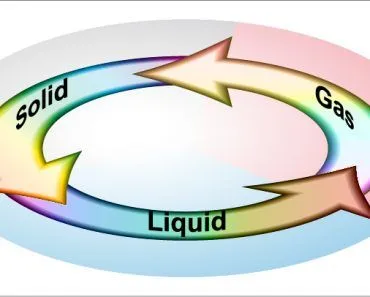
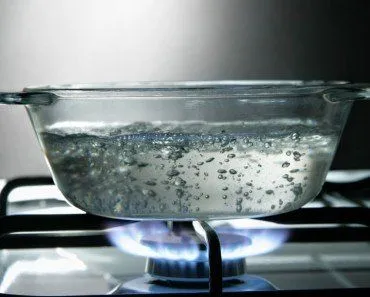
You may already know that solids melt into liquids at a specific temperature, and upon further heating, the liquid will eventually change into a gas. The common misconception here is that every hard and sturdy object is a solid, which is not the case when talking in purely scientific terms. Substances that have a single, well-defined melting point are usually crystalline solids, pure elements or compounds with atoms or molecules locked into a regular lattice. Solids in general can also be amorphous, like glass or wood, with no long-range order. Crystalline solids melt; many amorphous ones simply don’t.
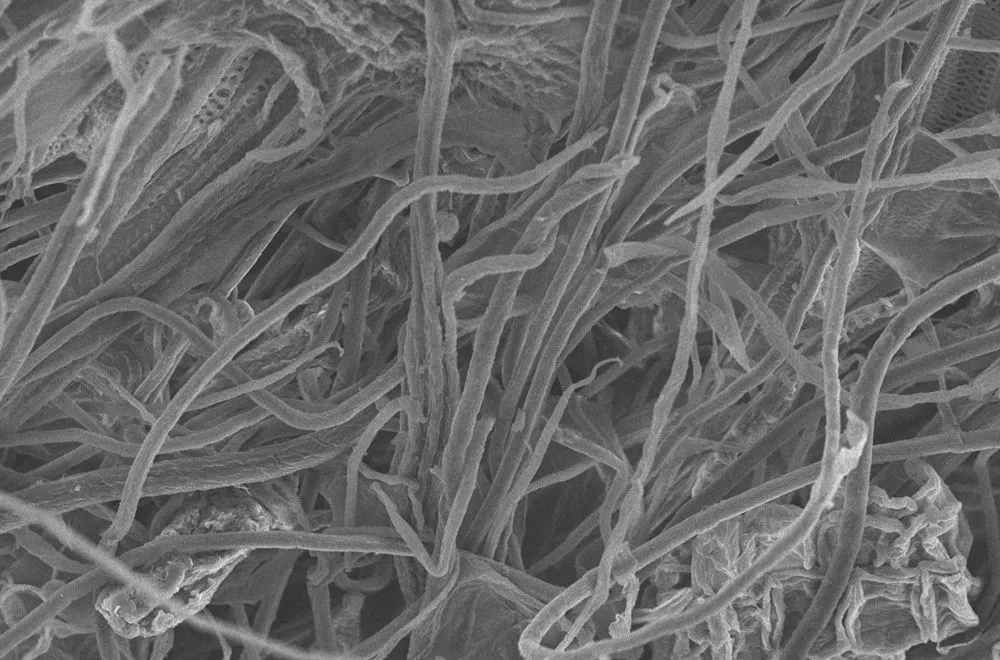
Wood, on the other hand, is a non-crystalline solid composed of water molecules, lignin and cellulose (both long-chain organic compounds) tightly bound in complex chemical bonds, each having their unique melting points. As a consequence, burning a piece of wood will vaporize the water molecules first, leading to an entangling of the cellulose and lignin bonds. These breakdown products either escape as smoke or, in the presence of air, react with atmospheric oxygen and burn. Strictly speaking, the thermal breakdown of wood without oxygen is called pyrolysis; when oxygen is present and the gases ignite, the overall process is combustion.
You may think that if we burn timber in a vacuum, away from all atmospheric hindrances, then each component would melt at its own melting point, eventually giving us a molten mass of wood. However, this isn’t the case.
Burning Wood In A Vacuum
Although water molecules and any such volatile matter would evaporate in a vacuum, the extensive cellulose fibers strongly inhibit the transition of wood to a liquid phase. The heat provided to the wooden log would instead break the glycosidic bonds (C–O–C) and hydrogen bonds that hold cellulose together, leaving behind methane, light hydrocarbons, water vapor, charcoal, and carbon dioxide.
The Difference Between Melting And Burning
Melting is a process of changing the state of matter from its solid phase to its liquid phase at a constant temperature. This temperature is its melting point at particular pressure conditions, a point that is unique to every substance. The chemical composition and thus the molecular formula of the substance remains the same during this state change.

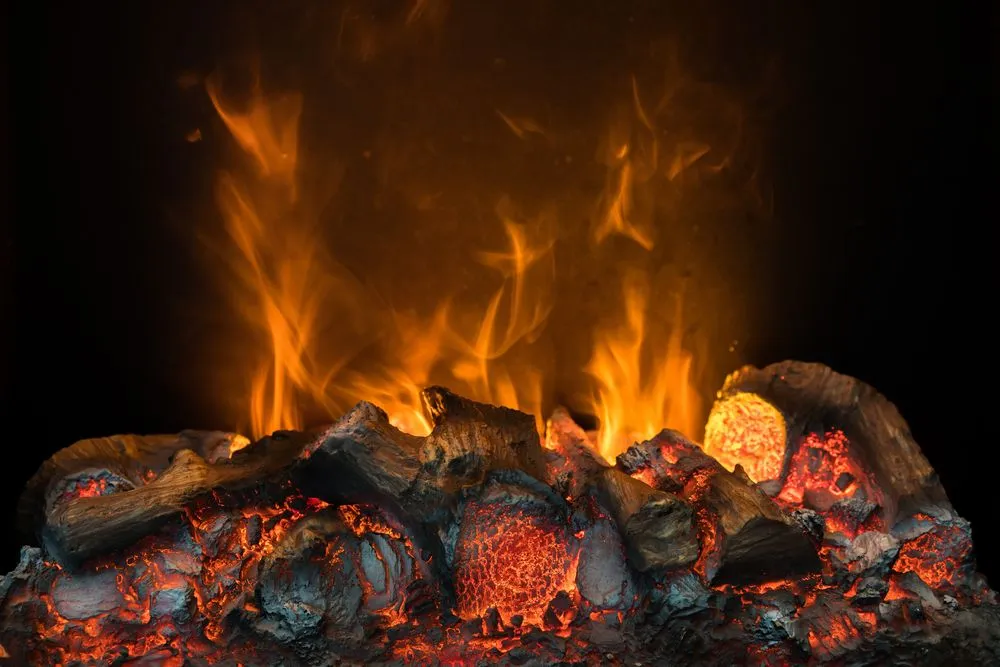
However, in our experiment, we are “burning” the wood. Burning is essentially a method to oxidize a substance. The substance interacts with oxygen (in most cases), forming a new compound altogether. This new substance has a different molecular formula in comparison to our original substance and might have a completely different appearance and set of physical properties.
Now that you know the wood you were heating was actually getting burnt, and not melted, let’s add a new twist.
There is actually a way to melt wood…
So What Temperature Does Wood Actually Change At?
If wood has no melting point, what should you type into the box when you go searching for one? The honest answer is that wood does not have a single “magic number” the way ice (0 °C / 32 °F) or aluminum (660 °C / 1,220 °F) does. Instead, it passes through a series of changes as it gets hotter, and each one happens over a range of temperatures rather than at one sharp point.

Here is roughly what happens as the temperature climbs, based on thermogravimetric measurements of wood. Up to about 100 °C (212 °F), very little chemistry happens beyond the moisture inside the wood boiling off as steam. Whole wood only starts to break down chemically at around 200–250 °C (about 390–480 °F), when bonds begin to snap and flammable gases are driven off. The least heat-stable component, hemicellulose, decomposes first (roughly 225–325 °C), the bulk of the cellulose goes around 370 °C, and tough lignin breaks down slowly across a wide span up to about 500 °C, leaving behind carbon-rich char.
Ignition fits inside this picture too. With a flame or spark nearby, a hot wood surface typically catches at about 300–365 °C (570–690 °F), which is why none of these numbers describe melting. By the time wood is hot enough to do anything dramatic, it is already decomposing and burning rather than flowing. So when a search engine offers you a tidy “melting point of wood,” treat it with suspicion: the real answer is a staircase of decomposition temperatures, not a single melt.
Is There No Way To Melt Wood?
In theory, it’s quite possible to melt wood using alternative means. At ordinary atmospheric pressure, carbon doesn’t even melt: it sublimes (goes straight from solid to vapor) at around 3,825 °C. Carbon only exists as a liquid at very high pressures (above roughly 10 MPa), where its triple point sits near 4,400 K. If you could keep wood under that kind of pressure as you heated it, the carbon-rich char left after pyrolysis “might” melt… (note the stress on “might”. As you have just learned, theoretical conclusions, however convincing, are often very different to the actual phenomenon experienced in the real world).
Although we are technologically capable of generating the lab conditions outlined above, there hasn’t been any published literature or research papers testing out this hypothesis.
Until that point is reached, we can only conclude that wood cannot be melted… yet!
References (click to expand)
- Can you melt a wooden log? - Yale Scientific Magazine. The Yale Scientific Magazine
- Losasso, F., Irving, G., Guendelman, E., & Fedkiw, R. (2006, May). Melting and burning solids into liquids and gases. IEEE Transactions on Visualization and Computer Graphics. Institute of Electrical and Electronics Engineers (IEEE).
- Rowell, R. M., & LeVan-Green, S. L. Thermal Properties. Handbook of Wood Chemistry and Wood Composites, Chapter 6. USDA Forest Service.
- Mensah, R. A., Jiang, L., Renner, J. S., & Xu, Q. (2022). Characterisation of the fire behaviour of wood: From pyrolysis to fire retardant mechanisms. Journal of Thermal Analysis and Calorimetry. NCBI PMC.