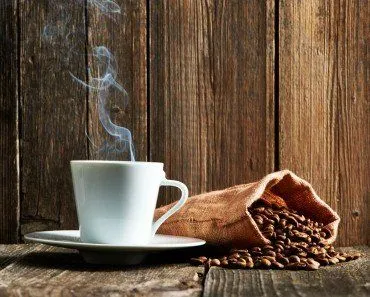
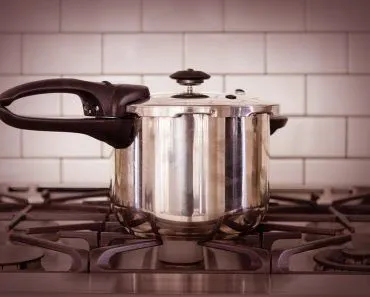
A coffee percolator brews coffee by using steam pressure to cycle near-boiling water up a central tube, over the grounds in a perforated basket, and back down into the reservoir, again and again. The same water passes through the coffee grounds repeatedly over 5 to 8 minutes, producing a strong, hot cup. Stovetop models are timed manually; electric percolators have a thermostat that automatically stops the cycle.
Coffee can be made in many different ways, and almost every brewing method has its devoted fans. Drip machines, French presses, Moka pots, AeroPresses, espresso machines, pour-over kettles, and each one extracts coffee in its own particular way. The percolator, which once sat on practically every American breakfast table, works on a principle so simple and so visibly satisfying that it has refused to die even after decades of being declared old-fashioned: hot water bubbles up a central tube, fans out across a bed of coffee grounds, drips back down, and starts the trip all over again. Hence the name; the water perks through the coffee.
Let’s walk through how the percolator was invented, how it actually works under the lid, how to use one, and how the brew it makes compares to other popular methods.
History Of The Coffee Percolator
The earliest ancestor of the modern coffee percolator was designed by the American-born British scientist Sir Benjamin Thompson (better known as Count Rumford) sometime around 1810. Rumford’s pot was actually a drip device rather than a true percolator, but it kicked off a century of inventors trying to brew coffee without leaving grounds in the cup.
The first real US coffee percolator patent went to James H. Nason of Franklin, Massachusetts, who received US Patent 51,741 on December 26, 1865. The design that became iconic, though, was patented by an Illinois farmer named Hanson Goodrich on August 13, 1889 (US Patent 408,707). Goodrich’s pot had the classic stovetop layout we still recognize today: a basket of coarse-ground coffee suspended above a reservoir of water, a hollow central stem, and a glass knob on the lid so you could watch the brew darken with each perk.
Electric percolators began appearing in the early 1900s, as household electrification spread. General Electric was publishing pamphlets on “coffee making by electricity” by 1905, and brands like Universal (Landers, Frary & Clark) sold popular plug-in models throughout the 1920s, 30s and 40s. By mid-century, the percolator was the default American coffee maker.
Its decline was swift. In 1972, Cleveland entrepreneurs Vincent Marotta and Samuel Glazer launched Mr. Coffee, the first popular home automatic drip machine, and hired baseball legend Joe DiMaggio to pitch it on TV. Drip coffee was milder, less bitter, and didn’t require timing, so within two decades roughly 90% of American coffee drinkers had switched. The percolator survives today mainly with campers, hunters, diner-style restaurants, and a stubborn band of enthusiasts who simply prefer its rich, almost roasty cup.
How Does A Coffee Percolator Work?
A percolator is, mechanically, a kettle with a clever loop bolted on top of it. The body of the pot is divided into two chambers: a water reservoir at the bottom and a perforated metal basket for coffee grounds near the top. A hollow vertical tube (the “stem”) runs from the bottom of the reservoir up through the basket and ends just under the lid.
When you put the pot on a heat source, the water at the very bottom of the reservoir heats up first. As it approaches boiling, bubbles of steam form against the metal base, expand, and shove a slug of hot water up the narrow central tube. This is exactly the same physics that drives a geothermal geyser, and engineers call it a gas-lift pump.
The water sprays against the lid, fans through a perforated dome at the top of the stem, and rains down evenly over the coffee grounds. It seeps through the bed of coffee, picking up flavor as it goes, and drips back into the reservoir at the bottom. The newly-brewed liquid is now hotter than the water still sitting at the base, so the cycle repeats: a fresh slug of water lifts up the stem, splashes through the grounds, drips down. Each cycle deepens the brew, which is why the glass knob on the lid darkens from light tan to nearly black over the course of a few minutes. That cheerful perk... perk... perk... sound is the bubbles of steam erupting at the base of the stem.
This is also the percolator’s biggest weakness from a specialty-coffee point of view. The Specialty Coffee Association recommends brewing at 195–205°F (90–96°C), but a percolator has to actually boil (212°F / 100°C) to drive the gas-lift cycle. The same water passes through the grounds three or four times, which pushes extraction well past the “sweet spot,” pulling out bitter compounds that drip-brew machines politely leave behind. Percolator fans counter that this is precisely what gives the cup its bold, no-cream-needed character.
How To Use A Coffee Percolator
Using a percolator looks intimidating the first time, but it’s genuinely a five-minute affair. Here’s the standard procedure:
- Fill the bottom reservoir with cold, fresh water up to the marked fill line. Don’t skip cold (starting cold gives you better control over the timing).
- Seat the perforated basket on the central stem and lower the assembly into the pot.
- Add coarse-ground coffee to the basket. The standard ratio is 1 level tablespoon of coarsely-ground coffee per 6 fl oz (177 mL) of water. Coarse is essential; fine grinds will slip through the basket holes and end up as silt at the bottom of your cup.
- Cap with the lid and place the pot on the heat source. On a stovetop, start on medium-high heat.
- Listen and watch. The first perk (a clearly audible blip and a flash of color in the glass knob) usually arrives in 3 to 4 minutes. Immediately drop the heat to low (or move the pot half-off the burner) so the perking continues gently rather than rolling.
- Brew for 5 to 8 minutes after the first perk. Longer means stronger and more bitter; shorter means weaker and brighter.
- Remove the basket immediately once you pull the pot off the heat. Leaving the grounds in contact with the hot brew is what turns “strong” into “ashtray.”
- Pour and serve.
Electric percolators automate steps 4 through 7. Once the brew chamber hits the cutoff temperature, a built-in bimetallic thermostat drops the heating element from its full brewing wattage down to a low “keep warm” setting, ending the perking cycle on its own.
Stovetop vs Electric Percolators
Both styles use the same gas-lift principle, but they differ in convenience and consistency.
- Stovetop percolators are simple, durable, and don’t need an outlet, which is why campers love them. They’re also entirely manual, so if you walk away and forget the pot, you’ll end up with coffee that tastes like burned toast soaked in tar.
- Electric percolators contain a heating element and a thermostat that automatically cuts the cycle once the brew is ready. They give more consistent results but tie you to a kitchen counter and an outlet. Many also feature a “keep warm” mode that, frankly, will degrade the brew if you leave it on for more than 20 minutes.
Percolator vs Drip, French Press, And Moka Pot
It’s easy to confuse a percolator with similar-looking devices. Here is how it stacks up:
- vs Drip coffee maker: Drip machines heat water once and let gravity pull it through a paper-filtered bed of grounds. The water passes through exactly once, at the SCA-approved temperature, producing a cleaner, more balanced cup. A percolator re-uses its water and runs hotter, which is why drip is gentler and percolator is bolder.
- vs French press: A French press is a full-immersion method, with coffee and water sitting together for 4 minutes, then a metal-mesh plunger separates them. Because the filter is metal, the cup keeps its oils and a fine layer of silt, giving it a heavy, syrupy body. A percolator instead drips the brewed liquid back through the grounds, producing a thinner-bodied but more aggressive cup.
- vs Moka pot: Moka pots are sometimes called “stovetop espresso makers” and look superficially similar to percolators, but they work differently. A Moka pot uses steam pressure (about 1–2 bar) to push water once, upward, through a tightly-packed puck of finely-ground coffee. The result is a concentrated, espresso-like shot, not the loose, hot, recycled brew of a percolator.
Is Percolated Coffee Bad For Your Cholesterol?
Here is the catch that surprises a lot of percolator fans: that perforated metal basket holds the grounds back, but it does almost nothing to filter the brew chemically. A percolator uses no paper filter, which lumps it in with the French press and old-fashioned boiled coffee, the methods coffee researchers call unfiltered.

Why does that matter? Coffee beans contain a pair of oily compounds called diterpenes, namely cafestol and kahweol. A paper filter soaks these oils up and leaves them behind in the spent grounds, but a metal mesh or a bare percolator basket lets them pour straight into your cup. According to the Harvard T.H. Chan School of Public Health, these diterpenes raise LDL (the “bad” cholesterol) and triglycerides, which is exactly why paper-filtered drip coffee and instant coffee, where the diterpenes are largely stripped out, are gentler on your blood lipids.
How much actually ends up in a percolated cup? A 2025 study in Nutrition, Metabolism and Cardiovascular Diseases measured it directly. Percolator coffee carried an intermediate dose, around 90 mg/L of cafestol and 70 mg/L of kahweol. That is far above paper-filtered drip coffee (roughly 12 and 8 mg/L) but nowhere near unfiltered Scandinavian-style boiled coffee, which blew past 900 mg/L. In other words, a percolator is not the worst offender, but it sits firmly on the unfiltered end of the scale.
None of this means you have to abandon the perk. The effect is dose-dependent, so an occasional camp-stove pot is no reason to worry. If you drink percolated coffee every day and keep an eye on your cholesterol, the simplest fix is to sit a paper filter disc inside the basket on top of the grounds; it traps most of the diterpenes while leaving the flavor largely intact. Researchers estimate that swapping even a few daily cups of unfiltered coffee for paper-filtered coffee can meaningfully lower LDL over time.
Now you know how coffee around the world is made using a coffee percolator. And why, despite a century of newer competitors, the humble perking pot is still bubbling away on stovetops and campfires.
References (click to expand)
- Coffee percolator. Wikipedia
- Hanson Goodrich, US Patent 408,707: Coffee-Pot (August 13, 1889). Google Patents / USPTO
- James H. Nason, US Patent 51,741: Coffee-Pot (December 26, 1865). Google Patents / USPTO
- Protocols & Best Practices. Specialty Coffee Association
- Coffee: Brewing. Encyclopaedia Britannica
- Coffee. The Nutrition Source, Harvard T.H. Chan School of Public Health
- Orrje et al. (2025). Cafestol and kahweol concentrations in workplace machine coffee compared with conventional brewing methods. Nutrition, Metabolism and Cardiovascular Diseases
- Use of coffee filters in brewing may lower LDL and risk for heart disease. Healio (2025)