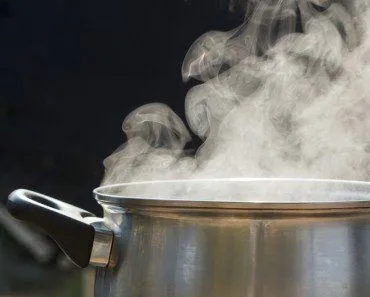
Water is loudest just before it boils because the bubbles forming at the hot bottom of the pot rise into still-cooler water above and collapse violently—a process called cavitation that sends shockwaves through the water. The full noise comes from three stages in order: nucleation (air bubbles forming), cavitation (those bubbles collapsing—the loudest), and surface popping (gentle bursts at the surface). Once the whole pot reaches 100°C, cavitation stops and the water suddenly gets quieter.
Cooking invariably involves the boiling of water, as it’s an integral part of cooking. You put water in a container, keep it on the stove, and cover it (for maximum utilization of heat energy). However, when the water starts to make noise and the cover begins to tremble, you know that the water has successfully boiled! You then take the boiled water and do whatever you need for the recipe… but WAIT! Have you ever wondered why water is loudest just before it boils?
Boiling Water
If you closely observe water while it boils, you will notice that when you start boiling, there is little to no noise, but as heating continues and the temperature keeps increasing, the noise becomes more discernible. It keeps getting louder, along with a rise in temperature. You will hear the most noise in the moments right before it reaches boiling.
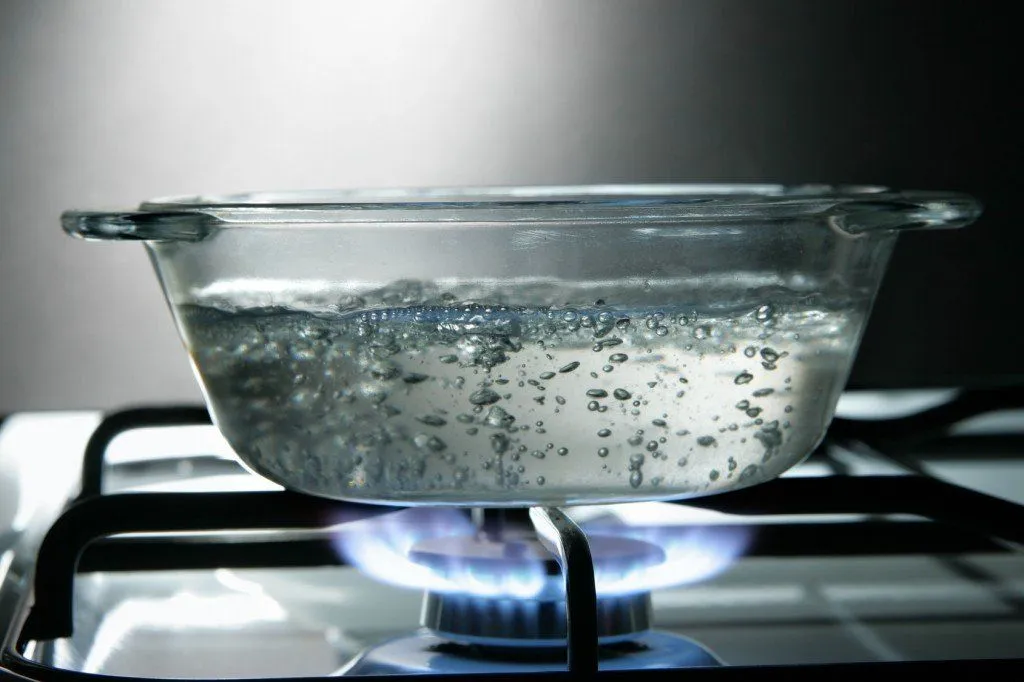
You might be aware that the boiling point of water is 100oC at sea-level (1 atmosphere of pressure—it drops at higher altitudes). Upon reaching the boiling point, although the water is visibly more agitative, the sound is now subdued. This has left many geeks (like us) and researchers baffled by this strange phenomenon.
Motivation To Study This Noise
If you’ve never been curious about this phenomenon, you should know that the science behind this has some more significant ramifications. If we understood it, scientists and engineers could potentially develop a system to isolate and stop that whistling sound, not just while boiling water, but also to minimize or nullify the irritating whistles that sometimes come from automobiles, typically when air gets trapped in the exhaust of a vehicle.
Ross Henrywood, a researcher from the University of Cambridge, posits that once we know where the noise is coming from and understand its cause, we can re-engineer systems to be free from that whistling sound.
For decades, scientists have been trying to decode the science behind the whistling sound coming from hot water right before it boils. This is evident from the observation of John William Strutt (Lord Rayleigh) in his 1877 book The Theory of Sound, where he noted that “much remains obscure as regards the manner in which the vibrations are excited.” Fortunately, thanks to technological advancements over the years and the advent of high-speed cameras, researchers have finally unraveled the mystery.
Basically, there are three main sources of sound when water boils: nucleation, cavitation and surface popping. Let’s look into the details of each.
Nucleation
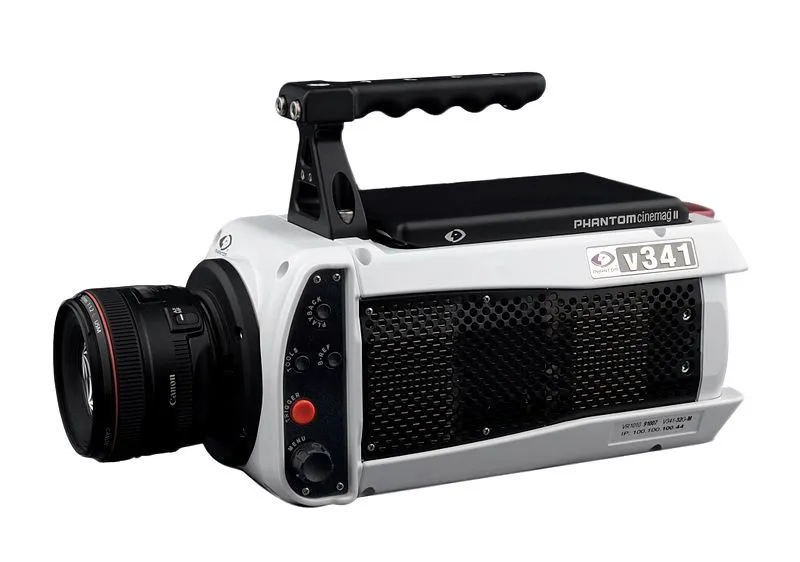
To understand the cause of this whistling sound, researchers boiled water in a kettle and observed the water droplets up close using a high-speed camera. Now, a normal video camera generally captures video in the range of 30-60 frames per second, but with a good industrial-grade high-speed camera, researchers can capture 15,000-30,000 frames per second, which helped them understand and theorize about this phenomenon much better.
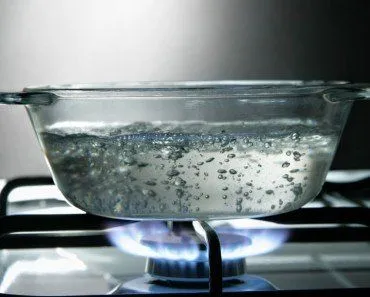
Researchers noted that the first contributor to the noise is due to the air bubbles trapped in the water. When water is heated, the air dissolved in water forms bubbles at the bottom of the container. The solubility of non-polar gases, such as oxygen and nitrogen, decreases with the increase in temperature. As the water is heated, this dissolved gas starts converting into air bubbles. After attaining a specific size, these bubbles are released from the bottom and climb to the top layer of water in the container. This is called nucleation. Thus, the first contributor to the sound that you hear while boiling water comes from these bubbles, i.e., when they’re created at the bottom.
Without a high-speed camera, if you look closely inside the boiling kettle, you can see the little bubbles form on the bottom of the kettle. From an intensity standpoint, this sound is generally low—in the frequency of around 100Hz. The loud whistling noise is predominantly contributed by cavitation, which is explained below.
Cavitation
As the temperature in the kettle continues to rise, these newly formed bubbles try to move up through the layers of water above it. These layers are relatively cooler than the layer at the bottom.
As the bubble tries to move up, passing into the cooler layer of water (below 100oC), it loses sufficient energy in the process. It begins to collapse before reaching the surface of the pot or kettle. This happens several thousand times and the collapsing is quite violent. When the bubbles collapse and burst, they create powerful shockwaves that generate the loud whistling noise. As the bubbles burst, they leave a cavity, and the water around the cavity sort of slaps into itself as it rushes to fill the space. This phenomenon is called cavitation and is quite noisy.
What Are The Bubbles In Boiling Water Made Of?
Here is a question that trips up a lot of people: are the bubbles in boiling water made of air, or of something else entirely? The answer actually changes as the water heats up. The very first bubbles, the tiny ones clinging to the bottom of the pot well before the water is truly hot, are simply dissolved air. Tap water carries dissolved nitrogen, oxygen and carbon dioxide, and because the solubility of these gases falls as the temperature climbs, they come out of solution and collect into bubbles. These are the same air bubbles responsible for the nucleation sound described above.

By the time the water reaches a full, rolling boil, the bubbles are something completely different. They are made almost entirely of water vapor, that is, steam, formed as liquid water molecules gain enough energy to break free and turn to gas. A common misconception is that these bubbles are air, or even hydrogen and oxygen split out of the water. They are not. Boiling does not break water down into its elements, so there is no hydrogen or oxygen gas hiding in the froth. For a closer look at this, see our dedicated explainer on what the bubbles are made of when water boils.
The Stages Of Boiling, From Simmer To Rolling Boil
The reason the sound keeps shifting is that boiling is not a single event but a sequence of stages, and each one looks and sounds different. Long before the surface erupts, the water passes through a simmer, where it is held just below the boil, generally above about 80oC (176oF) but under 100oC (212oF). At a simmer you see only small bubbles drifting up gently and the water barely moves, while you hear that soft, building murmur. Push it to the boiling point of 100oC (212oF) at sea level and you reach a rolling boil, where large vapor bubbles race continuously to the surface and the water churns even when you stir it.

Physicists have a name for what is happening down at the hot metal: nucleate boiling. In nucleate boiling, vapor bubbles grow from discrete points on a surface whose temperature is only slightly above that of the liquid, which is exactly why the base of your kettle is dotted with bubbles before the bulk of the water catches up. This staggered, bottom-up process is what gives the noise its layered crescendo, the loud whistling of collapsing bubbles giving way to the gentler popping once the whole pot finally reaches the boil.
Surface Popping
When the temperature is about to reach 100oC, these bubbles gain enough energy—reaching the surface, where they pop, albeit gently. The noise level at this juncture is quelled. This step is called surface popping. Eventually, when all the steam has made it to the top, the noise stops altogether, which is why once water has boiled, it becomes quiet!
This unexpected noise of water boiling is one of those everyday phenomena that we observe all the time, but barely give a second thought. So, the next time you’re busy doing something entirely different than cooking in the room beside the kitchen, listen for this audible cue from nature to determine if the water is about to boil. Save yourself from a last-minute dash to the kitchen to shut the stove off and avoid an overflowed pot!
References (click to expand)
- How the kettle got its whistle - University of Cambridge. cam.ac.uk
- Chin, C. T., Lancée, C., Borsboom, J., Mastik, F., Frijlink, M. E., de Jong, N., … Lohse, D. (2003, December). Brandaris 128: A digital 25 million frames per second camera with 128 highly sensitive frames. Review of Scientific Instruments. AIP Publishing.
- (2008) The myth of the boiling point - jstor. JSTOR
- What Are the Bubbles in Boiling Water? - Science Notes
- Boiling (nucleate boiling) - Wikipedia
- Simmering - Wikipedia