Table of Contents (click to expand)
Squeezing a tea bag after it has steeped forces extra tannins, and other dissolved compounds, out of the soggy leaves and into your cup. Tannins are astringent polyphenols, so the result is a stronger, more astringent and bitter brew. If you prefer a smooth, mild cup, lift the bag out without squeezing it.
Have you ever been told by someone not to squeeze a tea bag after it has steeped in hot water? In fact, you may even see a printed advisory on certain tea bag packets telling you to avoid squeezing a tea bag (in water) after it’s been soaking for some time.
Have you ever tried squeezing a tea bag in hot water? Why do people (generally) advise against it?
What’s A Tea Bag?
A tea bag is a small, porous packet that contains dried plant material, which, when soaked in hot/boiling water, helps to make tea (or some other infusion). Tea bags are generally made of filter paper/food-grade plastic (plastic that is considered safe for food contact). Some tea bags are also made of heat-sealable thermoplastic, such as PVC. Paper tea bags are also treated with epichlorohydrin to keep them from disintegrating.
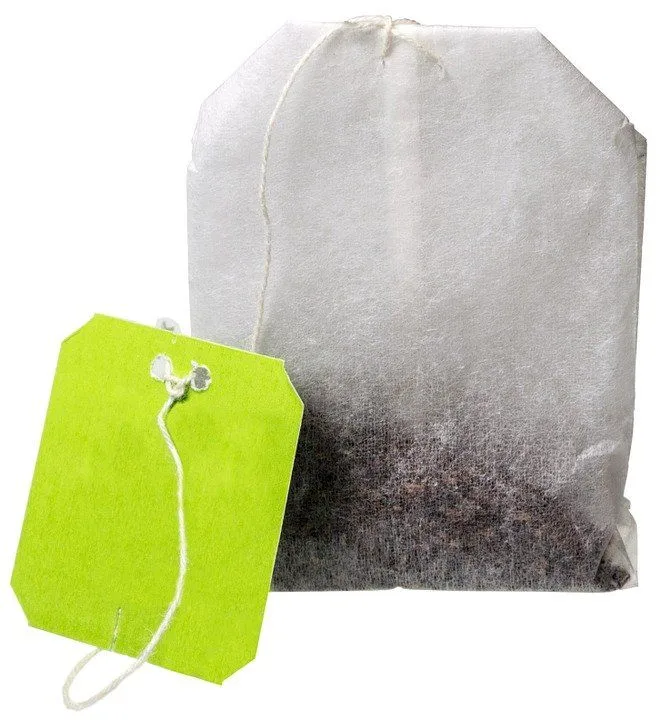
Originally, tea bags exclusively had a square or rectangular shape. However, modern tea bags come in tetrahedral and even circular shapes. There’s typically a small string attached to each tea bag with a paper label at the top.
How Tea Bags Came To Be
The idea of bagging tea is surprisingly old. As far back as the 8th century, during China’s Tang dynasty, paper was folded and sewn into square bags so that tea flavors and aromas could be preserved for a (relatively) long time. Those early bags were used mainly to store and transport the leaves rather than to brew a single cup, but the idea laid the foundation for modern tea bags.
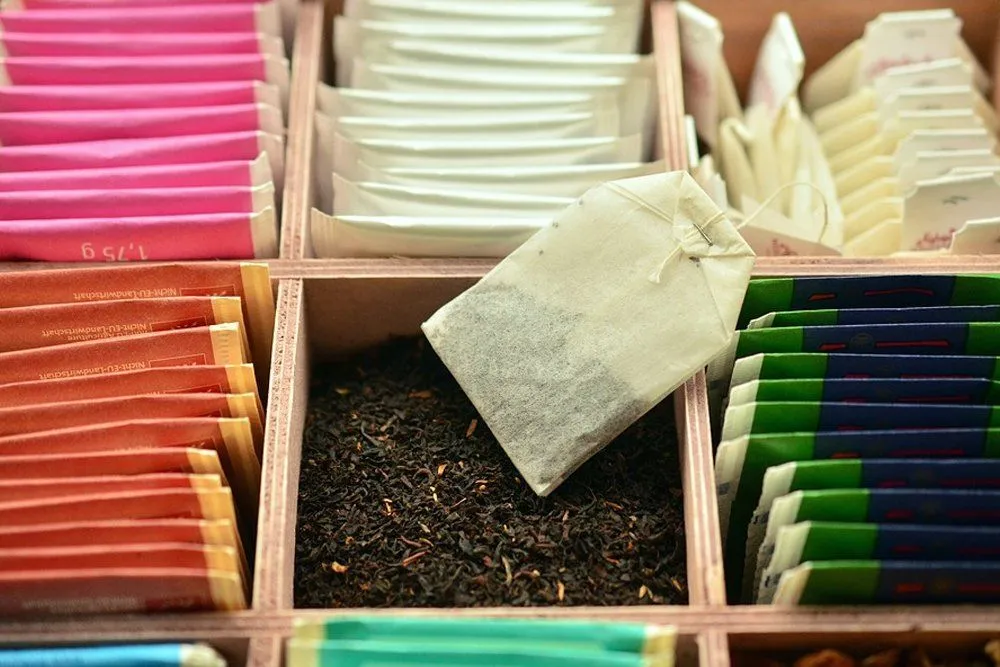
The modern version of tea bags first appeared in the Western World as early as 1903. Commercially, however, tea bags made their appearance around 1908, when coffee importer Thomas Sullivan shipped his silk tea bags all over the world. Those tea bags were supposed to be torn before use, and their loose contents were then poured into hot water to brew tea.
However, people found that it was more convenient to brew tea with the tea leaves still enclosed in the porous bags. Since dipping tea bags into water didn’t seem to cause any change in the taste, people gradually did away with the practice of removing the tea bag, and started dipping it directly into hot water instead.

Squeezing A Tea Bag Soaked In Hot Water
As mentioned earlier, it’s generally advised to not squeeze a tea bag soaked in hot water. The reason is very simple, and involves some basic chemistry.
You see, tea contains tannins. Tannins are a broad class of compounds that are widely distributed in many species of plants. More specifically, tannins are a class of astringent polyphenolic molecules that bind to and precipitate proteins. When you sip a strong cup of tea and feel that dry, puckering sensation in your mouth, that astringency is the tannins binding to proteins in your saliva.
People often confuse tannins with tannic acid, and mistakenly use these terms interchangeably. However, it should be noted that tannic acid is simply a type of tannin.
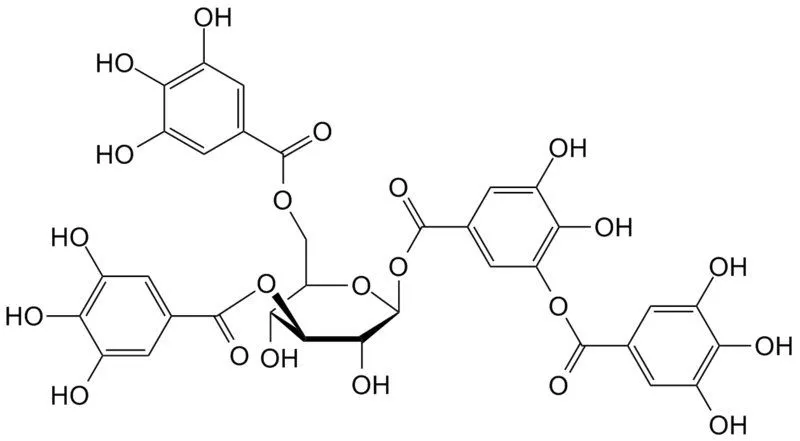
Many fruits and vegetables, including pomegranates, berries, nuts, legumes, cloves, vanilla etc. contain tannins, which offer quite a few health advantages.
However, they are also the reason why a tea bag should not be squeezed in hot water.
You see, when you dip a tea bag in hot water, a portion of the tannins (present in the tea leaves inside the tea bag) diffuses out into the water, but plenty of it stays locked in the wet plant material. When you squeeze a tea bag, you force out more of those concentrated tannins, along with other dissolved compounds and the fine sediment hiding in the soggy leaves. The result is a drink that becomes more astringent and bitter, or as some call it, ‘too strong’. (Bitterness in tea also comes from caffeine and catechins, which are themselves polyphenols, so squeezing tends to ramp up both sensations at once.)
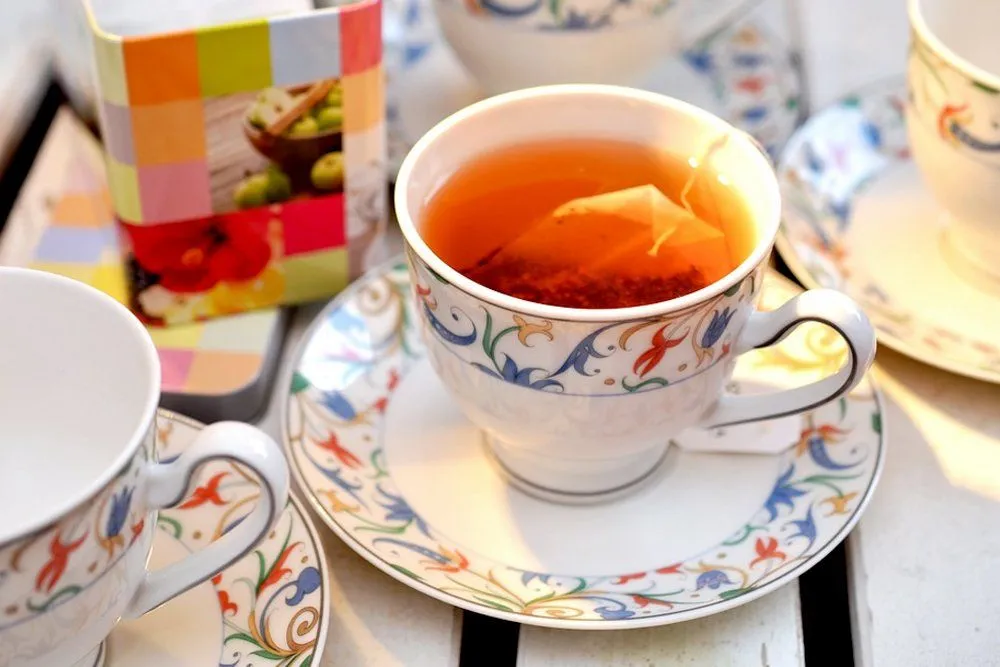
However, some people actually prefer a bitter tea, so they actively squeeze their tea bags to release more tannins into the hot water, and then enjoy a beverage that is generally considered too bitter for most people.
All in all, whether the flavor of a drink loaded with tannins is desirable depends entirely on personal preference, but if you like your tea to not taste bitter, then squeezing your tea bag after it steeps is simply not your cup of tea!
Do Tea Bags Release Microplastics Into Your Cup?
Here is the part of the tea bag story that has nothing to do with tannins, and everything to do with what the bag itself is made of. Remember those fancy, silky, pyramid-shaped tea bags that let whole leaves tumble around as they brew? A lot of them are not silk at all. They are woven from plastic, typically nylon or polyethylene terephthalate (PET), the same plastic family used in drink bottles.

In 2019, a team of chemical engineers at McGill University in Montreal (led by Professor Nathalie Tufenkji, with first author Laura Hernandez) decided to test what those plastic bags do in hot water. They bought four commercial plastic tea bags, snipped them open and emptied out the leaves so they wouldn't muddy the analysis, then steeped the empty bags in water at 95 °C (203 °F), roughly brewing temperature. Using electron microscopy, they found that a single plastic tea bag shed around 11.6 billion microplastic particles and 3.1 billion even smaller nanoplastic particles into one cup. That is far more plastic than has been measured in other foods and drinks, including bottled water. The result was published in the journal Environmental Science & Technology.
Before you swear off tea forever, two caveats matter. First, this applies to plastic mesh bags, not the ordinary paper-style tea bags most people use. Second, and importantly, the study measured how much plastic was released, but it did not establish that swallowing these particles harms human health. That question is still open. If you would rather avoid the issue entirely, loose-leaf tea or paper bags sidestep the plastic mesh, much the way avoiding certain containers limits plastic leaching from food packaging.
Is Tea A Solution, A Colloid, Or A Suspension?
This one trips up a lot of chemistry students, and it is a genuinely good question. When you drop a tea bag into hot water, what kind of mixture are you actually making?
The answer depends on particle size. Chemists sort liquid mixtures into three buckets based on how big the dispersed particles are. In a solution, the particles are individual molecules or ions smaller than about 1 nanometer, and they never settle out. In a colloid, the particles are larger, roughly 1 to 1000 nanometers, big enough to scatter light but still too small to settle. In a suspension, the particles are bigger than about 1000 nanometers (1 micrometer), large enough that gravity eventually pulls them to the bottom.

So where does tea land? The dissolved compounds that give tea its flavor and color (the tannins, caffeine and catechins we met earlier) genuinely dissolve at the molecular level, so that part behaves like a true solution. But brewed tea also carries some larger fragments of leaf and pigment, which is why a strong cup can look slightly cloudy and can shine a faint beam when light passes through it (the Tyndall effect, the giveaway of colloid-sized particles). For a tidy textbook answer, brewed tea is usually classed as a solution, since the flavor compounds are dissolved and nothing settles to the bottom of your mug. And yes, the spreading of color from the bag into the water is a clear case of diffusion, molecules drifting from where they are crowded toward where they are not.
Should A Tea Bag Float Or Sink In Hot Water?
Have you noticed that a fresh tea bag often bobs on the surface for a moment before slowly going under? Whether it floats or sinks comes down to one of the oldest ideas in physics: Archimedes' principle.

An object floats when its average density is less than the density of the liquid around it. A dry tea bag is full of tiny air pockets trapped between the paper or mesh fibers and the dry leaves. Air is far less dense than water, so all that trapped air drags the bag's average density below that of water, and it floats, exactly the way trapped air lets a hollow steel ship or a block of ice stay on the surface. As water seeps into the pores, it pushes that air out and replaces it with much denser liquid. The bag's average density climbs past that of water, and down it goes.
That also explains a question people ask a lot: why does a tea bag sink faster in hot water than in cold? Hot water is both less viscous (it flows more easily) and has a lower surface tension than cold water. A "thinner" liquid soaks into the porous bag more quickly, evicting the trapped air sooner, so the bag wets out and sinks faster. In cold water the bag can stubbornly float for a long time because the chilly, more viscous water is slow to wick in. None of this is a fault in the tea bag, by the way. A bag that refuses to sink simply still has air trapped inside.
How Hot Should The Water Be, And Does Cold Water Work?
The title of this article is a little tongue-in-cheek, because tea bags absolutely do need water, and for most teas, hot water. Temperature is arguably the single biggest lever you have over how your cup tastes, and it ties straight back to the tannin story from earlier.
Here is the trade-off. Hotter water extracts the flavor compounds faster, but it also pulls out more of the bitter, astringent tannins and degrades the delicate catechins in greener teas. A study of green tea infusions found that brewing at a high 95 °C peaked the catechins quickly but, with extended steeping, turned the brew dark and bitter, while a gentler 60 °C preserved the more delicate compounds. That is why brewing guides recommend different temperatures by tea type:
- Black tea and herbal infusions: near-boiling water, about 95 to 100 °C (203 to 212 °F), steeped 3 to 5 minutes.
- Oolong: a touch cooler, roughly 85 to 95 °C (185 to 203 °F).
- Green and white tea: cooler still, around 70 to 85 °C (160 to 185 °F), so you don't scald out the bitterness.
And cold water? It does work, just slowly. "Cold brewing" a tea bag in the fridge for several hours extracts flavor through the same diffusion process, only at a crawl because everything moves more sluggishly at low temperature. The payoff is a smoother, less bitter cup, precisely because the cold pulls out fewer tannins. So the real takeaway is not that you should never use hot water, but that matching the water temperature to the tea, and resisting the urge to squeeze, is how you keep your cup from turning bitter.
References (click to expand)
- Isolation of Caffeine from Tea - infohost.nmt.edu:80
- DIY: Taking the Caffeine Out of Tea - The Open University. The Open University
- Schwalfenberg, G., Genuis, S. J., & Rodushkin, I. (2013). The Benefits and Risks of Consuming Brewed Tea: Beware of Toxic Element Contamination. Journal of Toxicology. Hindawi Limited.
- Does tea lose its health benefits if it's been stored a long time? Tufts University
- Some plastic with your tea? McGill University Newsroom
- Hernandez, L. M., et al. (2019). Plastic Teabags Release Billions of Microparticles and Nanoparticles into Tea. Environmental Science & Technology. American Chemical Society.
- Colloids and Suspensions. Chemistry LibreTexts.
- Archimedes' Principle and Buoyancy. University Physics (OpenStax). Physics LibreTexts.
- Unique Properties of Liquids: Surface Tension and Viscosity. Chemistry LibreTexts.
- Effects of Brewing Conditions in Sample Preparation of Green Tea Infusions. PMC, NCBI.