Table of Contents (click to expand)
Cars have carpet because it dampens engine and road noise coming up through the floor pan, insulates feet from a cold metal floor, soaks up spills before they cause rust, hides everyday dirt, and remains cheaper to install than rubber, leather or molded plastic alternatives.
As a child, I will always remember my mom’s stern warning every time a friend came over—Everyone take off their shoes…I don’t want you getting the carpet dirty! Protecting the integrity of in-home carpets was a full-time job, and yet whenever I sat down in the backseat of the car, my mother never insisted that I take off my shoes, even though there was carpet in there too!
 Many people have wondered about the logic behind nearly every car on the market coming with carpet flooring, since carpet is notoriously difficult to keep clean, particularly from mud, gunk and other substances you pick up on the bottoms of your feet every day. Inquiring minds want to know—what possible reason is there for carpet flooring being standard in cars?
Molded Carpeting
The formal name for the carpeting lining every inch of a car floor is molded carpeting, which reflects the production process when it is applied. It is molded perfectly to the floor pans in a car so there are no loose-fitting sections of carpet on the floor. The floor pans are bare metal, so there is typically a layer of padding between the carpet and the metal floor; that layer of padding is typically made of either mass backing or poly backing. While both suffice, the former is thicker and has a consistency like rubber, while the latter is lightweight, thinner and easier to manipulate.
The texture, thickness and material of the floor carpeting may differ between make and model, but it seems to present the same problems in any situation. In fact, most people end up buying floor mats for their car, which sit in the footwells on top of the carpeted flooring. That fact alone seems to suggest an inherent flaw in carpeted flooring; if the first type of flooring was sufficient, why would another protective layer be needed?
 Most cars come with their own thin floor mats, often perforated and made of a flimsy plastic material, but other options include large rubber, plastic and polymer mats with grooves, rubber spikes and other corrugated sections to collect the mud, water, pebbles and debris from your feet, thus protecting the carpet beneath. These mats can then be taken out of the car and washed off, saving you from scrubbing the carpet, but the need for these mats seems counter-intuitive. If rubber or plastic is easier to clean than carpet, why wouldn’t car manufacturers simply use that to line the floor pans of their vehicles?
Benefits Of Carpeted Car Floors
In an industry as competitive and innovative as automobiles, most decisions are made for very good reasons, so if carpet is ubiquitous as car flooring, there must be some sense to it. At its most basic level, automotive carpet is made of thousands of tiny tufts of synthetic fiber, today almost always nylon or polypropylene (older classic cars and high-end trims used wool or rayon blends). This fibrous structure means that loops of varying sizes, dimensions and angles can interact with a wide range of sound frequencies. This matters in a car, because the engine, transmission and tires beneath the floor produce a constant mix of vibration and noise.
With carpeting laid across the floor, it acts as the soft, absorbent top layer of a much larger noise package. Automakers typically combine the carpet with a heavy backing (mass-loaded vinyl or felt), a layer of foam, and butyl-rubber damping pads stuck directly to the steel floor pan. Together, this stack noticeably softens the booming, droning and high-frequency hiss that early cars with bare wooden or steel floors used to transmit straight into the cabin. The carpet alone is only a small piece of the math, but it is the piece you actually see and feel.

The carpeting not only provides insulation when it comes to sound, but also in terms of temperature regulation. Imagine taking a long drive through wintry mountains, when the outside temperature is −7 °C (20 °F). While your car’s heater could keep the air in the cabin warm, you would constantly be losing heat through the floor (made primarily of steel, which conducts heat well). For those long road trips when you take off your shoes and get comfortable, placing your feet on cold metal or plastic would be a decidedly unpleasant way to travel.
In the past, leaks in cars were a major problem, resulting in mildew and a higher occurrence of rust than we see in today’s cars. Carpet was also an effective solution or defense mechanism against these signs of aging in a car, as they could soak up spills and prevent water or oil from sitting for too long in one place and eating away at the body of the car.
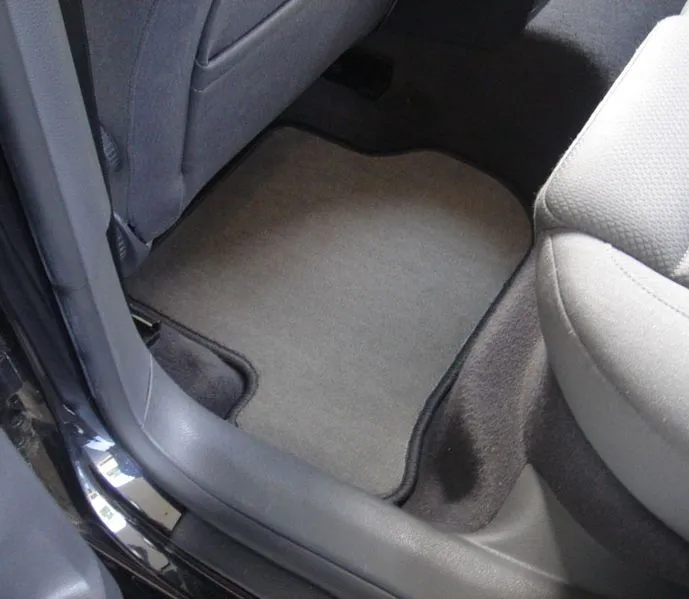
Aesthetically speaking, a dirty carpet on your car floor isn’t ideal, but those same whorls and knots that suppress excess noise are also great hiding places for dirt and grime. If your car floor was made of rubber, metal or plastic, it would show every tiny pebble and bit of gunk you drag in on your soles. Furthermore, the material would likely get scratched up easily by hard debris in your shoe, e.g., sharp rocks, bits of glass, etc. A scratched-up floor would also be far more difficult to repair or replace than simply shampooing the carpet or cutting out the section of carpet and replacing it.
When it comes to viable alternatives to carpet flooring in cars, there are some exciting prospects on the horizon, including new materials that can mimic organic textures, such as bamboo, while still providing insulation and noise-dampening properties. Leather materials, matte and glossy surfaces, and lightweight or synthetic woods could also be employed for a more aesthetic and easy-to-clean car floor, but as with any add-on for a car, this would come with a significant price tag. Carpet is cheap and easy to produce, and it has been the industry standard for decades, with no widespread outcry for change.

In other words, by the time you buy your next new car, you may be able to opt for something other than a carpeted floor, but don’t dismiss the benefits that carpet provides in your car. Perhaps more importantly, don’t underestimate what that kind of specialty customization will cost!
References (click to expand)
- Rant: Does carpet in cars make sense? - The Globe and Mail. The Globe and Mail
- Molded carpet - Wikipedia. Wikipedia
- Why Carpets are Extremely Effective at Sound Absorption. homecarpetone.com
- Acoustic flooring: What you need to consider when selecting a .... spectracf.com
- Replacement Auto Carpets - Truck and Car Floor Mats. truck-and-car-floor-mats.com