A car suspension system is the network of springs, dampers (shock absorbers) and links between the wheels and the body. It does three jobs: it supports the vehicle's weight, absorbs shocks from bumps and potholes, and keeps the tires pressed to the road for grip, steering and braking.
Have you ever wondered why your bicycle isn’t as comfortable as your motorcycle or car? While a smaller constricted seat could be one of the reasons, the primary reason is that every imperfection on the road surface is clearly felt on a bicycle. However, a car or motorcycle will glide over such obstacles with relative ease.
What Is A Suspension?
The trick to gliding over road imperfections and contours lies in an important component of every vehicle, known as the suspension. This feature is made possible by means of springs attached beneath the vehicle that absorb most of the undulations of the road, without transferring them to the driver or passengers. These springs are part of a vehicle’s suspension system, which has three jobs to juggle at once: it supports the weight of the vehicle, it soaks up shocks from the road, and it keeps the tires firmly pressed against the surface. In doing so, it not only ensures rider comfort, but also improves vehicle handling by bringing the “bounce” of these springs to rest in a suitable manner.
Why Do Vehicles Need A Suspension?
A suspension system in a vehicle serves to isolate the occupants of a vehicle from the vibrations that arise due to traversing the contours of the road surface, while helping the driver remain in complete control.

In order to have maximum control of a vehicle, it is imperative to be in maximum contact with the traversed surface, which appears to be in contrast with the original purpose of suspension, namely isolation from the road surface. Thus, suspension systems are designed to achieve a trade-off between occupant comfort and ride handling.
Another frequently overlooked function of suspension systems is the absorption of shock loads to prevent any damage to the chassis to which they are connected.
Sprung And Unsprung Mass
The part of the vehicle supported by the suspension system is known as the sprung mass. This usually includes various components, such as the driveline components, like the engine and transmission, vehicle body and chassis frame, as well as the passengers and their cargo.
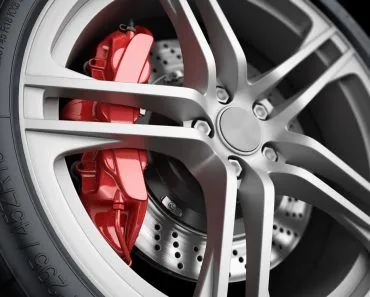
The unsprung mass consists of the parts that are not supported by the suspension. These include the wheels, brake assemblies, differentials, drive axles etc.
In order to maximize control of a vehicle, a high sprung to unsprung mass ratio is desirable. A higher sprung mass ensures more force on the springs and wheels, and consequently, greater traction. However, there is only a certain extent to which the sprung mass of a vehicle can be increased without affecting handling and the adequacy of power produced by the engine. Thus, the sprung to unsprung mass ratio is a trade-off between traction and weight.
Components Of A Suspension System
A suspension system is made of the following components:
1. Links
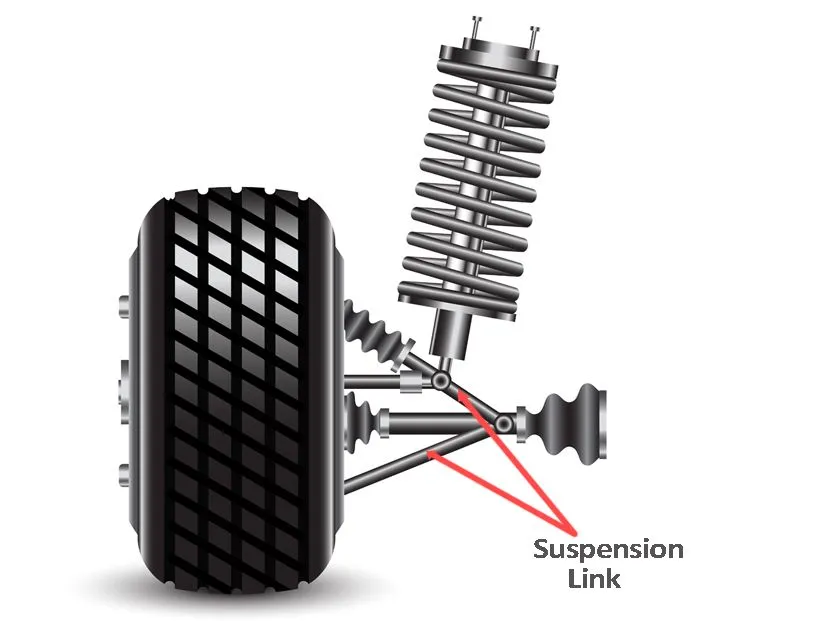
To allow for relative motion between the wheels and the frame, the suspension is connected to the chassis and the wheels by means of links. These links have various degrees of freedom, which define the axis along which the suspension moves.
2. Displacement Units
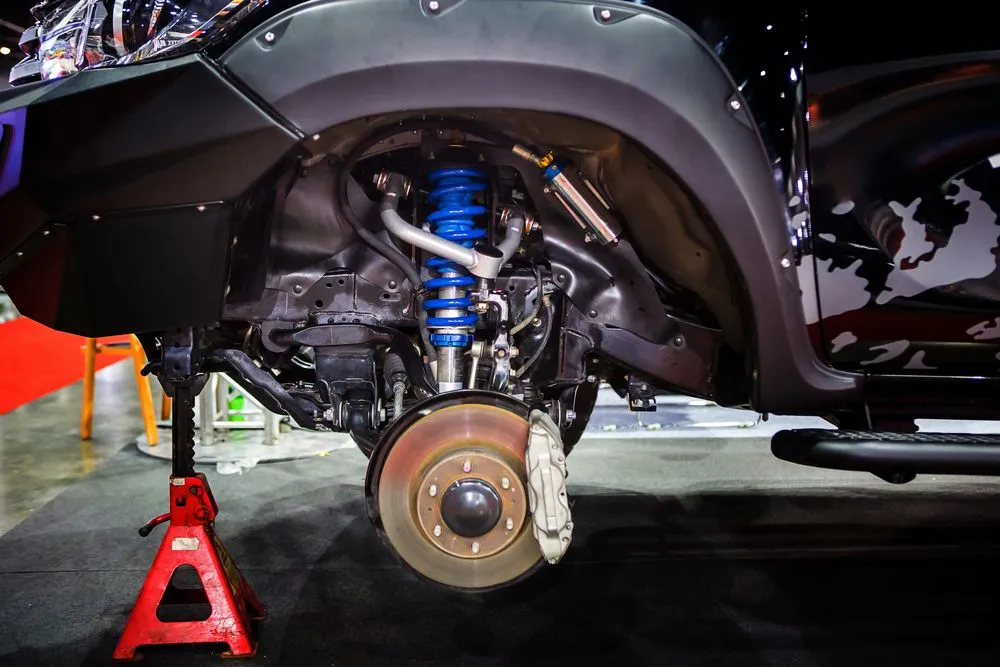
The displacement units are the core of any suspension system. The kinetic energy due to relative motion between the wheels and the remaining body when traveling over uneven surfaces gets stored in these displacement units.
While springs are a popular displacement unit, modern cars see hydraulic and pneumatic alternatives that can be electronically controlled. A displacement unit stores energy during travel over uneven surfaces and releases that energy when the wheels return to normal surfaces. The energy is released in a pattern known as damped simple harmonic motion.
3. Shock Absorbers (Dampers)
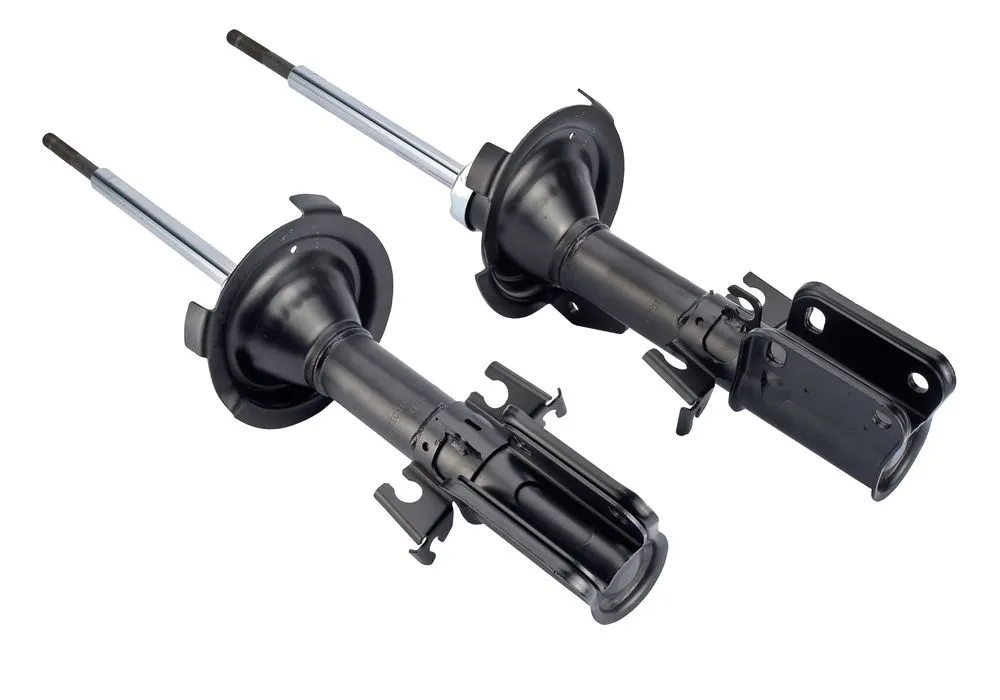
While a damped harmonic motion of the displacement unit can bring the vehicle to rest on its own, the time taken is usually longer, and the energy dissipation can be unregulated, leading to uncomfortable rides and a loss of suitable contact with the road. To eliminate this, it’s important to dissipate the stored energy in the displacement unit quickly and in a more regulated fashion. This is achieved by means of dampers.
A damper is composed of a piston head with holes in it traveling through an oil-filled cylinder. The incompressible nature of oil causes the piston to move slowly and uniformly through the cylinder, while ‘settling’ the motion of the displacement unit faster.
A quick word on terminology, since the two get muddled all the time: a plain shock absorber only does the damping job and carries no weight, whereas a strut is a structural suspension member that bundles a damper inside a coil spring and also bears part of the vehicle's load and locates the wheel. So every strut contains a damper, but not every damper is a strut.
4. Anti-Roll Bar (Sway Bar)
The anti-roll bar, also called a sway bar or stabilizer bar, is a metal torsion rod that links the left and right sides of an axle. When you take a corner and the body tries to lean, one side of the suspension compresses more than the other; the bar twists and feeds some of that motion across to the opposite wheel, fighting body roll and keeping the car flatter and more planted through the turn.
How Does Suspension Work?
The displacement unit in a suspension is capable of compression and elongation, based on the direction of wheel travel. When a wheel travels over a positive undulation on the road, such as a speed bump, the displacement unit compresses. Similarly, when the wheel travels over a negative undulation, such as a pothole, the displacement unit elongates.
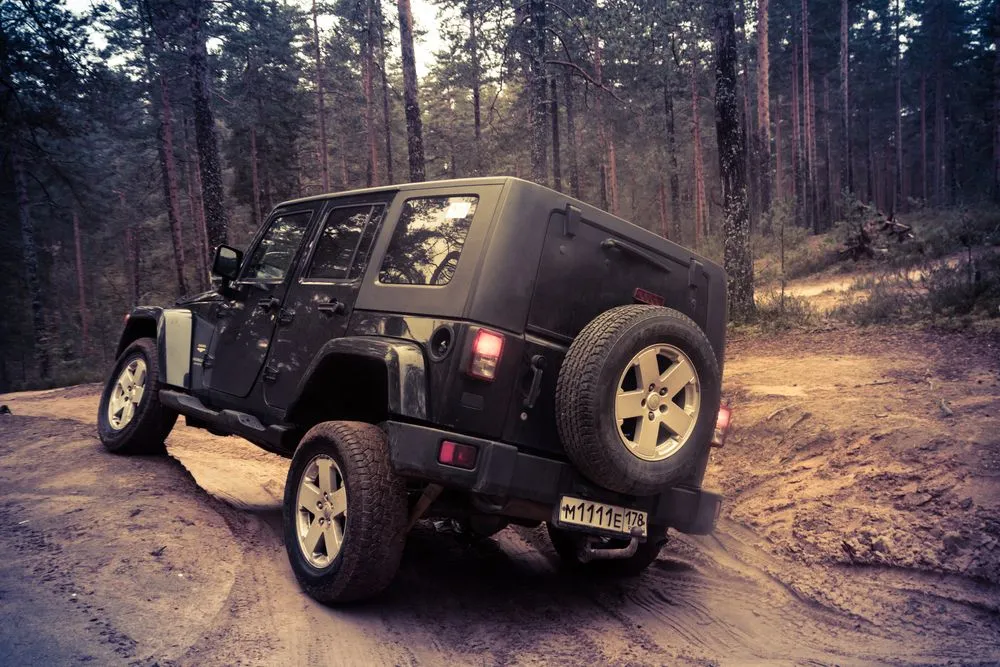
The kinetic energy due to wheel travel is stored in the displacement unit. A shock absorber is composed of a piston moving in an oil-filled chamber. This piston moves in synchronization with the displacement unit. Due to the incompressible nature of liquids, the piston movement is very restrictive and regulated, thus allowing for a controlled dissipation of the kinetic energy.
What Are The Various Types Of Suspension?
There are two useful ways to slice up the world of suspensions. The first is by geometry, meaning how the wheels are physically linked together. The second is by control, meaning how much say the car's electronics have over the springs and dampers. Let's take them in turn.
Dependent vs. Independent Suspension
In a dependent (or solid-axle) suspension, the left and right wheels are joined by a single rigid beam, so when one wheel hits a bump, the jolt is partly passed across to the other. It's tough, simple and cheap, which is why you still find it holding up the rear of most pickup trucks, vans and heavy-duty off-roaders.
In an independent suspension, each wheel moves on its own set of links, so a pothole under one tire barely disturbs the other. This gives a smoother ride and better grip, at the cost of more parts and complexity. Almost every modern passenger car uses independent suspension at the front, and most use it at all four corners. The common independent layouts are:
- MacPherson strut: the most widely used front setup in the world. A single strut (a damper wrapped in a coil spring) does double duty as both the shock absorber and a load-bearing structural member, with one lower control arm locating the wheel. It's compact and cheap, which suits front-wheel-drive cars perfectly.
- Double wishbone: two A-shaped control arms (the "wishbones") hold each wheel, keeping it more upright through corners and giving the precise handling prized on sports cars and performance sedans.
- Multi-link: the most sophisticated layout, using three or more separate links per wheel. It delivers wishbone-grade control while packaging more compactly, which is why it dominates the rear of modern premium and electric cars.
- Trailing arm: an arm runs back from a body pivot to carry the wheel, a neat, space-saving choice often seen at the rear of small front-wheel-drive cars.
Now for the second way of classifying suspensions, by how they are controlled.
1. Passive Suspension
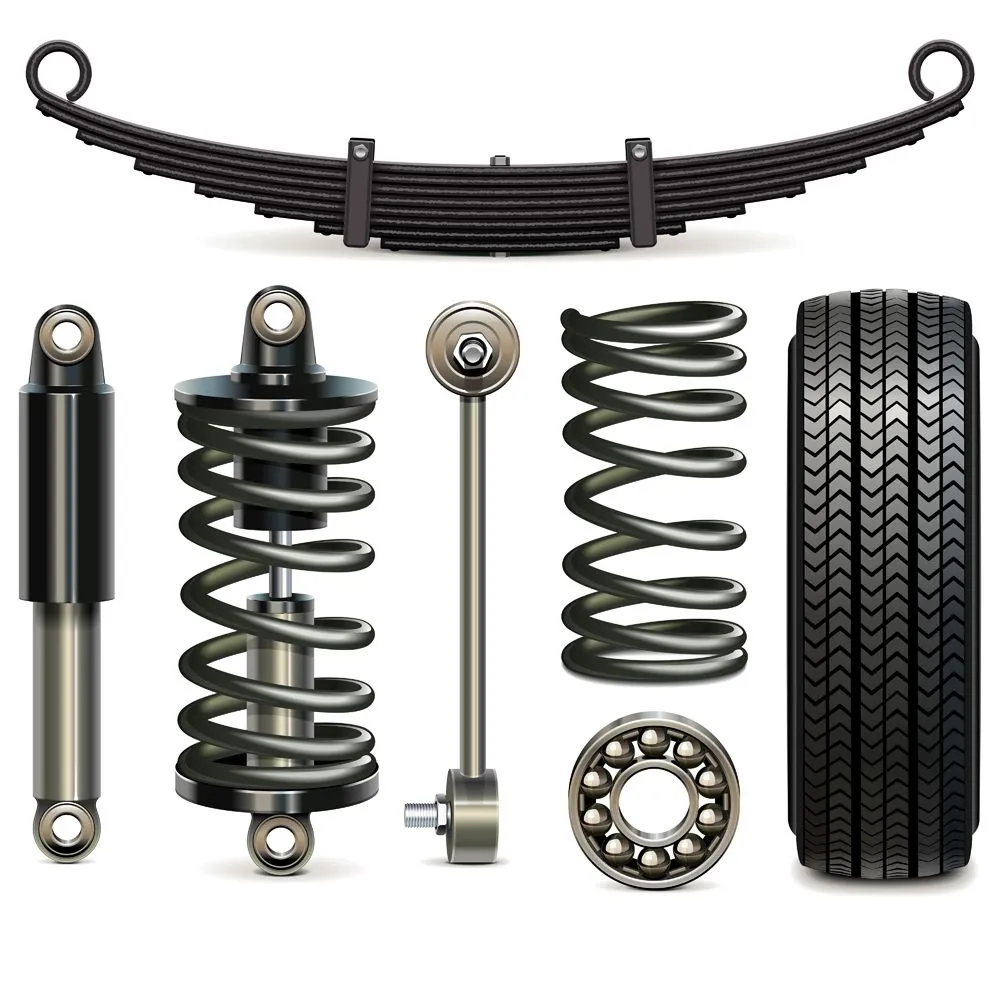
A passive suspension is the traditional kind: its springs and dampers have fixed characteristics set at the factory, so the system simply reacts to whatever the road throws at it. The vast majority of cars on the road are passive, and they differ mainly in the type of spring they use.
I. Coil Springs
The displacement unit is a coil spring made of steel. These are a very cost-effective option and are found on most modern cars and motorcycles.
Ii. Leaf Springs
The displacement unit is a stack of elastic sheets of metal (the "leaves") laid out laterally or longitudinally, usually paired with a solid axle. Far from being obsolete, leaf springs are still standard at the rear of most pickup trucks, vans and heavier load-bearing vehicles, where their high load capacity and rugged simplicity are hard to beat. In ordinary passenger cars, though, they have been almost entirely replaced by coil springs for the sake of ride comfort.
Iii. Torsion Bars
Here the spring is a long steel bar anchored at one end, with the other end twisting as the wheel moves up and down; the bar's resistance to twisting (its torsional stiffness) is what does the springing. Torsion bars take up little space and once featured heavily on the front of trucks and SUVs.
2. Adjustable (Air And Hydropneumatic) Suspension
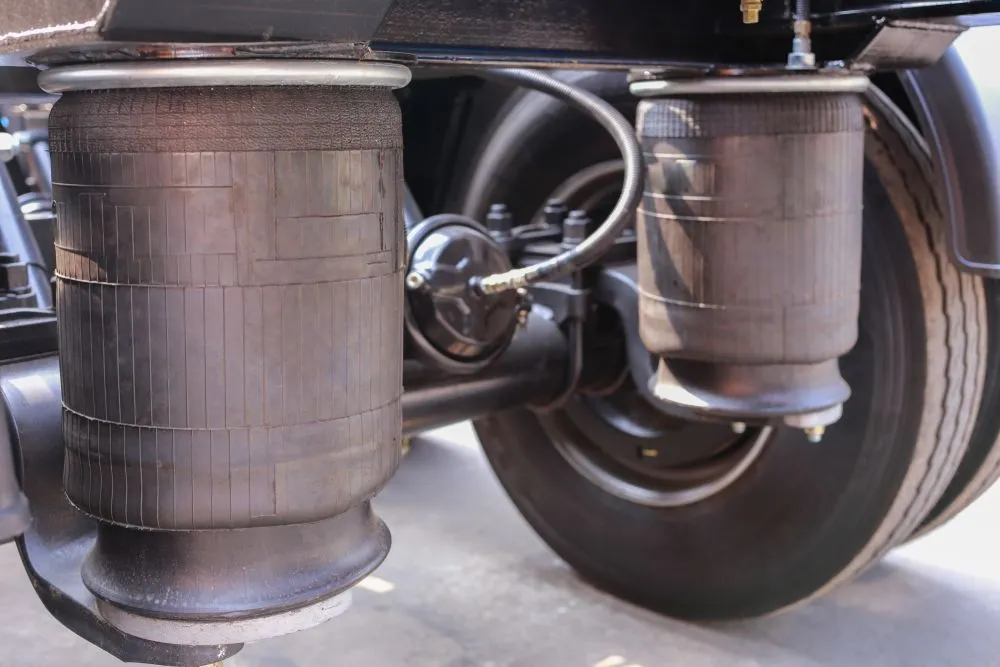
These systems swap the steel spring for a gas or fluid medium, which lets the car adjust its ride height and stiffness. They are sometimes loosely called "active," but strictly speaking they are self-leveling rather than truly active, because they do not use powered actuators to counteract body motion in real time.
I. Air Springs
In this type of suspension setup, the displacement unit is an air-filled rubber bladder that can be inflated or deflated at will. This is generally accompanied by a compressor unit and a filter to prevent moisture from entering the system. Air suspension is better than mechanical suspensions in terms of ride quality, load-bearing and ride handling. However, these systems are more expensive to install and maintain.
Ii. Hydropneumatic Suspension
A hydropneumatic suspension is a combination of air springs and hydraulic damping integrated into one unit. Apart from damping, the hydraulic column also serves to vary the ground clearance by adjusting the ride height.
3. Semi-Active And Active Suspension
This is where the electronics truly take over. A semi-active system keeps a conventional spring but fits dampers whose stiffness can be varied on the fly, often using magnetorheological fluid whose thickness changes when a magnetic field is applied (as in GM's MagneRide). It can only ever remove energy from the system, but it can do so cleverly and almost instantly. A fully active system goes further, using powered hydraulic or electromagnetic actuators that can actually push a wheel down or pull it up, adding energy to cancel out body roll, dive and pitch. Because actuators are expensive and power-hungry, fully active setups are still mostly reserved for luxury and performance flagships.
Advancements In Suspension Technology: Adaptive Suspension
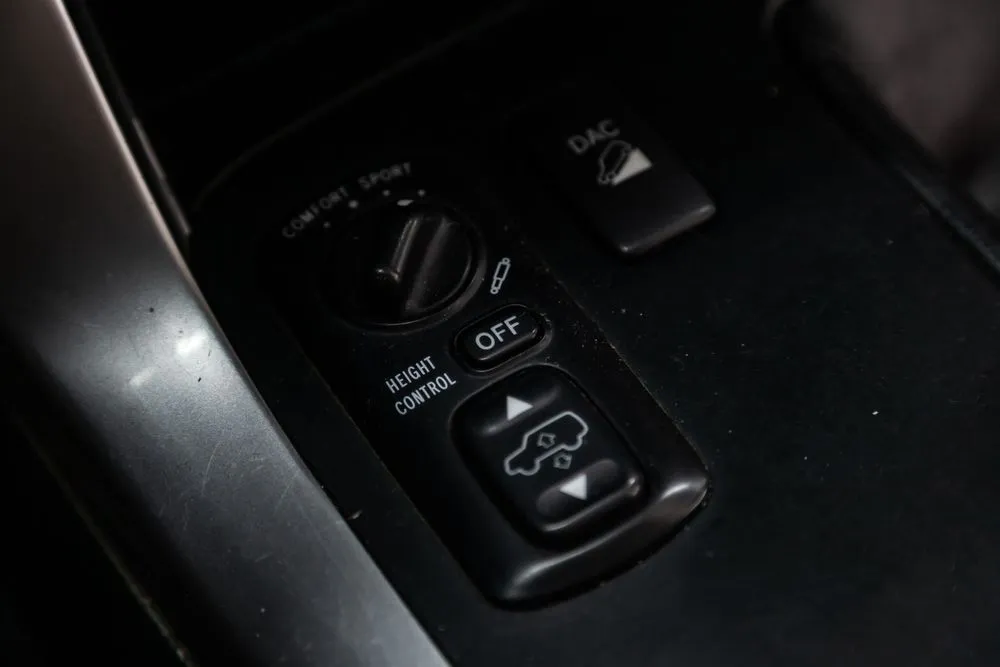
An adaptive suspension system consists of an active suspension system linked to cameras, sensors and the GPS system built into a vehicle. This enables the onboard computer to make adjustments to the suspension configuration in anticipation of the terrain to come, thereby ensuring smoother ride quality and better handling.
Ride height control is another feature found in hydropneumatic suspension systems. By changing the amount of oil in the hydraulic column, the height of the vehicle can be varied slightly. A lowered car is more stable and easier to handle, while a raised car can effectively clear underbody obstacles, such as tall speed bumps, surface undulations, or even water from flooding.
What Does A Suspension Mean To Us?
The suspension, unlike other powertrain components like the combustion engine and transmission, will not become antiquated with the advent of electric vehicles, as stability and comfort of the ride will always be an important aspect of automotive travel. Paying close attention to suspension parameters and upkeep can go a long way towards improving the overall health and performance of your vehicle!