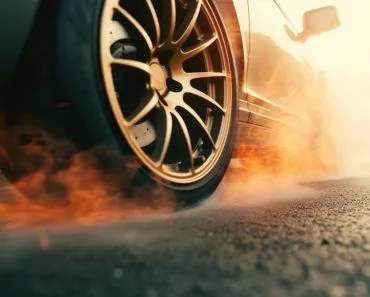
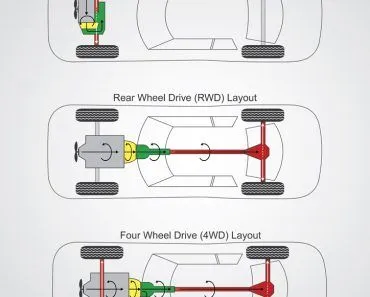
Trains use steel wheels because steel-on-steel rolling resistance is roughly ten times lower than rubber-on-road, which is how a single locomotive can pull thousands of tonnes for hundreds of miles on a smooth, level track. Cars use rubber tires because they need to grip uneven roads, brake hard in short distances, and absorb bumps that a rigid metal wheel could not.
There are all kinds of vehicles around us with different forms and factors. Different means of transportation use different technologies to work effectively.
We have cars and buses that run on roads. These vehicles use rubber tires over their wheels, and we are very used to seeing them.
Important Factors That Affect The Choice Of A Wheel
Before we head straight into the discussion of the wheels of trains and cars, let’s identify some of the factors that must be taken into account when deciding what kind of wheel should be used. Keep in mind that there are many factors that play a role, but these are the major ones:
Friction
Friction has to be the most important factor in deciding what kind of wheel a means of transportation needs, hands down.
Friction is a form of force. Usually, friction is experienced when the surface of one object comes into contact with the surface of another object. Each object applies a force on the surface of the other object in the direction opposite to the movement of the other object.
We know that the lower the friction, i.e. the smoother the two objects in contact are, the faster they move over each other.

Speeds
Different vehicles are meant to travel at different speeds. How fast something is supposed to travel, as well as for how long it is supposed to travel at such speeds, plays a role in deciding the kind of wheel that is to be used.
Terrain
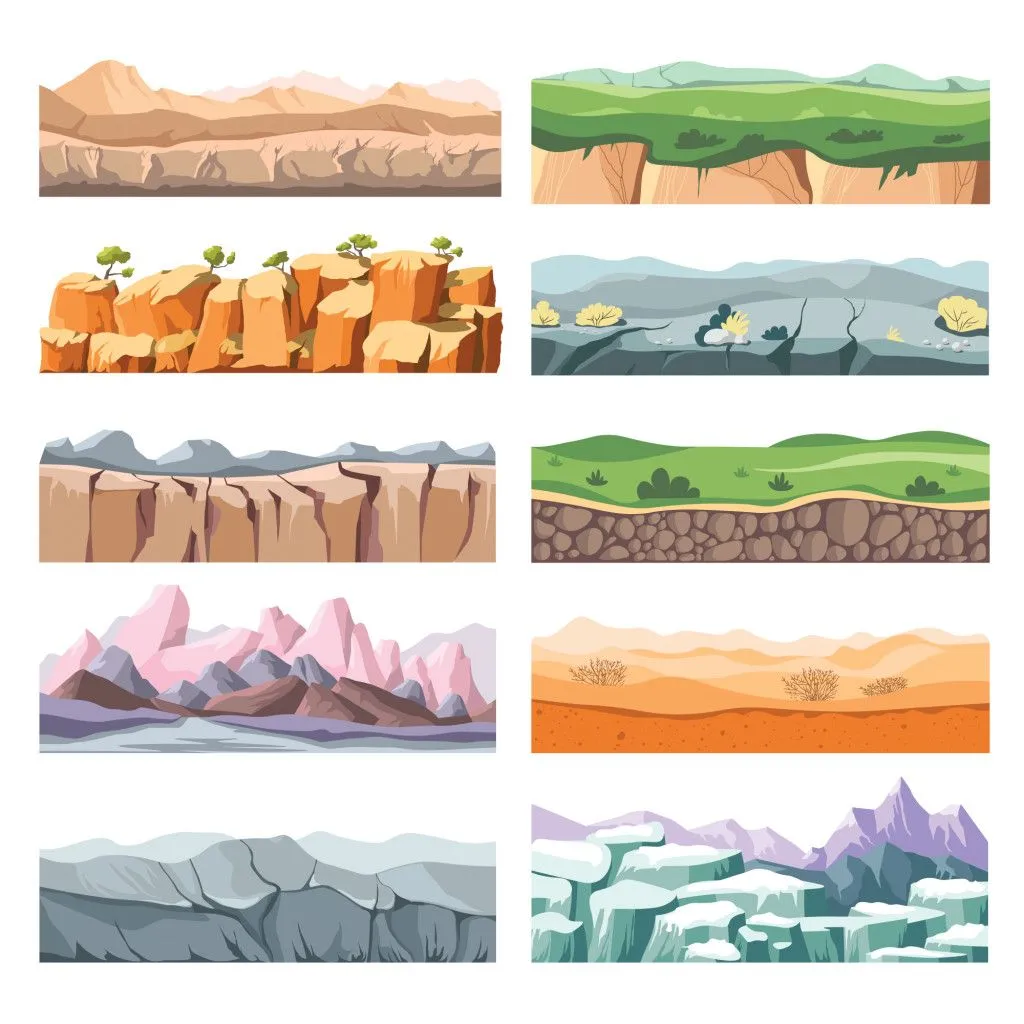
We also choose a type of vehicle for the kind of terrain we want to go through. Different terrains require different means of transportation, and thus different kinds of wheels.
So Why Do Trains Need Metal Wheels?
Trains are supposed to travel long distances at high speeds while carrying a huge amount of weight. We have to use wheels that can satisfy all of these conditions.
First of all, the friction needs to be minimal for the wheels of a train. A train travels on rails that are thoroughly uniform and smooth. Since there are no bumps or holes in the route, the objective of the train is to maintain a high speed.
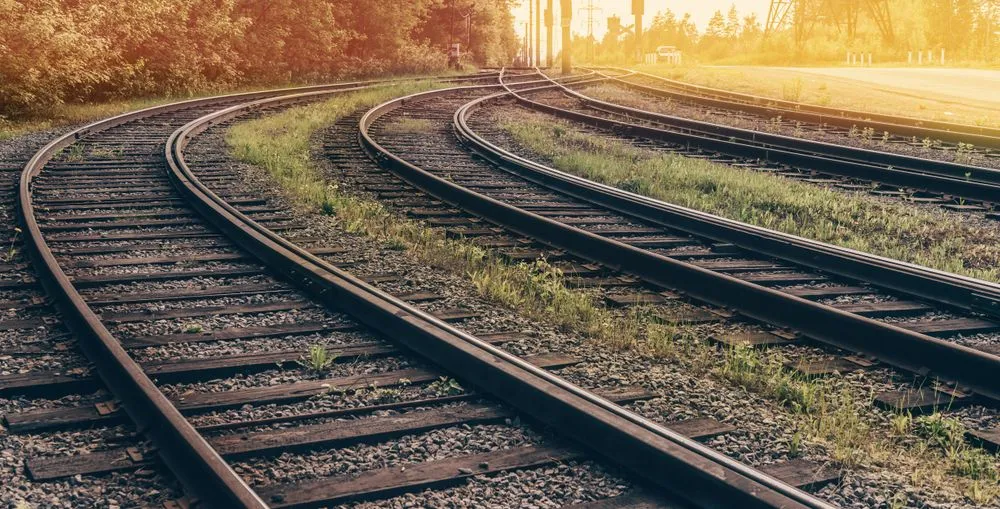
A train can maintain a high speed if there is very little rolling resistance between its wheels and the rails, which is achieved by making the wheels out of smooth, hardened steel. Both the rails and the wheels are steel and roll smoothly against each other. The coefficient of rolling resistance for a steel wheel on a steel rail is roughly 0.001 to 0.002, compared with about 0.01 to 0.02 for a car tire on asphalt; in other words, a steel-on-steel wheel takes about ten times less energy to keep rolling at the same speed under the same load. (Note that this is rolling resistance, which is different from the grip, or static friction, at the contact patch. Trains do still need that grip to accelerate and brake, which is why railway operators sprinkle sand on the rails in slippery conditions.)
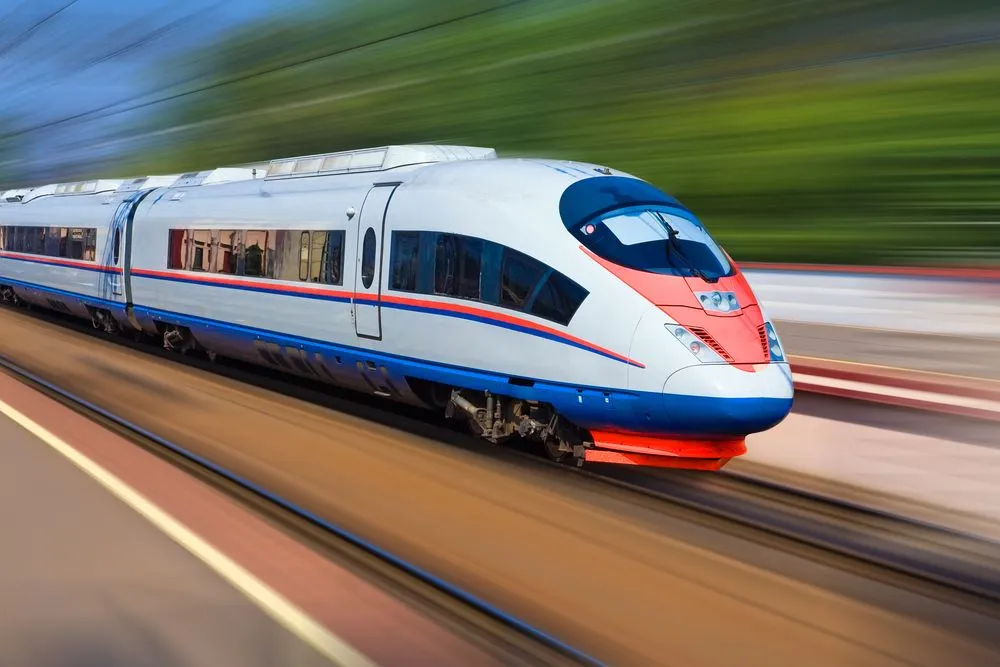
Trains do not need to stop suddenly, which is generally for their own good, since they carry so much weight and momentum. Because of this reason, they do not require wheels that produce friction, so metal wheels are chosen to reduce friction and maintain the speed.
Trains are also extremely heavy (much much heavier than your usual sedan). Rubber wheels require a very high amount of energy to move. Most of the energy/force produced from your car’s engine goes into making the rubber wheels rotate.
Now if the train’s wheels were made of rubber, the engine would require a tremendous amount of energy/force to make the train move, since its weight is so great. Friction also increases as the weight of an object increases, making the rubber tires cause even more friction.
All of these qualities are bad news for trains, so using rubber wheels for a train is just not practical.
What About Cars?
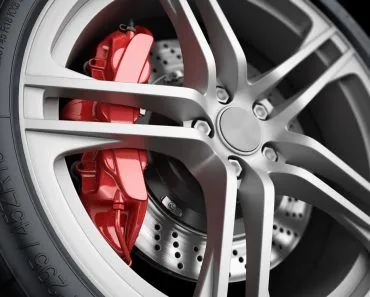
Unlike the train, which only runs on rails, a car or any vehicle has to travel on roads—and off roads sometimes too! There are instances when we have to drive our car through a road full of potholes, while at others we have to drive it through thick mud.

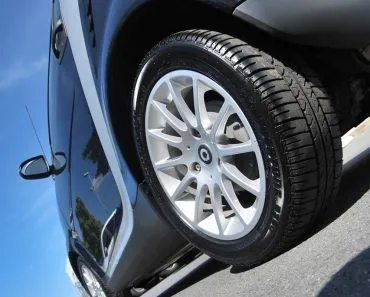
Uneven terrain is not an unusual challenge for our vehicles either. All of these situations require the vehicle to have a strong grip on the surface on which it is treading. This grip is only achieved if there is enough friction between the wheels and the terrain. This friction is provided by the rubber.
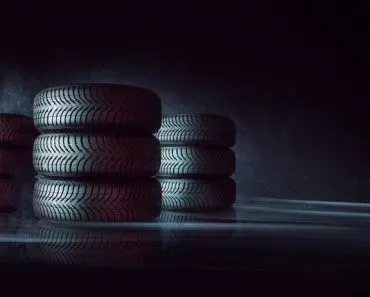
The roads and lands that the vehicles go through also continually damage the tires, but it would be very expensive to change metal wheels over and over again. Rubber tires are comparatively cheaper to change and last much longer in such testing conditions.
Cars also need to brake and stop much more often and more rapidly than trains, so the inclusion of rubber tires helps with this too.
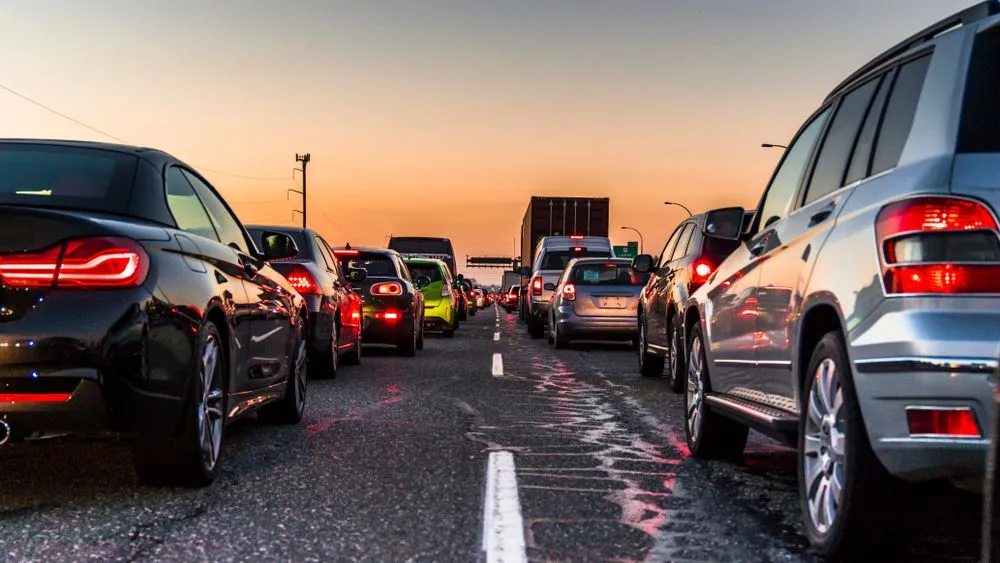
Since cars only need to maintain a certain speed and are not nearly as heavy as trains, the rubber tires do not hold them back from gaining momentum and do not waste an outsized share of the engine's energy, as they would on a train. They also do an unglamorous but vital job that steel wheels cannot: absorbing bumps and small road imperfections so that the suspension does not have to do all the work.
Train Wheel Trivia: Flanges, And A Few Rubber-Tyred Exceptions
Two quick details worth knowing. First, train wheels are not perfectly cylindrical: each one has a raised lip on the inside called a flange, which sits just inside the rail and prevents the wheel from slipping sideways off the track. The tread itself is also slightly conical, so the wheel naturally re-centers itself when the train wobbles. So yes, trains very much have wheels (this is by far the most common question searchers ask) — they just look a little different from car wheels.
Second, there are a handful of rubber-tyred metros that are exceptions to the rule. The Paris Métro (some lines), the Montreal Metro, Mexico City Metro and Lyon Métro run on pneumatic tyres riding on concrete tracks, with steel wheels as a backup. They are quieter and accelerate harder than steel-on-steel trains, but they use much more energy per passenger-kilometer and produce more tyre wear, which is why the design has never become the global norm.
Conclusion
There are many factors that affect the kinds of wheels that need to be used for different kinds of vehicles, but the most important one among them is friction.
Since trains need to travel at fast speeds constantly with a lot of weight, they require less friction, which is provided by the metal wheels, whereas cars have to tread uneven terrains and all kinds of roads that require a high value of friction, which is provided by rubber tires!
References (click to expand)
- Train Wheel Science - Scientific American. Scientific American
- What is Friction? | Physics Van | UIUC. The University of Illinois Urbana-Champaign
- Friction - an overview | ScienceDirect Topics. ScienceDirect
- Rolling resistance (coefficients for steel-on-steel vs rubber-on-asphalt). Wikipedia.
- Rubber-tyred metro (Paris, Montreal, Mexico City). Wikipedia.