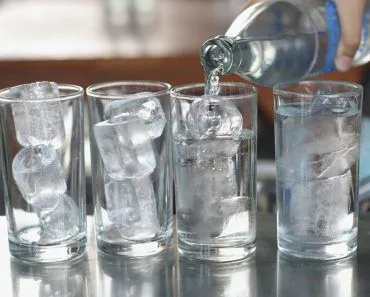
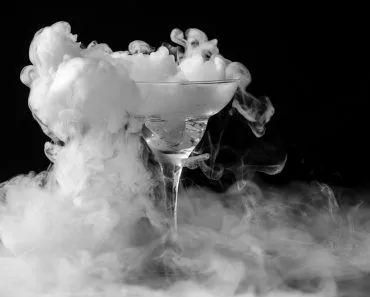
Ice cubes look cloudy mainly because dissolved air and impurities get trapped at the core when water freezes quickly from the outside in. Clear ice forms when water is boiled (to drive off dissolved air) and frozen slowly from one direction.
When you put ice cubes into a drink, you may notice they are usually cloudy. However, you may have also seen crystal clear ice cubes, often found in high-end bars and restaurants.
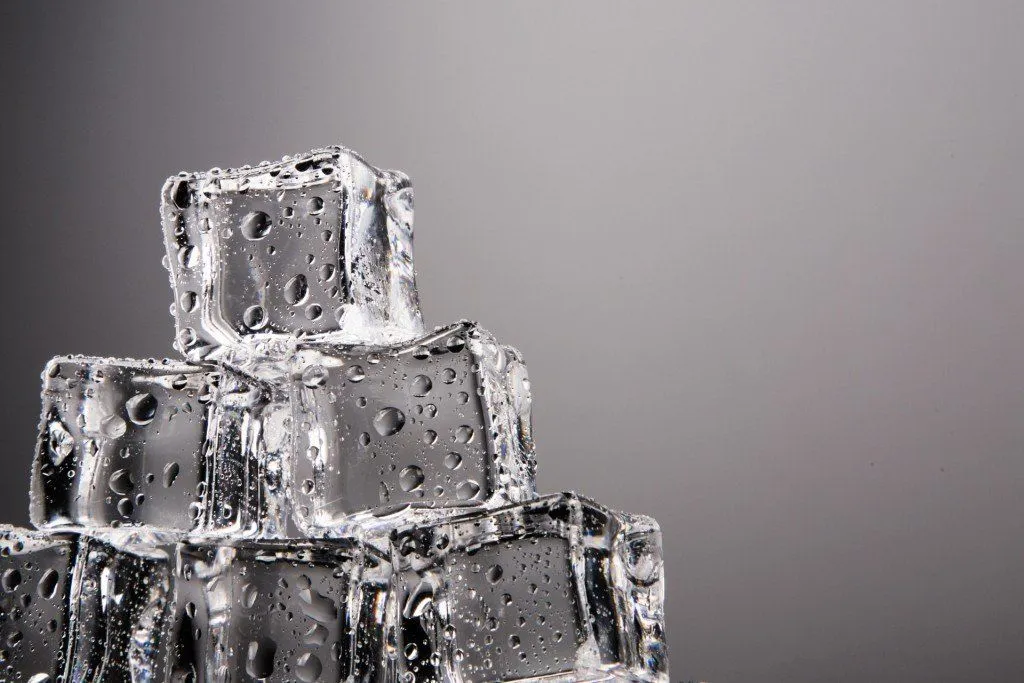
You might think that this is because of the quality of water used to make the ice, but that may not be the case. Even if you freeze clear, drinkable tap water, it will likely form cloudy ice cubes. And even if it appears somewhat clear, it won’t be as clear as the ice cubes you see in ads or top-notch bars.
Since all ice cubes are made of water and formed through the same freezing process, why do they appear differently?
Water At Room Temperature Contains Many Impurities
Although we cannot see it with the naked eye, our water contains various impurities. The term “impurities” doesn’t necessarily refer to bacteria and germs only. Anything that is not water present in the water can be regarded as an impurity. Most of the impurities found in tap water are not harmful to our health, and some, such as calcium and magnesium, are even beneficial. Additionally, different impurities in water can give it a distinct taste.
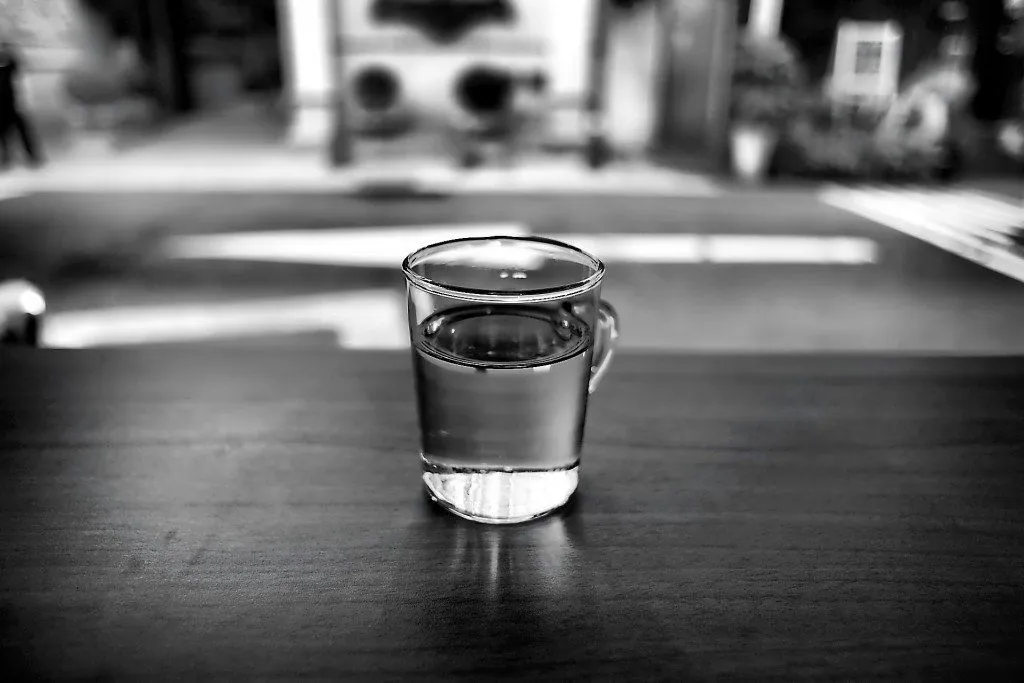
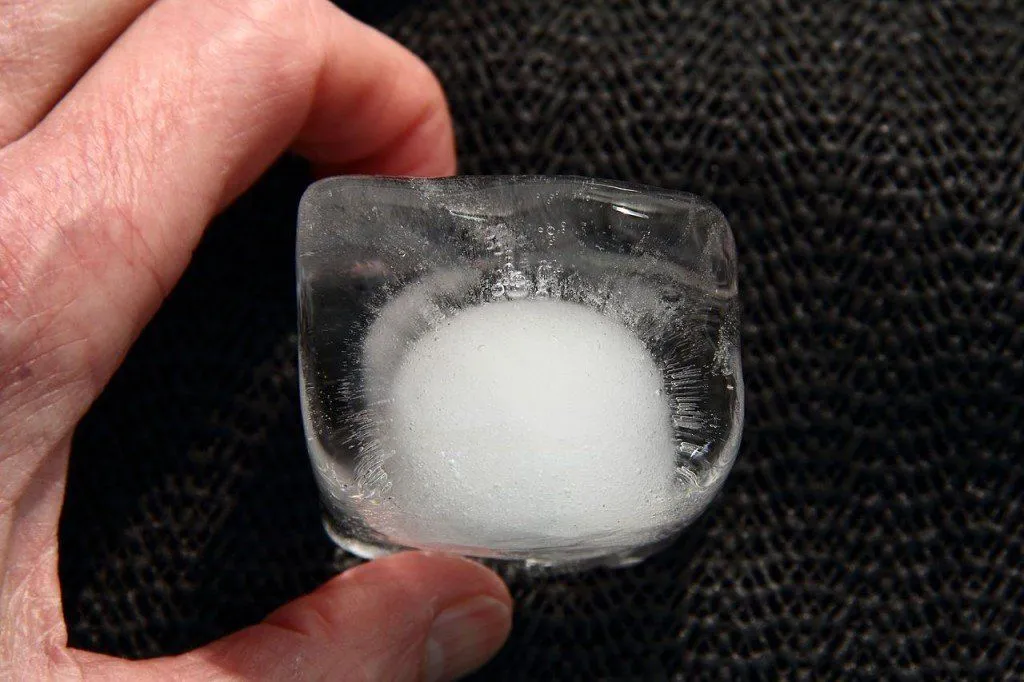
The most commonly found impurities in tap water include lime (also called limescale), calcium, fluoride, nitrates, magnesium, and other organic elements that are difficult to remove through regular filtration methods. When water freezes, these dissolved minerals are pushed ahead of the advancing ice and concentrate near the center, which is one reason ice cubes can look whitest in the middle. That said, minerals are usually only a minor contributor to a cloudy cube. As we will see, the bigger culprit is dissolved air, which is why even ice made from soft or low-mineral water still freezes cloudy.
Note that ice cubes made from distilled water tend to be clearer because distilled (or even boiled water) does not have as many impurities as tap water.
Ice Cubes Tend To Be Cloudy When Water Is Cooled Rapidly
Even if you try freezing boiled water in your freezer, it’s likely that the ice cubes formed will not be as clear as you might expect them to be.

The reason is not related to the water being full of impurities, but rather in how it’s cooled.
You see when you cool water in your run-of-the-mill freezer, it cools rapidly, and tiny air bubbles (formed from the dissolved air in water) get trapped within the crystalline structure.
These bubbles are then pushed toward the cube’s center as water freezes around them, making the ice cube cloudy.
To ensure their ice cubes are as clear as possible, specialized ice makers freeze water in layers so that air bubbles do not form within the ice.
Furthermore, they freeze water very slowly, so large crystals of water are formed, and any bubbles that might have formed in the process have plenty of time to escape.
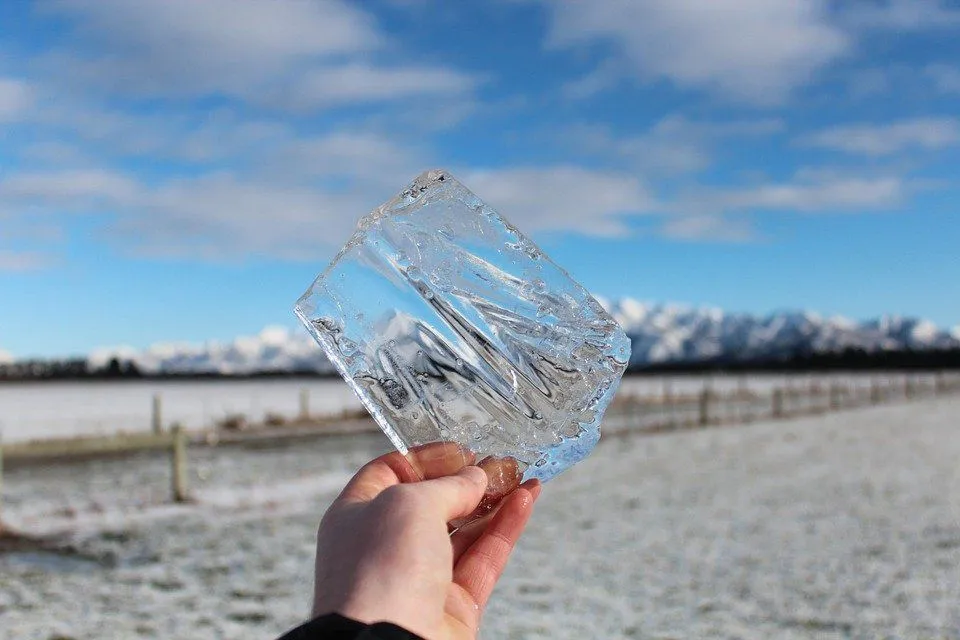
If you want, however, you can make clear ice at your house too! Just make sure you use boiled water (you might even consider boiling it twice for better results) and then freeze it slowly.
Is Ice Transparent Or White? Why Trapped Bubbles Scatter Light
Here is the curious part: pure ice, like pure water, is genuinely transparent. A single, flawless ice crystal lets light pass straight through it. So why does so much everyday ice look white and opaque instead?

The answer is those trapped air bubbles. Every time light moving through the ice hits the edge of a bubble, it crosses a boundary between solid ice and a pocket of air, and at that boundary the light gets bent and bounced off in a new direction. Pack millions of these tiny bubbles into the core of a cube and the light no longer travels in a straight line. Instead it bounces around in all directions before scattering back out, and your eye reads that jumbled mess as a milky, opaque white.
Because the bubbles scatter all wavelengths of visible light roughly equally, no single color dominates, so the cloud looks white rather than tinted. It is the same trick that makes fresh snow look white even though each ice crystal is colorless: countless air gaps between the crystals scatter the light. So ice is neither purely transparent nor truly white. It is transparent when it is bubble-free, and it turns translucent or opaque once enough trapped air is scattering the light.
Are Cloudy Or White Ice Cubes Bad For You?
If your ice keeps coming out cloudy or white in the center, you might wonder whether something unhealthy is hiding in there. The reassuring answer is no. Cloudy ice is not a sign of contamination. The whiteness is mostly trapped air, with a small amount of the harmless dissolved minerals (chiefly calcium and magnesium) that occur naturally in tap water.

The U.S. Environmental Protection Agency does not even set a health-based limit for water hardness, because the calcium and magnesium that make water "hard" are not toxic at the levels found in drinking water. So those occasional white flecks in your cubes are not dangerous. The simple rule is this: if the water is safe to drink, the ice made from it is safe to use, whether the cube turns out crystal clear or completely cloudy.
There are a couple of practical downsides, though, neither of them about safety. Cloudy ice is riddled with air pockets, so it is a touch less dense and tends to melt a little faster than clear ice, watering down your drink sooner. And because air bubbles can hold onto odors, ice that has sat in the freezer for a while can pick up a stale, freezer-y taste. If you notice persistent white particles that settle out, descaling your ice tray or ice maker with a vinegar rinse usually clears it up.
How To Make Clear Ice At Home
Boiling the water first (to drive off some of the dissolved air) and freezing it slowly does help, but on its own it rarely gives you the flawless, glass-clear cubes you see in a cocktail bar. The technique the pros actually rely on is called directional freezing, and you can copy it with kitchen gear.
The idea is to force the water to freeze in one direction only, from the top down, so that the air and minerals are continually pushed ahead of the ice into the still-liquid water below, instead of being trapped in the middle. Here is the simplest version:
- Fill a small insulated cooler (an "esky" or even an insulated mug) with water and leave the lid off.
- Place it in your freezer. Because the foam walls insulate the sides and bottom, the water can only lose heat from the open top, so it freezes downward, one layer at a time.
- Take it out before it freezes solid, usually after about 18 to 24 hours. The top portion will be beautifully clear, while the cloudy part with all the trapped air will be concentrated at the very bottom.
- Tip out the block, let it temper for a few minutes so it does not crack, then cut or break off the clear section for your drinks.
Starting with cooled, previously boiled water gives you a small head start by lowering the dissolved-air content, but it is the one-directional freeze that does the heavy lifting. The same physics is why deep glacial ice and slowly frozen lake ice are so clear: the gases have somewhere to go instead of being sealed in.
Last Updated By: Ashish Tiwari
References (click to expand)
- Melo, F. S., Cardoso, R. P., & Hermes, C. J. L. (2024, May). Quality and quantity trade-offs in clear ice making. International Journal of Refrigeration. Elsevier BV.
- Azhari, A. S., Tyastirin, E., & Faizah, H. (2022, December 17). Physical, Chemical, and Microbiological Quality Analysis of Home Ice Cubes, Beams, and Crystals in Gang Lebar, Wonocolo, Surabaya. Jurnal Biologi Tropis. Universitas Mataram.
- Mason, B. J. (1958, April). The supercooling and nucleation of water. Advances in Physics. Informa UK Limited.
- How Do I Make Clear Ice At Home? A Food Scientist Shares Easy Tips. University of Southern Queensland / The Conversation.
- Why Is Ice Different Colors? The Weather Guys. Space Science and Engineering Center, University of Wisconsin-Madison.
- Secondary Drinking Water Standards: Guidance for Nuisance Chemicals. U.S. Environmental Protection Agency.