Table of Contents (click to expand)
The 2019-2020 "Black Summer" was so severe because a record-strong positive Indian Ocean Dipole, a negative Southern Annular Mode and a warming climate combined to give Australia its hottest, driest year on record. By the time the fires were out in March 2020, they had burned roughly 24 million hectares (59 million acres), killed 33 people directly and destroyed over 3,000 homes.
Nearly 3 billion animals killed or displaced, 33 people killed directly (with hundreds more deaths later linked to the smoke), more than 3,000 homes lost, and roughly 24 million hectares (59 million acres) burned.
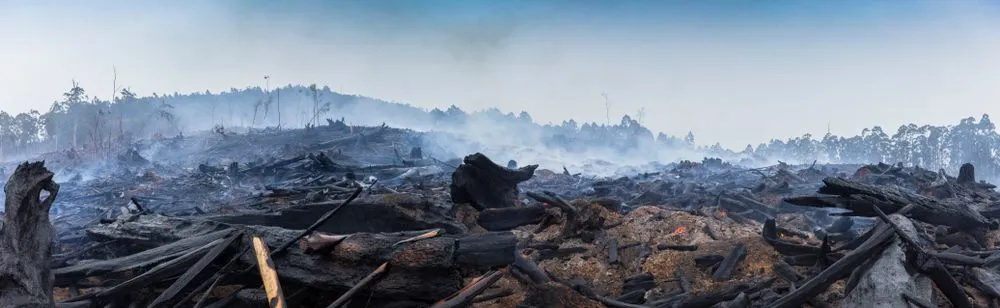
That was the toll of the wildfires that ravaged Australia from June 2019 through the southern summer of 2019-2020, a stretch now remembered as the "Black Summer." The blaze raged for months, claiming lives, covering ground and at times growing so uncontrollable that weather prediction systems struggled to keep pace. Every state and territory battled its own fires, but New South Wales and Victoria were hit the worst; red skies choked with ash and smoke hung over most of these states, and the smoke plumes were clearly visible from space.
At their peak, the fire fronts in New South Wales alone stretched for thousands of kilometers, and the smoke drifting off the coast was carried right across the Pacific Ocean to South America.
Very few Australian bushfires in the past have been as widespread or furious as the 2019-2020 fires. The Black Saturday fires of February 7, 2009 accounted for 173 deaths and remain the worst Australian bushfire event in terms of loss of life, even though they burned a far smaller area (over 430,000 hectares, roughly one million acres). February of 1983 saw Ash Wednesday, the second-deadliest bushfire event behind Black Saturday, in which 75 people died (47 in Victoria and 28 in South Australia) and more than 200,000 hectares (about 500,000 acres) burned in Victoria alone (Source).
By the time the last fires were extinguished in early March 2020, they had scorched roughly 24 million hectares (59 million acres). For perspective, the Amazon rainforest fires that made global headlines in 2019 burned an estimated 2.4 million hectares (about 6 million acres), a fraction of the area lost in Australia (Source).
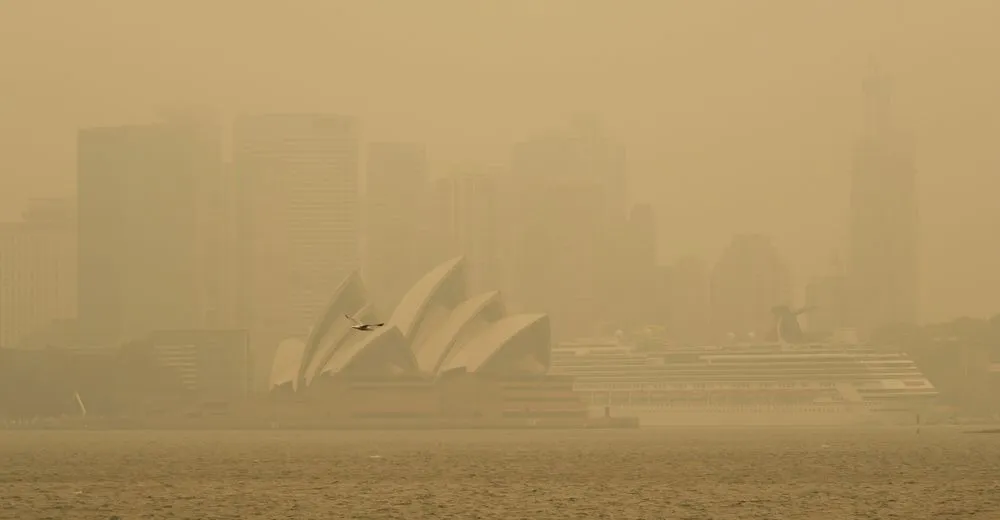
Fire, Fire Everywhere
Clearly, Australia is no stranger to bushfires: the hot, dry summers that plague the continent frequently create perfect dry bush fuel systems that require only a stray cigarette, a flash of lightning or plain, deliberate arson to trigger an uncontrollable and destructive fire. It is the driest continent in the world, with most of the landmass composed of hot desert, save for the Eastern, Southwestern and Southern coasts.
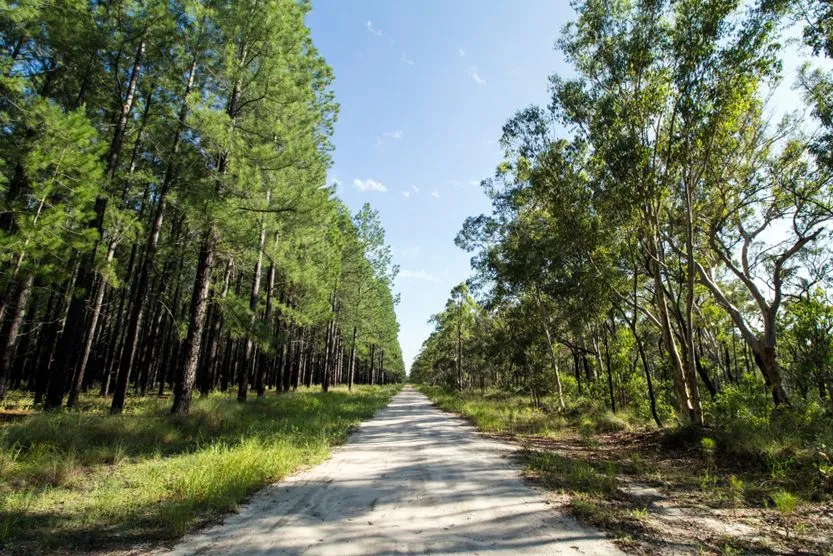
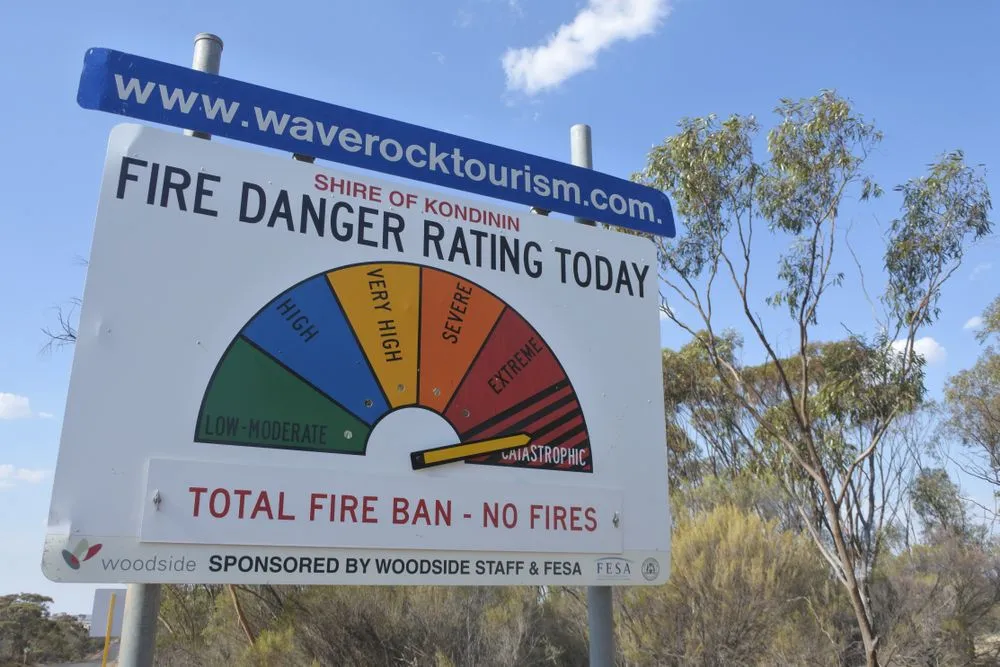
Year after year, the spring season brings ample preparation for bushfire season. Controlled fires are conducted to burn out the brush fuel in vulnerable locations, under specific weather conditions and stringent supervision. Fire lanes or firebreaks (corridors of cleared vegetation designed to stop the spread of fire) are a common sight. Local governments issue thorough and detailed fire prevention guidelines for homeowners to better protect citizens (Source).
Unfortunately, the usual groundwork this past year has clearly failed to forestall the intense forces of nature. What’s so special about the fires of 2019?
C For Climate Change
It’s not coming up, and it’s no longer talked of in the future tense. Climate change is here, evidenced by the devastating spike in calamities, freak weather phenomena, extreme climatic conditions and record-breaking temperatures on our planet. What made that bushfire season so much worse was a calamitous confluence of extreme and extended drought, heat waves and strong winds.
Temperatures: December 18, 2019 saw Australia’s hottest nationwide average temperature on record, with the area-averaged daily maximum hitting 41.9 °C (107.4 °F). The previous record had been set just the day before, on December 17, at 40.9 °C (105.6 °F), beating the old mark of 40.3 °C (104.5 °F) set on January 7, 2013. The normal average summer temperature of Australia sits at about 27.5 °C (81.5 °F), a good 14 degrees lower than the peak reached during that historic summer.
Rainfall: The last few decades in Australia have been characterized by highly unpredictable and erratic rains. A report states that the northern regions of the continent have been receiving an unusually high amount of rainfall over the past 800 years. On the other hand, southern areas have had especially low levels of rainfall, and the droughts of the 20th and 21st centuries are possibly the worst seen in 400 years. The spring of 2019 was also the country’s driest spring on record (Source).
Australia’s east coast houses most of the major urbanized regions, such as Sydney, Melbourne, Canberra and Brisbane. That area had been in a declared drought since 2017, which was still in force as the fires burned. (Source)
Winds: The massive, hot desert occupying most of the middle and northwest of the continent carries heated gusts of wind to most of the East and Southeast coasts. December winds reached speeds of up to 128 km/h (about 80 mph). Seasonal strong winds are not unusual, but under these circumstances they only served to exacerbate the already severe fire conditions. Worse still, the winds kept shifting direction in unpredictable ways, making the firefighting even harder and more dangerous (Source).
The Big Three
All these climatic conditions can be explained by three main phenomena that occur in the Oceania region. Caution: There are some confusing, but important, terms ahead!
El Niño
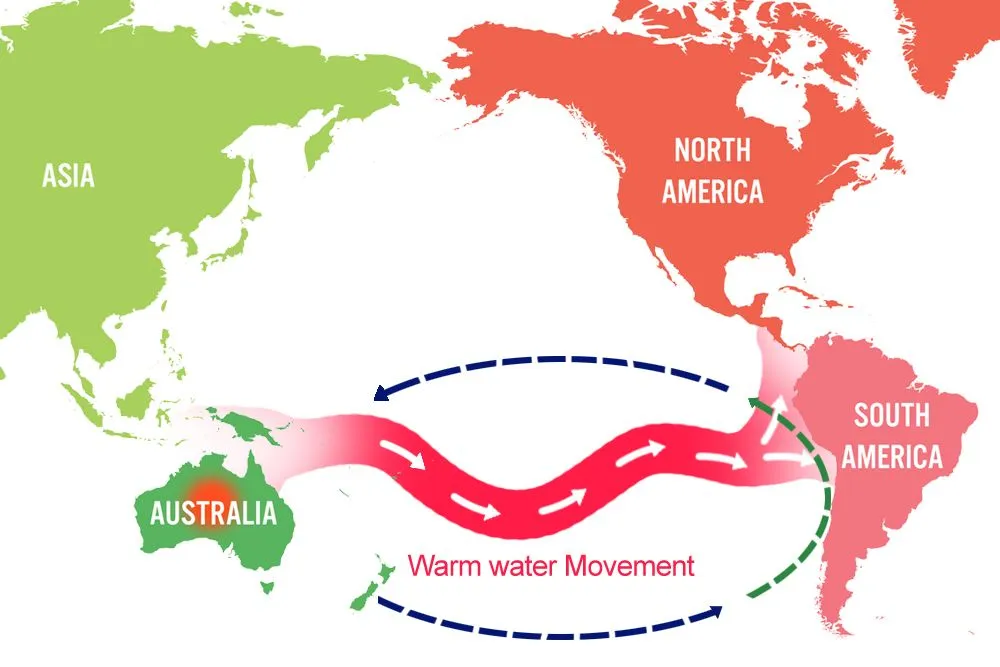
El Niño is a climate cycle caused by shifts in warm water currents and pools in the Pacific Ocean, but it affects climatic conditions worldwide. The warm water pool of the Pacific is usually supposed to be present near Southeast Asia, but when El Niño occurs, this pool shifts eastward along the equator nearer to South America.
Consequently, it causes changes in wind and rainfall patterns due to varying evaporation rates from the ocean. Therefore, the warm water pool that brings much of the rain to the northern parts of Australia instead sucks out the moisture in the area during El Niño. Many severe droughts witnessed in Australia have been during El Niño years (1982, 1994, 2002 & 2006). This relatively common phenomenon also causes high temperatures (Source).
A weak El Niño lingered into early 2019 before conditions in the Pacific returned to neutral by around August 2019, so this was not a classic El Niño-driven fire season. Even so, the earlier dry signal helped set up a landscape of hot weather and parched vegetation that was just waiting to host a massive fire. As the sections below show, the bigger culprit lay in the Indian Ocean.
Southern Annular Mode
Next up is the Southern Annular Mode (SAM), which also affects Australian rainfall and temperature. The Westerlies are winds that normally bring rain to the continent and blow from west to east. Seasonally, these winds shift north and south, which is why the north and south of Australia get rain in different seasons.
The SAM changes the pattern of this North-South fluctuation by shifting the rain-bearing winds further north or south than normally expected. Thus, some areas experience unseasonal rain, while others drought. This year’s SAM left the Southeast drier than usual due to a northward shift of the westerly winds (Source).
Indian Ocean Dipole
Finally, to wrap up this spiel of technical terms, there is the Indian Ocean Dipole. The easiest explanation is to think of this as the Indian Ocean’s version of El Niño. There’s a warm water pool that cycles from the west to the east of the ocean. Around November, it’s supposed to reduce temperatures on the west coast of Australia and help bring on the monsoons. In 2019, however, the IOD swung into one of the strongest positive phases on record, which made the air flowing across Australia much hotter and drier than it should have been and starved the south of its usual winter and spring rains. This was the single biggest natural driver behind the drought, amplified by a warming climate (Source).
Fighting The Flames
Australian firefighters were pushed to the brink. Most of them were volunteers, drawn from across Australia and overseas, and several lost their lives during the season. Images of charred kangaroos and koalas caught in the flames became tragic symbols of the devastation the blaze caused.
With the drought biting hard, there was simply not enough water to fight every front, and many believed only sustained heavy rain could save the country. That rain finally arrived in February 2020, and the heavy falls (along with cooler conditions) helped crews bring the last of the fires under control by early March. The cost to wildlife was staggering: a WWF-commissioned study later estimated that nearly 3 billion animals had been killed or displaced, and ecologists warned that some species faced extinction, while the iconic koala lost large parts of its habitat across New South Wales and Victoria.
In the aftermath, a federal Royal Commission concluded that climate change had worsened the fire conditions and that extreme seasons like this one were likely to become more frequent. The Black Summer remains one of the worst wildfire disasters in modern history, and its lesson is blunt: this time it was Australia, but next time (and there will be a next time), climate change could place anyone on the planet in the line of fire.
References (click to expand)
- 3 billion animals impacted by Australia’s bushfire crisis. WWF-Australia
- More than 3 billion animals impacted by fires, including 60,000 koalas. The University of Sydney
- Past bushfires (Black Saturday, Ash Wednesday). Forest Fire Management Victoria
- Annual Climate Statement 2019 (warmest and driest year on record). Bureau of Meteorology
- Map: See how much of the Amazon forest is burning. National Geographic
- Royal Commission into National Natural Disaster Arrangements (final report, 2020). Wikipedia
- Wildfire Prevention in Australia. United Nations Office for Disaster Risk Reduction
- About the Indian Ocean Dipole. Bureau of Meteorology
- What is El Niño and what might it mean for Australia?. Bureau of Meteorology