Table of Contents (click to expand)
A handful of natural fires have burned for thousands of years and show no sign of stopping. The longest known is Australia’s Burning Mountain (Mount Wingen), a coal-seam fire alight for at least 6,000 years. Canada’s Smoking Hills have smoldered for 7,000 to 10,000 years, and Azerbaijan’s Yanar Dag is a famous gas-fed eternal flame.
When we think of fire, we likely imagine a hot, burning mass of heat and light with the power to lap up or incinerate anything in its way. The beauty of these glowing flames is in their inevitable demise, as they lose their power once extinguished. Homo sapiens in the Early Stone Age would have thanked their stars if the fire they accidentally discovered lasted forever, and the Human Torch would be pretty much indestructible.
However, it turns out that there are some fires that have been burning for thousands of years and continue to do so, no matter what storms or precipitation Mother Nature may throw at them.
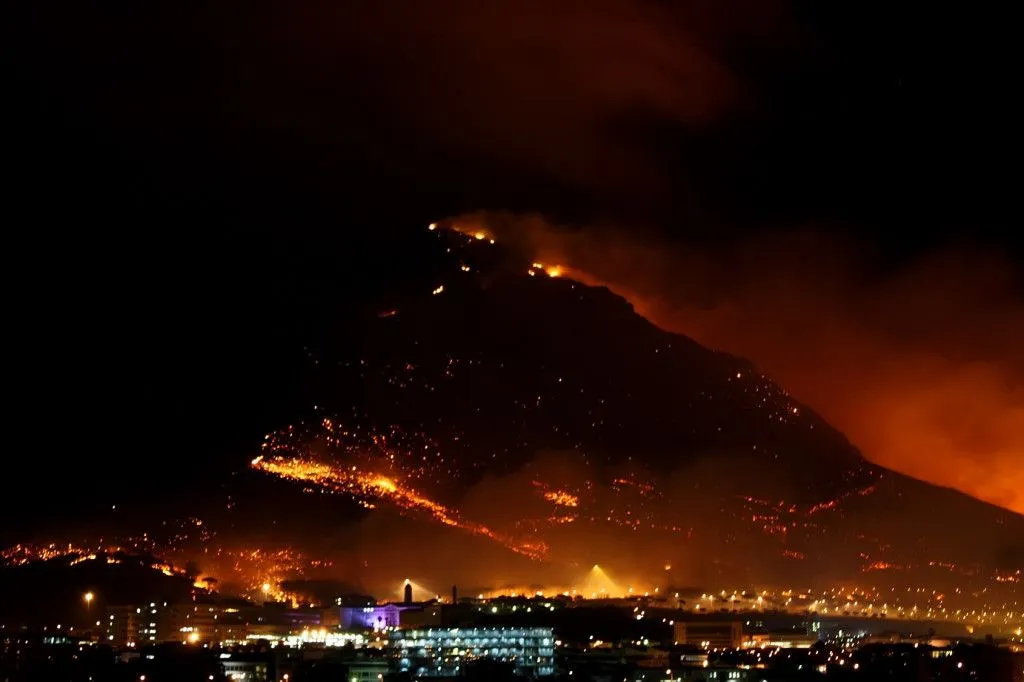
A fire needs three things to stay alive: oxygen, fuel, and a source of heat (the so-called fire triangle). If none of these three runs out, it is theoretically possible for a fire to burn forever. We see glimpses of this in long-burning wildfires, where expansive forests act as unlimited fuel sources, making it practically impossible to put out these fires.
Here we look at a few such fires that have come to play essential parts in cultural and religious histories, and are also considered popular tourist attractions (thanks, capitalism).
1. Yanar Dag (Fire Mountain)
The country of Azerbaijan has earned itself the moniker of the ‘Land of Fire’ over the years, owing to the spontaneous fires that can pop up in different places across its mountains and seas; even the state emblem features red tongues of flame in the center. Azerbaijan is also known to be the birthplace of Zoroastrianism, one of the oldest religions in the world, and one centered around a sacred belief in fire.
The phenomenon of these natural fires, aside from being an element of amazement, occurs due to the country’s plentiful gas reserves. Most of these fires eventually burn out due to the depletion of these resources and tectonic shifts, but the fire at Yanar Dag is one of the most miraculous fires still burning to this day. The flames rise up to 3 meters (about 10 feet) along the hillside and continue to burn even in winter, as the falling snow never reaches the ground.
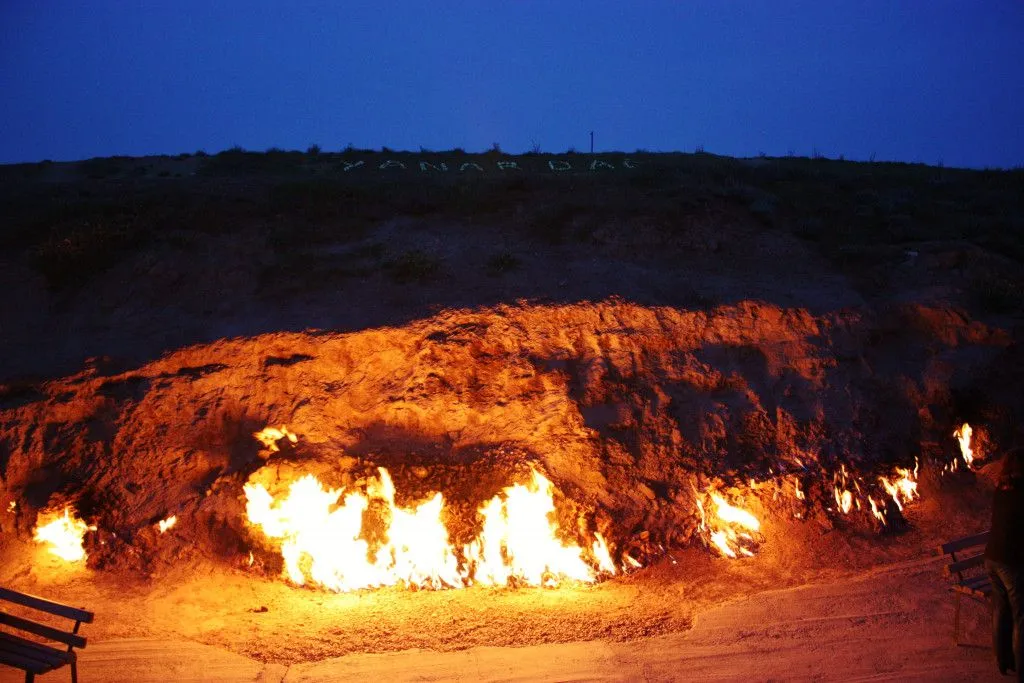
Venetian explorer Marco Polo wrote of the region’s mysterious flames when he passed through on his way to Baku in the 13th century, and Silk Road merchants helped spread the legend that earned Azerbaijan its “Land of Fire” name. The Yanar Dag flame as we know it today is younger than that, however: according to local accounts, this particular fire was accidentally lit in the 1950s and has burned without interruption ever since, forming a wall of flame along the edge of the hillside. It is now a top-rated tourist attraction protected by the State Historical, Cultural, and Natural Reserve.
2. Burning Mountain
Eastern Australia is abundant in the components needed to sustain fires: the fuel comes in the form of excessively dry vegetation, caused by the weather conditions, while the heat source is typically lightning or human causes. Although most regions of Australia experience such fires, the eastern and southern coasts, where most of the population reside, are notorious for having the most fires in the country.
The most infamous of these is one of the world’s longest-burning fires, which has been lit for the past 6,000 years, under the coal seam in Mount Wingen, a hill in New South Wales. The word ‘Wingen’ itself comes from the language of the local Wonnarua (Wanaruah) Aboriginal people and means “fire”.
The exact cause of the fire is unknown, but scientists suggest that it could be due to a lightning strike on the seam. These coals don’t have flames like a usual fire, but glow with heat at a temperature of roughly 1,000 degrees Celsius (around 1,800 °F), some 30 meters (about 100 feet) under the surface. The burning front is only about 5 to 10 meters wide and creeps southward at roughly a meter a year, leaving a scorched, barren scar in its wake. Vents in the surface let smoke and a sulfurous smell escape. The Burning Mountain Nature Reserve is covered with forest, except along this slow-moving coal seam.
The exact age of the embers is not known, but 6,000 years is considered a low-end probability. It’s possible that it could have been burning for a hundred thousand years or more, and could continue to burn for thousands more.
3. Smoking Hills
These hills lining the coastline at Cape Bathurst, in Canada’s Northwest Territories, have been described as “hellish looking,” and with good reason. Even though the area is remote and rarely visited, the hills have been smoldering for roughly 7,000 to 10,000 years (likely since the glaciers retreated) and feature in the legends of the Inuvialuit, who believed the smoke rose from the campfires of people living underground.
The first recorded sighting was made in the 1850s by Irish-born explorer Captain Robert McClure, whose crew aboard HMS Investigator was searching the Arctic for the lost Franklin expedition. It is said that he brought a sample of the smoldering rock back to the ship, but it was so hot that it burned a hole clean through his desk.
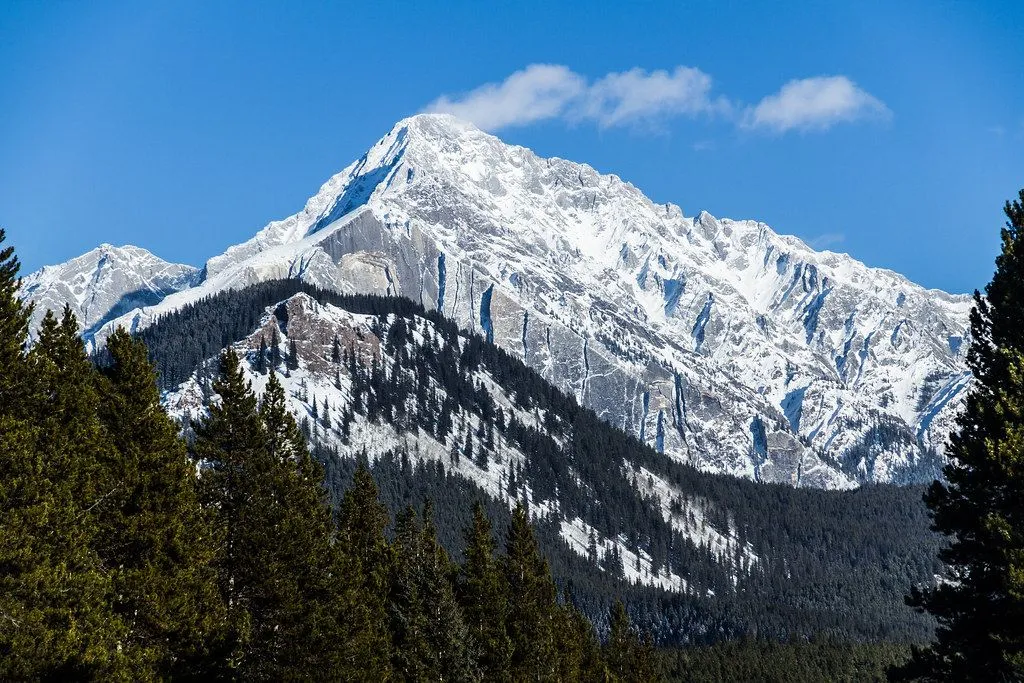
The appearance of this place makes it look even scarier. The mountain is surrounded by the remote Arctic Tundra, an area mostly untouched by human populations, but the size of the hills is a stark contrast. Unlike the gas and coal fires elsewhere on this list, the Smoking Hills aren’t really a fire at all in the usual sense. The cliffs are made of oil-rich shale packed with pyrite (iron sulfide); where erosion exposes it to air and moisture, the pyrite oxidizes and releases enough heat to spontaneously ignite the shale, no spark required. The ground is black and covered in deep mud that releases a strong smell of hydrogen sulfide and sulfur dioxide and billows smoke from vents. The air can be acidic enough to sting your eyes and throat, and even sturdy boots will start to melt if you spend too long on this volatile ground.
The Longest-Burning Man-Made Fires
The three fires above all lit themselves, but people have accidentally set coal alight and watched it burn for lifetimes too. The most famous example sits in the United States, beneath the borough of Centralia, Pennsylvania. A coal seam there has been on fire since at least 27 May 1962, when (by the most widely documented account) the town set fire to rubbish in an abandoned strip-mine pit and the flames slipped through an unsealed opening into the maze of old mines below. The fire now creeps at depths of up to 90 meters (about 300 feet) across roughly 3,700 acres (15 square kilometers), and at its current rate it could keep burning for more than 250 years. It hollowed out the town in the process: Centralia's population has collapsed from around 1,500 when the fire started to barely a handful of residents today, with most of the buildings long since demolished.

Centralia is far from the oldest of these. In Dudweiler, in Germany's Saarland region, a coal seam known as the Brennender Berg ("Burning Mountain") has smoldered since 1668, most likely set off by the pressures of unplanned coal mining. It became such a curiosity that the writer Johann Wolfgang von Goethe hiked up to it in 1770 and later recalled being wrapped in a strong smell of sulfur. India's Jharia coalfield tells a grimmer version of the same story: the first fire was recorded there in 1916, and by 2010 some 68 separate fires were burning beneath a 150-square-kilometer (58-square-mile) area, steadily eating away at the country's best coking coal. None of these human-lit fires comes close to the roughly 6,000 years of Australia's natural Burning Mountain, but they are a sobering reminder that a fire we start ourselves can easily outlast the people who lit it.
Other Eternal Flames Around the World
Yanar Dag is not the only gas-fed flame that refuses to die. On a mountainside near Çıralı in southwestern Turkey, a cluster of small fires known as Yanartaş, or the Chimaera, has burned continuously for at least 2,500 years. The Roman naturalist Pliny the Elder wrote about these flames nearly 2,000 years ago, and they are fed largely by methane (around 87 percent of the escaping gas) seeping up through cracks in the rock. Ancient writers were so struck by the sight that many believe it inspired the Chimera, the fire-breathing monster of Greek myth that the hero Bellerophon was sent to slay.

You do not have to travel to the Mediterranean to find one, either. Tucked inside the Shale Creek Preserve at Chestnut Ridge Park in western New York, Eternal Flame Falls hides a tiny grotto at the foot of a 9-meter (30-foot) waterfall, where escaping natural gas can be lit into a flame just 10 to 20 centimeters (4 to 8 inches) high, flickering behind the falling water. It occasionally blows out and has to be relit by visitors, but it keeps coming back. What puzzles scientists is the source: the young Rhinestreet shale feeding the flame is much cooler (about the temperature of a cup of tea) than the roughly 100 degrees Celsius (212 degrees Fahrenheit) usually needed to "cook" natural gas out of rock, hinting that some as-yet-unexplained process is at work underground.
A Final Word
Such eternal flames are rare, although there are a few other such places across the globe, all of which hold a place of reverence for different religions, cultures, and folklore traditions. They each exist for different reasons, but they remain beautiful feats of nature that have held us in awe for centuries, along with a good amount of intrigue, mystery, and a healthy dose of fear!
References (click to expand)
- State Historical, Cultural and Natural Reserve - yanardag.az. Yanar Dagh
- Eternal flame: How Azerbaijan became the 'Land of Fire'. CNN Travel
- The Smoking Hills - Natural Resources Canada
- Burning Mountain Nature Reserve | NSW National Parks. The National Parks and Wildlife Service
- Centralia mine fire - Wikipedia
- Longest-burning fire - Guinness World Records
- Brennender Berg - Wikipedia
- Coal-seam fire - Wikipedia
- Yanartaş - Wikipedia
- Eternal Flame Falls - Wikipedia