It comes down to length laws. US rules limit only trailer length, so American “conventional” trucks put the engine ahead of the cab in a long nose that adds a crumple zone and better aerodynamics. Europe caps total vehicle length, so its “cab-over” trucks sit the cab over the engine to save space, gaining a tighter turning radius.
Trucking is the backbone of the global supply chain. Whether goods are brought in by air, or travel the seven seas, they will almost all spend some time in the back of a truck before they are brought to your door.
Needless to say, they have very powerful engines that consistently chug through both favorable and arduous terrain to reach their destinations. As long as there are goods to be delivered, there will be trucks to cater to them, no matter what size consignment they may need to haul.

However, not all trucks are created equal. Consider, for example, the placement of engines. Some have a visible hood under which the engine is placed, while others have a flat ‘nose’. Why do trucks have different configurations?
What Are The Various Engine Configurations In Trucks?
Amongst the many ways in which trucks can be classified, one is engine placement. American trucking places the engine in front of the driver’s cabin. This results in a protruding bonnet that can be accessed separately for servicing. Such trucks are called “conventional trucks”.
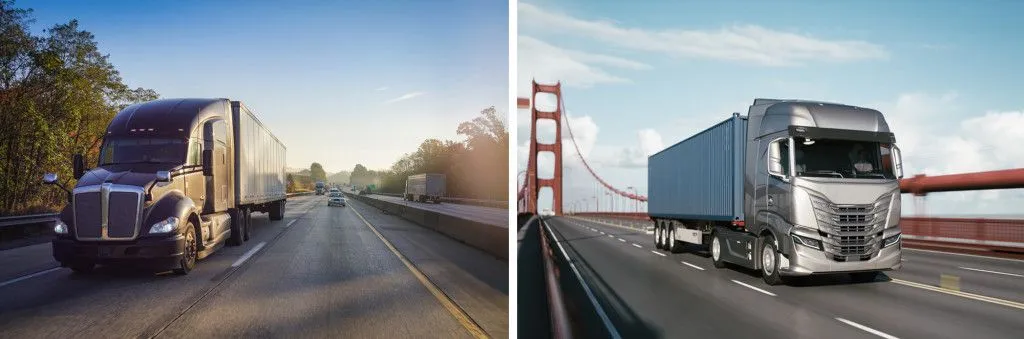
European trucking, on the other hand, integrates the engine and the driver’s cabin into one unit. The result is a ‘flat’ nose, without a visible bonnet. To access the engine, the entire cabin can be moved out of the way. Such trucks are called cab-over trucks. However, it’s important to note that the geographical distinction between trucks is not strict. Depending on utility, cab-over trucks can be found in USA, as can conventional trucks in Europe.
Design Of A Truck – Conventional Vs Cab-over Trucks
Truck design is heavily dependent on any “law of the land”, and the relatively freer laws in America allow for a separate bonnet, and consequently differently shaped trucks.
Conventional Trucks
The biggest reason comes down to how length is regulated. In the United States, the legal length limit applies only to the trailer, not to the whole rig. Once a rule change in the late 1970s freed up the tractor’s length, makers were able to stretch the nose out front at no cost to cargo space. On top of that, the United States’ Federal bridge gross weight formula rewards spreading a heavy load across axles that sit farther apart. A long nose with the engine and front axle ahead of the cabin helps achieve exactly that spread.
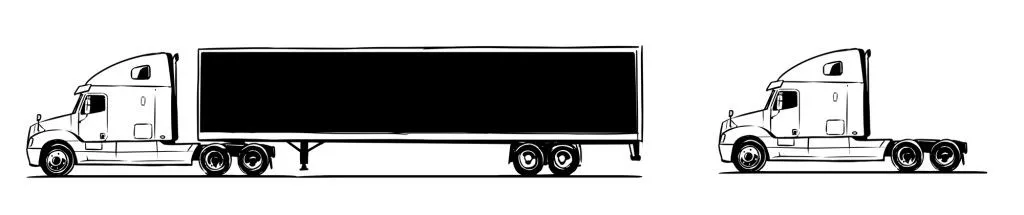
The result is a bonnet, with a rather spacious cabin that can accommodate creature comforts, such as a night cabin for longer hauls. The combination of bonnet and cabin, along with the chassis, without any trailer, is known as the tractor. Usually, the chassis is equipped with its own axles. If the trailer being attached to the tractor has its own axles, the setup is known as a semi-tractor trailer, or more simply, a semi-truck.
Cab-over Engine Trucks
Europe plays by different rules. There, the law caps the total length of the whole vehicle, tractor and trailer together. Every meter taken up by a long nose is a meter stolen from the cargo area, so manufacturers tuck the engine and front axle directly under the cabin’s seating to keep the truck short and maximize load space. This area is heavily insulated from the heat and noise of the engine to keep the driver comfortable.
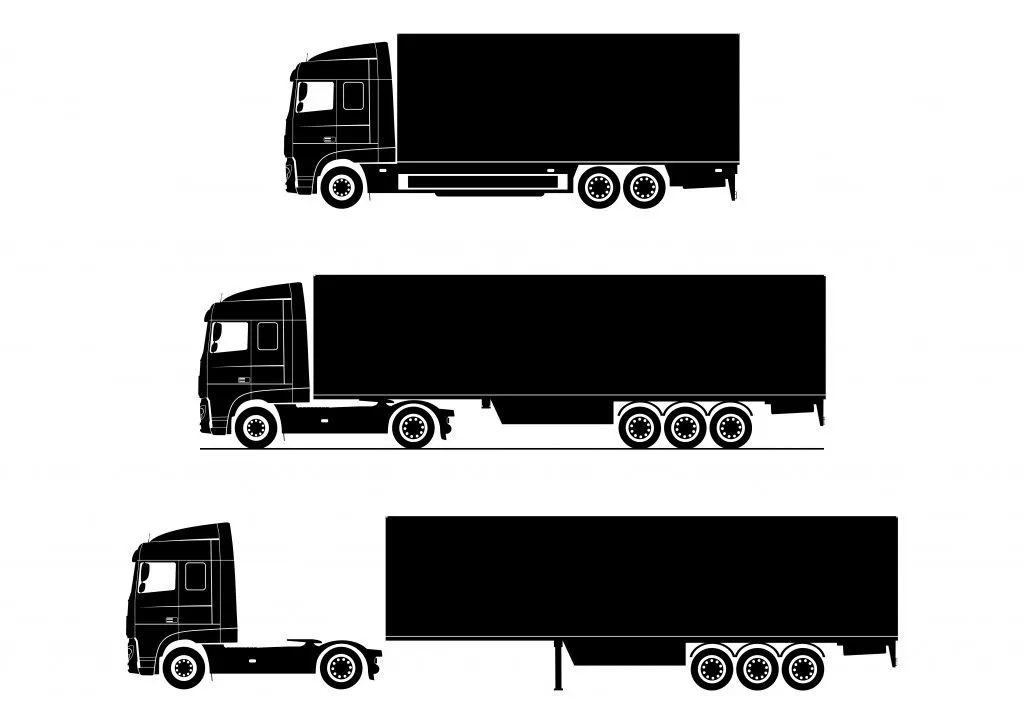
The result is a box-shaped cabin with a flat ‘nose’, or no visible engine compartment. The cabin space available to the passenger is reduced significantly, as the axles are placed closer together. The added space can be used to accommodate larger trailers, and consequently larger loads.
Design Implications And Their Impact On Trucking
Differences in engine configuration impact the truck’s driving dynamics and passenger comfort significantly. Due to this, their applications differ widely.
Conventional Design
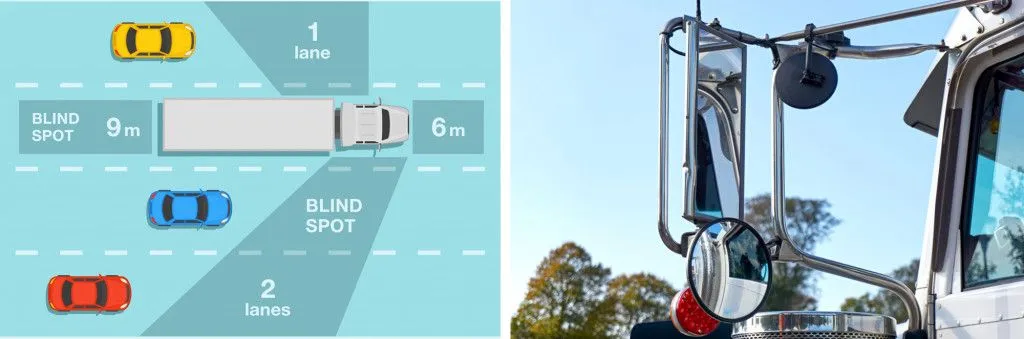
The presence of a dedicated engine compartment results in greater distance between the axles, and thus a longer wheelbase. Long wheelbases impart stability in straight lines, but severely affect maneuverability on corners. The operating crew gets a dedicated cabin, and can sit lower in the vehicle’s space frame. This comfort is a trade-off for visibility while cornering, as this configuration results in blind spots for the driver.
The dedicated cabin reduces exposure of the occupants to occupational hazards, such as engine noise, heat and vibrations. It also helps in a crash. The long hood and engine ahead of the cabin act as a crumple zone, giving the driver a buffer of metal that absorbs energy before it reaches them in a head-on collision. Many conventional trucks go a step further: their engine mounts are designed to break away so the engine drops toward the road, rather than being driven back into the cabin. The trade-off is the longer overall length, which makes the truck less nimble in tight spaces.
Conventional trucks allow for better movement of air over their body, as compared to cab-over engines. Sloping and curving surfaces, such as the bonnet, windshield and roof helps to reduce drag. This improves fuel economy; a crucial component in shipping costs.
Cab-over Engine Design
When compared to their conventional counterparts, cab-over engines have a shorter wheelbase with the crew sat higher in the space frame. This makes it easier to maneuver through tighter spaces, while providing excellent visibility to the driver. Due to the absence of a dedicated engine compartment, the crew is exposed to greater heat, noise and vibrations. This results in a much harsher ride in comparison to their conventional counterparts.
Crash safety is where the cab-over loses out. With no hood ahead of the cabin, there is almost no crumple zone, and the driver sits right at the point of impact in a head-on collision, with little structure to absorb the energy. The boxy design also increases the surface area resisting airflow, and consequently drag. To claw back some of that lost aerodynamics, cab-over trucks are equipped with air dams and curved roof cowls.
Applications
Owing to their design, conventional trucks are generally suited to long-distance, heavy-duty applications, such as mining, construction and off-road use. Cab-overs are better suited for light and moderately heavy applications, mostly within urban areas and over short distances. Common applications include firefighting, dumping and consignment transportation.
A Final Word
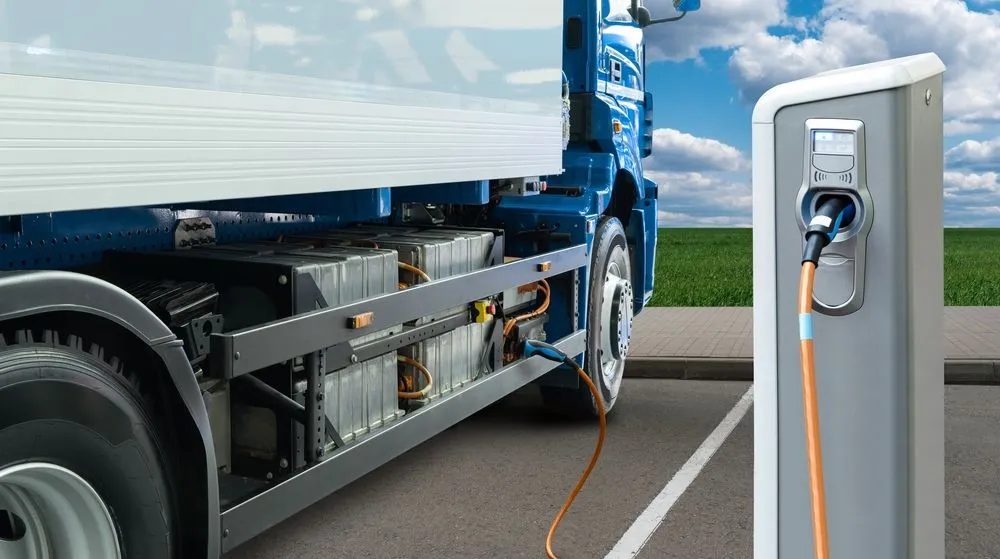
While the difference in engine placement is seemingly menial, it has a notable impact on a truck’s performance. Advancements in design and technology have come a long way since their inception, making them compact, yet ever more powerful. Modern-day trucking is evolving around alternative fuels and electrification. While reasonable for shorter distances, how it pans out for long-haul trucking… only time will tell!
References (click to expand)
- Commercial Vehicle Size and Weight Program. FHWA Freight Management and Operations. U.S. Department of Transportation
- Bridge Formula Weights - FHWA Operations. ops.fhwa.dot.gov
- Electricity. Alternative Fuels Data Center. U.S. Department of Energy
- Hariram, A., Koch, T., Mårdberg, B., & Kyncl, J. (2019, October 6). A Study in Options to Improve Aerodynamic Profile of Heavy-Duty Vehicles in Europe. Sustainability. MDPI AG.