Table of Contents (click to expand)
Natural rubber is milky-white, so tires are black only because a reinforcing filler called “carbon black” is added during manufacture. It boosts the tire’s tensile strength, abrasion and wear resistance, and shields the rubber from UV and ozone damage. The deep black color is simply a side effect of that reinforcement.
Wally, a man who loved colors, was driving down the road to an even more colorful city. All the houses and buildings around him were painted in different colors and hues. Wally parked his car and took a look around the street. Everyone was wearing clothes of different colors. There were children in reds and blues and adults in yellows and greens.

Everyone and everything around Wally was splashed in a different color… except one thing, and his smile faded into a deep frown when he saw it.
He looked around and everywhere they were the same color. No matter where he looked. The tires of all the vehicles around him were black. When everything else in the world was so colorful, why did all the tires have to be black?
Before we can jump into the study of the blackness of tires, we need to understand where the rubber (used to make the tires) comes from. To understand this, we need to begin in the forests of Southeast Asia.
How Is Rubber Obtained?
Rubber is naturally obtained from a sticky white substance known as latex that originates as tree sap. Latex is sticky, milky, and white in nature. To remove the latex from rubber trees, the harvester must make incisions into the bark.
Once these incisions are made, the white liquid emerges and starts flowing down the cuts. This white liquid is stored and then acid is added to make natural rubber.
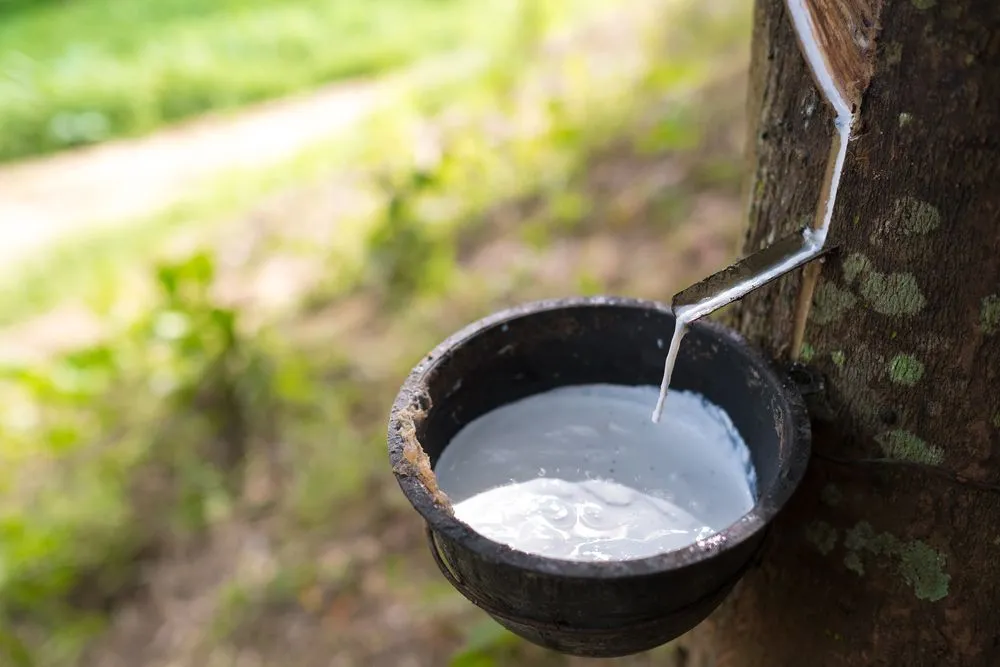
Timing matters here. Latex flows best when it’s cool, and the tree’s internal water pressure (turgor) peaks in the hours before dawn, so the sap keeps trickling for longer. As the day warms up, the latex coagulates faster at the cut and the flow slows to a stop.
This is why harvesters tap the trees in the early morning, often before sunrise, when the temperature is at its coolest.
Why Are Tires Black?
From the green lushness of Southeast Asia, we then have to visit a tire manufacturing factory to continue this story. What we first see is a huge lump of natural white rubber entering a machine. Yes, the natural rubber is still white. Then you would see workers adding some synthetic rubber, which also isn’t black in color. The question still remains. The next step in the process is where the color change occurs, when the workers add “carbon black.”

Carbon black is just carbon in the form of tiny particles. It isn’t scraped up as a leftover; it’s deliberately produced, usually by burning heavy petroleum oil or natural gas with too little air so the fuel only partially combusts. Carbon black is one of the blackest substances in the world and is the ingredient that gives the black color to our tires. Now, you might have a new question… what is the need for carbon black?
Carbon black is known for its ability to act as a reinforcing material, and that, not the color, is the real reason it’s in there. Its tiny particles bond tightly to the rubber, dramatically increasing the tire’s tensile strength and its resistance to abrasion and wear. Without it, a tread might last only a few hundred miles instead of tens of thousands. Carbon black also shields the rubber from sunlight, soaking up the UV rays and ozone that would otherwise crack and rot it over time. On top of that, it helps dissipate heat away from key parts of the tire, like the tread and belt areas. When a tire runs on the road or any surface, heat is produced due to friction, and this heat may damage the rubber tire and reduce its life.
Were Tires Always Black?
After learning that white natural rubber turns black during manufacture because of carbon black, you might wonder if tires have always been black. To answer this question, let’s journey into the past for a bit. How about 1900s New York?
Although there aren’t too many cars around during this period, the ones that did exist, along with other carriers using rubber tires, have their tires in white! So tires haven’t always been black!
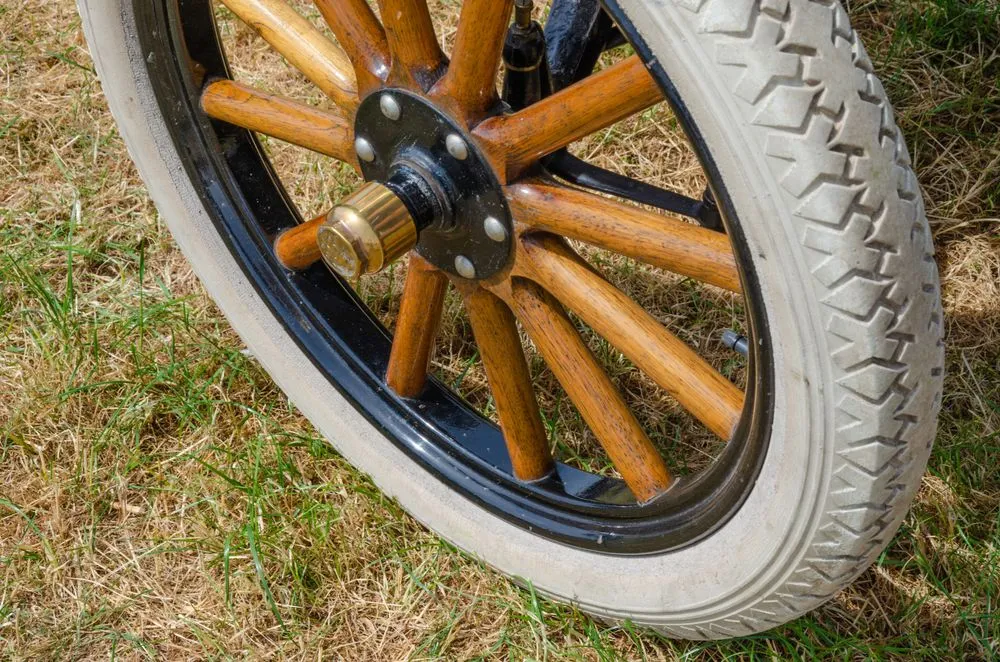
In the early days of rubber tires, they were a milky off-white. That was partly the natural shade of the rubber and partly because makers added zinc oxide, a white powder, to firm them up. To increase their strength further, manufacturers began mixing in sooty carbon, which turned the rubber black.
By around 1910, tire makers such as B.F. Goodrich had switched to engineered carbon black, which reinforced the rubber far better than plain soot. The improvement was so dramatic that, after years of research and production, the black color of the tire became iconic and nearly universal.
Conclusion
After journeying through different countries and timelines, now we know that the tires of all the vehicles around us are black because of carbon black, a substance used to reinforce the tires.
Though we had originally found the idea of exclusively black tires in a world full of different colors appalling, knowing that the black color keeps our tires (and ourselves) safe from accidents makes it much easier to tolerate!