Table of Contents (click to expand)
Fusion needs plasma hotter than 100 million °C (roughly seven times the Sun’s core) and reactor walls that can survive an endless blast of high-energy neutrons. The U.S. National Ignition Facility crossed the scientific milestone of ignition in December 2022, getting more energy from the fuel than the laser delivered to it, but its lasers still draw far more grid electricity than the reaction produces. Until tokamaks like ITER and private machines like SPARC and Helion’s Polaris reach engineering breakeven, commercial fusion power plants remain a decade or more away.
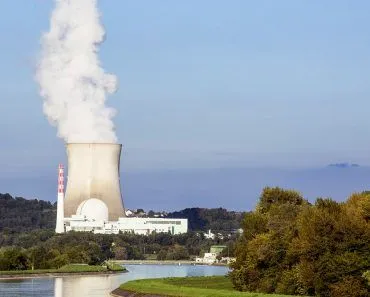
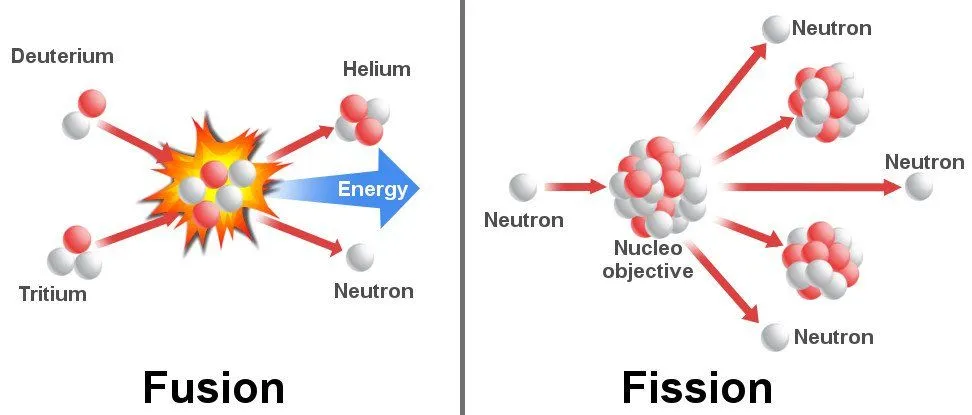
Nuclear power plants around the world work on the principle of nuclear fission, a process wherein an atom is split into smaller atoms, accompanied by the release of energy, which is then used to power other things. Nuclear fusion, as you might already know, is the opposite of nuclear fission. It can also generate huge amounts of power, just like fission.
You might be surprised to note that fusion is actually a better bet than fission when it comes to generating power.
Nuclear Fission Vs. Nuclear Fusion: What’s The Difference?
Before we get into why fusion is such a headache to pull off, it helps to be clear on how the two nuclear reactions actually differ, because they are essentially opposites. Fission happens when a neutron slams into a large, heavy atom (usually uranium or plutonium) and forces it to split into smaller atoms, releasing energy in the process. Fusion works the other way around: two very light atoms, such as the hydrogen isotopes deuterium and tritium, are squeezed together to form a heavier atom (helium), and that merger releases energy too.
Here is the part that trips a lot of people up: every commercial nuclear power plant operating today runs on fission, not fusion. We use fission because it is a reaction we can start, control and sustain with existing technology. Fusion, despite being the very reaction that powers the Sun, has never been coaxed into producing more electricity than it consumes here on Earth, so not a single fusion plant yet feeds power to the grid.
Gram for gram, though, fusion is the more generous of the two. According to the International Atomic Energy Agency, fusion releases roughly four times more energy per kilogram of fuel than fission, and nearly four million times more energy than burning the same mass of oil or coal. The fuel is easier to come by, as well: deuterium can be filtered straight out of ordinary seawater, whereas fission depends on mined and enriched uranium. The catch, as the rest of this article explains, is that actually lighting a fusion reaction is spectacularly hard.
Why Is Fusion A Better Option Than Fission To Generate Power?
Fusion is much better than fission in a number of ways. Firstly, nuclear fusion requires less fuel than fission. On top of that, fusion is carried out by using deuterium (an isotope of hydrogen) as fuel, which is quite abundant in nature. In contrast, the fuel necessary for fission (uranium, plutonium or thorium) is very hard to get – and insanely expensive!
Furthermore, unlike fission, the fusion reaction itself doesn’t spit out the long-lived radioactive waste that haunts conventional reactors. The deuterium-tritium reaction’s only direct product is helium, which we can actually use to our benefit (the world has been running short of it for years). The high-energy neutrons released alongside the helium do make the reactor’s inner walls radioactive, but that activated material has a much shorter half-life than fission’s spent fuel and decays back to background levels in roughly a century, not 100,000 years.
Since fusion doesn’t produce runaway chain reactions the way fission can, there’s practically no risk of a meltdown in the case of nuclear fusion.
So, if fusion is so great, and better than fission in so many respects, why aren’t we using fusion to produce power already?
Does Nuclear Fusion Produce Radioactive Waste?
This is one of the most common questions asked about fusion, and the honest answer is: some, but nothing like fission. The fusion reaction itself does not create the long-lived, intensely radioactive fission products that pile up in a conventional reactor’s spent fuel and stay hazardous for tens of thousands of years. As the World Nuclear Association puts it, the long-term radiotoxicity of fusion waste would be considerably lower than that of the actinides left behind by used fission fuel.
There is a catch, though. The high-energy neutrons streaming out of a deuterium-tritium reaction bombard the reactor’s inner structure and gradually make those metal components radioactive, a process called neutron activation. The volume of this waste can be similar to that of a fission plant, but it is far less dangerous and much shorter-lived. That is why researchers are developing special ‘low-activation’ steels, such as Europe’s EUROFER-97, engineered so that the material cools down to recyclable levels within roughly 100 years rather than 100,000.
The other radioactive material a fusion plant has to manage is the fuel itself. Tritium is radioactive, notoriously tricky to contain (it can seep through some grades of steel), and it decays with a half-life of about 12.3 years. So fusion is not entirely free of radioactivity, but its waste legacy is measured in centuries, not geological ages.
Challenges Associated With Generating Power From Nuclear Fusion
There is not just one, but rather a couple things that have stopped us in the past, and are still making it impossible for us to use nuclear fusion to reliably produce power. Let’s take a look at some of these:
Incredibly High Energy Requirement
One of the biggest reasons why we haven’t been able to harness power from fusion is that its energy requirements are unbelievably, terribly high.
In order for fusion to occur, you need a temperature of at least 100,000,000 degrees Celsius (180,000,000 °F). That’s roughly seven times the temperature of the Sun’s core, which sits at a comparatively cool 15 million °C. Experimental fusion reactors do exist (and work), but as a class they still consume more grid electricity than the fusion reaction puts out. The closest anyone has come is the U.S. National Ignition Facility, which in December 2022 became the first machine to produce more energy from the fuel than the laser pulse delivered to the target. That milestone is called ignition, and NIF has since repeated it more than ten times, with the current record being 8.6 megajoules of fusion output from a 2.08 MJ laser shot in April 2025. The catch: those lasers themselves draw roughly 300 MJ of wall-plug electricity to fire, so the facility as a whole is still about a hundred times short of engineering breakeven.
I mean, there isn’t any point in running a nuclear reactor if you end up feeding it more energy than you get back from it, right?
Material Requirements
Not only is the energy requirement for starting a fusion reaction unbelievably high, but it’s also quite difficult to find materials that can withstand the reaction. For instance, you need a special material that won’t budge when it’s heated to such high temperatures. You would also need lots of liquid helium to keep the entire setup cooled.
Sustaining And Containing The Fusion Reaction
You would require a lot of excess energy in order to keep the fusion reaction going once it has started. As such, you should be able to create enough excess energy with the initial reaction so that it helps other atoms fuse. In addition to that, you need a very complicated, intricate and densely-packed setup to house the entire reaction. Most research today happens inside a doughnut-shaped magnetic-confinement device called the tokamak, though a smaller group of facilities (NIF being the marquee example) uses an entirely different approach called inertial confinement, where 192 powerful lasers crush a tiny pellet of fuel from all sides at once.
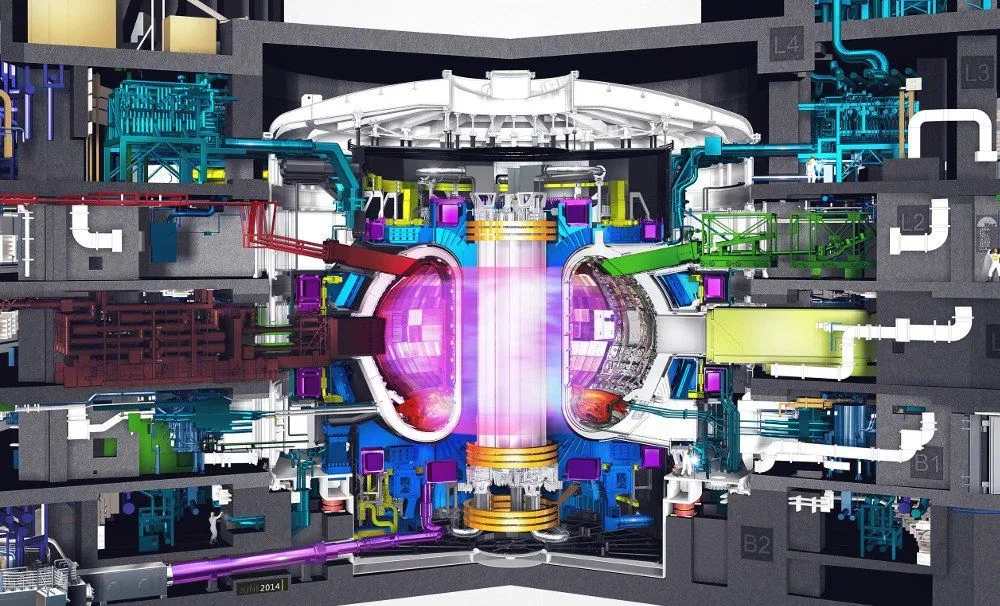
The tokamak consists of a doughnut-shaped vacuum chamber. Gas is pumped into this chamber and electricity flows through the center, causing the gas to become charged and form plasma. This plasma is contained within the chamber by very strong magnetic fields.
The formation of plasma is a good thing, because that’s what we want, but plasma is highly conductive. Essentially, it starts to form its own electromagnetic currents and fields as it zooms around, thus disrupting the magnetic fields that are trying to contain it within the chamber. We have yet to figure out a reliable way in which the plasma currents self-contain, allowing them to be stable and safe.
We also need to find a material that can withstand such a high amount of heat for a long time in order for the fusion reaction to sustain.
Metallurgical Problems
Fusion reactions produce high-energy neutrons that hit the reactor walls. The layer of the reactor that faces the plasma is called the first wall. This sort of radiation causes most alloying elements typically used in steel to become radioactive.

As of now, we don’t know exactly what materials we should use to build fusion reactors so that its walls withstand the extreme conditions they will experience.
Budget And Social Stigma
Last but not least is the obligatory money problem. Anything related to nuclear power is usually considered a tough idea to sell to the masses. Betting on nuclear fusion is akin to making a multi-billion dollar investment with no guarantee of success.
In addition to that, there’s a social stigma around nuclear power that makes many believe that ‘nuclear energy is bad’. First, there’s the notorious ‘danger of radiation’. This is further aggravated by unfortunate incidents like Chernobyl, Fukushima etc. It is also important to remember that many people associate the word ‘nuclear’ with weapons of mass destruction (e.g., atomic bombs, hydrogen bombs etc.), which are capable of wiping out entire cities.
Truth be told, nuclear (either fission or fusion) is one of the ‘cleanest’ and safest energy sources available to us today. However, we are years away from making nuclear fusion a technically and economically viable process. Once the power of fusion is tapped and controlled, we’d no longer have to worry about running out of power… ever!
Where Do We Stand? Recent Fusion Breakthroughs (2022-2026)
For most of fusion’s history, the field’s standing joke has been that practical fusion power is always "thirty years away." The last few years have finally moved the needle in a way that makes that joke feel a little less reflexive. Here are the milestones that matter:
NIF crosses the ignition threshold (and keeps going)
On December 5, 2022, the National Ignition Facility at Lawrence Livermore National Laboratory fired 192 lasers at a peppercorn-sized fuel capsule and got back 3.15 megajoules of fusion energy from a 2.05 MJ laser shot. That was the first time any experiment, anywhere, produced more energy from the fusion reaction than was delivered to ignite it. NIF has since repeated the result more than ten times, with successively bigger yields. The current record stands at 8.6 MJ from a 2.08 MJ shot in April 2025, a target gain north of 4.
ITER slips again, but private players close in
ITER, the international mega-reactor being built in southern France, originally targeted first plasma in 2025. Its 2024 reshaped baseline pushed that date out to 2034, with full deuterium-tritium operation now expected in 2039. While ITER waits, well-funded private companies have started building their own machines on much faster timelines. Massachusetts-based Commonwealth Fusion Systems is assembling its SPARC tokamak in Devens, MA, with first plasma targeted for 2027, and has announced a 400 MWe commercial plant (ARC) in Chesterfield County, Virginia. Helion Energy turned on its seventh-generation Polaris prototype in late 2024, signed a power-purchase agreement with Microsoft for 50 MW by 2028, and broke ground on its commercial Orion plant in Malaga, Washington in mid-2025.
Tokamaks hold plasma for longer than ever
On January 20, 2025, China’s Experimental Advanced Superconducting Tokamak (EAST) sustained a high-confinement-mode plasma at over 100 million °C for 1,066 seconds, smashing its own 2023 record of 403 seconds. South Korea’s KSTAR, meanwhile, held its plasma at 100 million °C for 48 seconds after upgrading its divertor from carbon to tungsten. Europe’s JET reactor closed out its 40-year career in October 2023 by releasing 69 MJ of fusion energy in a single 5.2-second pulse, the most fusion energy any device has ever produced, from just 0.21 milligrams of fuel.
Regulators clear a path
In February 2026 the U.S. Nuclear Regulatory Commission finalized a rule that regulates fusion machines under the byproduct-materials framework (10 CFR Part 30), the same one used for medical isotopes and particle accelerators, rather than the much heavier fission framework. That removes one of the bigger non-physics obstacles between today’s prototypes and a working commercial plant.
None of this means a fusion plant will be feeding your local grid next year. It does mean the bottleneck is shifting from "can the physics work?" to "can we engineer it cheaply enough?" That is, finally, a different kind of problem.
References (click to expand)
- A Pint Of The Sun. The Institute for Astronomy
- Lawrence Livermore National Laboratory Achieves Fusion Ignition. LLNL
- ITER - In a Few Lines. ITER Organization
- Nuclear Fusion Power. World Nuclear Association
- China's EAST achieves 1,066-second steady-state high-confinement plasma operation. Chinese Academy of Sciences
- Nuclear Fusion | Do the Math. The University of California, San Diego
- Nuclear Fission and Nuclear Fusion - Purdue University. Purdue University
- Why does the sun not run out of oxygen as it burns?. West Texas A&M University
- Kenneth O'Rourke Capstone project - Need Energy? Why not shoot for the Moon?: The Moon as a source for nuclear fusion and tidal generation. Introduction - www.sas.upenn.edu
- Fission and Fusion: What is the Difference?. U.S. Department of Energy
- What is Nuclear Fusion?. International Atomic Energy Agency
- DOE Explains...Deuterium-Tritium Fusion Fuel. U.S. Department of Energy
- Overview on the management of radioactive waste from fusion facilities. Nuclear Fusion, IOP Publishing