Table of Contents (click to expand)
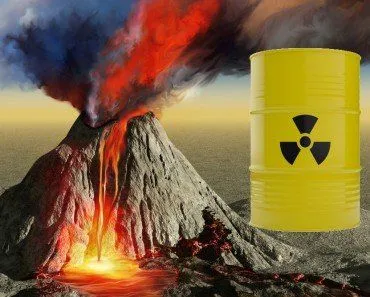
We don’t shoot nuclear waste into the sun or onto the moon because reaching the sun is brutally hard (you must cancel Earth’s 30 km/s sideways motion, which takes 55 times more energy than a trip to Mars), a single launch failure could scatter radioactive material across the planet, and the cost per kilogram is enormous. Deep underground burial is the cheaper, safer answer.
Nuclear power is mysterious. Although it generates an incredible amount of energy with very little ‘starting’ material, making it a fantastic and reliable source of energy, it also has some disadvantages and liabilities.
One of the biggest problems related to anything “nuclear” is handling the waste that is inevitably produced.
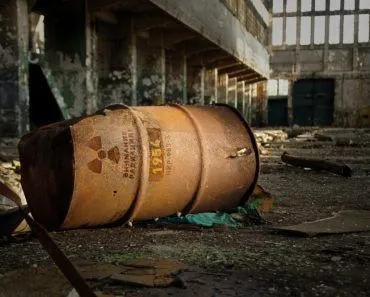
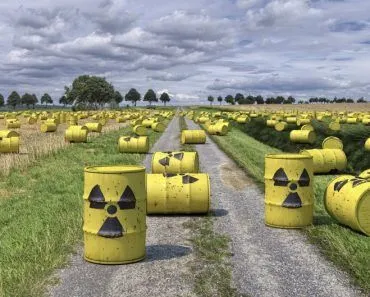
More specifically known as radioactive waste, this “glowing garbage” is a byproduct of different nuclear technology processes, including nuclear power, nuclear medicine, and nuclear research. It’s extremely hazardous, as it contains radioactive material, which, as you may already know, can be dangerous to all forms of life, including humans.
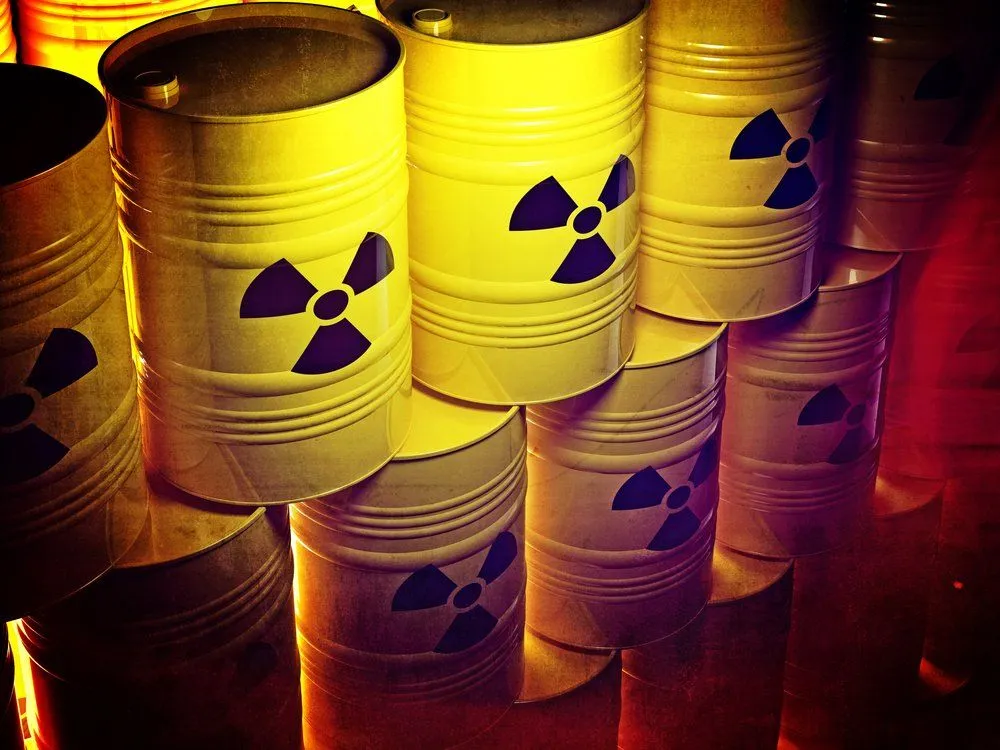
The disposal of nuclear waste is one of the biggest challenges of the modern world, a world that aspires to derive a significant amount of its energy from nuclear processes. Therefore, as you may expect, many minds have proposed various ideas and hypotheses as to how to best eliminate excess nuclear waste.
One such idea suggests collecting all the nuclear waste and putting it in sealed containers. These containers can then be loaded into a rocket launched from Earth to crash into the sun.
 Savvy, right?
Well, not really, and in this article, we’ll discuss why it’s actually a pretty terrible idea.
Massive Thrust Needed
Sending any rocket into space requires thrust, an upward force that launches the rocket off the ground and hurtles it toward its intended target (such as the International Space Station).
You’d be amazed to know that the amount of thrust required to send a rocket OUTSIDE the solar system is less than the thrust required to send it to a target within the solar system, such as another planet, or in this case, the sun.
Why is that?
It comes down to how fast Earth is already moving. Our planet spins on its axis at about 1,670 km/h (1,040 mph, or 465 meters per second) at the equator, and space agencies use that spin as a free launch boost. They fire satellites and probes eastward so the planet’s rotation is added to the velocity of the rocket.
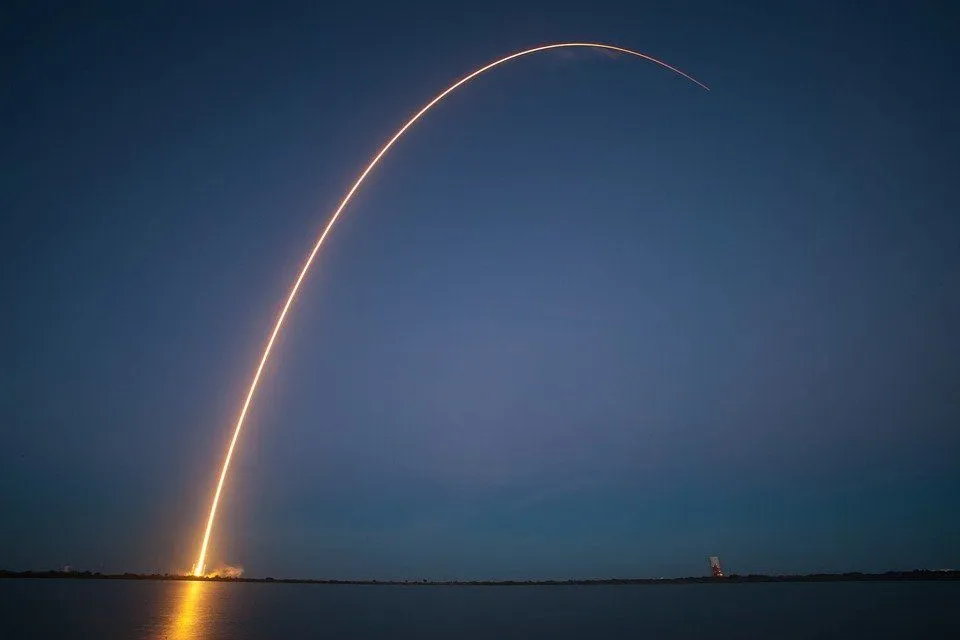
That same head start, though, is exactly what makes the sun so hard to hit. The bigger problem is not Earth’s daily spin but its yearly orbit: the whole planet is racing around the sun at roughly 30 km/s (about 67,000 mph), and anything we launch inherits that enormous sideways speed. To fall into the sun, a rocket has to cancel almost all of that 30 km/s sideways motion, otherwise it simply loops around the sun and swings right back out, the same trick a gravitational slingshot exploits. According to NASA, that makes reaching the sun take about 55 times more energy than reaching Mars, and it is why escaping the solar system entirely (as the Voyager probes did) is actually easier than dropping a payload into our own star.
Even if you bleed off enough speed to start falling inward, you are not done. The sun’s gravity keeps accelerating the spacecraft as it gets closer, so without yet more braking the payload just whips past on a tight orbit and slingshots back out into space rather than crashing in. NASA’s Parker Solar Probe needed seven flybys of Venus over nearly seven years, gradually shedding speed, simply to graze the outer solar atmosphere, and that is a featherweight probe, not a fleet of waste canisters.
Risks Of Rocket Launch Failure
Launch failures are not uncommon. Space research and the history of cosmic exploration is filled with accidents related to rocket launches, some of which had catastrophic results, including the loss of human life. Every rocket and its crew is thoroughly mentally prepared for contingencies if something goes wrong during or after the launch.
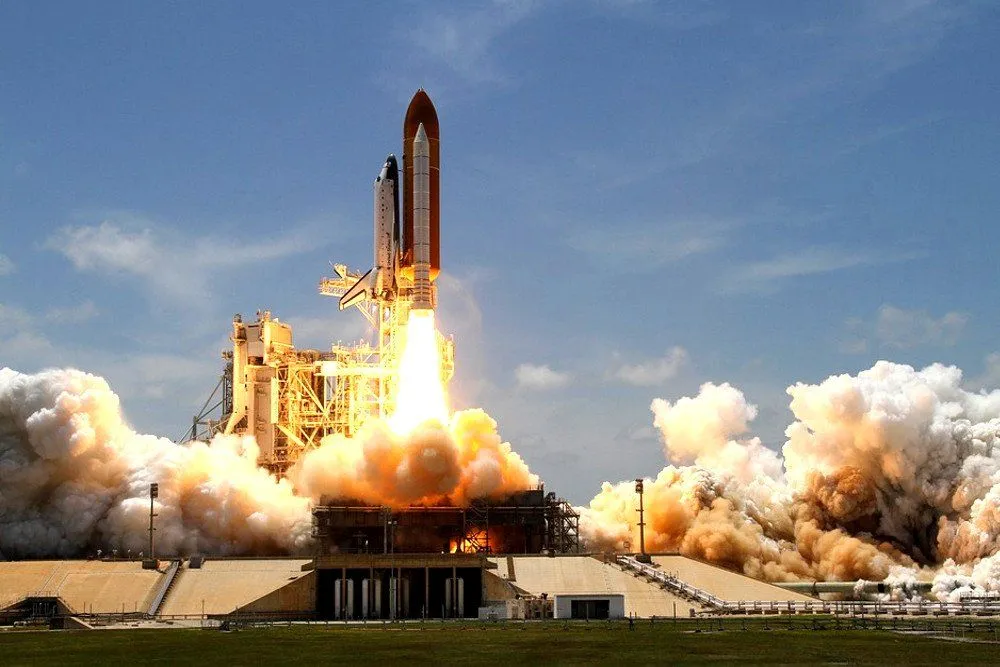
Now, imagine if something goes wrong in the launch of a rocket carrying highly dangerous radioactive waste. What would happen then?
Suffice to say that a launch failure of that magnitude would have terrible consequences for the entire world, as the radioactive waste onboard would spread over a massive area (due to the atmosphere).
This is not a hypothetical worry. In April 1964, the U.S. Transit 5BN-3 navigation satellite failed to reach orbit and burned up over the Indian Ocean. Its onboard nuclear power source, a plutonium-238 unit called SNAP-9A, disintegrated in the upper atmosphere and scattered roughly 1 kilogram (about 630 trillion becquerels) of plutonium across every continent, with most of it settling over the Southern Hemisphere. That was a single small generator. Now picture a rocket loaded with tonnes of high-level waste breaking apart at altitude, and you start to see why no space agency is keen on the idea.
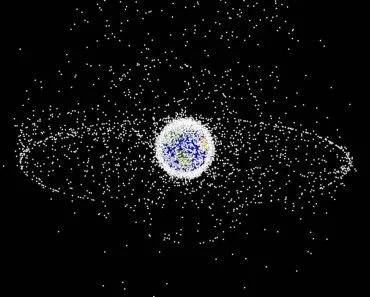
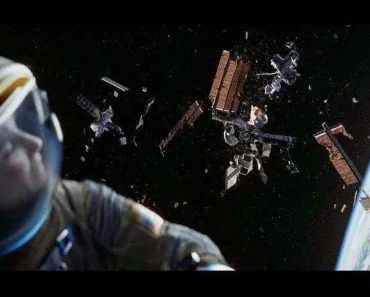
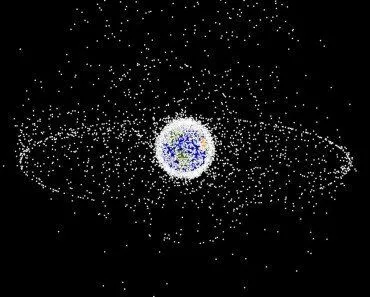
Then, of course, there’s the hazard of space junk. There’s already a humongous amount of old, defunct satellites out there, with all their broken parts and debris orbiting our planet, which pose grave challenges to all space missions. Needless to say, it would be particularly horrible if a nuclear garbage-carrying rocket fails and ends up contributing radioactive waste to Earth’s ever-expanding belt of space junk.
Exorbitant Cost
A space mission of this magnitude would, needless to say, be very expensive. Even today, when reusable rockets have driven prices down hard, putting cargo into low Earth orbit still costs a few thousand dollars per kilogram, and reaching the sun (with all that braking) costs far more. Now weigh that against the sheer volume of the problem: the United States alone is sitting on more than 90,000 tonnes of spent nuclear fuel, and the global pile grows by thousands of tonnes every year. Launching all of it, one rocket at a time, would run into the trillions of dollars. The plan is so expensive, in fact, that it presently doesn’t make any sense for a space agency to even consider sending the planet’s nuclear waste to the sun or moon.
Too High A Risk
It is fair to say that launching all of our nuclear waste into space would be a dangerous undertaking, and an economically unviable one, especially since we already have far cheaper and safer ways to deal with the problem of nuclear waste. The leading answer is the deep geological repository: seal the waste in corrosion-resistant canisters and bury it hundreds of meters down in stable bedrock, where it stays isolated for the tens of thousands of years it needs to decay. Finland is finishing the world’s first such repository, Onkalo, which entombs spent fuel about 400 meters below ground and is expected to begin accepting waste later this decade. It is a fraction of the cost of a space launch, and there is no rocket to blow up.
Furthermore, in terms of sending it to the moon, we really don’t want to contaminate our nearest celestial satellite by scattering radioactive waste all over its surface. We might not visit too frequently, but we do have plans to inhabit it someday!
References (click to expand)
- X Xie. Disposal of Nuclear Waste: Methods and Concerns. Stanford University
- Nuclear Reactors: Nuclear Waste - Chemistry LibreTexts. LibreTexts
- Risk Analysis and the Regulation of Reusable Launch Vehicles - scholar.smu.edu
- OJ Bojorquez. Risk Level Analysis for Hazard Area During Commercial .... San Diego State University
- Paté-Cornell, M.-E., & Fischbeck, P. S. (1994, February). Risk Management for the Tiles of the Space Shuttle. Interfaces. Institute for Operations Research and the Management Sciences (INFORMS).
- 10 Things to Know About Parker Solar Probe. NASA Science
- 5 Fast Facts about Spent Nuclear Fuel. U.S. Department of Energy
- Plutonium in the Atmosphere: A Global Perspective (SNAP-9A burnup). PubMed, National Library of Medicine
- Deep Geologic Repository Progress, 2025 Update (Onkalo, Finland). American Nuclear Society