Travel tires you out because sitting still in a moving vehicle is not actually still. Your muscles constantly contract to keep you upright through every jerk, sway and turn; your brain processes a flood of speed, vibration and visual cues; long sitting slows blood and lymph flow; on flights, dry cabin air dehydrates you; and the stress of luggage, strangers and unfamiliar places adds psychological fatigue on top.
I have a few friends who like to go on long road trips. They want to get in their car and drive a few hundred miles carefree!
Me? I’m not like that at all.

For me, traveling long distances by car or bus is exhausting. I have wondered why this is. For much of the journey, we merely sit either in cars, buses, trains, or airplanes. Why, then, should traveling be as tiring as a long day of work?
Note: This experience is subjective, and it isn’t universal. Some people feel excited by long-distance road travel. This article discusses only a few factors that make you tired after a long car, bus, or airplane journey.
Factors That Impact Passenger Comfort On The Road
Traveling on the road is not as easy as sitting in a chair.
While on the journey, accelerating and decelerating due to traffic jerks you back and forth while winding roads swing you from one side of the vehicle to another. If the vehicle is old, running on a rusty, vibrating engine with uneven seats, or the roads are dented with potholes, the ride is anything but stationary.

These sways, jerks, and jumps take their toll on the body, even though we are unaware of it. Your body puts in effort to keep you sitting in your seat. The brain has more to process: information about the speed of the vehicle, the vibrations of the vehicle, and an awareness of the surroundings. The muscles have to do the work to respond to the changing conditions.
And sitting for hours on end, regardless of moving vehicles, is tiring. The lack of muscle movement during sitting slows down the circulation of blood and lymph fluid. This tires the muscles and joints that need blood and lymph to supply these organs with oxygen and nutrients and take away waste. This is a gentle reminder to get up and walk around if you’ve been sitting for a while.
This is why standing hurts your legs more than walking.

For Formula One drivers, G-forces add to the pressures of a body in a moving vehicle. Formula One drivers must tolerate the G-forces that come with driving over accelerating 200 km/h, and turning hard corners at those speeds.
Here’s an interesting fact: Greger Huttu–a world champion of iRacing (a virtual racing simulator) – was invited to drive a real race car. He drove a few laps in a real Star Mazda race car at Road Atlanta (with the car easily clearing 100 mph, or 160 km/h), but his body couldn’t cope with the heat and the sustained G-forces, and he was forced to climb out after just a handful of laps.
Trains are comparatively less tiring simply because they do not accelerate, decelerate, and change direction as frequently as automobiles.
Fatigue-causing Factors In A Flight
Flights are no better than road vehicles when it comes to causing fatigue.
First of all, there is the matter of height. Ascending into the air brings with it a change in physical conditions. The pressure in the cabin makes it a little easier to adjust to flying, but it is still far from sitting in a chair in the bedroom.
Then there is dehydration: airlines maintain the pressure in the cabin by regulating the composition of the breathable air in the cabin. This is why cabin air is 15% drier than “ground air,” which dehydrates passengers. This is one of the many reasons that airplane food tastes so bad.
Besides food tasting awful, long travel hours and high altitude affect the blood flow in your body. Your body has to work harder to circulate blood to the limbs in the face of unusually high altitude and dry air conditions, leading to digestive issues such as gas and bloating.
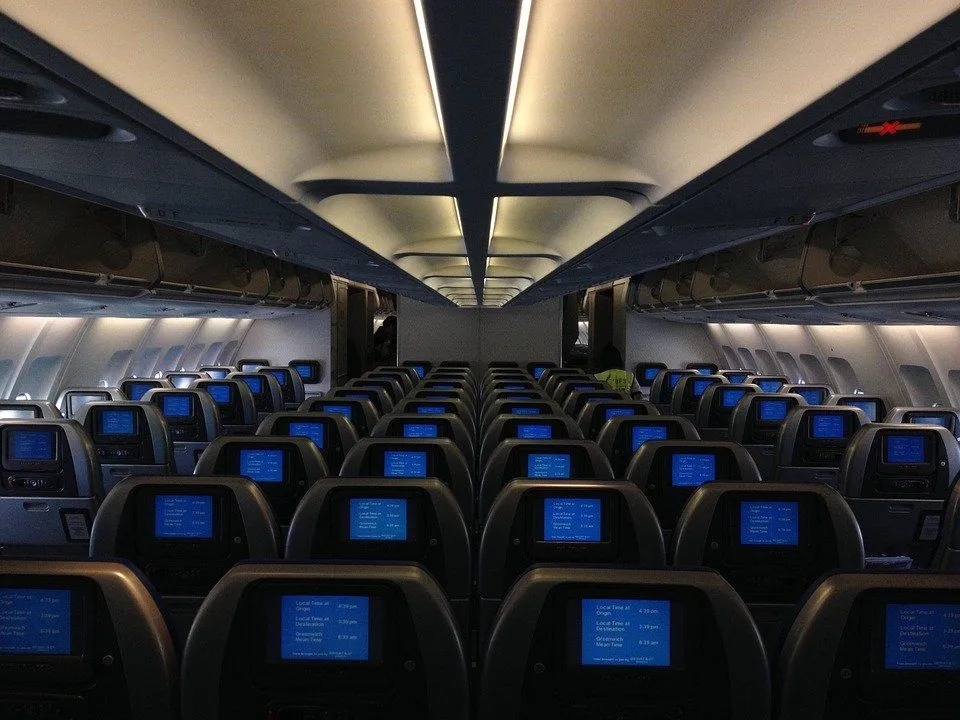
Noise, shuddering, rolling, turbulence, and other vibrations experienced during a flight are not natural movements of the human body. The body constantly tries to stabilize itself, making you feel tired after a long flight.
The Psychological Factor
One cannot ignore the psychological aspect of long-distance travel. Already, the very concept of travel exhausts many people.

You’re in a new place, potentially surrounded by strangers, sitting in what is most likely a pretty uncomfortable seat, and making it safely with all your luggage can be stressful. You’re constantly on alert, which is not (most) people’s natural state of mind.
That’s why the business class is so popular: you get more space and privacy, making it more comfortable.
Why Is Driving Itself So Exhausting?
So far we have mostly talked about you as a passenger, with your body quietly fighting every sway and jerk. But anyone who has done a long stint at the wheel knows that driving carries its own special kind of tiredness, and the reason is a little counterintuitive. You might assume that a busy, demanding drive is the draining one. In fact, it is often the long, featureless highway that flattens you the fastest.

Researchers call this cognitive underload. A monotonous road gives your brain too little to do, the same kind of under-stimulation that makes a dull lecture so sleep-inducing, yet you still have to stay alert for the rare moment when something does happen. Sustaining attention on a dull task like that is genuinely hard work. Over time your arousal drifts down and you slip into a vigilance decrement: your reaction times stretch out, you start to miss things, and mental fatigue climbs the longer you have been at it. A study of monotonous daytime driving found that drivers who let their speed vary a little stayed sharper and reported less sleepiness than those who held a dead-steady pace, precisely because those small changes gave their brains something to do.
That is why an hour crawling through busy city traffic can leave you wired but wide awake, while three hours on an empty motorway leaves you fighting to keep your eyes open. Your body barely moved, but your attention system ran a marathon.
Why Do Car, Bus And Train Rides Make You So Sleepy?
There is a flip side to all this fatigue: the same motion that wears you down can also lull you straight to sleep. Almost everyone has nodded off against a train or bus window, often within minutes of setting off. That is not just boredom; it is physics working on your nervous system.

Part of it is gentle rocking. In a 2019 study published in Current Biology, volunteers who slept on a slowly rocking bed fell asleep faster and spent longer in deep, non-REM sleep. The swaying appeared to synchronize the slow brain oscillations and sleep spindles that mark deep sleep, nudging the brain across the line from waking to sleeping. It is the grown-up version of rocking a baby in a cradle, and a swaying carriage does much the same thing.
The other ingredient is low-frequency vibration. The steady buzz of a car on a highway or a train on its tracks sits mostly in the 4 to 7 hertz range, and a review of the research found that vibrations of roughly 4 to 10 Hz are especially good at inducing drowsiness. In a driving-simulator experiment at RMIT University, that gentle whole-body vibration began making people drowsy within about 15 minutes and was measurably blunting their alertness by the 30-minute mark. Add a warm cabin, the white-noise hum of the engine and very little for your mind to do, and sleep becomes almost irresistible. It is pleasant enough as a passenger, but it is exactly why this kind of drowsiness is so dangerous behind the wheel.
How Long Does Travel Fatigue Last?
Here it helps to separate two things that often get muddled: travel fatigue and jet lag. They feel similar, but they run on different clocks.
Travel fatigue is the general wrung-out feeling that any long journey can leave behind, whatever the mode of transport, and even if you never cross a single time zone. It is the cumulative result of everything in this article: the constant micro-movements, the cramped seating, the dry air, the disrupted meals and the low-grade stress. For a one-off trip the acute form usually clears quickly, easing once you have caught up on sleep, rehydrated, eaten properly and moved around a little.
Jet lag is the trickier cousin. It only appears when you fly across roughly three or more time zones, and it comes from your internal body clock being out of step with local time. Recovery from jet lag follows a rough rule of thumb of about one day per time zone crossed when flying east, and a little faster, around half a day per time zone, when flying west. Travel fatigue itself can also turn cumulative for people who travel constantly, building up across a season unless they leave proper recovery windows between trips. If that worn-out feeling lingers well beyond a few days of genuine rest, it is worth treating as a signal in its own right rather than just dismissing it as "travel".
Dealing With Travel Fatigue
Travel fatigue can be a drag, but you can minimize its effects and recover quickly by making a few changes to your travel routine.
Paying attention to your body’s needs is important to deal with travel fatigue. Eating a healthy diet of fruits, nuts, and vegetables and drinking plenty of water will help. Avoid alcohol and caffeine, which can worsen fatigue. Planning your trip and packing essentials like an eye mask, earplugs, snacks, and any necessary medications can make you mentally more prepared and eliminate the risk of a last-minute rush. Light exercises like short walks or gentle stretches will also help.
Travel fatigue is a common experience among frequent travelers. Whether by car, bus, or airplane, the human body experiences various physical and psychological factors that contribute to the feeling of exhaustion. To mitigate travel fatigue, staying hydrated, engaging in physical activity, and adopting healthy habits before, during, and after traveling are recommended.
Happy traveling!
Last Updated By: Salama Yusuf
References (click to expand)
- Evaluation of Whole-Body Vibration and Ride Comfort in a ....
- Defense Technical Information Center (DTIC).
- Vibration Measurement in Flight.
- Seat vibration in military propeller aircraft.
- ANALYSIS OF IN-FLIGHT VIBRATION FOR A TURBO ....
- Beh, S. F., Lee, S. K., Bin, Y. S., & Cheung, J. M. (2022). Travelers’ perceptions of jetlag and travel fatigue: A scoping review. Chronobiology International, 39(8), 1037-1057.
- Leatherwood, W. E., & Dragoo, J. L. (2012, November 9). Effect of airline travel on performance: a review of the literature. British Journal of Sports Medicine. BMJ.
- The Relationship Between Drivers' Cognitive Fatigue and Speed Variability During Monotonous Daytime Driving. Frontiers in Psychology.
- Perrault, A. A., et al. (2019). Whole-Night Continuous Rocking Entrains Spontaneous Neural Oscillations with Benefits for Sleep and Memory. Current Biology.
- Effects of whole-body vibration on driver drowsiness: A review. Journal of Safety Research.
- Snooze mobiles: how vibrations in cars make drivers sleepy. RMIT University.
- Managing Travel Fatigue and Jet Lag in Athletes: A Review and Consensus Statement.