Bread hardens as it goes stale because of starch retrogradation: its amylose and amylopectin molecules slowly recrystallize and lock water away, making the loaf feel dry even though almost no water has actually left it. Chips do the opposite: their fried, virtually water-free structure is hygroscopic, so it pulls in moisture from the surrounding air and goes soft. Counter-intuitively, bread stales fastest in a refrigerator (around 0–4 °C), where retrogradation is at its peak. Freezing it (or sealing it airtight) is what actually keeps it fresh.
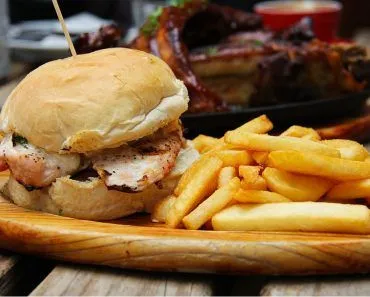
Bread and chips are two of the most beloved food items of the 21st century. Humans use bread as an ingredient in so many mouthwatering dishes (can you imagine a world without sandwiches!), not to mention our fascination with chips! Despite knowing that devouring a single packet of potato chips can add countless calories to our body (a 100-gram packet of potato chips adds almost 540 calories to our body), we just can’t get enough of them.
What’s the worst thing about them, apart from the ‘calorie aspect’?
Both bread and chips become stale over a period of time. While chips get stale much faster than bread, they both face the same fate if left in open air conditions. Despite being very similar, chemically and structurally, the way they go stale is different; in fact, they are totally opposite of each other. Chips soften when they become stale, whereas bread hardens.
Why is that?
Why Does Bread Harden?
There’s a common misconception that bread hardens when it gets stale because it rapidly loses moisture over a period of time. If that were the case, then you could control the staling process to a great extent by putting bread in a fridge, or better still, in a freezer, which has ample moisture and practically no heat (which could make bread lose moisture). However, as it turns out, bread stales almost six times faster when kept in a refrigerator than it does in normal conditions. Therefore, loss of moisture is clearly not the culprit here.
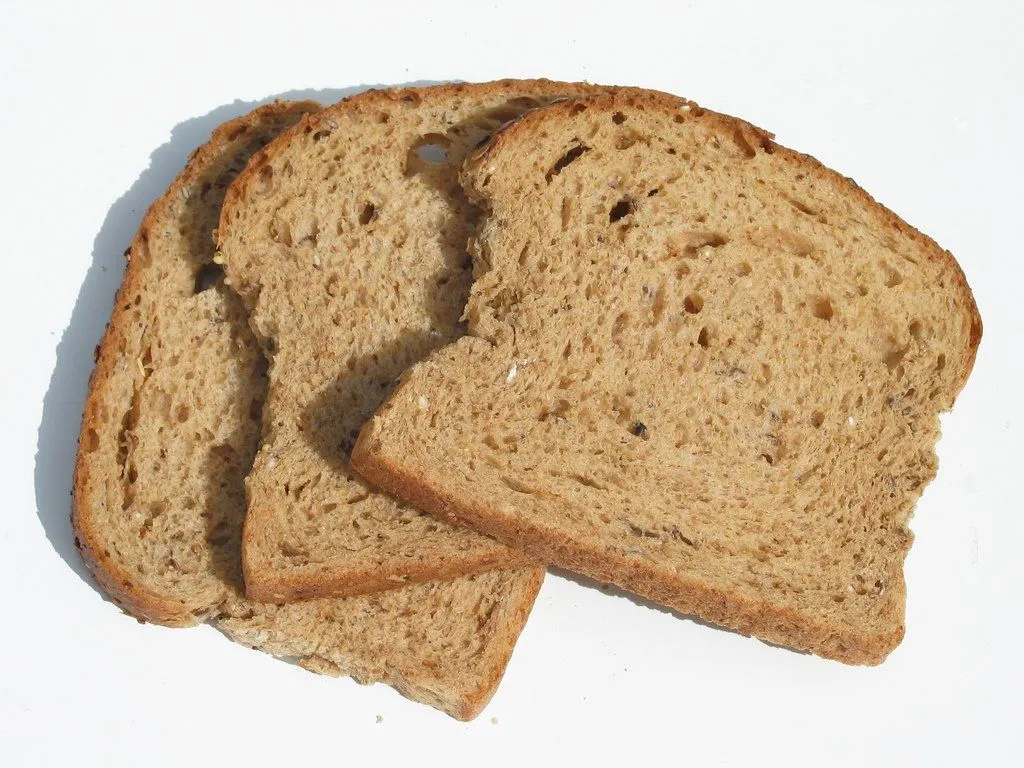
In fact, it’s just the opposite. Bread is made up of starch molecules and wheat flour protein (gluten) molecules. Mixed in amidst the dense network of these molecules are tiny packets of carbon dioxide, which are produced during fermentation.
When bread is baked, its starch granules absorb water and swell (gelatinization). Once the loaf cools and sits, the amylose and amylopectin chains slowly realign and re-form crystals, a process called starch retrogradation. The water doesn’t actually leave the loaf (it gets bound up in those new crystals and migrates from the crumb to the crust), but the bread feels dry and firm because the starch has rearranged into a more rigid structure. That’s why bread stales fastest in the fridge: retrogradation peaks at temperatures between 0 °C and 8 °C, exactly the range a refrigerator sits in. Freezing the loaf (below about −8 °C) actually freezes the process in place.
Why Do Chips Soften When They Go Stale?
Just like bread, chips also consist of starch molecules, but the way they interact with moisture in their surroundings is very different. When chips are first fried (during their preparation), all the water present inside them evaporates due to the presence of heat. In other words, there’s practically no water content in chips that have just been removed from their packet.
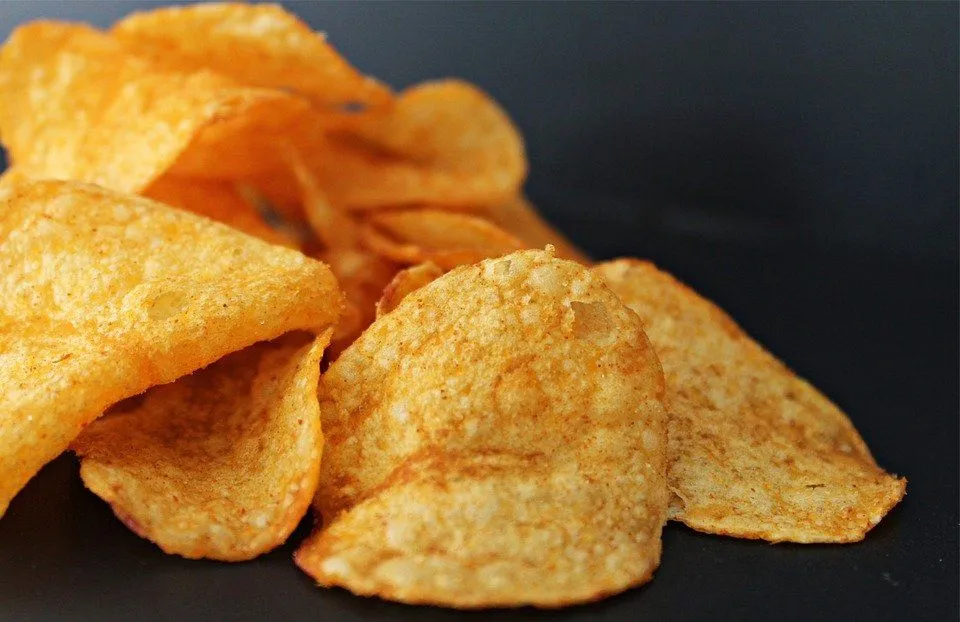
However, once the packaging is undone, chips come in direct contact with air, which contains moisture. The water molecules begin to bind with starch molecules in the chips and make them lose their crunch and go stale.
How To Reverse The Staling Process In Chips And Bread?
Since water is the main culprit in staling both of these things, all you have to do is take moisture out of the equation. Literally.
Chips
To make chips return to their original form, or in other words, make them crispy again, lay them out in a single layer on a microwave-safe plate lined with a paper towel (it soaks up the escaping moisture) and zap them in 20–30 second bursts until they’re dry and crunchy again. For larger quantities, an oven at about 120–150 °C (250–300 °F) for 5–10 minutes (or an air fryer for 2–3 minutes) gives even better results. Voila!

Bread
‘Unstaling’ bread takes a bit more effort. You should start by taking a damp towel and wrapping it around the stale bread. Place it on a dish and microwave it at a high temperature for 10 seconds. Keep an observant eye on it, lest the bread overcook or the cloth catch fire (if not dampened properly).
You should be aware that the softness and texture of such ‘unstaled’ bread obviously wouldn’t match that of freshly baked bread, or bread that hadn’t gone stale in the first place. Also, this type of ‘unstaled’ bread would turn hard even faster if left in the open for a second time.
The best thing you can do to avoid staling in both cases is to keep your chips and bread in closed, air-tight containers. After all, prevention is always better than treatment!
Why Does Any Food Get Stale? The Water Activity Rule
Step back from bread and chips for a moment, and the same logic explains why any food goes stale. Food scientists track a single number called water activity (written aw), which is just the relative humidity of the air a food would settle into if you sealed it in a jar and let it come to balance. Pure water has a water activity of 1.0, while a freshly fried chip or a crisp cracker sits far lower, down in the dry, crunchy range.

Here is the rule that does all the work: water always migrates from wherever its activity is higher toward wherever it is lower, until the two sides balance out. Room air in most homes hovers around 40 to 60 percent relative humidity, which is the equivalent of a water activity near 0.4 to 0.6. A chip, cracker, cereal flake or cookie that starts out drier than that is below the room, so it steadily pulls moisture in from the air and turns soft and limp. A fresh slice of bread or a soft cookie starts out wetter than the room, so it loses moisture to the air (on top of its starch retrogradation) and turns dry and firm. Same air, same physics, opposite outcomes, decided entirely by which side of the room's humidity the food started on.
How Long Does It Take For Chips To Go Stale?
There is no single number, because staling is a race toward that humidity balance, and a few things set the pace. The bigger the gap between the chip's bone-dry interior and the moisture in the room, the faster water rushes in, so chips go limp far quicker on a muggy summer day than in a dry, air-conditioned kitchen. Surface area matters too: thin, ridged chips and broken crumbs soak up air faster than a thick, intact one. Above all, it comes down to the seal. A bag clipped shut or chips tipped into an airtight container can stay crisp for a week or more, while a bag left open overnight is often soft by morning.

So why do chips sometimes taste flat the moment you open a brand-new bag? That is usually not moisture at all. It is the oil. Over weeks on the shelf, the fat in fried chips slowly reacts with traces of oxygen, light and heat, a process called autoxidation that researchers have identified as the main cause of quality loss in crisps. That is exactly why manufacturers flush the bag with nitrogen instead of air: with the oxygen displaced, the oils stay fresh far longer.
Are Stale Chips Safe To Eat?
Almost always, yes. It helps to separate two different ideas that get lumped together: stale and spoiled. Staleness is a texture and flavor problem, not a safety one. A soft, leathery chip has simply traded moisture with the air, and a dry, firm slice of bread has lost some, but neither has become dangerous. That is also why a "Best if Used By" date on the bag is a quality date, not a safety deadline; the U.S. Department of Agriculture is explicit that these dates tell you when a food is at its best, not when it turns unsafe.

The real warning sign in chips is not softness but rancidity. When those frying oils oxidize too far, they give off a sharp, bitter, almost paint-like or crayon-like smell, and at that point the chips are worth throwing out on taste alone. The same goes for any visible mold or a damp, clumped texture, which means moisture has broken into the bag, much like the way canned food eventually spoils once its seal is compromised. Short of those signs, a stale chip is a disappointing chip, not an unsafe one, and a quick blast in the oven or air fryer will bring back most of the crunch.
References (click to expand)
- Hard Bread and Soggy Cookies | A Moment of Science. WFIU
- Why Does Stale Bread Turn Hard, But Stale Chips Turn Soft?. Popular Science
- Here's Why Stale Bread Is Hard, But Stale Chips Are Soft. Business Insider
- Water Activity and its Role in Food Preservation. UC Master Food Preserver Program, University of California
- Impact of nitrogen flushing and oil choice on lipid oxidation in fried potato crisps. PMC, National Library of Medicine
- Food Product Dating. Food Safety and Inspection Service, U.S. Department of Agriculture