Table of Contents (click to expand)
Fried food floats because water inside it turns to steam, which slightly puffs the food up and drives some mass out as vapor. That drops the food’s density below the oil’s, so it bobs to the surface. Floating means the food is nearly done, but only a thermometer (165°F / 74°C for chicken) confirms it’s safe to eat.
As heat is applied to fries, they lose part of their mass (as water turns into steam) and their volume increases. This reduces the density of fries, so they start floating in the oil after just a few minutes of heating!
I love fries… I can’t get enough of them whenever I go to any fast food joint. Regardless of what I order, fries are always essential.
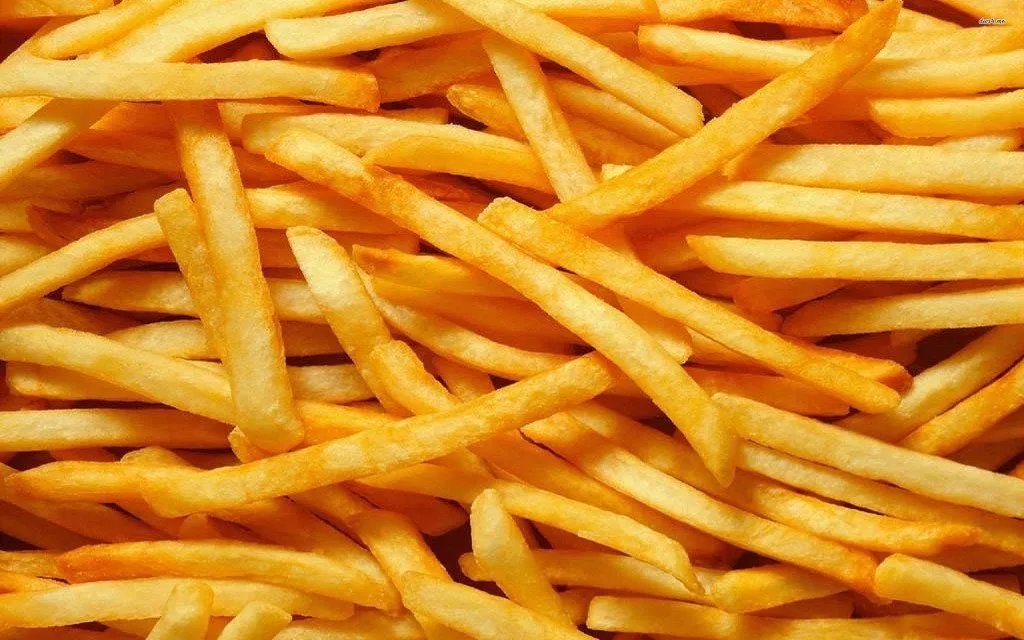
While salivating at the sight of thinly cut potato strips frying in oil, I can’t help but notice that a few minutes into the frying process, the fries begin to float. This is something you will observe not only with fries, but basically every food item that you fry in oil.
Why does it happen? Why does frying something make it float?
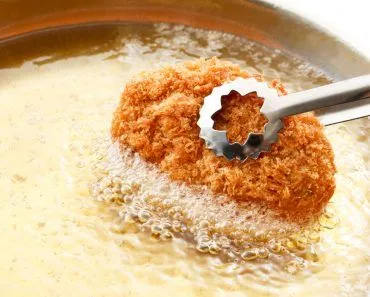
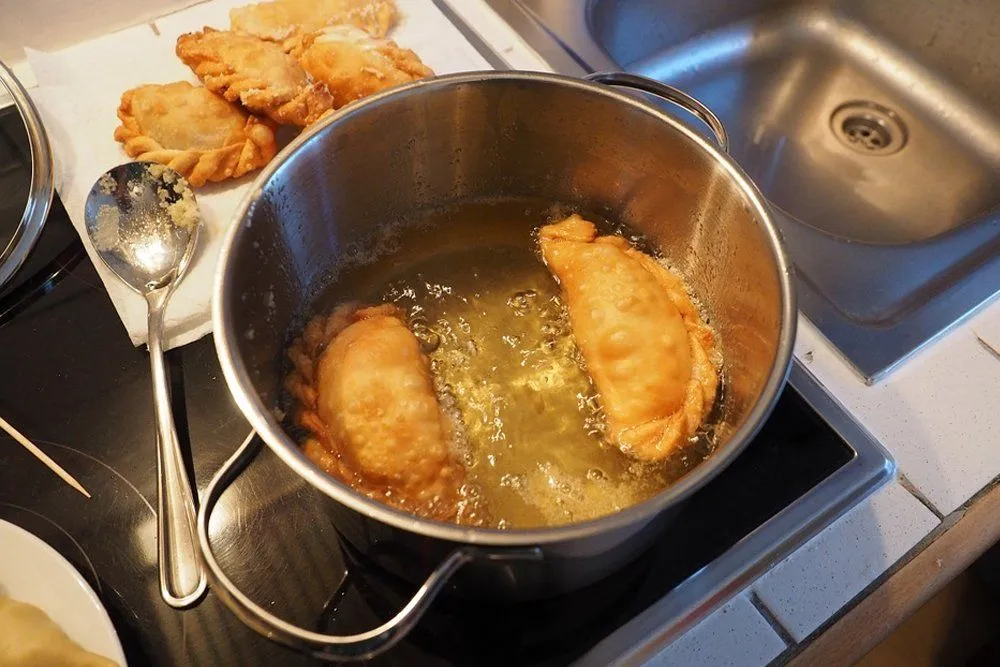
Deep fat frying is a very popular cooking method that involves submerging a food item in extremely hot oil until it reaches a safe internal temperature. The oil itself typically sits between 163°C and 190°C (325°F to 375°F), per USDA food safety guidance. A properly-cooked deep-fried food is crispy on the surface and cooked to perfection in the center. Some of the most common food items that require deep fat frying include French fries, potato chips, fried chicken, and battered fish.
Heat Converts Water Into Steam
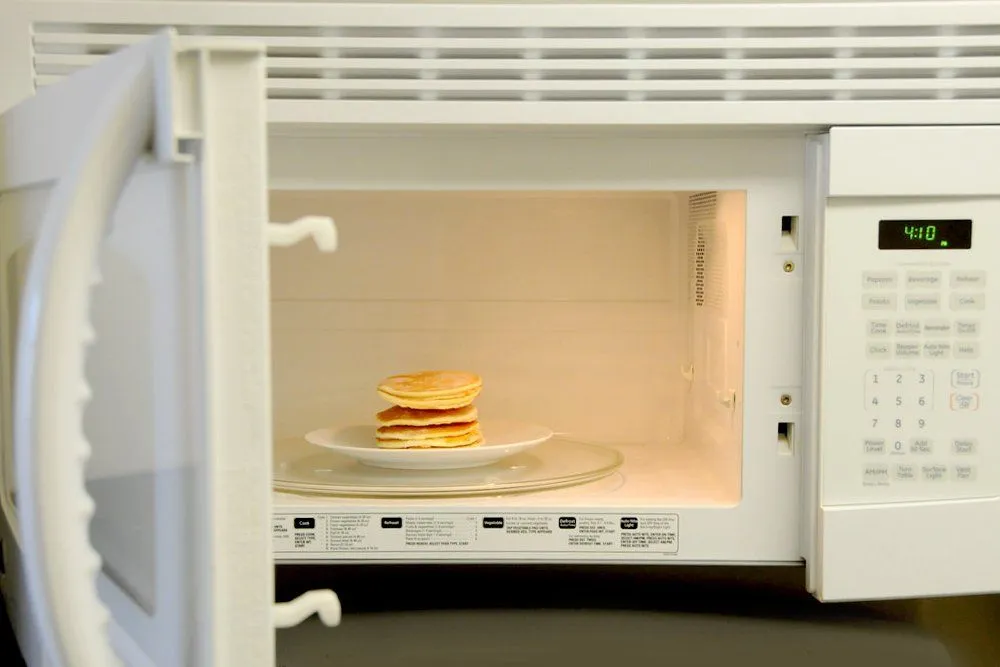
Most foods that you fry have some amount of water in them. That’s actually what microwave ovens rely on in order to heat food. A microwave oven has a small component called a magnetron, which produces microwave rays that excite and vibrate water molecules. This vigorous motion of water molecules creates intermolecular friction, which generates heat to cook food. If there were absolutely no water content in a food item, microwave ovens wouldn’t be such a common household product.
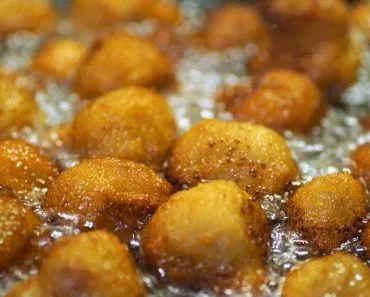
Coming back to the main topic, all food has some water content in it. Now, when you heat that food in the presence of oil, the heat slowly turns the small amount of water within the food into steam. This steam starts to rise and pushes against the crust of the fried food (such as fries). This is why fried food often becomes puffy, thanks to the trapped steam.
Heat Changes The Density Of Food
When you fry a food item, such as French fries, its density becomes less than the oil in which it is being fried. You see, density is a characteristic property of a substance that signifies the relationship between the mass of the substance and how much space it takes up (volume).
Mathematically, density is represented as the ratio of mass to volume of a substance.
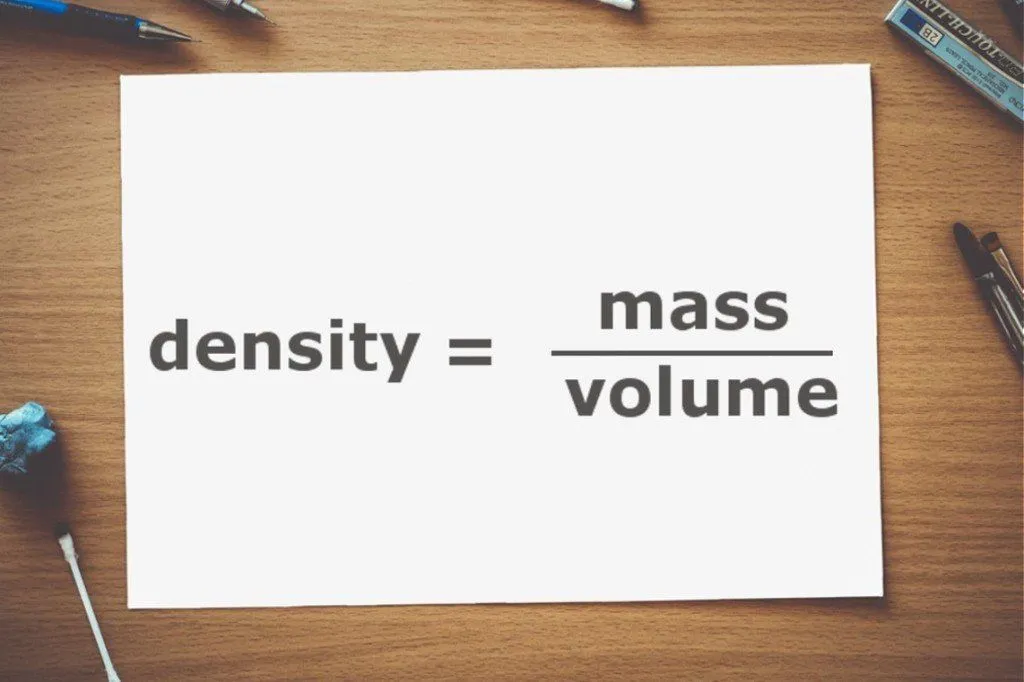
As heat is applied to fries, they lose part of their mass (as the water turns into steam) and their volume increases. This reduces the density of fries, and voila! they start floating in the oil after just a few minutes of heating up.
Water is heavier than oil, but the process of frying makes the food less dense than the oil surrounding it, thus making it float.
However, deep frying oil is usually held around 175°C (350°F) and can creep higher if left unattended. At those temperatures, cooking oil is also a highly flammable liquid. This is why it’s very important to take extreme safety precautions to prevent the risk of starting a fire or burning yourself.
Does Floating Mean Fried Food Is Done?
This is the question most home cooks actually want answered: if my fries, chicken wings, fish, or chicken nuggets bob up to the surface, are they ready to plate?
The short answer is: floating is a useful sign, but not a guarantee. The same physics we just walked through (water evaporating, density dropping) is exactly what’s happening inside a piece of food as it cooks. By the time enough water has been driven off to make the food less dense than the oil, the interior has usually had time to climb past the danger zone. That’s why the rule of thumb works fairly well for thin items like French fries, potato chips, and battered onion rings, where heat travels almost all the way through before the food lifts off.
It’s far less reliable for thicker items like bone-in fried chicken, chicken nuggets, or whole pieces of fish. A drumstick can float once the surface batter has dried out and steam has built up under it, even if the meat near the bone is still under-cooked. The USDA is blunt about this: appearance is not a safe doneness indicator. A food thermometer is.
Use these target internal temperatures from USDA FSIS as the final check:
- Chicken and other poultry (including nuggets and wings): 74°C (165°F) in the thickest part.
- Fish: 63°C (145°F), or until the flesh is opaque and flakes with a fork.
- Ground meats in fritters or meatballs: 71°C (160°F).
So treat floating as the kitchen-physics equivalent of a “check engine” light: it’s telling you the food is close. For fries and chips, pull them, drain, and taste. For anything with meat or thickness, slide a probe thermometer in before you trust the bob.
References (click to expand)
- Deep Fat Frying and Food Safety. Washington State University
- Deep Fat Frying. USDA Food Safety and Inspection Service
- Safe Minimum Internal Temperature Chart. USDA Food Safety and Inspection Service
- Six Ways Deep Fat Frying a Turkey Can Burn You. University of Utah Health
- Predicting lift-off time when deep-frying potato dough snacks. arXiv preprint 1910.04458