Buildings decay fast once they're abandoned because nobody is fighting the constant, slow attack of water, weather, plants, and pests. An occupied house has someone clearing gutters, fixing leaks, and patching cracks within days; an empty one lets that same minor water intrusion soak the wood, feed mould, freeze and crack, and rot the structural members. Add broken windows that let weather in, vines and roots prying open masonry, rodents chewing wiring and insulation, and the occasional human break-in or fire, and a sturdy building can become uninhabitable in just a few years.
In modern cities, you have likely seen people living and working in buildings that are decades, or even centuries old, depending on where you are in the world, yet they still appear to be in perfect condition.
However, if a building is left uninhabited for even a few years, it decays at an incredible rate. Why does that happen? How exactly is an inhabited building better protected than an abandoned one?
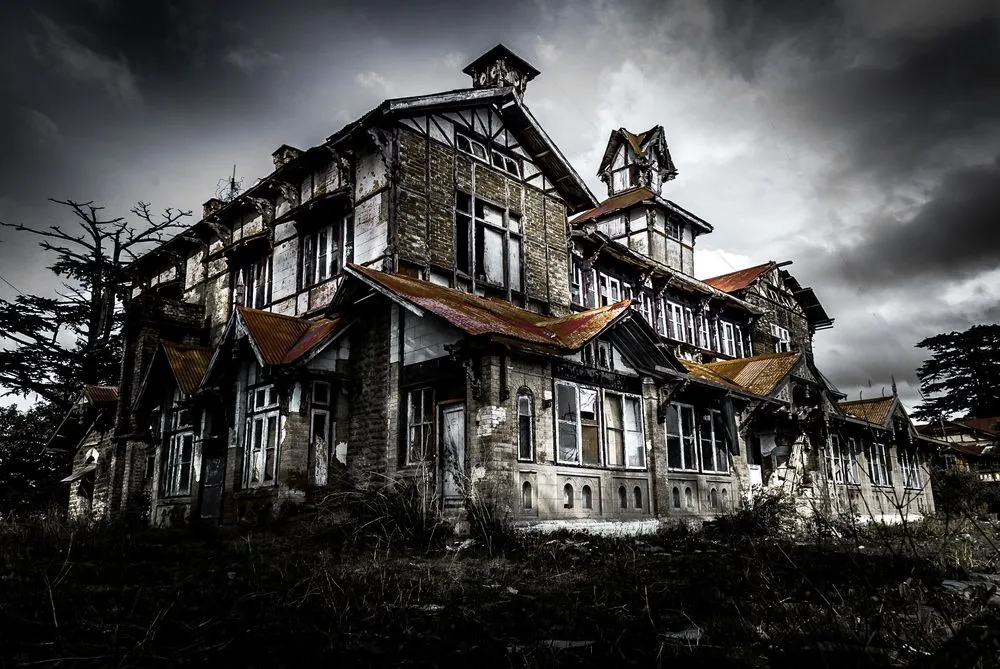
Here are some reasons of quick decay of abandoned buildings:
Weather
Any structure that stands “in the open” must brave the elements of nature, which negatively impacts the structural integrity of a building. For example, during the summer, water may seep into the ceiling or walls of a house and dampen it. However, come winter, water freezes and compromises the strength of the wall. In fact, this is one of the primary reasons why the walls of abandoned buildings begin to fall apart during winters.
Additionally, the material used in the construction of the building is also affected by the ambient weather. If a building has a lot of metal, like iron or steel, it will rust gradually if not maintained, which will accelerate the decay of the structure.
Water
Water is considered one of the biggest dangers to an abandoned building, house or any structure that must withstand the elements. Once water from rain, snow or any other sources gets into the building and is left unchecked, it is basically a death sentence for the building in question.
Water dissolves drywall, rots wood, rusts metal and melts plaster, among many other things that ultimately compromise the structure and its integrity.
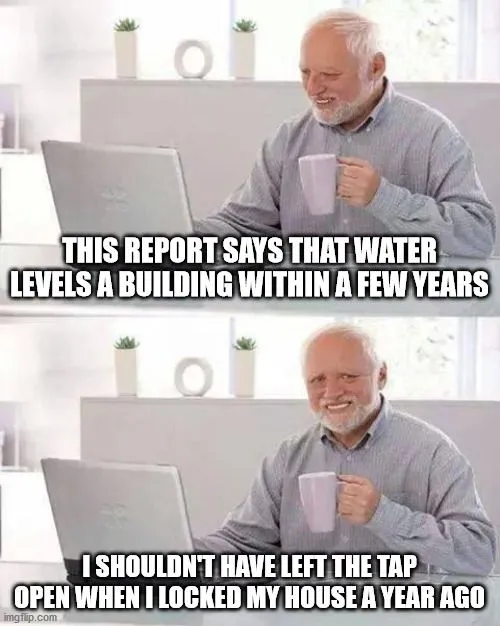
Furthermore, if a building gets very cold during the winter, as mentioned earlier, water inflicts even more damage by freezing in place and weakening the strength of concrete and masonry.
Vegetation
Once enough water finds its way into the walls of a building, it ‘opens the door’ to a host of other undesirable elements, like the growth of plants within the building. You may have noticed that abandoned buildings’ walls are often adorned with plants, moss, and fungi that scale the height of the walls, sometimes even cracking the floor and ceiling.
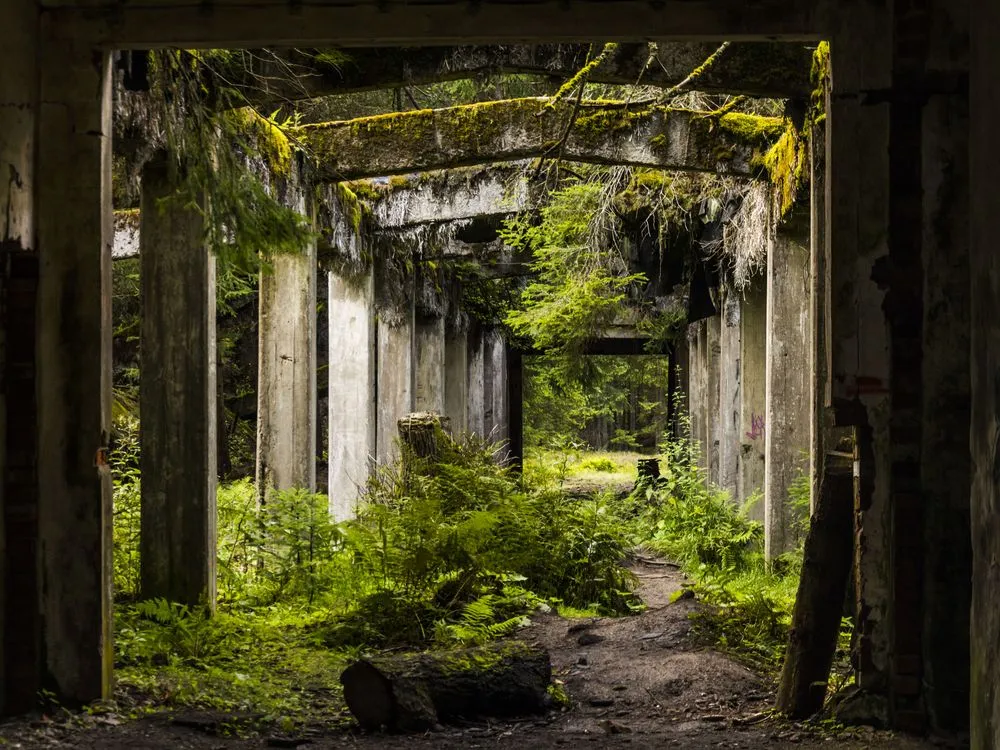
Plants and vegetation attract birds and animals, all of which further contribute to decay of the building.
Construction Material
The material used in the construction of a building has a lot to do with how long it’s going to last. Some materials (such as, stone), as you can imagine, make sturdier structures, but have other disadvantages.
For example, wood is a very common material used in construction; but a house made primarily of wood will likely fall apart in nearly 50 years (or much faster, depending on the ambient temperature and climate). Similarly, a concrete structure would last anywhere between 50-100 years while a stone building may last more than a century. (Source)
Note that these are just estimates about the longevity of a given structure based on its construction material, as mentioned earlier, there are numerous other factors that accelerate or slow down the decay of a building.
Lack Of Regular Maintenance
One of the biggest reasons why a 100-year-old building can stand stall, while an abandoned building may bite the dust within a few years, is that the former gets taken care of by its inhabitants.
The importance of maintenance for a building or any structure, for that matter, cannot be overstated.
When a building is inhabited, the tiniest hole in the ceiling, walls or floor is noticed by its inhabitants and fixed quickly.
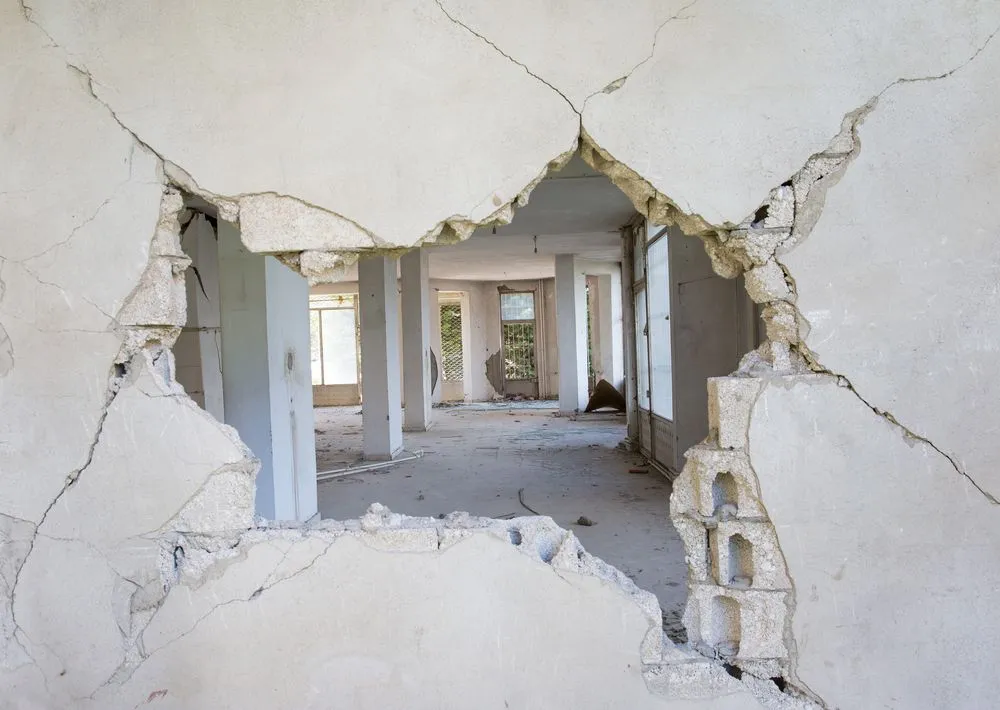
In contrast, a small crack in the window of an abandoned building is enough to ultimately bring down the entire structure in a matter of a few years. This is why it’s often said that an abandoned house ages 5 years for every year that it stands vacant.
Human Interference
A vacant building decays if left unattended, as we have already established, but what makes the process of decay even worse is the element of human interference.
If a building is abandoned, it usually attracts human visitors, especially when it’s first abandoned. Within an abandoned building, people pry off boards, tear out the walls, rip out copper, metal or even wood wherever it can be found. Cases of people walking into vacant buildings and simply breaking things without reason are also oddly common.
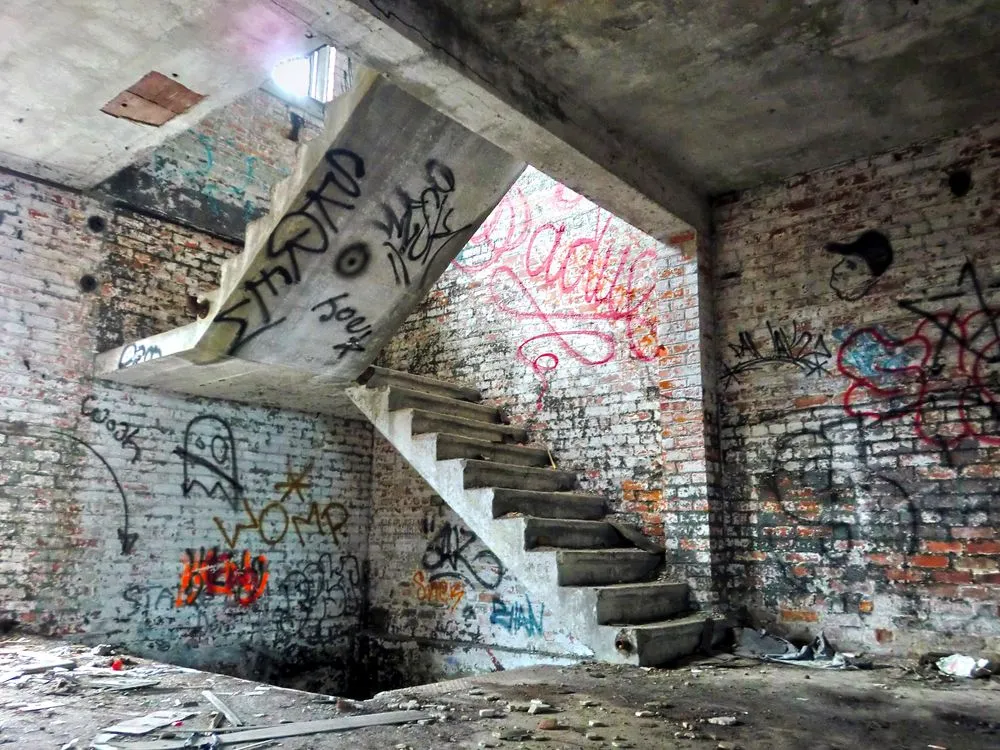
All of these activities significantly diminish the structural integrity of a building. In fact, this is why people hire guards and put up signs that say “Private property: Trespassers will be prosecuted” in order to protect their vacant buildings, even though no one lives there anymore. Basically, hiring a guard to secure the building premises is usually less expensive than absorbing the monetary loss that comes from such human sabotage of the building.
This is why it’s always advisable to have a plan that ensures a building is shielded from such environmental and human factors, even if no one inhabits it. If left completely unattended, an abandoned building is as good as a pile of wood, concrete and rubble, quickly retaken by nature!
Why Do Buildings Get Abandoned In The First Place?
Before a building can decay, somebody has to walk away from it, and that part of the story is often sadder than the rot that follows. Structures rarely sit empty by choice. The single biggest driver is economic: when the jobs leave a town, the people tend to follow. Across the American Rust Belt and similar former manufacturing hubs, decades of deindustrialization hollowed out cities like Detroit, Cleveland and Gary, leaving far more houses than residents to fill them. Some upstate New York cities lost a third or more of their population between 1950 and 2010, and a shrinking population simply cannot keep an oversupply of housing occupied.

The other major trigger is foreclosure. After the 2008 housing crash, millions of owners owed more than their homes were worth, and many simply left. Lenders frequently walked away too, because the cost of maintaining a low-value property was more than they could ever hope to recover, leaving houses in a legal limbo with no one responsible for them.
This also explains one of the eeriest things about derelict homes: the belongings left behind. When a departure is forced or sudden (an eviction, a foreclosure notice, a flood, or a factory closing that empties a whole street), people leave in a hurry, and a half-set dinner table or a wall of family photos can sit untouched for years. Once a property has effectively negative value, nobody has much reason to come back even for the furniture. And the moment the last person locks the door for good, the slow demolition by water, weather and pests begins in earnest.
How Long Does It Take An Abandoned Building To Fall Apart?
There is no single answer, because the clock runs at very different speeds depending on climate, construction and how badly the roof has failed. A rule of thumb that restorers like to quote is that an abandoned house ages roughly five years for every year it stands empty, but the honest version is a sequence of stages rather than one fixed number.

The countdown really starts when the building envelope is breached, usually a failed roof or a broken window. Until that happens, dry timber is remarkably tough. Wood-destroying fungi need water to do their work: research from the USDA Forest Products Laboratory finds that wood rots once its moisture content climbs above roughly 30 percent, yet will not decay at all if it stays below 20 percent. An occupied house keeps its timber in that safe, dry range because someone clears the gutters and patches the leak within days. An empty one does not, so within the first wet season the framing soaks through, mold blooms, and the fungi begin eating the cellulose that gives wood its strength.
From there the decline only speeds up. Over the first few years, sodden framing softens, plaster falls, and pests move in. Over the longer run the material itself sets the outer limit: a timber-framed house may hold together for around 50 years, a concrete structure for 50 to 100, and a stone building for well over a century, though a caved-in roof can bring any of them down far sooner. The end state is always the same. Floors sag, walls bow, and eventually the frame can no longer carry the weight above it, so the building quietly returns to rubble.
References (click to expand)
- . (2006). Drinking Water Distribution Systems. []. National Academies Press.
- . (1974). Expansion Joints in Buildings. []. National Academies Press.
- Dir. U. Prof. Dr. W. Rücker, Dipl.-Ing. F. Hille, Dipl.-Ing. R. Rohrmann - Guideline For The Assessment Of Existing Structures - CiteSeerX
- D Parkinson. performance based design of structural steel for - Digital WPI. Worcester Polytechnic Institute
- Vacant and Abandoned Properties: Turning Liabilities Into Assets - HUD USER, U.S. Department of Housing and Urban Development
- Why do some cities have so many vacant properties? - Center for Community Progress
- Morris, P.I.; Winandy, J.E. Limiting Conditions for Decay in Wood Systems - USDA Forest Service, Forest Products Laboratory