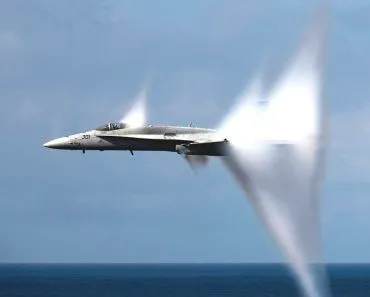
The Germans designed their bombs with a special whistle that would make that screaming cry as they fell towards the cities below. Typically, a metal object with sharp edges, like a bomb would make a small noise “hissing” sound as it fell through the air, unless it happened to exceed the sound barrier (343 meters per second), which would result in a sonic boom. However, by designing bombs that had a whistle-like attachment, the Germans were utilizing psychological warfare as much as physical warfare.
Thomas Pynchon’s masterful World War II novel, Gravity’s Rainbow, begins with one of the most memorable lines in literature: A screaming comes across the sky. It has happened before, but there is nothing to compare it to now. It is too late.
 The 'screaming' Pynchon describes is, famously, the sound of a V-2 rocket, but the eerie thing is that the V-2 was supersonic, so its victims couldn't hear it coming at all. The sound only caught up to the ground after the impact had already happened. The whistling bombs popular memory associates with the Blitz were a different weapon entirely. Movies and television shows that deal with the wars of the 20th century often include such a whistling sound in its description or depiction of falling bombs. For those of you unfamiliar with military technology, this “whistling” may come across as strange, to say the least; in the midst of a battle, it seems unwise to give the enemy warning when dropping bombs. First of all, did that whistling actually exist, and if so, what caused it?
The Sound Of Falling Bombs
When you are watching a Hollywood reenactment of a famous World War II battle, the whistling cries of falling bombs certainly help to build tension, but there is some truth behind this terrifying sound. During the Blitz, the Luftwaffe fitted many of its SC-series free-fall iron bombs with cardboard or metal whistles welded to the fins; as the bombs fell, air rushed through the whistles and produced the now-iconic screaming wail. Without any such attachment, a falling bomb makes only a low hiss as air slips past its sharp edges, unless it crosses the sound barrier (about 343 m/s at sea level), in which case it generates a sonic boom instead.
However, by designing bombs that had a whistle-like attachment, the Germans were utilizing psychological warfare as much as physical warfare. The whistle became associated with death from above, and since the bombing raids in London and other European cities were often done in the middle of the night, that wailing cry became a nightmare-inducing and anxiety-striking sound. Survivors of the London bombing still remember those haunting whistles of death from their underground shelters.

Some historians and soldiers argue that the whistling was intended to warn civilians of the coming danger, so they could have time to take cover or run away, but that theory falls apart when you look at the physics of such a sound. It would be nearly impossible to tell what direction the bomb was coming from by the wail alone, so it could be headed straight for you, or might land 120 yards away. Furthermore, those bomb flight times would be relatively short, so even if you did hear the wailing cry of a falling bomb, you would have very little time to react or “run away”. The whistle may have given enough warning to cover could be taken, or you could fall to the ground and cover your head, but that’s about it.
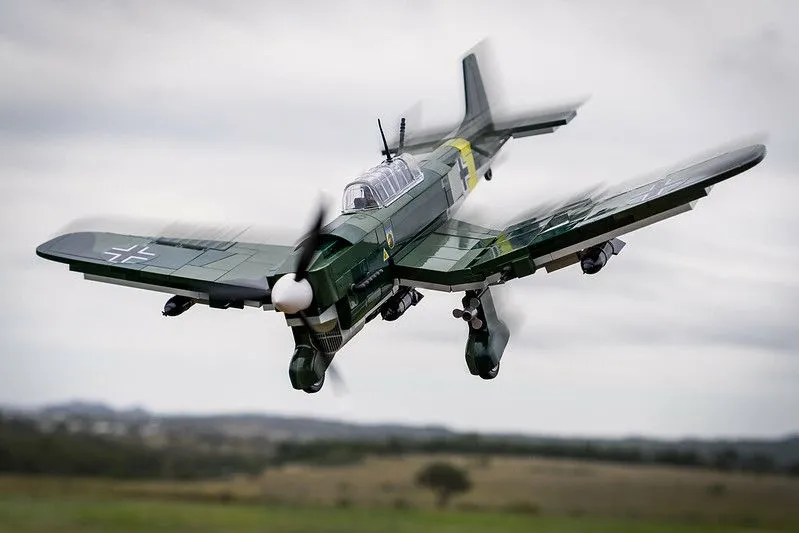
There was also a particular type of German warplane, called a Stuka, that was designed to make a piercing whistle whenever it went into a dive. This had the same effect as the falling bombs, but could last even longer, and would precede a strafing run or its own dropped payload of bombs.
The Physics Of The Whistle
For those people who pay attention to small details, the depiction of falling bombs in Hollywood movies is usually incorrect. When the bomb was dropped and the whistling began, the pilot would hear the pitch start quite high and then reduce in pitch as he moved away from the source; this is the classic “Wheeeeeeezzzzz—–Boom!” sound effect you may have heard in movies or cartoons.
 However, that “classic” falling bomb sound is how the pilot in the plane would hear it, not the people on the ground. Quite the opposite, in fact, as the whistling bomb rapidly approached the Earth, thanks to the Doppler Effect, the whistling sound would increase in pitch, just as the wail of a police siren increases in pitch as it approaches you. In other words, the whistle would reach its highest pitch right before impacting the ground, but that is rarely how the sound effect is added to battle scenes!
Can You Actually Hear A Bomb Falling Toward You?
Here is the unsettling answer that the movies never give you: it depends entirely on how fast the bomb is travelling. A weapon moving slower than the speed of sound (roughly 343 m/s, about 1,235 km/h or 767 mph, at sea level) outruns nothing. Its sound waves race ahead of it, so you genuinely hear it approaching, the whistle, the hiss, the drone, all arriving before the explosion. A weapon moving faster than sound is a different story: it overtakes its own noise, and the first thing you know about it is the blast itself.

The two German "vengeance weapons" of 1944 make the contrast almost cruelly clear. The V-1 flying bomb, nicknamed the "buzz bomb" or "doodlebug", was powered by a simple pulsejet that fired about 50 times a second, producing a loud, droning buzz that Londoners could hear long before it arrived. The terrifying part came when the engine cut out: the fuel supply stopped as the bomb tipped into its final dive, and that sudden silence overhead was the signal that it was about to fall. People learned to dread the quiet far more than the noise.
The V-2 rocket was the opposite kind of nightmare. It plunged back from the edge of space at supersonic speed, striking at around 2,880 km/h (1,790 mph), well over twice the speed of sound, so it arrived completely silently. There was no warning whistle, no buzz, nothing to hear; the sound of its approach only reached the ground after the explosion had already happened. So when people ask whether you can hear a bomb falling, the honest reply is that a subsonic weapon announces itself and a supersonic one does not, which is exactly why the sound barrier sits at the heart of the whole question.
What Was The Stuka's "Jericho Trumpet"?
The screaming Stuka deserves a closer look, because its wail did not come from the bombs at all. The Junkers Ju 87 B dive bomber was fitted with a pair of propeller-driven sirens the Luftwaffe officially called Lärmgeräte, or "noise devices", though they are far better known today as Jericho trumpets (Jericho-Trompete), after the biblical trumpets that brought down the walls of Jericho. Each siren measured about 0.7 m (2.3 ft) across and was mounted on the front of the aircraft's fixed landing gear legs.

The mechanism was beautifully simple and entirely automatic, with no wiring or hydraulics involved. As the Stuka pushed over into its near-vertical dive, the rush of air spun the little propeller on each siren, and the device shrieked. Because the pitch rose with airspeed, the wail climbed higher and higher as the plane plunged, building to a scream just as it released its payload. The point was never accuracy; it was terror, a sound engineered to break the nerve of troops and civilians on the ground.
There was, however, a catch. The sirens added so much drag that they shaved roughly 20 to 25 km/h (12 to 15 mph) off the Stuka's speed, a meaningful penalty once Allied fighters and anti-aircraft guns started taking a heavy toll on the slow dive bombers. Over time many units stopped fitting them, and the Luftwaffe shifted the job to the bombs themselves, attaching whistles to the fins so the screaming arrived without slowing the aircraft. In other words, the famous fin whistle was partly a workaround for a siren that had become too expensive to fly with.
A Final Word
Movies and television producers don’t always get the minute details of war right, but the presence of a terrifying whistle in World War 2 movies is historically accurate. Using a combination of physical strength and psychological terror, bombs with accentuated whistles were able to do damage to the morale and psyche of the intended victims that went far beyond physical violence.
References (click to expand)
- Why do Bombs make a Whistle Sound as they Fall? | Questions. The Naked Scientists
- World War 2 bombs made whistling sound while they fell. mechstuff.com
- Sonic boom - Wikipedia. Wikipedia
- The Sound of Fear: The history of noise as a weapon. Fact
- "Buzz Bomb": 70th Anniversary of the V-1 Campaign. National Air and Space Museum (Smithsonian)
- V-1 flying bomb. Wikipedia
- V-2 rocket. Wikipedia
- Junkers Ju 87. Wikipedia
- Speed of Sound. University Physics (OpenStax). Physics LibreTexts