Table of Contents (click to expand)
There are different types of missiles, some of which require physical contact with the target in order to detonate, while others are designed to detonate as soon as they come close enough to the target. The latter type of missile, which uses a proximity fuse, will detonate automatically when the distance between the missile and the target becomes less than a predetermined value. This allows for more damage to be inflicted over a larger area without actually hitting anything.
A few days ago, I was watching a documentary about the bombings of Hiroshima and Nagasaki. The documentary dealt specifically with the design of the atomic bombs and how their transportation over hundreds of miles and eventual delivery were considered two incredibly big challenges.
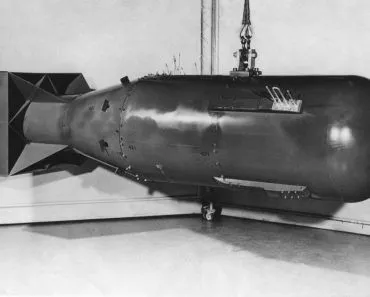
It was in the documentary that I first came to know that the bomb detonated in Hiroshima actually exploded before making physical contact with the ground. In other words, it exploded a few meters above the ground. Initially, I was quite surprised when I learned this, because I had always believed that rockets and missiles have to hit their target in order to explode. However, as it turns out, that’s not true, at least not in every case.
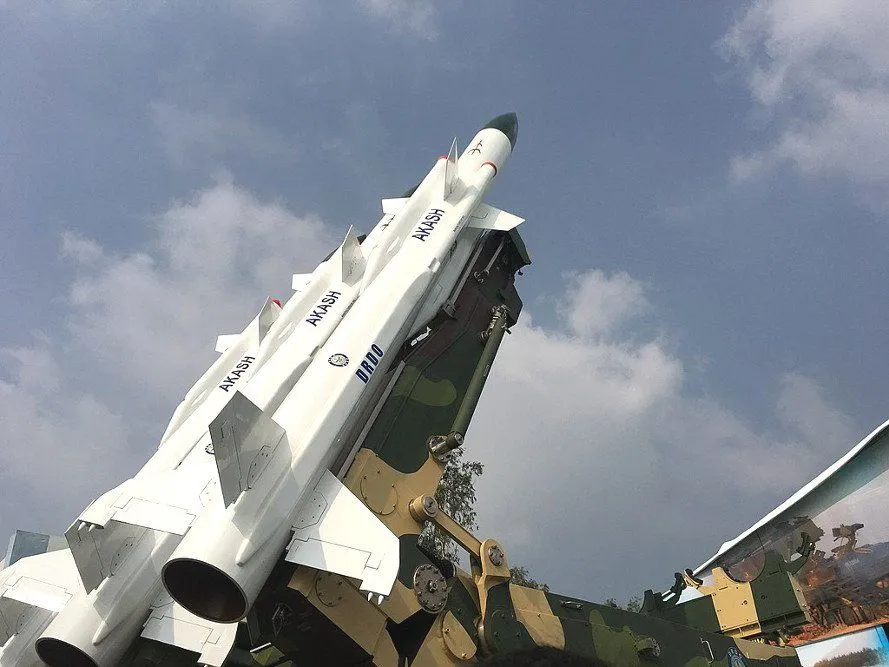
If you don’t know already, then let me tell you… there are missiles that detonate before actually ‘touching’ their target.
So, how does that work? How do missiles manage to detonate without having to make physical contact with the target?
Different Requirements, Different Missiles, Different Fuses
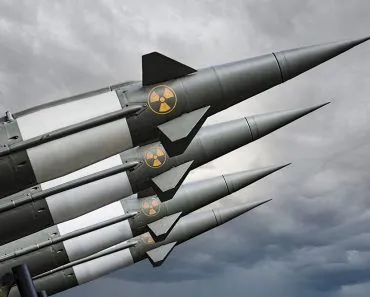
Missiles, as you may already know, come in different shapes and sizes, and every one of them is suited for specific purposes. For example, if you want to bomb a very specific geographical location, the missile to use would be different from the one you’d use to shoot down an enemy aircraft.
As you can imagine, many factors are taken into account while designing a missile, and “what kind of target is the missile going to be used against?” is one of the most crucial things that missile makers need to answer.
As such, some missiles are designed in a way that they have to actually hit their target, or, in other words, make physical contact with the target, while others are designed to detonate as soon as they come close enough to their intended target.
Fuse Types
A fuse (also spelled ‘fuze’) is the part of a missile that kickstarts the series of events that ultimately lead to the detonation of the warhead in the missile.
Based on their mechanism of activation, fuses can be broadly classified into a few categories, including impact fuse, proximity fuse, time fuse, barometric fuse, combination fuse etc. In this article, we are going to discuss the first two.
Impact Fuse
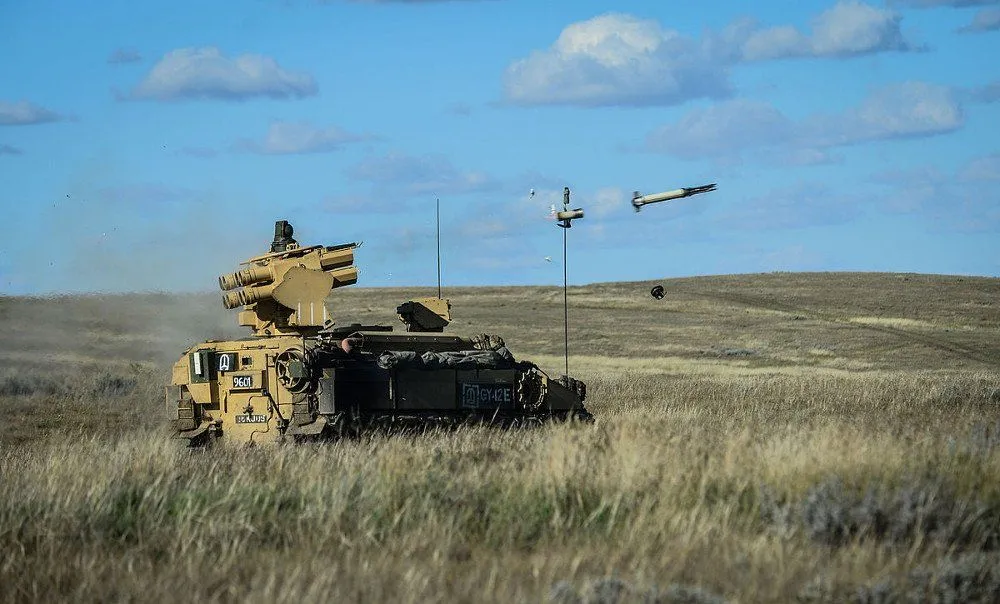
The missiles that have impact fuses (also known as ‘contact fuses’) have to physically strike the target in order to detonate. If they fail to hit the target, then they explode whenever/wherever they strike a solid surface. These types of missile are generally used to destroy bunkers and armored tanks, because they concentrate an extremely powerful ‘punch’ in a smaller area.
Proximity Fuse
A missile with a proximity fuse will detonate automatically when the missile gets ‘close enough’ to the target, or more specifically, when the distance between the missile and the target becomes less than a predetermined value.
Proximity fuses have become the norm in almost all modern surface-to-air and air-to-air missiles. While missiles with impact fuses have their advantages (and are very effective against particularly ‘hard’ surfaces), they are not as effectual when it comes to inflicting more damage over a larger area or when hitting targets that are constantly moving.
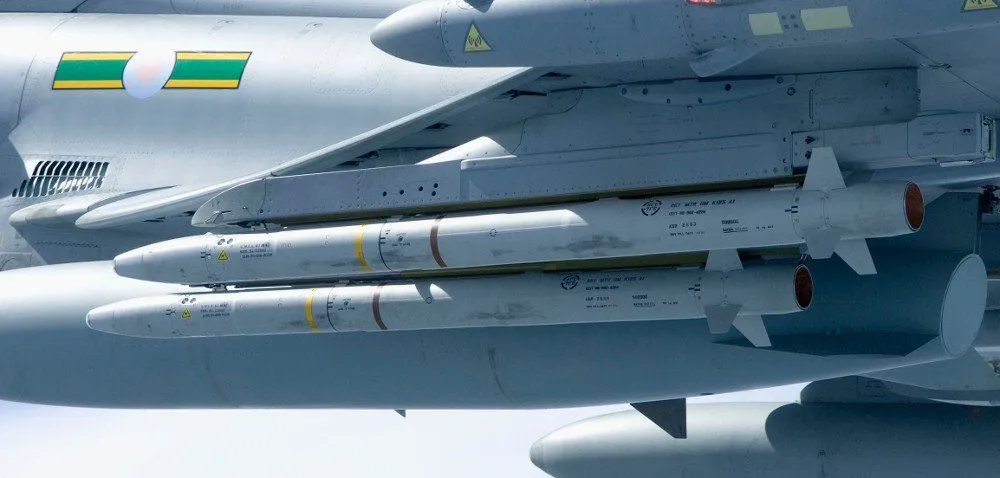
Missiles with proximity fuses are generally used against aircraft, missiles, ships or personnel.
Why Do Some Missiles Detonate Before Actually Hitting The Target?
The missiles with proximity fuses generally detonate when they come within a certain distance of their target. There are a few reasons why they detonate before hitting the target: one, an ‘air burst’ renders more damage over a larger area without actually hitting anything.
You see, an explosion usually inflicts damage in two major ways: fragmentation and shock waves. When a bomb explodes, pieces of shrapnel are ejected in every direction, which could be fatal, both for structures and personnel (fragmentation).
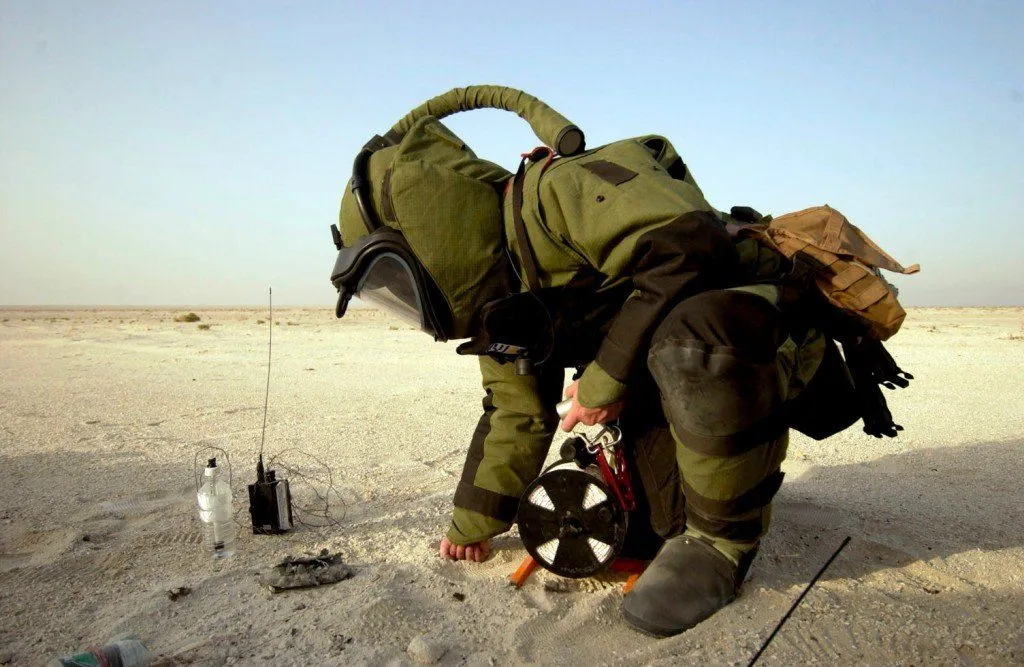
Also, powerful explosions (the likes of which are caused by missiles) are followed by shockwaves. These shockwaves are strong enough to not only knock people off their feet, but also rupture their eardrums, or in the worst case, cause death. One of the things that make shockwaves so lethal is that their area of impact is much greater than the shrapnel.
A World War 2 veteran who took part in the D-Day assault on Omaha beach in 1944 survived after a grenade exploded a few feet away from him. He later said in an interview that while he was not hit by the shrapnel of the grenade, he was flung into the air by an ‘invisible wave’, which felt as though he had been “hit in the head with a baseball bat”.
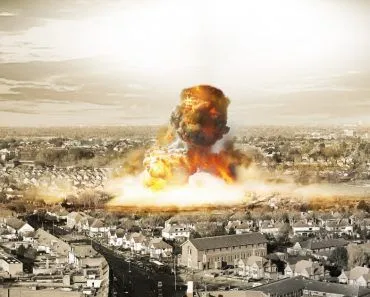
Shockwaves are quite powerful, and if they are produced following a particularly powerful explosion (like that of the atomic bomb of Hiroshima), they can wreak havoc and marginally increase the ‘impact radius’ of the bomb.
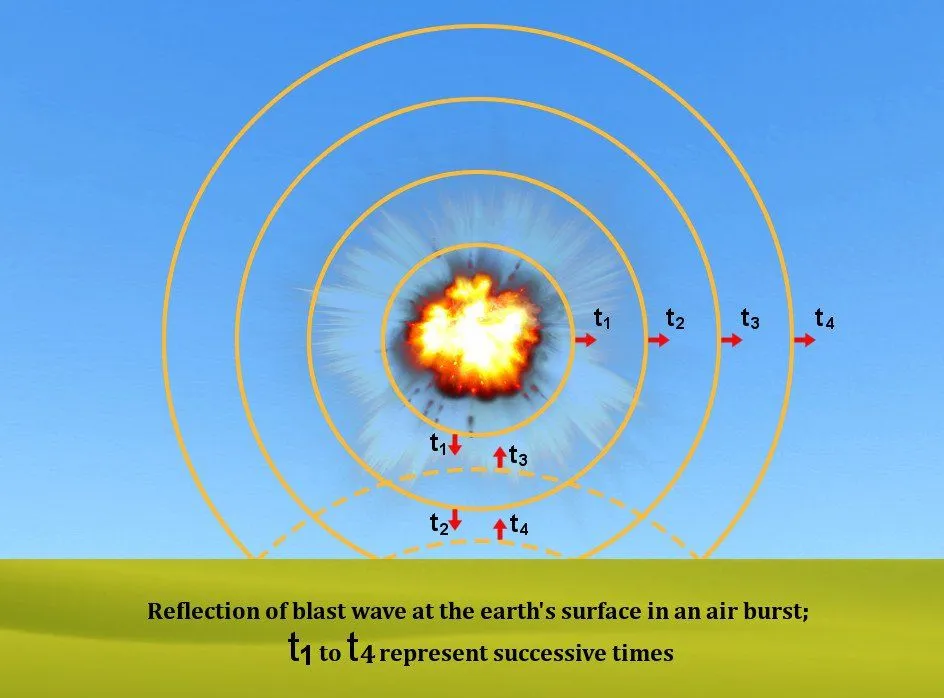
For an air burst bomb, shockwaves first travel toward the ground, and are subsequently reflected off the ground, meeting with even more shockwaves. The meeting of the original shockwaves and these ‘ground-reflected’ shock waves causes both these waves to push outwards and run parallel to the ground. This leads to an exponential increase in the lethality of the explosion.
That’s why many missiles (just like the Hiroshima bomb) explode before physically striking their target.
What Actually Makes A Missile Explode? The Explosive Train
So far we've talked all about the fuse, but the fuse doesn't actually do the exploding. Think of it as the trigger, not the gun. The fuse only decides the moment of detonation; the bang itself comes from the warhead. A warhead has three basic parts: the fuse (along with its safety and arming device), the explosive fill, and the warhead case that holds everything together.
Here's the part that surprises most people. You can't simply 'light' the main explosive. The bulk filling in a modern warhead, things like TNT or RDX, is deliberately insensitive. That's a safety feature, because you really don't want a warhead going off just because it was dropped, jolted or caught in a fire. The downside is that this stubborn main charge won't detonate from a small spark, so engineers set it off with a relay race of charges called an explosive train.
The train is arranged in order of decreasing sensitivity. A tiny, very touchy primary explosive inside the detonator fires first. On its own, the detonator's output is too weak to reliably set off the main filling, so a booster of intermediate-sensitivity explosive sits in between. The booster amplifies the detonator's little jolt into a shock wave strong enough to trigger a full, high-order detonation of the main charge. Primary fires the booster, the booster fires the main charge, and only then does the warhead case burst apart into shock waves and high-speed fragments.
This staged design is also why a missile sitting in a bunker is safe to handle. A safety and arming device keeps one link of the explosive train physically out of line until after launch. Until those charges swing into alignment and the missile is 'armed', the trigger simply cannot reach the warhead.
Do Missiles Always Explode On Impact?
Not always, and that catches a lot of people off guard. Whether a missile goes off the instant it strikes something depends entirely on the kind of fuse it is carrying.

A missile with a contact (impact) fuse does detonate on impact, but even here there's a choice to make. Superquick or instantaneous fuses go off on the slightest contact, which is what you want against soft, spread-out targets. Delay-action fuses do the opposite: they hold off for a fraction of a second so the warhead can first punch through armor plate, a concrete bunker or a ship's hull, and only then detonate inside for maximum effect. Many impact fuses also have a graze action, which trips the detonation on a glancing, sideways blow that a straight nose-on sensor might otherwise miss, cutting down on failures.
Then there are the missiles designed not to wait for contact at all, the proximity-fused ones we met earlier, which burst nearby. And sometimes a missile doesn't explode on impact, or ever. A fuse can simply fail, leaving a dud. Because an armed dud is dangerous, many fuses include a self-destruct timer that destroys the round in mid-air if it has not already gone off.
Stranger still, some modern interceptors carry no explosive warhead whatsoever. So-called hit-to-kill weapons, such as the U.S. Army's THAAD system and its Miniature Hit-to-Kill (MHTK) missile, destroy an incoming threat purely with the kinetic energy of a head-on collision. As the Army puts it, the MHTK 'has no warhead', and instead defeats rocket, artillery and mortar threats with kinetic energy during a direct hit. For these, the 'explosion' is really just the violence of one very fast object slamming into another.
Beyond Contact And Proximity: Time, Barometric And Command Fuses
Earlier I promised to focus on impact and proximity fuses, but those are far from the only ways to set off a warhead. A handful of other fuse types fill in the gaps.

A time fuse detonates a set number of seconds after firing, no matter where the missile or shell happens to be. Gunners have used these for well over a century to burst a shell at a calculated point along its arc, for example to scatter fragments above troops out in the open. The earliest versions burned a measured train of gunpowder; modern electronic timers do the same job far more precisely and are much easier to set.
A barometric (altitude) fuse triggers at a chosen height rather than a chosen time. It works out how high it is using a barometric altimeter, a radar or an infrared rangefinder, which is exactly how a bomb can be set to burst at a specific altitude above the ground. A command fuse, by contrast, hands the decision to a person or computer outside the weapon: it fires only when it receives an external signal, sent down a wire or by radio.
In practice, real weapons rarely rely on a single one of these. A given missile often carries a combination fuse, for instance a proximity sensor backed up by an impact fuse and a self-destruct timer in case both miss. Layering the methods is simply a way to make sure the warhead goes off when, and only when, it is supposed to.
References (click to expand)
- (2009) Fuze, Proximity, Cutaway | National Air and Space Museum. National Air and Space Museum of the Smithsonian Institution
- Lide, D. R. (Ed.). (2018, February 6). Radio Proximity Fuzes. (D. R. Lide, Ed.), A Century of Excellence in MEASUREMENTS, STANDARDS, and TECHNOLOGY. CRC Press.
- (PDF) Electronic Time Fuze Design | Dr Virendra Kumar Verma. Academia.edu
- Technical Digest Home - www.jhuapl.edu
- Fuze, Proximity, Cutaway | Smithsonian Institution. The Smithsonian Institution
- Chapter 13: Warheads. Fundamentals of Naval Weapons Systems. Federation of American Scientists (US Navy)
- Impact fuze | ignition device. Encyclopaedia Britannica
- Time fuze | ignition device. Encyclopaedia Britannica
- U.S. Army successfully fires miniature hit-to-kill missile. army.mil
- Explosive train. Wikipedia
- Fuze. Wikipedia