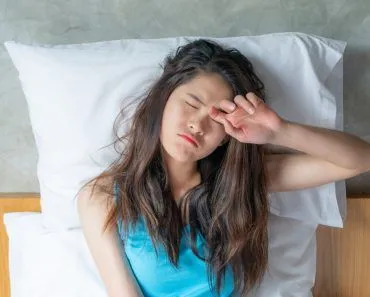
Your eyelids feel heavy when you are tired because the muscles that hold the upper lid open – chiefly the levator palpebrae superioris and the sympathetically driven Müller’s muscle – run out of steam after hours of constant use and lose drive from a sleepy brainstem. Sleep deprivation, hours of screen time, allergies, and the age-related drooping known as ptosis can make the sensation even stronger.
Heavy eyelids in healthy individuals is usually due to fatigue or a lack of rest, or spending too much time in front of a computer/TV screen. A few eye allergies, infections and medical conditions can also cause heavy, droopy eyelids.
After a long day, we generally tend to feel our eyelids getting heavier, as if something was pulling down on them. This may be after a day of rigorous physical activity, or when you’ve spent hours staring at a computer screen in the office… one of the first and surest signs of fatigue is heavy eyelids.
Do you know the reason behind that? Why do eyelids get heavy when we feel tired and sleepy?
Muscles Around The Eye
There are many muscles that surround our eyes and hold them in position. Take a look at the picture below for a quick reference.
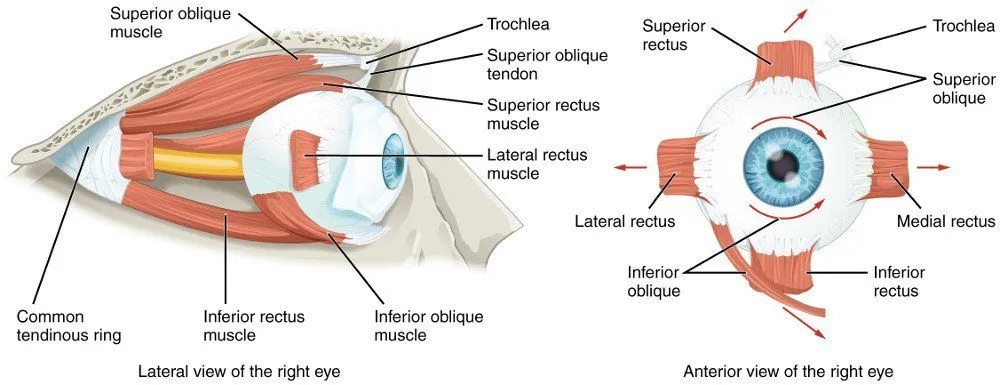
You see, the muscles around the eye, those that hold the eye in position, are like any other muscle in the body when it comes to experiencing fatigue after a long day of consistent use. In other words, just like your arms and leg muscles grow leaden with extended use during a physically demanding day, similarly, the muscles around the eyes also grow weary and experience fatigue.
This is particularly true for the ocular and brow muscles, as they are active for almost every waking hour. The job of lifting the upper lid mostly falls on two small muscles: the levator palpebrae superioris, which is driven by the oculomotor nerve, and the smaller Müller’s muscle (the superior tarsal muscle), which is held in tone by the sympathetic nervous system. As tiredness sets in, the brainstem cuts back its drive to the levator and sympathetic tone drops, so Müller’s muscle relaxes a little too. You feel that combination as a heaviness pulling your lids down. Heaviness of the eyelids in otherwise healthy individuals is therefore down to the fatigue these muscles experience during the "open eyes" hours of the day, and it can be exacerbated by a poor night’s sleep, or by long hours of focusing on, say, a smartphone screen or a computer monitor.
Excess Skin Of The Eyelid
Some people tend to have excess skin on their eyelids, which makes them more prone than others to this condition. Also, people with prolapsed fat pads beneath their eyes are more likely to have heavier eyelids.
Eye Allergies
Chronic eye allergies may also cause your eyelids to get heavy. Sinus infections and excessive sun exposure can lead to swelling of the eyelids, which in turn makes them feel heavy. However, this condition is only temporary and can be treated, often with simple eyedrops prescribed by an ophthalmologist.
Ptosis (Droopy Eyelids)
Some people tend to have droopy eyelids; they may have this condition from birth or develop it as they age. The condition is called ptosis.
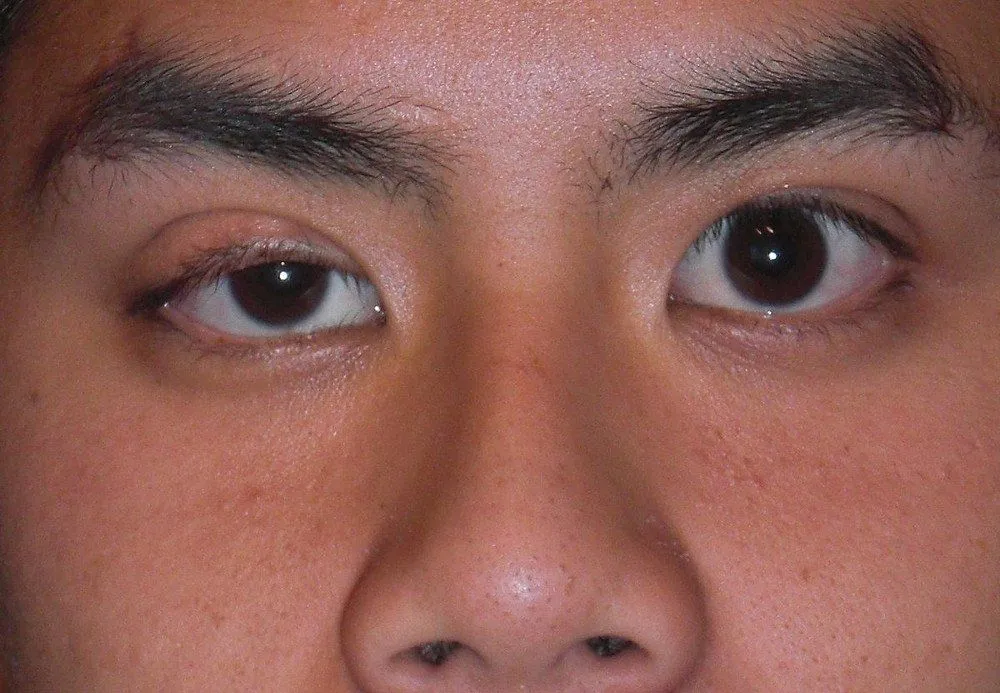
In simple words, ptosis is the drooping of the upper eyelid. It’s sometimes confused with "lazy eye", but the two are different conditions – lazy eye (amblyopia) is a vision-development problem in the brain, while ptosis is a mechanical drooping of the lid itself. Ptosis occurs when the muscles that raise the eyelid – mainly the levator palpebrae superioris and Müller’s muscle – do not work properly or have some sort of weakness. This condition can affect one or both eyes. Although it can affect anyone, it’s generally more common in adults, especially in the elderly, as muscles in their eyelids begin to deteriorate with age. Some people have congenital ptosis, i.e., they are born with heavy, drooping eyelids.
Why Does One Eyelid Feel Heavier Than The Other?
Plenty of people notice the heaviness in just one eye, or feel that one lid is dragging more than its neighbor. That lopsided feeling is surprisingly common, and most of the time it is harmless. The two sides of your face rarely work in perfect lockstep, so a single tired eye can simply mean that one side has taken more of the strain, you have been rubbing or resting your head on that side, or a touch of dryness or allergy is bothering that eye alone.

When the drooping itself is one-sided, doctors call it unilateral ptosis. Ptosis can affect one or both eyes, and even the everyday age-related kind, where the tendon that helps the levator muscle lift the lid slowly stretches over the years, often looks worse on one side than the other. Roughly 70 percent of children born with congenital ptosis have it in only one eye, so a single heavy lid you have had your whole life usually traces back to how those muscles were built.
Occasionally, though, a newly lopsided eyelid is the body flagging something deeper. The nerves that drive the eyelid muscles can be affected by problems ranging from a pinched sympathetic pathway (which produces Horner's syndrome, a droopy lid paired with a smaller pupil on the same side) to nerve damage from long-standing diabetes, and, more rarely, a stroke, brain aneurysm, or tumor. That is why a one-sided droop that appears suddenly is worth taking seriously rather than shrugging off, a point we will return to below.
Why Do My Eyelids Feel Heavy When I'm Not Tired?
Here is a frustrating version of the problem: your eyes feel weighed down, yet you slept fine, and in the mirror your lids look perfectly normal. In most cases, the culprit is not your eyelid muscles at all but the surface of the eye. Digital eye strain and dry eye both create a tired, heavy sensation without any actual drooping. When you stare at a screen, you blink far less often, the tear film dries out, and the eyes have to work harder just to stay comfortable. The American Academy of Ophthalmology notes that focusing on a task for long periods without blinking can leave your eyes feeling dry and tired, and the good news is that eye strain does not injure the eye or cause permanent damage.
If that sounds like you, the fixes are simple and well established. Eye-care bodies recommend the 20-20-20 rule: every 20 minutes, look at something at least 20 feet (about 6 meters) away for 20 seconds, which lets the focusing muscles relax. Blinking on purpose, using lubricating eye drops, improving your lighting, and taking real breaks from the screen all help. Eye strain, as the Cleveland Clinic puts it, is "rarely more than a nuisance," and the heaviness usually lifts once you ease the load on your eyes.
There is one pattern worth knowing about, however. If your eyelids start the day fine but grow heavier and droopier the longer you use them, improving again after rest, that fatigability can be a sign of myasthenia gravis, an autoimmune condition in which the signal between nerve and muscle weakens with use. Drooping eyelids and double vision are often its first symptoms, and over half of people with the condition begin with these eye-only complaints. It is uncommon, but the telltale "worse by evening, better after a nap" rhythm is a reason to get checked rather than to worry quietly.
When Should You Worry About Heavy Eyelids?
For the vast majority of people, heavy eyelids are nothing more than your body asking for sleep, a break from the screen, or relief from a bit of dryness or allergy. Still, a few warning signs are worth memorizing. Call a doctor promptly, according to Harvard Health, if a drooping eyelid develops suddenly over a few hours or days, or if the heaviness comes with double vision, weakness of the facial muscles, difficulty speaking or swallowing, or a severe headache. Those combinations can point to a nerve or neurological problem that needs prompt attention.
Short of those red flags, it is still sensible to see an optometrist or ophthalmologist if the heaviness lingers for weeks despite better sleep and screen habits, if a droop is steadily getting worse, or if a sagging lid actually blocks part of your vision. An eye exam can sort out the common, benign causes from the rare ones in minutes, and most causes of heavy eyelids are eminently treatable once they are pinned down.
In a nutshell, therefore, heavy eyelids in healthy individuals is usually due to fatigue or a lack of rest, or spending too much time in front of a computer/TV screen. A few eye allergies, infections and medical conditions can also cause heavy, droopy eyelids. It’s always recommended to get your eyes checked if you are suffering from this condition.
References (click to expand)
- Drooping Eyelid (Ptosis) - Harvard Health - www.health.harvard.edu:80
- What Is Ptosis? - American Academy of Ophthalmology. The American Academy of Ophthalmology
- Rubbing Your Eyes Is Bad | University of Utah Health. The University of Utah
- Anatomy, Head and Neck: Eye Muscles. StatPearls. NCBI Bookshelf.
- Ptosis (Droopy Eyelid): Causes and Treatment. Cleveland Clinic.
- Drooping Eyelid (Ptosis) A to Z. Harvard Health Publishing.
- Eye Strain and Sleepy Eyes: How to Prevent Eye Discomfort. American Academy of Ophthalmology.
- Eye Strain: Symptoms, Causes & Treatment. Cleveland Clinic.
- Myasthenia Gravis Presenting as Persistent Unilateral Ptosis with Facial Droop. NCBI / PMC.