Table of Contents (click to expand)
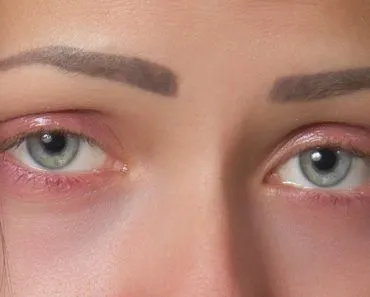
Your eyes burn in the morning because they dry out overnight. While you sleep, you don’t blink and tear production slows down, so the protective tear film thins and the surface of the eye dries. Sleeping with your eyelids slightly open, or under a fan or air vent, makes the dryness (and the burning) worse.
When you open your eyes just after waking up, do you feel a stinging or burning sensation? It’s not painful, but more of a discomfort that lasts no longer than 4-5 seconds, occurring just after opening your eyes. Why does that happen?

The burning sensation has a lot to do with the amount of liquid present in your eyes.
Why Are Eyes Always Wet?
Have you noticed that your eyes look like they’re perpetually bathed in water? In fact, our eyes are always wet, even when you’re not ‘tearing up’ or crying. This thin film of tears on the surface of the eye is made up of three layers (an oily outer layer, a watery middle layer, and an inner layer of mucus) that together nourish the eyes and keep them lubricated, which is vital for ocular health.
If the tear film of your eye is disturbed, you may experience irritation, burning, or blurred vision, all of which is usually accompanied with tearing up of the eye.
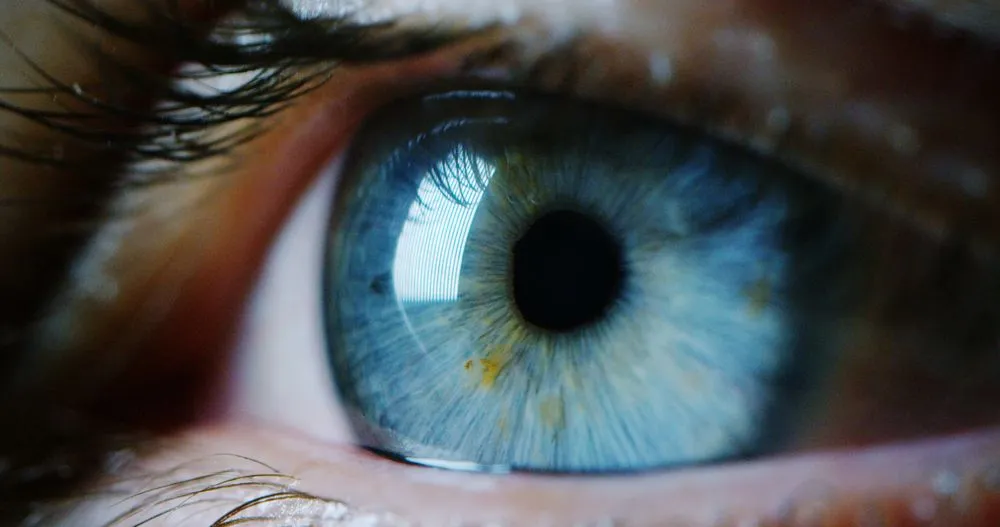
There are certain glands, called lacrimal glands, tucked above the outer corner of each eye, just beneath the upper outer eyelid, that create a watery, salty fluid. This fluid reaches the eye through tiny ducts under the upper eyelid and spreads across the eye when you blink.
I recommend reading “Why Are Tears Salty?” for more details on how tears are created and why they’re salty.
How is this related to the burning sensation that we experience when we open our eyes just after waking up? Or when our eyes feel ‘heavy’?
Why Our Eyes Burn Just After Waking Up
Two words: dry eyes.
When you’re asleep, you obviously don’t blink. Plus, your body follows a daily (circadian) rhythm, and tear production naturally slows down at night, so the watery part of the tear film all but stops being topped up. With no blinking to spread it around and very little fresh fluid coming in, the tear film thins out and your eyes dry out by morning.

The dryness is even worse for people who sleep with their eyelids partially open, a condition doctors call nocturnal lagophthalmos. This leaves part of the eye’s surface exposed to the air all night, so it dries out even faster. Sleeping directly under a fast-moving ceiling fan, or with an air vent or heater blowing toward your face, doesn’t help matters either!
The same thing happens when your eyes get ‘heavy’ after working for prolonged periods of time, such as looking at a computer or smartphone screen, or even reading. People don’t tend to blink their eyes as much when they concentrate on something, which dries out their eyes quickly.

Consider this… we normally blink around 15-20 times a minute, but while binge-watching a TV show or reading (or while doing anything else that requires concentration), the blinking rate can plummet to as few as 3-7 times a minute. That’s a massive drop!
This is why doctors sometimes advise people to use eye drops that help lubricate dry eyes, a condition very commonly seen in people who work in front of computer screens for hours on end.
It’s Important To Blink
You may have heard of the 20-20-20 rule. It says that for every 20 minutes you spend staring at a screen or book, you should look at something about 6 meters (20 feet) away for at least 20 seconds. Looking into the distance lets the focusing muscles in your eyes relax, and squeezing in a few deliberate blinks during that break re-coats the surface with tears.
This not only keeps your eyes lubricated, but is also considered a good form of exercise for them!
What’s The Longest One Can Go Without Blinking?
Have you ever timed yourself to see how long you can keep your eyes open without blinking?
If you’re not a pro at staring contests, then it’s highly likely that you would blink in under 6-7 minutes (and even that would be a challenge!).
If you’re wondering whether there are actual pros at an activity as mundane as staring, well, let me tell you that there are.
Back in 2011, there was a staring contest in Australia’s Northern Territory in which two men, Fergal “Eyesore” Fleming and Steven “Stare Master” Stagg, pushed the limits of staring. Eyesore turned out to be the victor: Stare Master finally blinked at 40 minutes and 59 seconds, and Eyesore held on for roughly a full second longer, clocking in at about 41 minutes! (Source)
However, it wasn’t easy… well into the contest, both participants’ eyes had reddened and started shedding tears. By the 35-minute mark, Eyesore said it felt as if he was getting tattooed on his eyeballs! In other words, please don’t try this at home.
Blinking is a critical part of eye health and normal life, so keep your eyes lubricated and blink away!
References (click to expand)
- Probe and Irrigation of Nasolacrimal Duct. UPMC Children's Hospital of Pittsburgh
- Tear System (Lacrimal Apparatus): Function and Anatomy. Cleveland Clinic
- (2011) Dry Eye Syndrome - PMC - NCBI. The National Center for Biotechnology Information
- Anatomy, Head and Neck: Eye Lacrimal Gland. StatPearls. NCBI Bookshelf