We blink mainly to lubricate and clean the eyes, spreading tears that wash away dust and keep the surface from drying out. Adults blink 15 to 20 times a minute. Blinking also gives the brain a brief mental break: activity in the attention network dips while the default mode network briefly switches on.
We blink, like we breathe, unceasingly. A relaxed adult blinks somewhere between 15 and 20 times every waking minute, and each blink lasts only about a tenth of a second. However, while the benefits of breathing are obvious, the same cannot be said about blinking. In fact, our momentary lapses into darkness add up to roughly a tenth of our waking visual input. Then why is it that we blink?
Lubrication
Every time you blink, from the corner of your eyes, a blend of secretions are released that clean and lubricate the intricate machinery of the eye. These secretions include oils and mucus, which prevent the eyeballs from drying out. Furthermore, the eyes, as Shakespeare mused, “are the window to your soul”, but that soul can be marred if the windows aren’t shut to the dust outside. Thus, we believe that shutting the lids over our eyes cleanses and shields their sensitive parts from dust particles.

The protection is strengthened by the presence of eyelashes, where debris gets stuck like kites in a tree. Blinking, other than warding off dust particles, also shuts the door to potentially harmful stimuli, such as excessively bright light. These two theories explain why one tends to blink more than usual during windy or dry days.
However, shouldn’t being completely blind for 10% of our waking hours hinder our functioning? Shouldn’t we be effectively blind and blank out while blinking? And no, the reason why this is not the case is not that a blink lasts for less than 1/10th of a second. The explanation is actually something deeper and more unexpected.
Attention Breaks
The brain is remarkably good at fooling you. The reason why you don’t blackout while blinking is partly the same reason you can’t see your own nose, even when it unapologetically invades your already limited field of vision. The brain cleverly ignores it, as though it were never there. Similarly, one ingenious study showed that the brain cleverly ignores the darkness by switching off during every blink, as though it never emerged.
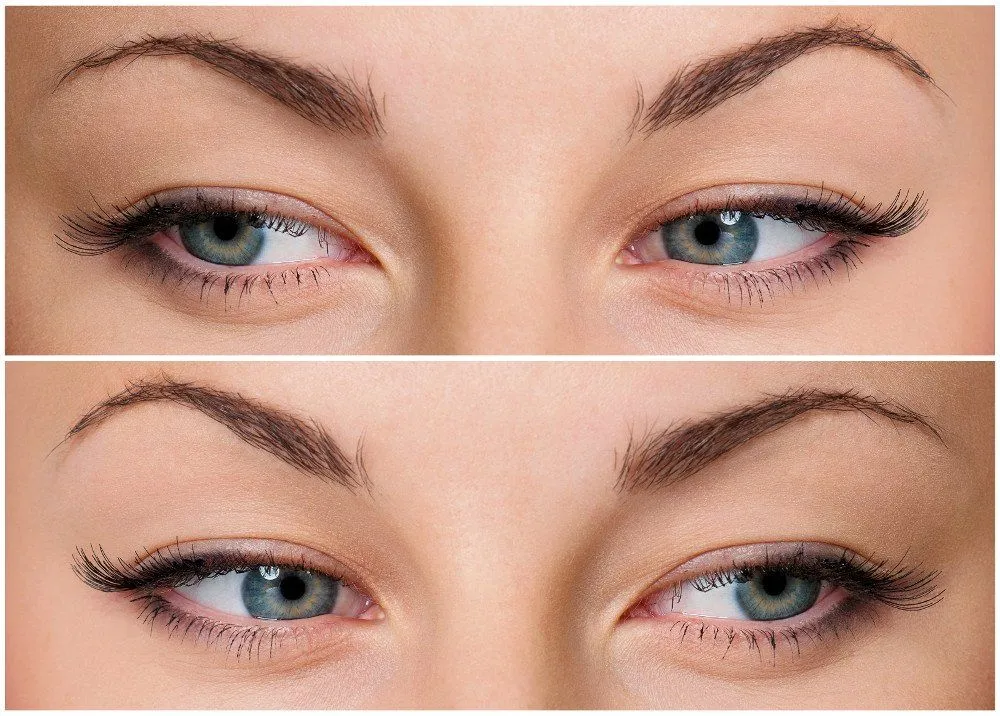
According to researchers, blinking occurs at ‘breakpoints’ where attention or conscious processing can be relinquished and revived later. This includes full-stops while reading text or pauses while listening. However, blinking doesn’t just occur at explicit breakpoints, but also at ‘implicit’ breakpoints that one encounters in videos. These are points where the brain suppresses attention when it knows that the most relevant events are the most unlikely to occur, such as when the protagonist exits the scene.
To prove this, they tested 10 individuals by making them watch episodes of Mr. Bean while being scanned by an fMRI scanner. The images allowed them to measure the degree of activity of every subject’s cortex when he or she blinked while watching the videos.

The researchers found that activity in areas associated with attention plummeted moments before a subject blinked, while simultaneously, a spike in areas that constitute the Default Mode Network (DMN), our auto-pilot system, was observed. When we blink, the activity of our attention network, the very network that detects environmental changes, is inhibited. However, to continue the functioning of the rest of the networks, the DMN takes over. When we open our eyes again, the attention network revives and we experience the world as continuous, as though nothing occurred. If we weren’t conscious to detect the darkness, did it even exist?
However, to ensure that these were responses to spontaneous blinking and not actual visual interruptions in the video, researchers recorded brain images of the subjects viewing actual blackouts subtly inserted into the video. Each blackout persisted for exactly 1/10th of a second, the same time one spends blinking. When they compared the two images (one tracing the DMN activity of subjects blinking and the other when the subjects witnessed an actual blackout), they found that the former was more illuminated. The cortex areas were more activated during a blink!
Blinking seems to provide us a respite, albeit momentarily, from the arduous task that is deliberate concentration. Fatigue is the reason why the rate of blinking escalates when one reads for hours at a stretch. However, one can notice that, on the contrary, its frequency decreases when one is alert while beginning the reading session.
Why Do We Blink When Something Comes At Our Eyes?
There is a second kind of blink that has nothing to do with housekeeping. Flick a finger toward someone’s face, or let a gust carry grit toward them, and the lids slam shut before the person has decided anything at all. This is the corneal (blink) reflex, an involuntary, two-sided closing of the eyelids that the body runs entirely below conscious control. According to StatPearls, contact with the cornea sets off two protective reflexes at once: the blink and the production of tears.

The wiring is elegantly simple. The sensory signal travels in along the ophthalmic division of the trigeminal nerve (cranial nerve V); it is relayed through the brainstem, and the command to shut comes back out along the facial nerve (cranial nerve VII), which fires the orbicularis oculi, the ring of muscle that purses the eyelids closed. Because the loop never bothers the thinking part of the brain, it can fire faster than you can consciously flinch, which is exactly the point.
A related response handles threats that never actually touch you. When an object looms suddenly toward the face, the eyes snap shut (and the head often jerks back) in what is called the menace response, a reflex blink set off purely by the rapid visual approach. It is the same defensive instinct that makes you wince when something is thrown at you, even when you know it cannot reach you, and the same family of reflexes that forces your eyes shut when you sneeze. Bright light works on the same protective logic, which is why a camera flash makes you blink before you can stop it.
Do Your Eyes Move When You Close Them?
The short answer is yes, but not the way most people assume. Shut your eyes firmly, as if bracing against soap, and the eyeballs roll upward and slightly outward behind the closed lids. This upward roll is Bell’s phenomenon, also called the palpebral oculogyric reflex, first described by the anatomist Sir Charles Bell in 1823 while he was trying to shut the eyelids of a patient whose facial nerve was paralyzed.

The upward roll is itself protective: it tucks the sensitive cornea up under the brow bone, so that anything that slips past the closing lid is more likely to strike the tougher lower part of the eye. You almost never catch yourself doing it, because in a healthy face the lids meet completely and hide the moving eye behind them. The reflex turns up in roughly three out of four people, and doctors only get to see it directly when the eyelids fail to close, as in facial palsy. An ordinary, lightning-fast blink is a gentler affair: the eye does shift a little, but the dramatic upward sweep belongs mainly to slow or forced closures rather than the tenth-of-a-second flicks you do all day. Either way, a blink is never just a curtain dropping; the eyeball is quietly moving too.
Why Do We Blink Less When We Stare At A Screen?
A relaxed adult blinks somewhere around 15 to 20 times a minute, but that number is anything but fixed. It rises and falls with what your eyes are doing, and concentration is its great enemy. In one study summarized in a review of dry eye and screen use, office workers averaged about 22 blinks a minute when relaxed, but only about 10 a minute while reading a book and roughly 7 a minute while reading text on a video screen.

The deeper the focus, the worse it gets: during demanding computer tasks the blink rate can fall to under half its resting value, and a far larger share of the blinks that do happen are incomplete, with the upper lid never fully reaching the lower one. That matters because each full blink resurfaces the eye, sweeping a fresh film of tears (and the oily layer from the meibomian glands) across it. Blink too rarely or too partially and that film starts to evaporate between blinks, leaving the surface dry, gritty and tired. This is the heart of what eye doctors call digital eye strain, and it is why the standard advice during long screen sessions is simply to remember to blink fully and to look away every so often.
So, that’s why we blink… what an eye-opener this was! (eh? eh? It had to be done.)
References (click to expand)
- Nakano, T., Kato, M., Morito, Y., Itoi, S., & Kitazawa, S. (2013). Blink-related momentary activation of the default mode network while viewing videos. Proceedings of the National Academy of Sciences.
- Why do we blink? | Live Science. Live Science
- Blinking - Wikipedia. Wikipedia
- Corneal Reflex. StatPearls. NCBI Bookshelf.
- Corneal (Blink) Reflex: What It Is & How It Works. Cleveland Clinic.
- Menace response. Wikipedia.
- What is Bell's Phenomenon? News-Medical.
- The Relationship Between Dry Eye Disease and Digital Screen Use. Clinical Ophthalmology (2021). PMC.