Rubber bands lose their stretch because oxygen and ozone in the air slowly chew through the polymer chains, and the soft plasticizers mixed in to keep the rubber bendy gradually leach out. UV light and heat speed both of those up. The result is the familiar story: yesterday's bouncy band, today's dry, brittle ring that snaps the moment you pull on it. Keeping rubber bands cool, dark, and away from oils and ozone slows the decay (this is why your fridge drawer of old hair ties tends to outlive the ones in the kitchen window).
There is something strangely fascinating about rubber bands. Whether we’re using them to hold back our hair, organize papers, or wrap around our pointer finger for a cheeky snapshot, the elasticity of rubber bands allows them to perform many functions that we rely on every day – especially our fruit-cutting needs.
Their predictable stretch and elastic embrace help to keep things secure, but nothing lasts forever, and you’ve surely noticed that over time, rubber bands start to lose that sexy stretch. Eventually, they’re just useless rings of worn-out rubber, or they snap under certain conditions.
The question is, why does this change happen? Why do rubber bands lose their elasticity?
The Science Of Rubber
Rubber isn’t a manmade creation, although we do use it in countless applications to make our life easier. In fact, natural rubber is a special type of chemical compound called an elastomer, composed of unique molecules that can stretch to nearly double their normal length. Various forms of rubber in human use have been around for thousands of years, and likely began in Brazil, where the “rubber tree” (Hevea brasiliensis) is found.
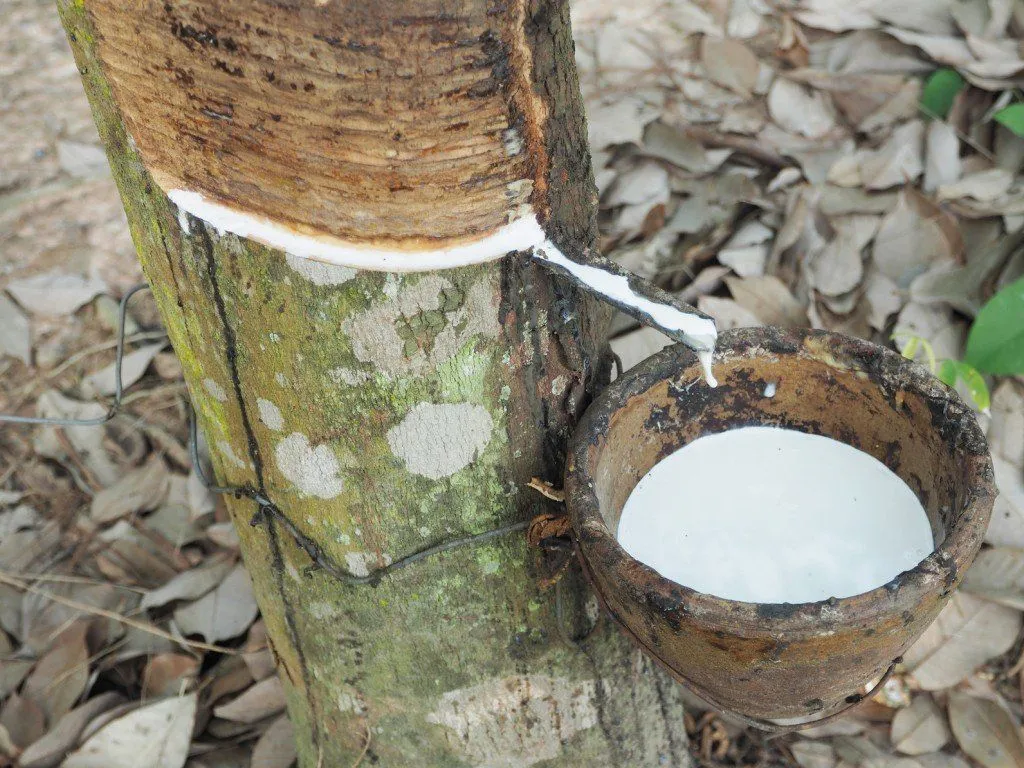
Natural rubber comes in the form of a runny, white milky substance called “latex” and can be found in very small quantities in other plants, but rubber trees hold huge amounts of rubber molecules in a colloidal suspension (roughly 30%), making it the most popular and efficient source for extracting rubber.
When the ancient residents noticed the unusual bouncing and stretching properties of the substance, they began using it much as we do now – to make balls for sports, waterproof shoes, and protective coverings for their possessions. Early explorers saw this remarkable substance and brought it back to Europe, where it quickly gained popularity and was improved.
Fast-forward a few thousand years, and we have perfected our use of natural rubber. Recognizing that unprocessed rubber didn’t have nearly as much resilience or as high of a stretch ratio, researchers combined the natural elastomers found in rubber with many different oils and substances to improve the properties. One of the most important breakthroughs was the use of plasticizers, which are small molecules that can improve flexibility and stretching. The chains of polymers can slip past one another more easily and stretch without straining, because these “spacer” molecules prevent rigidity and unnecessary bonding between the polymer chains.
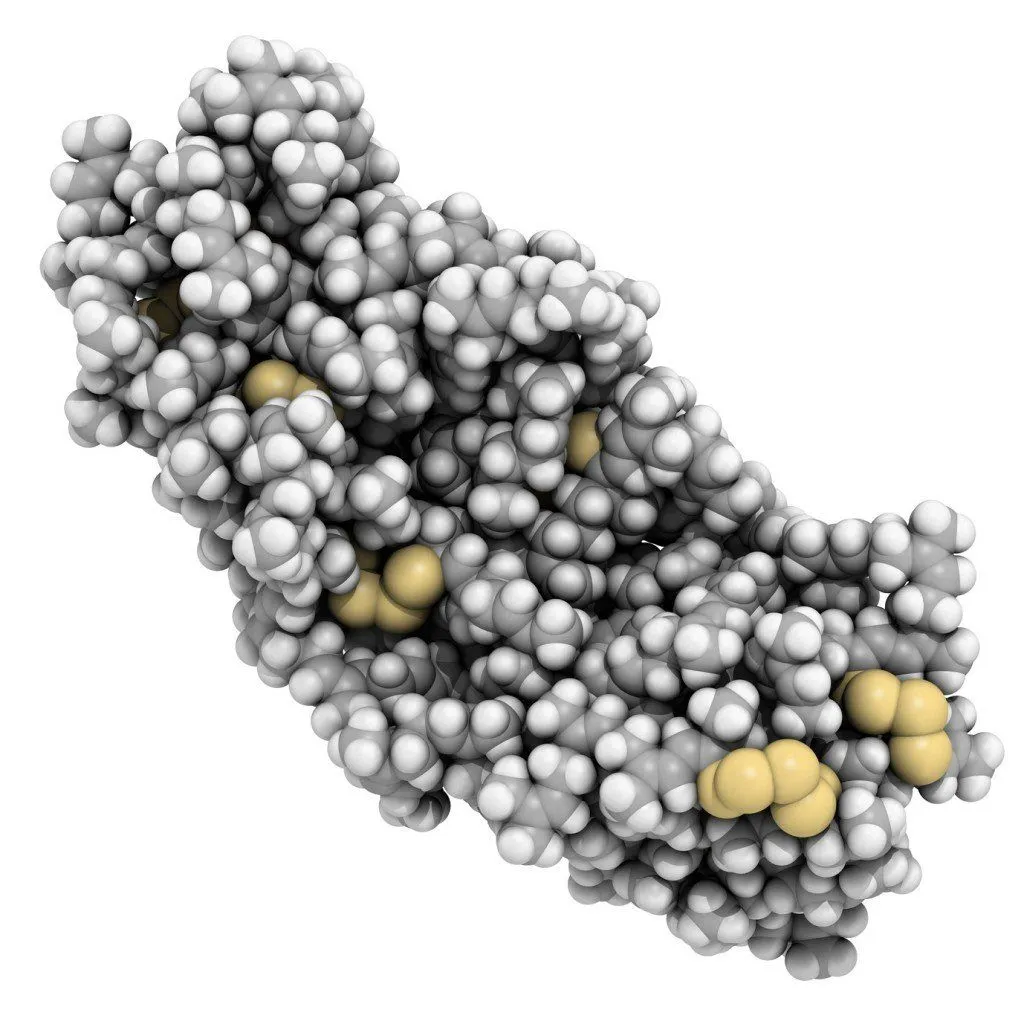
Vulcanized rubber is another altered form of natural rubber that we see in everything from the tires on our cars to our favorite bowling balls. Vulcanized rubber was only developed in the 19th century, and involves mixing sulfur or other accelerators into the polymer mix of rubber to strengthen the substance and make it less susceptible to breaking down. The sulfur atoms act as cross-links between the chains, permitting extreme stretching without snapping, and adding strength and integrity to the material.
What Is The Weak Point Of Rubber? Why Does It Lose Its Stretch?
As with most things in nature, there is a breaking point, and rubber is no exception. Untreated natural rubber can be flimsy and easy to pull apart or deform, which is why synthetic rubbers and “treated” rubbers are predominant nowadays. However, plasticizers and other compounds added to rubber do have vulnerabilities, particularly light and oxidization.
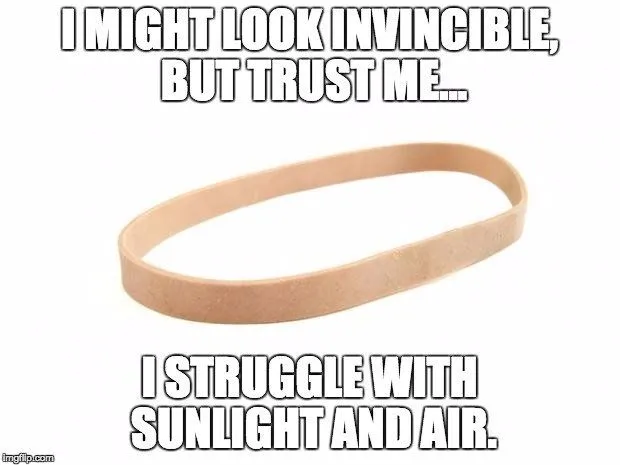
When the elastomers and plasticizers begin to oxidize over time, those materials stop performing their functions and providing the elasticity that we know and love in our rubber products. The snap-back benefit of a rubber band begins to disappear as those natural chemicals begin to break down. In natural rubber, oxygen exposure will begin to break down the double bonds within days, leaving a crumbly mess; that is why rubber has been heated and treated for thousands of years – to slow the inevitable breakdown.
Exposure to ozone (which is present in all air to some degree) is largely responsible for this oxidization battle with rubber, but that isn’t the only culprit. Light (particularly UV radiation) is another arch-enemy of elasticity and rubber. Leaving rubber out in the sun too long can cause the polymers and plasticizers to deteriorate, causing that bounce-back aspect of rubber to disappear.
Finally, the polymers and molecules in rubber prefer to be “warmed” up to have maximum flexibility and resilience, so stretching rubber out in cold weather can sometimes be dangerous. When the temperature is low, the molecules don’t move past one another as readily, and can make rubber brittle and prone to snapping.
There’s a flip side, though: chilling rubber bands before they get brittle actually extends their life. Most of the chemistry that ages a rubber band — oxidation, ozone attack, the slow migration of plasticizers — speeds up with heat and slows down in the cold. That’s the whole reason rubber bands kept in a fridge or a dark drawer keep snapping back long after their kitchen-window cousins have turned dry and dusty.
You may also notice an old rubber band turning unpleasantly sticky instead of brittle. That’s the other failure mode: the sulfur cross-links break down (a kind of reverse vulcanization), the polymer goes a bit gooey, and plasticizers ooze to the surface. Either way, brittle or sticky, the underlying story is the same — the network that gave the band its snap has broken down.
From all of that information, it seems like the best thing to do with your hair ties is to never stretch them too far, keep them at room temperature, stay out of the sun, and don’t expose them to any oxygen. Simple, right?
Can You Restore A Rubber Band That Has Already Dried Out?
It is tempting to think a tired old band just needs a drink of water or a warm bath to spring back to life. Unfortunately, the chemistry says otherwise. Once oxygen, ozone and UV light have gone to work, the aging runs one way only. A 2019 review in the journal Polymers puts it plainly: unlike a band that is merely cold and stiff, chemical aging is an irreversible process of oxidation, chain scission (polymer chains snapping in two) and the formation of brand-new cross-links. The broken chains lower the cross-link density and leave the rubber soft and gummy, while the fresh cross-links stiffen it and make it brittle. Either way, the original polymer network has been rewritten, and you cannot un-bake that cake.

So what about the popular tip to revive rubber by warming it or rubbing in a little oil? It can help a band that is simply stiff and dried out but not yet chemically perished. Gentle warmth gets the chains sliding past one another again, and an oil can briefly soften the rubber, much as the original plasticizers did, by keeping the chains from locking together. But this is a temporary loosening, not a true repair. A band that has already gone porous, cracked or crumbly is past saving, and the kindest thing you can do is recycle it and reach for a fresh one.
Why Does The Elastic In Your Clothes Go Slack?
Here is a twist: the stretch in your waistbands, leggings and swimsuits usually is not rubber at all. It is elastane, better known by the brand-style names spandex and Lycra. Chemically it is a "segmented polyurethane," a fiber built from two kinds of blocks: soft, springy segments that do the stretching, and hard segments that act as anchors holding everything in shape, rather like the sulfur cross-links in vulcanized rubber. When those anchors give way, the fabric stops bouncing back, and that comfy waistband turns into a sad, baggy hoop.

Two everyday habits do most of the damage. The first is heat: a hot tumble dryer is hard on elastane, which is exactly why care labels beg you to air-dry stretchy clothes. The second is chlorine. In a 2024 study in Polymers, swimwear soaked in chlorinated pool water lost roughly two-thirds of its breaking strength after 300 hours, with individual fibers fraying and snapping under the microscope. That "crunchy," lifeless feel an old swimsuit or sock develops is the elastane breaking down. The fix follows the same logic that keeps rubber bands young: rinse swimwear in cool water right after the pool to wash off the chlorine, skip the dryer, and keep stretchy fabrics out of prolonged heat and sun.
References (click to expand)
- How Rubber Works - Science | HowStuffWorks. HowStuffWorks
- Scission, Cross-Linking, and Physical Relaxation during Thermal Degradation of Elastomers. Polymers (Basel), 2019. PMC.
- Selective Elastane Removal Using DMSO-DBN Under Moderate Temperatures. Polymers (Basel), 2025. PMC.
- The Impact of Chlorinated Water and Sun Exposure on the Durability and Performance of Swimwear Materials. Polymers (Basel), 2024. PMC.
- Do I have to rinse out my swimsuit after the pool? A textile scientist has the answer. The Conversation / Phys.org.