Folding paper is a physical change, and the crease is permanent because the sharp fold pushes the cellulose fibers along it past their elastic limit. The hydrogen bonds holding those fibers in place break and re-form in the new, folded position, so the paper cannot spring back to flat.
If you have ever tried the legendary 7-Fold Challenge with a piece of A4 paper, then you know that it is physically impossible for a person to fold a piece of paper seven times with their bare hands. Considering how many millions of people have tried and failed this enigmatic challenge, that’s a lot of piece of paper with dozens of folds all over them. Unfortunately, no matter how heavy a weight you put on them, or how long you wait, those pieces of paper will remain folded forever.
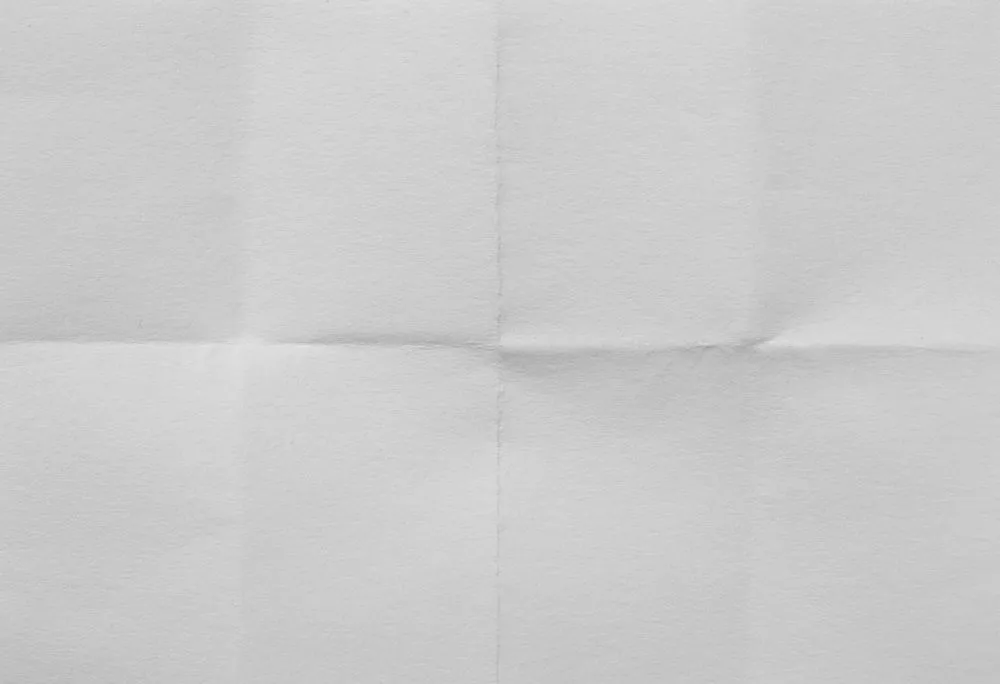
Why is folding a piece of paper such a permanent act? Considering how easily we can manipulate paper, what prevents it from regaining its initial form?
The Science Of Paper
An early forerunner of paper was papyrus, made about 5,000 years ago by the Egyptians from a reed that grew along the Nile River. Strictly speaking, papyrus is not true paper (its strips were laid out and pressed rather than pulped), and the first real paper, made from a mat of macerated fibers, is credited to Cai Lun in China around 105 AD. Although the technology involved in making paper has improved significantly over the millennia, the fundamental concept remains much the same: compressing and drying plant fibers into a uniform surface.

Essentially, paper is made by beating or smashing plant material until the fibers are released. This plant material is usually evergreen trees or other fast-growing conifers, although plants like bamboo, jute and cotton can also be used for this purpose. This plant material is then mixed with water to form a suspension called “stock” (or pulp). This pulp is then spread out over a wire mesh, which encourages the fibers to bind together into a uniform mat. This mat is then pressed or squeezed to eliminate the excess water and allowed to dry.
This is the simplest explanation of how paper is made, although the mass production of paper utilizes large machines and industrial processes. The preparation of the pulp can be done through mechanical or chemical methods, the latter being more common in modern times. Once the pulp is produced, dyes and other additives can be mixed with the pulpy fibers to create different colors or textures in the final paper product. Large roller machines with conveyor belts pull this substance under extreme pressure into rolls or sheets that can be used for countless applications, from phone books and wallpaper to paper towels and diapers.
Elastic And Plastic
Now that we understand how paper is made, we have a better perspective on what happens when a piece of paper is folded or bent. To explain this in simple terms, consider paper from a structural perspective, in the same way you would assess the integrity of metal or any other material. Now, remember that materials have an elastic limit and a plastic region. An elastic limit is the point up to which a material can be bent and still return to its original position, without any permanent structural alteration. If you exceed this limit, you take the material into its plastic region, where any physical alterations become permanent and the material can no longer return to its original shape.
Every material will have a different elastic limit (yield), plastic region and ultimate strength. In the case of paper, imagine holding the paper like a “hot dog”, but not actually folding or creasing the paper. The plant fibers in the paper, at this point, have not exceeded their elastic limit, so you can let go of the paper and it will return to its flat, uncreased state. However, if you roll that same sheet of paper into a loose tube and wrap a rubber band around it for a few hours, some of the plant fibers will be pushed past the elastic limit. When you remove the rubber band, it will no longer lay flat, as minor physical deformities have occurred.
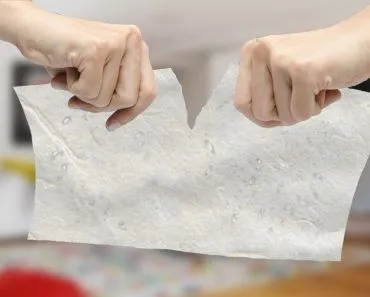
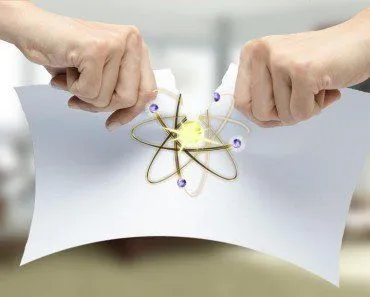
When you fold a piece of paper, the plant fibers along the crease are pushed permanently into that plastic region, and the sharpest ones can even fracture right at the angle of the fold. There is also a hidden chemical reason for the permanence. The cellulose fibers in paper are held together by countless tiny hydrogen bonds, and the crease forces many of them to break and then re-form in the new, folded geometry. Once those bonds have locked the fibers into the creased position, the fold becomes a structural change that cannot be reversed. As a result, the paper will remember this fold forever, no matter how hard you try to flatten it back out.
Is Folding Paper A Physical Or Chemical Change?
If a fold is so stubbornly permanent, it is tempting to assume that something deep and chemical has happened to the paper. It hasn’t. Folding a sheet of paper is a physical change, not a chemical one. The difference comes down to a single question: have you made a new substance? When you fold paper, you have only rearranged the material you already had. The cellulose is still cellulose, the dyes are still dyes, and the mass on the kitchen scale is exactly the same before and after. No new chemical compound has been created, so by definition the change is physical.

Now, this is where folding paper trips people up, because "physical change" is often taught as a shorthand for "easily reversible". Melting ice back into water, or dissolving sugar and boiling the water off again, are the classic textbook examples. A crease feels like the exception that breaks the rule, since you plainly cannot wish it away. The honest answer is that reversibility was never the real test. The hydrogen bonds described above have shifted the fibers into a new position, but no atom has been swapped and no new molecule has been built, so the change stays firmly on the physical side of the ledger. Compare that to burning the same sheet, which converts the cellulose into ash, carbon dioxide and water vapor. That is a chemical change, and it is the kind you genuinely cannot undo.
Why Can’t You Fold Paper More Than A Few Times?
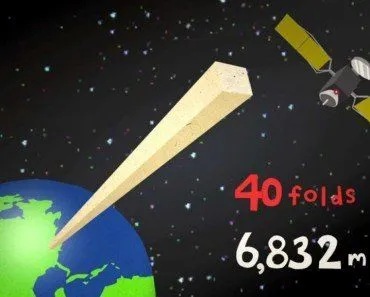
The flip side of a crease being permanent is that every fold also makes the next one harder, which is why you hit a wall so quickly. For decades it was an accepted belief that a sheet of paper could not be folded in half more than eight times, no matter its size, according to Guinness World Records. The reason is brutally simple arithmetic. Each fold doubles the thickness of the stack, so after n folds the paper is 2n layers thick. Seven folds already means 128 layers, ten folds means 1,024, and by the twentieth fold you would be wrestling with over a million layers stacked on top of one another.
That exponential growth fights you from two directions. The stack becomes too stiff to bend, and the paper you need to wrap around the rounded edge of each fold runs out, because a little length is lost at every bend. In 2002, high-school student Britney Gallivan put real numbers to this. She derived an equation linking the length of paper required, its thickness, and the number of folds possible, then proved it by folding a roughly 1,200 m (0.75 mile) roll of tissue paper in half twelve times, as reported by Science News. The lesson is that the limit is not magic. It is the same exponential thickness that makes a single crease so unforgiving, now scaled up fold after fold. We dig into the bare-hands version of this myth in our piece on whether you can really only fold a piece of paper seven times.
Can You Ever Get A Crease Out?
So is a creased sheet ruined forever? Not necessarily. Professional paper conservators flatten folded and creased documents all the time, and the trick is to undo the very thing that locked the fold in place. Because the crease is held by hydrogen bonds between the cellulose fibers, and those bonds form and re-form in the presence of water, gently adding moisture back is the key. Conservators place the paper in a controlled humidification chamber until the fibers relax and the sheet becomes pliable, a process the U.S. National Park Service describes as relaxing the paper "until it is relaxed enough to lie almost flat".
Once relaxed, the sheet is pressed flat between absorbent blotters under a weight and allowed to dry slowly, which lets the hydrogen bonds re-lock the fibers in a flatter arrangement. The catch is that this is delicate work, and the same moisture that relaxes the fibers also weakens them, which is exactly why wet paper tears so easily. Dried without controlled pressure, the paper simply curls and warps. So while you can soften a crease, the sharpest fibers that fractured right at a hard fold do not grow back, and a faint ghost of the line usually remains. The fold can be coaxed flatter, but the paper never quite forgets it entirely.
A Final Word
Paper is one of the most common and useful materials in the world, but in comparison to metal, plastic or other composite substances, it is very fragile and has a low threshold for structural failure. In other words, if you’re going to make a fold in a piece of paper, make sure you put it in the right place, because you’ll never be able to take it back!
References (click to expand)
- Eriksson, K.-E. L. (1990). Biotechnology in the pulp and paper industry. Wood Science and Technology. Springer Science and Business Media LLC.
- (2013) Fold Mechanics of Natural and Synthetic Origami Papers. The American Society of Mechanical Engineers
- Browning, B. L. (1970, January). The Nature of Paper. The Library Quarterly. University of Chicago Press.
- Contribution of Hydrogen Bonds to Paper Strength Properties. PLOS ONE. NCBI/PMC.
- Most times to fold a piece of paper. Guinness World Records.
- Peterson, I. (2004). Folding Paper in Half, Twelve Times. Science News.
- Conserve O Gram 13/2: How to Flatten Folded or Rolled Paper Collections. U.S. National Park Service.