A balloon pops when pricked because the stretched rubber around the new hole is no longer being pulled evenly from all sides. The unbalanced tension yanks the rubber back from the hole almost instantly, releasing the pressurized air with a sharp “pop”. The same hole in an under-inflated balloon just leaks slowly.
Popping balloons before, during and after birthday parties is one of my fondest memories of childhood. There’s something inexplicably satisfying about pricking a balloon and watching it go ‘Pop!’ in the very next instant.
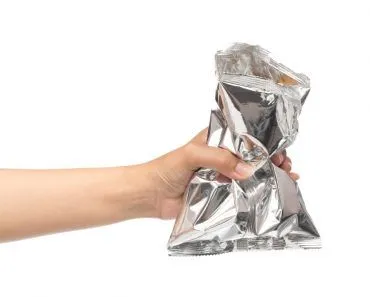
But what goes on “behind the scenes” when you prick a balloon? Why does it pop instantaneously, rather than leaking air slowly, which is what happens when you prick a bag of chips?
Short answer: an inflated balloon’s “skin” is under a lot more tension, so it pops as soon as it’s poked, since the rubber around the pricked hole is not being pulled uniformly in all directions.
The Elasticity Of A Balloon
A balloon is usually made from highly elastic materials, such as rubber, latex, nylon or polychloroprene, which lends them the ability to inflate and stretch to become many times larger than their original size. The air inside the balloon is at a higher pressure than the air outside, which is why there’s a pressure differential between the inside and outside air.
The rubber in the balloon contains a number of long molecules (called ‘polymers’) that are linked together, just like how noodles in a plate tend to stick together. Due to their elastic nature, a balloon can be inflated up to a certain limit. If that limit is crossed, however, the tension pulling on the cross-links of the chains becomes too great, causing them to break – and Pop! goes the balloon.
How Does Popping A Balloon Work?
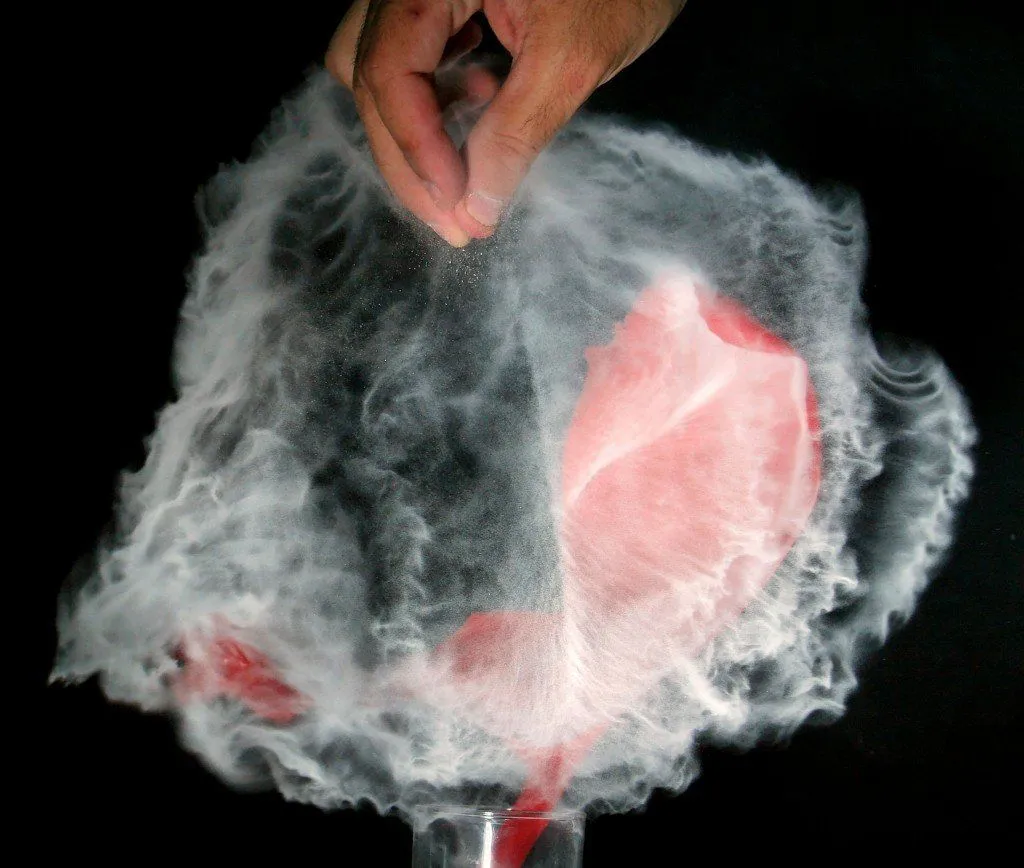
The moment you prick a balloon, a tiny hole is made on its surface. Now, if it’s only slightly inflated, it wouldn’t pop instantly; the air would leak out of it slowly until it was completely deflated, returning to its original size.
However, if it’s a balloon that has been inflated to its maximum size, its polymer chains are under a lot of tension. Every point on the surface is being uniformly pulled in all directions by the surrounding rubber molecules, keeping the balloon tightly stretched out. The moment a tiny hole appears on the surface, the rubber immediately surrounding the hole is suddenly no longer being pulled uniformly in all directions.
This causes the net force to pull the skin away from the hole, which further increases the hole’s size. This goes on until the entire skin of the balloon is pulled all the way back to a point opposite the hole and the balloon explodes with a popping sound. Note that the “pop” is attributed to the pressure wave created after a sudden pressure change due to the rapid expansion of the air that was inside the balloon.
When explained like this, it might seem like a long process, but it’s actually an incredibly quick one. Ask yourself this – how long does it take a balloon to pop from the time you poke it with something sharp? Exactly…. so this seemingly long process is essentially instantaneous.
The same logic also explains why a balloon pops when you step on it. Your foot doesn’t actually “crush” the air inside; what it does is overstretch the rubber in one spot until it tears, opening a tiny gash. Once that gash exists, the rest of the rubber around it is no longer pulled uniformly, the tear races outward at hundreds of meters per second, and the balloon goes off. High-speed video of bursting balloons shows the rip front moving at roughly half the speed of sound in rubber, which is why the whole event looks instantaneous to your eye.
Why Is It Easier To Pop A Balloon With A Needle Than With Your Finger?
Here’s a little puzzle that science teachers love. Press an inflated balloon hard with the flat of your finger and it just squishes and pushes back, stubbornly refusing to burst. Now touch that same balloon with the tip of a sharp needle, using far less muscle, and it goes off at once. If the balloon is already so highly stretched, why does the gentle needle win where your strong finger fails?

The answer is pressure, which physicists define as force divided by the area it acts over (P = F/A), measured in pascals (1 Pa = 1 N/m2). The crucial word there is area. The same push spread over a large area produces only gentle pressure, while that same push squeezed onto a tiny area produces enormous pressure. As the OpenStax physics text puts it, a force on the broad pad of a finger “has little lasting effect”, yet “the same force applied to an area the size of the sharp end of a needle is great enough to break the skin”. It is the same idea that lets atmospheric pressure act so differently depending on the surface it presses against.
Your fingertip touches the balloon over an area of perhaps a square centimeter, so even a firm shove spreads out into a modest, balloon-survivable pressure. A needle point, by contrast, meets the rubber over a speck a fraction of a millimeter across. Concentrate the same gentle force onto that pinprick of area and the local pressure on the rubber rockets up by thousands of times, easily enough to puncture the already taut latex.
There is a second effect helping the needle along. Engineers call it stress concentration: any sharp notch, crack or point in a stretched material drives the local stress far above the average, and that is exactly where a tear chooses to begin. The needle’s tip is a ready-made stress raiser, so it doesn’t just press harder, it also hands the over-stretched rubber a perfect spot from which to rip. Your blunt finger gives the rubber nowhere to start, which is why it can lean on the balloon all day without bursting it.
Why Does A Balloon Pop When It’s Squirted With An Orange Peel?
If you’ve never tried this before, you might want to try it now. Take an orange peel and squirt some of the zest on an inflated balloon. If you’re not using a balloon that has vulcanized rubber in it, the balloon will pop instantly. Here’s a quick video of the experiment:
Why does that happen?
This strange phenomenon is because oranges consist of a colorless liquid hydrocarbon called limonene (which, by the way, also gives oranges their characteristic fragrance).
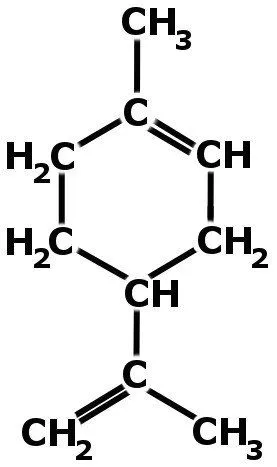
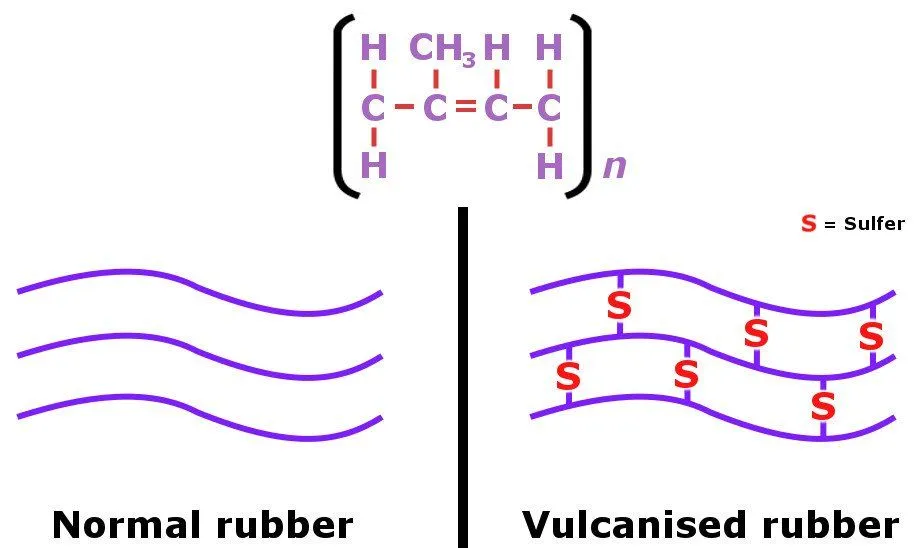
The non-polar nature of limonene is responsible for dissolving the non-polar chains present in rubber (where polymer strands are not cross-linked). If, however, the balloon is made of vulcanized rubber, it wouldn’t burst as a result of orange peels, because vulcanized rubber has its polymer strands connected by sulfur atoms.
So, the next time you’re at a kid’s birthday party and want to pop balloons with a bit more style, make it a point to carry a few fresh oranges in your pockets. And yes, keep your fingers crossed that the balloons aren’t made of vulcanized rubber!
References (click to expand)
- Balloon - Wikipedia. Wikipedia
- Limonene - Wikipedia. Wikipedia
- UCSB Science Line: Why doesn't a water-filled balloon pop over a candle flame? University of California, Santa Barbara.
- Needle Through a Balloon - scifun.chem.wisc.edu:80
- How Does an Orange Peel Pop a Balloon? Chemistry, of .... chemedx.org
- Pressure (P = F/A). College Physics 2e, Section 11.3. OpenStax.
- Stress concentration - Wikipedia. Wikipedia.