Table of Contents (click to expand)
Coins have ridges, called reeded edges, because the practice was first designed to stop people shaving metal from the rims of gold and silver coins (a fraud known as clipping). Today, US dimes, quarters and half dollars keep the ridges, while nickels and pennies have smooth edges because they were never valuable enough to clip.
When you walk down the street, coins jangling in your pocket, it’s nice to know that you have some spare change on hand, but how often do you ever stop and think about those quarters, dimes, nickels and pennies? Have you ever considered why those coins are different sizes? What they’re made of? And, perhaps most mysteriously, why some coins have ridges on the edges, while others don’t?
If you blindly go through life accepting the way things are, then this probably isn’t the site for you, but if your curiosity is piqued, then read on, to learn once and for all why some types of coin currencies are notched on the edges.

Short Answer: The notched edges on certain coins, known as reeded edges, were initially designed to stop people from filing or shaving the rims down when coins were made of more precious metals like gold and silver.
Coins And Criminals
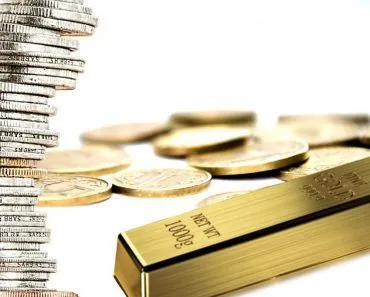
Today, coins are almost exclusively made from copper, nickel and zinc (rather inexpensive metals), so coins are not actually worth their weight in that particular metal. However, that wasn’t always the case. Back in 18th and 19th century America, your pocketful of coins was worth quite a bit more than it is now, relatively speaking. In the 1800s, there were also quite a few more coins in existence, including $10, $5 and $2.50 gold pieces. These three coins were made of an equivalent amount of gold ($10 coin = $10 in gold, $5 coin = $5 in gold, etc.). Smaller denominations, including the dollar, half-dollar, quarter, dime and the silver half dime (the five-cent piece that came before the modern nickel), were worth their weight in silver. The one-cent coin had been around since 1793, but back then it was a chunky pure-copper piece, not the small bronze cent that arrived in 1864.
As you can see, walking around with a pocketful of change made of pure gold and silver was a lot more exciting than having your pants weighed down by “useless” change today. This also presented an opportunity for less savory individuals to take advantage of the design and carefully file off the edges of these gold and silver coins. The shavings weren’t much, but they certainly added up, and if the process was done precisely enough, it was very difficult to tell when a coin had been shaved down. Essentially, $0.50 to $1 of value could be shaved off, yet the $9 or $9.50 coin could still be used to buy $10 of goods. This sneaky behavior was known as coin clipping, and it became a real problem, as it devalued the currency, but many people were doing it!
When enough shavings had been gathered, these criminals could trade in the precious metal and make a tidy profit. This didn’t escape the notice of the US government, who was in charge of regulating currency, and they had to come up with a solution. The clever political minds of the time came up with the idea of adding those recognizable notches to the edges of coins, a process called “reeding”, when the coins were made.
To be fair, this wasn’t the first time the idea had been tried. Machine-struck (milled) coinage reached England back in the 1500s, but reeded edges as a deliberate anti-clipping measure were really cemented at the Royal Mint in the 1690s, when none other than Sir Isaac Newton, then the Mint’s warden, oversaw a massive recoinage that replaced ragged hand-hammered coins with crisp, machine-made ones. So when the young United States adopted reeding, it was borrowing a trick already proven across Europe (America has never had a problem stealing good ideas from other nations, cough, cough, the National Anthem). The payoff was the same on either side of the Atlantic: if the edge of a coin was shaved off to steal some of that precious metal, the missing ridges made it obvious to business owners and bankers, who could reject the coin or send it back to the government to be destroyed.
Now, for those of you with a handful of coins in front of you, one thing has surely not escaped your notice: only half-dollars, quarters and dimes have these ridges (and the $10, $5 and $2.50 gold coins no longer exist). The coins of lesser value, such as the nickel (and later the penny), were never valuable enough to be worth clipping, so the ridges were left off and their edges stayed smooth.
Why Don’t Nickels And Pennies Have Ridges?
This is the flip side of the whole story, and it is the question that sends most people searching in the first place: you tip some change out of your pocket, run a thumb along the edge, and find it perfectly smooth. If it is a nickel or a penny, that is exactly how it should be. A smooth-edged five-cent piece or one-cent coin is not a mint error, and it has not been quietly shaved down by a thief. The US Mint makes every single one of them that way, and always has.

The reason loops right back to clipping. Reeding was only ever worth the trouble on coins that carried real gold or silver, because those were the only ones a forger could profitably shave. The nickel and the cent never cleared that bar. The one-cent coin has been a humble copper (and later bronze, then copper-plated zinc) piece since 1793, and the five-cent nickel has been struck from a cheap copper-nickel alloy since the very first Shield nickel left the Mint in 1866. Their metal was simply never worth stealing a sliver at a time, so the Mint left their edges plain and skipped a manufacturing step.
That plain edge has stuck around ever since. Every nickel in the series, from the Shield to the Liberty Head, the Buffalo and today’s Jefferson, has worn a smooth edge, and so has every Lincoln cent. So the next time a smooth nickel turns up in your change, you can relax: it is not a dud, it is just a coin that was never valuable enough for anyone to bother clipping.
How Many Ridges Does Each US Coin Have?
If you have ever tried to count the tiny grooves on a coin with a fingernail and lost track somewhere in the twenties, you are not alone. The good news is that the US Mint has already done the counting for you, and the totals are oddly precise. A dime carries 118 reeds around its edge, a quarter has 119, and a half dollar has 150. The nickel and the penny, naturally, have exactly zero.

Those numbers are not arbitrary. The reeds are formed by a grooved collar that grips the coin at the instant it is struck, so the final count falls out of the coin’s diameter and the spacing of the grooves. That is why a broad half dollar ends up with far more reeds than a slim dime. Counting them by eye is a real test of patience, but it is also a handy trick for spotting a counterfeit, since a fake struck from a homemade die rarely gets the reed count exactly right.
And what about the dollar coin, the odd one out? The modern golden dollars skip reeding altogether. The Presidential dollars minted from 2007 to 2016, along with the Native American (Sacagawea) dollars struck since 2009, carry edge lettering instead, tiny inscriptions pressed into the rim in a separate step after the coin is struck. A Presidential dollar’s edge spells out the year, the mint mark, 13 stars and the Latin motto E Pluribus Unum (the earliest coins also carried “In God We Trust” along the edge, until Congress voted in 2007 to move it onto the face of the coin). It is the same basic idea as reeding, guarding the rim and making the coin harder to fake, only written in words instead of grooves.
Reeding Coins In The Modern World
The story isn’t over there, however. The gold standard for coins was abandoned during the Great Depression, and silver followed in 1965, when the Coinage Act stripped the precious metal out of circulating dimes and quarters (the half dollar was cut to 40% silver, then went silver-free by 1971). This meant new coin compositions had to be used, ones of considerably lower value. Now, despite their color, modern quarters and dimes contain 0% silver, and the nickel never held any to begin with; instead they are packed with those cheaper elements mentioned earlier (copper, nickel and zinc). In other words, when someone throws coins at you, they’re not being all that generous.
When this change occurred, the US Mint saw no reason to replace all of the machinery that had been outfitted with the technology to apply the reeding to these coins, so the tradition continued. That may seem like a rather unsatisfying answer, but in truth, there is a greater purpose that people didn’t realize until the 20th century. Having some coins with ridges and some without helped to differentiate between similarly sized coins (pennies and dimes/nickels and quarters). With quarters and dimes that contain the reeding, as well as nickels and pennies that don’t, it helps people who have vision impairment know which coins they are about to spend on a purchase, or prevent them from jamming a nickel repeatedly into a gumball machine.
The ironic thing, of course, is that coins are far less frequently used in the United States than they once were, due to the availability and convenience of paper currency. So while this solution for visually impaired people is excellent when it comes to coins, all paper currency is presently the same size, which is not the case in many other countries. In the Eurozone, Australia, Malaysia, just to name a few, each denomination of currency is a different size. In other countries, such as Canada, clever currency designers have even included Braille on the bills to make them more recognizable.

Maybe it’s time for the United States to steal a few more ideas and keep up with the changing times!
References (click to expand)
- Coin Specifications. The United States Mint
- Isaac Newton: International Prominence (Warden and Master of the Mint). Encyclopaedia Britannica
- Coins of the United States dollar - Wikipedia. Wikipedia
- Friedman M.,& Schwartz A. J. (1963). A Monetary History of the United States, 1867-1960. Princeton University Press
- Shield nickel - Wikipedia. Wikipedia
- Presidential dollar - Wikipedia. Wikipedia