Table of Contents (click to expand)
A car engine vibrates on startup because its pistons and crankshaft generate unbalanced reciprocating and rotary forces, and combustion arrives in pulses rather than a smooth flow. The shake feels strongest at first because a cold engine idles at a higher RPM on a richer fuel mixture. A flywheel and rubber engine mounts damp most of it, so steady, mild vibration is normal.
For most of us, a typical day with our car consists of firing it up, shifting gear, and proceeding with our business. As the car burbles to life, we hardly give a second thought to the steady, sometimes imperceptible vibrations emanating from it.
What causes engines to vibrate when starting up or idling? Let’s find out!
Why Do Car Engines Vibrate Upon Start Up?
Even though we may be seemingly oblivious to in-car vibrations, they are a subtle reminder that the car is running. When faced with a malfunction, one of the most common signs is deviation from this ‘unnoticed’ running vibration.
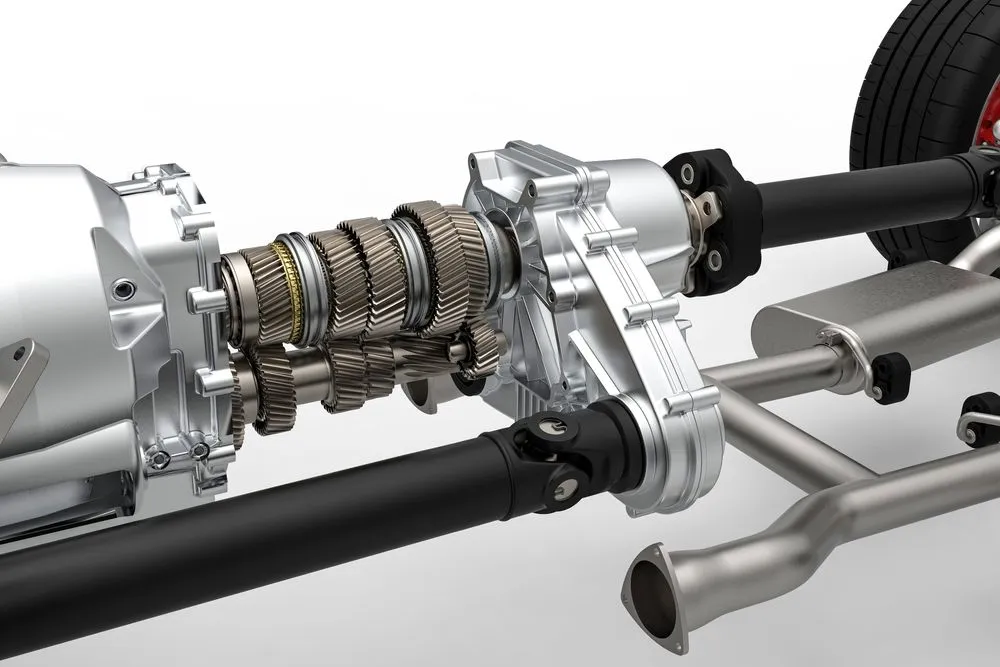
Vibration is often attributed to motion of the drivetrain’s internal components. However, this is only partially true, as electric vehicles, which also have moving internal components (motors), do not exhibit such vibration.
The answer to this conundrum lies in the design of internal combustion engines.
Internal Combustion Engine Design
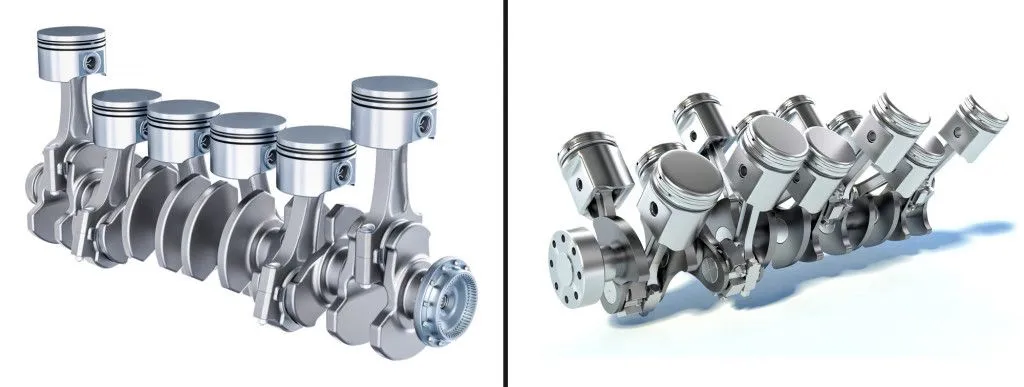
Internal combustion engines are reciprocating engines. They consist of a reciprocating component (piston and connecting rod) to bring about rotatory motion (crankshaft). The combination of reciprocating and rotary motion introduces cyclic and unbalanced forces. These forces are perceived as the vibrations we feel upon starting/running the car.
Why Is Vibration Strongest At Startup?
So why does the shake feel most obvious in those first few seconds, before settling into the background hum? A few things are happening at once.
When you turn the key, the starter motor spins a heavy disc bolted to the crankshaft, called the flywheel (on automatic cars, a similar plate called the flexplate). The starter's pinion meshes with the toothed ring gear around the flywheel's edge and cranks the engine over until combustion takes over. That brief, lumpy shudder you feel is the engine firing its first few power strokes before it finds a steady rhythm.
The flywheel doesn't just receive the starter; it also smooths things out. A four-stroke engine only produces a power stroke once every two crankshaft revolutions per cylinder, so power arrives as a series of pulses rather than a continuous push. The flywheel's inertia stores energy during each power stroke and releases it during the idle strokes, evening out the crankshaft's speed and damping the vibration of combustion.
A cold engine also vibrates more than a warm one. Before it reaches operating temperature, the engine's computer (the ECU) raises the idle speed and feeds it a richer fuel mixture to keep combustion stable. The higher cold-idle RPM and the slightly uneven burn of that rich mixture make the vibration easier to feel. As the engine warms up, the idle drops and the mixture leans out, so the shake fades to the gentle, steady hum you barely notice.
Finally, the engine doesn't sit rigidly on the car. It rests on engine mounts (also called motor mounts), typically rubber blocks or fluid-filled hydraulic mounts that absorb the engine's oscillations and isolate them from the chassis and cabin. Without them, the steady idle vibration would feel far harsher inside the car.
Normal Startup Vibration vs. A Fault
A little vibration on startup, especially on a cold morning, is completely normal. It becomes a warning sign only when it changes character: a persistent rough idle once the engine is warm, a shake that gets worse rather than better, or a new shudder you haven't felt before. Those often point to worn engine mounts, a misfiring cylinder, dirty fuel injectors, or a vacuum leak rather than the everyday physics of a reciprocating engine. If the vibration is steady, mild, and settles as the car warms up, there's usually nothing to worry about.
What Are Unbalanced Forces?
Unbalanced forces are generated when all the forces in a moving system aren’t cancelled out by opposing forces. The residual forces cause various disturbances, in this case, vibrations.
Vibrations In Internal Combustion Engines
Vibrations in cars arise from the reciprocating and rotary motion of the piston, connecting rod, and crankshaft. It is desirable for components to exhibit ‘symmetry’ of forces when in motion. That is to say, both reciprocating and rotary components should be designed so that there are as few residual forces in the moving system as possible. Vibrations in engines primarily arise from two sources.
Static Imbalance
This refers to inequality in the weights and centers of gravity of the various reciprocating components with respect to each other. In an ideal system, these are identical for every piston and connecting rod in the engine.
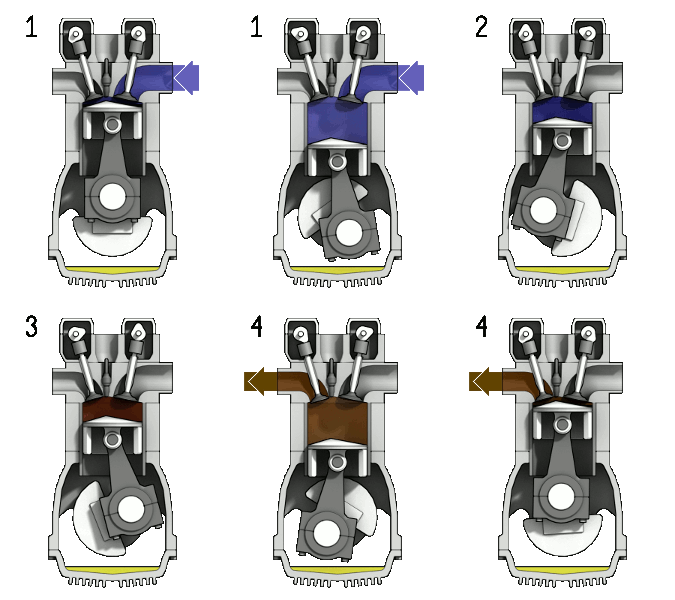
Dynamic Imbalance
This refers to the presence of eccentric rotational masses that result in the generation of unbalanced centrifugal forces when the engine is in motion. In an ideal system, the center of mass of the rotating elements should lie on the axis of rotation.
Balancing Of Engines
It is important to balance residual forces generated due to the motion of engine components. If unchecked, its debilitating effects include occupant discomfort and complete mechanical failure of the engine. The first step to balancing engines is resolving any static imbalance of machining components to extremely close and identical tolerances. Engineers seek to resolve most imbalance issues by static balancing.
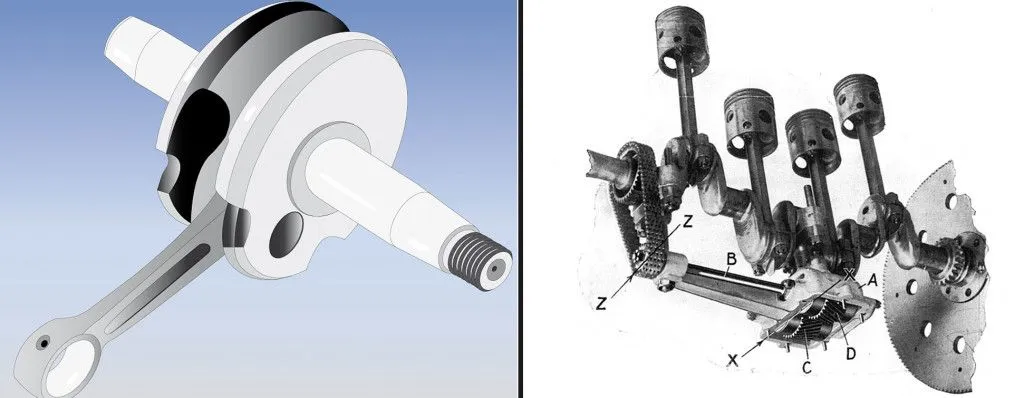
What cannot be resolved by static balancing is addressed by dynamic balancing. Here, unbalanced forces are counteracted by balancing shafts placed opposite to them.
However, it’s important to note that vibration-causing imbalances cannot be completely eliminated from reciprocating engines. They can only be reduced to acceptable levels of mechanical limits and passenger comfort.
Primary And Secondary Balancing
Dynamic balancing is associated with engine run time, and consists of primary and secondary balancing. Primary balancing is done for unbalanced forces acting at the crankshaft’s speed of rotation. Secondary balancing is done for unbalanced forces that act at twice the speed of rotation. The connecting rod, which is longer than the radius of the crankshaft, gives rise to these unbalanced forces. This is known as obliquity. While primary unbalanced forces are greater, they are easier to balance than secondary unbalanced forces.
Balancing In Single-cylinder Engines
Single-cylinder engines are most commonly found in two-wheeled vehicles, such as scooters, mopeds and motorcycles. Due to their design, they can only achieve primary balancing.
The connecting rod’s obliquity causes the motion through the cylinder’s top dead center to be faster than the bottom dead center. This results in the generation of unbalanced secondary forces that result in persistent vibrations, and a relatively less refined design.
Balancing In Multi-cylinder Engines
As a general rule, having a greater number of cylinders is advantageous to balancing an engine. Additional pistons improve the scope for the generation of opposing forces that can cancel out previously unbalanced forces in single-cylinder configurations.
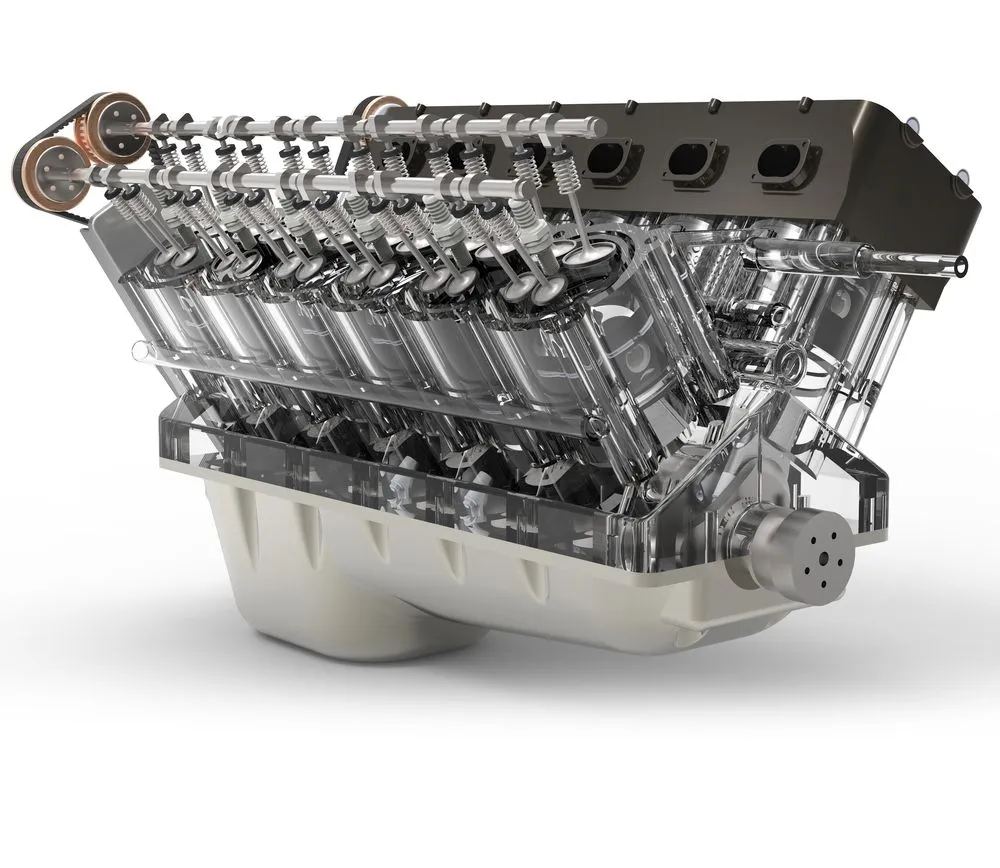
Other than the number of cylinders, their arrangement and firing order is also integral to the engine’s balance. Here are some multi-cylinder layouts and their states of balance.
1. Inline 4
The inline 4-cylinder configuration is most common in modern automobiles. By virtue of its layout and the firing order, its primary forces are completely balanced. In contrast, the secondary forces must be balanced using a balance shaft. To prevent secondary forces from exceeding accepted limits, 4-cylinder engines are typically smaller.
2. Inline 6
This engine is one of the most balanced configurations in reciprocating engines. As every piston has its opposing counterpart, it presents a well-balanced set up without the need for balance shafts or large counter-weights.
3. V6
A V6 engine comprises two 3-cylinder banks connected to a common crankshaft. Due to the odd number of cylinders in each bank, these engines suffer from primary imbalance. In order to resolve this imbalance, the angle between the cylinder banks can be changed to produce an optimal setup. Common angles include 60 deg., 90 deg. and 120 deg., 60 deg. being the most balanced layout.
4. V8
V8 engines are a combination of 2 4-cylinder banks angled at 90 degrees. The crankshaft is designed so that two pistons can share one bearing. It also incorporates heavy counterweights to balance the secondary forces. 6- and 8-cylinder engines are commonly found in sports cars.
5. V12
A v12 engine can be thought of as a combination of 2 inline 6-cylinder engines, and exhibits superior levels of refinement. V12 engines have very large displacement and find use in powerful sports cars and luxury vehicles.
What Is NVH (Noise, Vibration, And Harshness)?
That startup shudder has a name in the automotive industry, or at least it belongs to a whole field of study called NVH, short for noise, vibration, and harshness. It is the engineering discipline devoted to keeping a car comfortable, and it covers the sum of all the audible and perceptible vibrations that reach you from the powertrain, the chassis, the exhaust, and even the climate-control fans. The shake you feel when you fire up the engine is squarely the V in that trio.

Engineers split the three by how you sense them. Vibration is the low-frequency energy you feel through the seat, the steering wheel, and the pedals, roughly 0.5 to 50 Hz. Noise is what your ears pick up, and the band NVH engineers watch most closely runs from roughly 20 to 5,000 Hz. Harshness is the awkward one, because it is subjective: it describes how abrupt or unpleasant a jolt feels rather than how loud or strong it measures. You cannot read harshness off a single meter, so it is judged by trained listeners or by psychoacoustic models that try to mimic human perception.
To pin down the noise and vibration parts, NVH engineers cover a test car with microphones and accelerometers, the small sensors you can see clamped to the car in the photo above. Which source dominates changes with speed: below about 50 km/h (roughly 31 mph) the engine and drivetrain are the loudest thing, while at higher speeds tire roar and wind rush take over. Electric cars have not made this problem disappear so much as reshaped it. Take away the combustion engine's masking din and a host of quieter whines and vibrations that nobody used to notice suddenly stand out, which is why EV engineers now spend real effort chasing hums that a gasoline engine would have drowned out entirely.
Importance Of Vibrations In Car Engines
An unwanted change in routine vibrations can signal some sort of mechanical fault or impending breakdown. Engine vibrations and road noise entering the cabin also help the driver establish a connection with the road. This is essential for safety on the road.
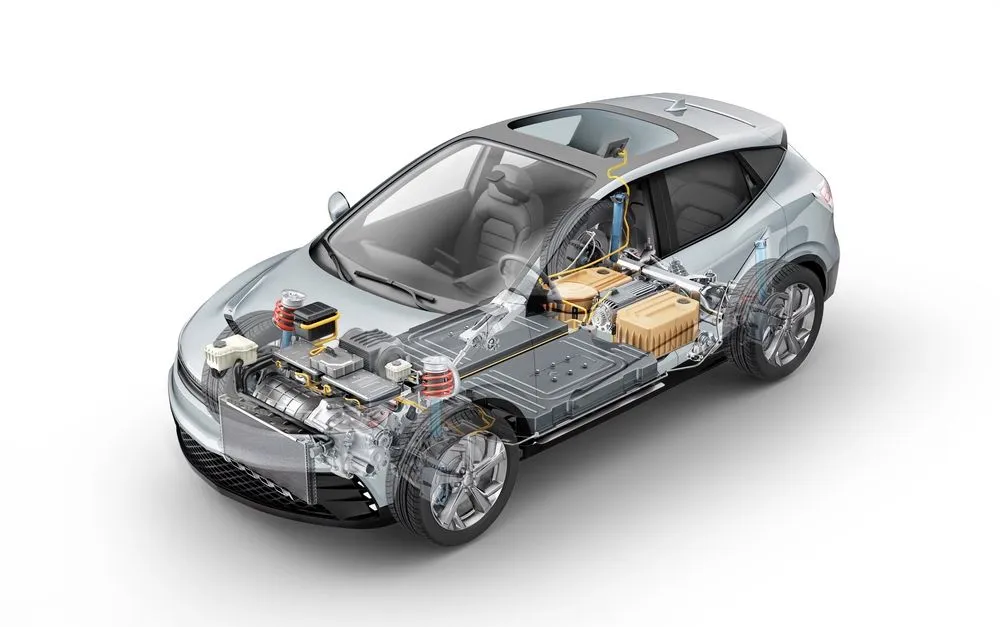
Electric motors are smooth enough that an EV can be almost silent at low speeds. That turns out to be a safety problem of its own, as pedestrians and cyclists may not hear an EV approaching. To address this, the US National Highway Traffic Safety Administration's FMVSS No. 141 rule requires hybrids and EVs to emit an artificial warning sound through external speakers at low speeds, up to roughly 30 km/h (about 18.6 mph), above which tire and wind noise become audible on their own. These are pedestrian alerts on the outside of the car rather than cabin sound, though many automakers also pipe synthesized engine-like tones into the cabin to give drivers familiar feedback.
In pursuit of total quiet, it is possible to look at engine vibrations as a nuisance. However, as enumerated above, engine vibrations have their own subtle role to play.
References (click to expand)
- J KLING. Balancing of Novel Engine Designs. Chalmers University of Technology
- Unit 21 Balancing of Inline and Radial Engines - eGyanKosh. egyankosh.ac.in
- Flywheel. Encyclopaedia Britannica.
- https://nitsri.ac.in/Department/Mechanical%20Engineering/MSD_302_Lecture_14_-_Topic__Balancing_of_Rotating_and_Reciprocating_Forces_in_Internal_Combustion_Engines_-_15-10-2020.pdf
- Electric vehicle warning sounds (FMVSS No. 141). Wikipedia.
- NVH (Noise, Vibration, Harshness). Kistler.
- Noise, Vibration, and Harshness. Wikipedia.