Paper gets weak when wet because water breaks the hydrogen bonds that hold its tangled cellulose fibers together. Water molecules form their own bonds with the cellulose, so the fibers swell and slide apart with little resistance. The paper does not dissolve; the cellulose is unchanged, which is why a dried sheet stiffens up again.
Gather a bunch of used papers, pile them up and try to tear the stack in half. If you’re not an unusually powerful fellow, it’s highly unlikely that you could tear it. Now, put that same stack in a bucket full of water and let it soak for a while. Take it out a few minutes later and try to tear it again. You should be able to tear it very easily… why is that?
Why does paper become so incredibly weak when it’s wet?
Short answer: Paper is composed of tangled cellulose fibers held together by hydrogen bonds. Water sneaks in, forms its own bonds with the cellulose and breaks those fiber-to-fiber bonds, so the fibers pull apart and the paper tears easily.
What Is Paper Made Of?
You must have heard many times that we should conserve paper because “trees are cut down to make them”. Well, that’s exactly right. In essence, a piece of paper is just wood.
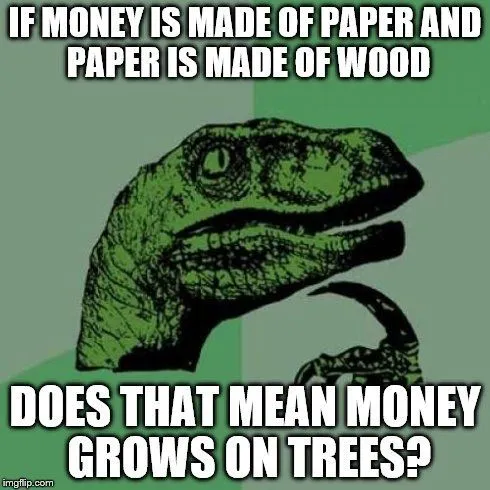
Wood is actually a heterogeneous substance; 40-50% of it is micro-fibrils of cellulose and 15-25% is hemicellulose, both of which are held together by a natural glue called ‘lignin’. (Source) To make paper out of wood, you first need to turn raw wood into ‘pulp’ – a watery soup of cellulose fibers, water, lignin and certain other chemicals used during the process. After the pulp is ready, it goes through several additional processes to ultimately take the form of paper as we know it.
Cellulose Structure
You might have read or heard the term ‘cellulose’ many times in discussions pertaining to cotton, wood, dried hemp and other similar materials. It is the most abundant organic polymer (an organic substance whose molecular structure consists of a large number of similar units bonded together) on the planet. It is the chemical structure of cellulose, which happens to be the most important constituent of paper, that keeps the paper ‘rigid’ when dry and extremely fragile when wet.
Take a look at the structural formula of cellulose:
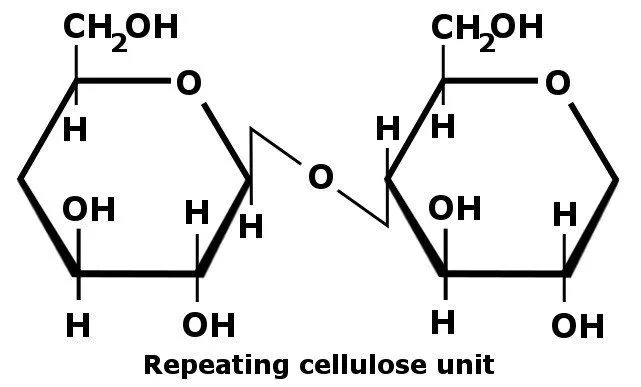
The numerous hydroxyl groups (-OH) present in cellulose form hydrogen bonds with oxygen atoms on the same chain or a neighboring chain. Also, one thing you should know about hydrogen bonds – they are incredibly strong! They help hold the long chains of cellulose together and impart that ‘sturdiness’ to paper.
What Happens When Paper Gets Wet?
Introducing water to paper brings about a drastic change in its ability to ‘stand up straight’, which severely compromises its strength. You see, cellulose is hydrophilic (Source), meaning that it has a strong affinity for water and readily soaks it up. Cellulose does not actually dissolve in water (the dense network of hydrogen bonds that makes it sturdy also makes it stubbornly insoluble), but the water it absorbs still does plenty of damage. When water seeps into paper, the hydrogen bonds holding neighboring cellulose fibers together begin to break down. This happens because each water molecule is itself made of oxygen and hydrogen, so it readily forms its own hydrogen bonds with the cellulose, muscling in on the very bonding sites the fibers were using to grip one another.
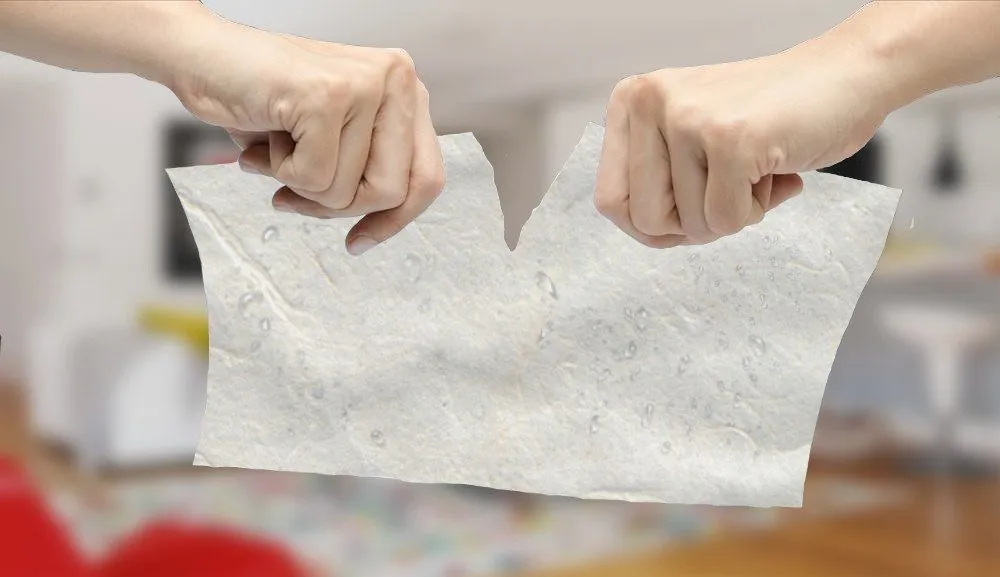
In short, adding water swaps strong fiber-to-fiber bonds for weaker fiber-to-water ones. The fibers swell, lose their grip on each other, and the once-tidy network slides apart with almost no resistance.
Wetting paper has a dramatic influence on the strength of paper, such that you could easily tear huge stacks of them apart with little effort. In fact, paper becomes so weak that it can disintegrate all by itself, which can be pretty bad in some cases.
We all know that wet paper is incredibly weak, so it should be handled with the utmost care. Still, now that you are equipped with a bit of scientific insight into how the disintegration of wet paper actually works, perhaps you’ll check your pockets twice before doing the laundry!
Does Paper Actually Dissolve In Water?
It is tempting to say that a sheet left in a puddle has “dissolved”, but that is not quite what happens. To dissolve, a substance has to break apart into individual molecules and mix evenly into the liquid, the way a spoon of sugar vanishes into tea. Paper never does this. When you fish a soggy sheet out of the water, the cellulose is still there, just swollen and floppy. Stir it hard enough and you get a cloudy mush of loose fibers (essentially the pulp that the paper was made from in the first place), but those fibers are still solid cellulose, not dissolved molecules.
The reason comes straight back to those hydrogen bonds. Cellulose is laced with such a dense, three-dimensional network of intramolecular and intermolecular hydrogen bonds that water simply cannot prise the individual chains apart and surround them. Chemists describe cellulose as stubbornly insoluble in water and in nearly every ordinary organic solvent for exactly this reason. To genuinely dissolve cellulose, industry has to reach for aggressive, specialized solvent systems, such as N-methylmorpholine-N-oxide (used to make Lyocell fabric), sodium hydroxide with urea, or modern ionic liquids and deep eutectic solvents. None of those are sitting in your kitchen sink, which is why a dropped receipt goes limp but never truly disappears.
There is one clever exception. So-called water-soluble paper, the kind used for confidential notes and dissolvable packaging, is doctored with sodium carboxymethyl cellulose, a chemically modified cellulose that does disperse in water within seconds. Ordinary writing paper has no such additive, so it stays put as a wet, weak sheet rather than melting away.
Does Wet Paper Recover Its Strength After It Dries?
Here is the encouraging part: because wetting is only a physical change, a sheet that has been soaked can largely bounce back once it dries. As the water evaporates, the fibers settle back against one another and the hydrogen bonds that water had muscled aside reform, restoring much of the original stiffness. This is the flip side of the same coin researchers describe when they ask why paper gets stronger as it dries: drive the water out, let the bonds reconnect, and the strength comes back.
“Largely”, though, is not “completely”. While it is wet, ordinary paper is astonishingly feeble (laboratory tests show untreated paper keeps less than 10% of its dry strength once it has been soaked), and the drying process rarely returns things to exactly how they were. The swollen fibers do not always line up the way they originally did, so a once-flat page dries curled, warped and wrinkled, with pages prone to sticking together. The US National Park Service, which deals with flood-damaged archives, notes plainly that “paper loses strength when it gets wet, and books suffer damage due to swelling”, and that air-dried pages come out badly cockled. That is also why conservators racing to save water-logged books often freeze them first, then dry them slowly: it halts the roughly 72-hour countdown before mold sets in and keeps the warping to a minimum.
Why Don’t Paper Towels Fall Apart When Wet?
If wet paper is so hopeless, how does a paper towel mop up a spill without instantly turning to mush? After all, soaking up water is its entire job. The trick is that a paper towel is not just plain paper. During manufacturing it is treated with a wet-strength resin, most commonly a polyamidoamine-epichlorohydrin (PAE) polymer, that changes the rules.

Recall that ordinary paper relies entirely on weak hydrogen bonds between fibers, which is exactly why water can knock them out so easily. Wet-strength resins sidestep that weakness by forming actual covalent bonds between the resin and the cellulose fibers, cross-linking the fiber network together. Covalent bonds are far stronger than hydrogen bonds and, crucially, water cannot break them apart. So even when the towel is drenched, a scaffold of permanent bonds keeps the fibers locked in place.
The difference is dramatic. Where untreated paper holds onto well under 10% of its dry strength when wet, a towel made with PAE resin can retain roughly 20 to 35% of its strength, more than enough to wipe a counter without disintegrating. The very same chemistry is what lets tissues, paper napkins, milk cartons and tea bags survive their inevitable encounters with liquid.
Is Wetting Or Tearing Paper A Physical Or Chemical Change?
Here is a question that trips up a lot of people: when you soak a sheet until it turns soft and mushy, or rip it cleanly in two, are you changing the paper chemically? The answer is no. Both wetting and tearing paper are physical changes.
The litmus test for a chemical change is simple: did you make a new substance? Burn that sheet and you do (the paper turns to ash, smoke and carbon dioxide in a genuine chemical reaction, and you can never get the paper back). But soaking it only adds water between the fibers, and tearing it only divides the sheet into smaller pieces. In both cases the cellulose itself is left chemically untouched. No bonds inside the cellulose molecules are broken or rearranged; the only bonds disturbed are the weak hydrogen bonds between fibers, which is exactly why a wet sheet can dry out and stiffen up again. The change is reversible, and the substance is still plain old paper, both telltale signs of a physical change rather than a chemical one.
References (click to expand)
- Wood - Wikipedia. Wikipedia
- Cellulose - Wikipedia. Wikipedia
- Tejado, A., & van de Ven, T. G. M. (2010, September). Why does paper get stronger as it dries?. Materials Today. Elsevier BV.
- Contribution of Hydrogen Bonds to Paper Strength Properties. PLOS ONE. NCBI/PMC.
- Why does paper tear more easily when it's wet?. Live Science.
- Novel solvent systems for cellulose dissolution. BioResources (NC State University).
- Preservation Matters: Disasters - Saving Wet Books After A Flood. U.S. National Park Service.
- Paper strength development and recyclability with polyamideamine-epichlorohydrin (PAE). BioResources (NC State University).
- Kymene Wet Strength Additives. Solenis.