Table of Contents (click to expand)
Aluminum foil cools fast because it has very low mass (so little total heat is stored), high thermal conductivity (it dumps heat quickly), and a huge surface-to-volume ratio that lets it shed heat to the air in seconds.
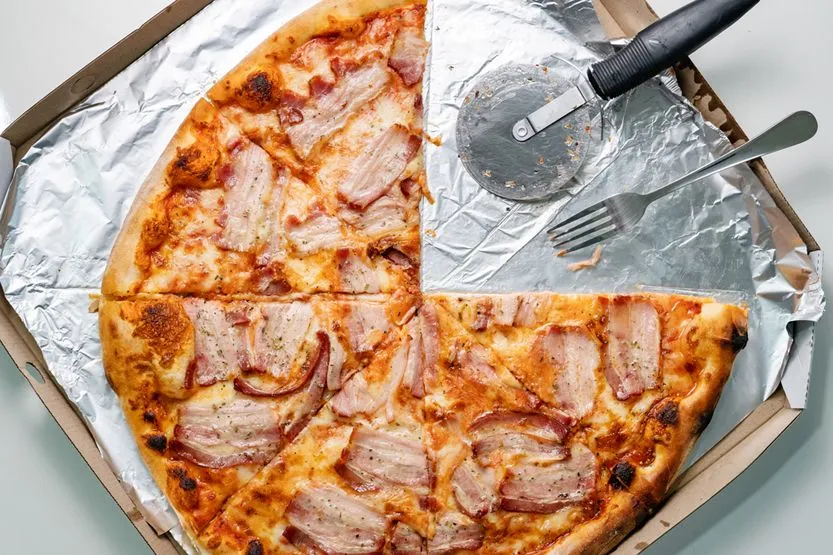
Put a frozen pizza on a sheet of aluminum foil and place it inside a convection oven. You will then heat it up for a few minutes and retrieve it, cheesy and delicious.
The pizza will be hot (and ready to be served), but the aluminum foil that was under the pie, and inside the oven for just as long as the pizza, won’t be hot to the touch!
Why does that happen? Why doesn’t aluminum foil feel hot after you take it out of the oven (or after being heated in any other way), whereas almost everything else that you put inside an oven does?
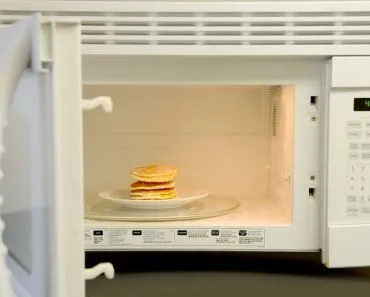
Important: The word ‘oven’, which is used multiple times in the article, refers to big convection ovens. It isn’t advisable to put aluminum or any other metal inside a microwave oven, as the material may catch on fire.
Thermal Conductivity Of Aluminum
Thermal conductivity is the property of a substance that dictates how fast it’s able to transfer heat. If a given object transfers heat quickly, then it’s said to have high thermal conductivity. Similarly, objects with low thermal conductivity take longer to transfer heat.
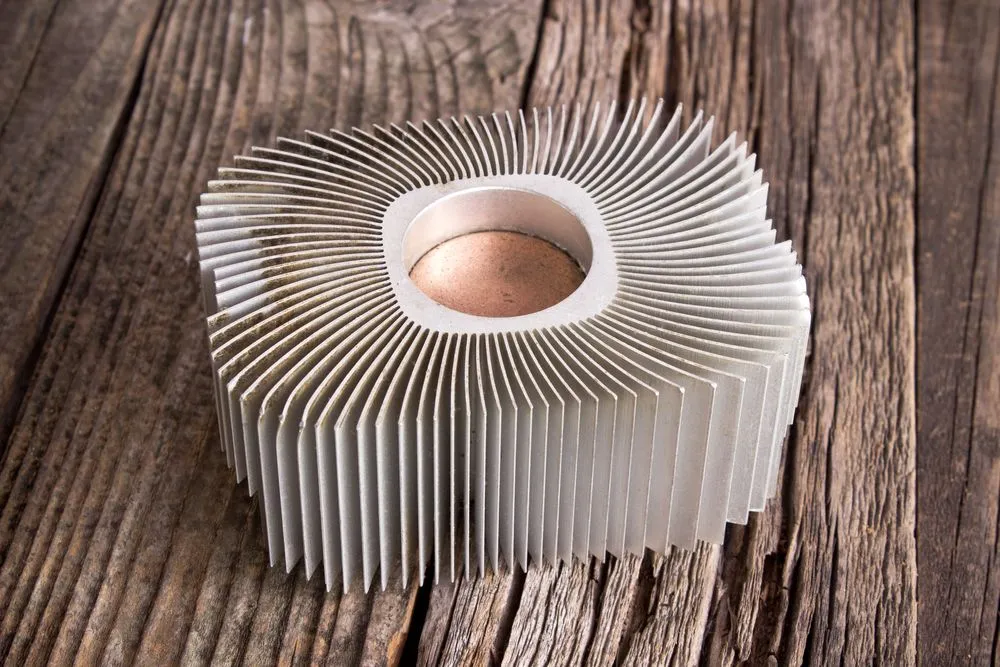
Quite naturally, therefore, substances with low thermal conductivity are used as thermal insulators, i.e., objects that don’t let heat pass easily (cookware with Teflon coating). Objects that have relatively higher thermal conductivity are used in making heat sinks, for example.
Aluminum, as you may have guessed, has a relatively high thermal conductivity, which makes it perfect to be used as a foil to wrap food with.
But that’s not all… there’s one more important thing that makes aluminum foil so unique.
Low Thermal Mass Of Aluminum Foil
Not only does aluminum foil have high thermal conductivity, but it’s also very thin (low mass), and obviously has a high surface area. Due to the latter, whatever heat the foil absorbs is lost rapidly to the surrounding air.
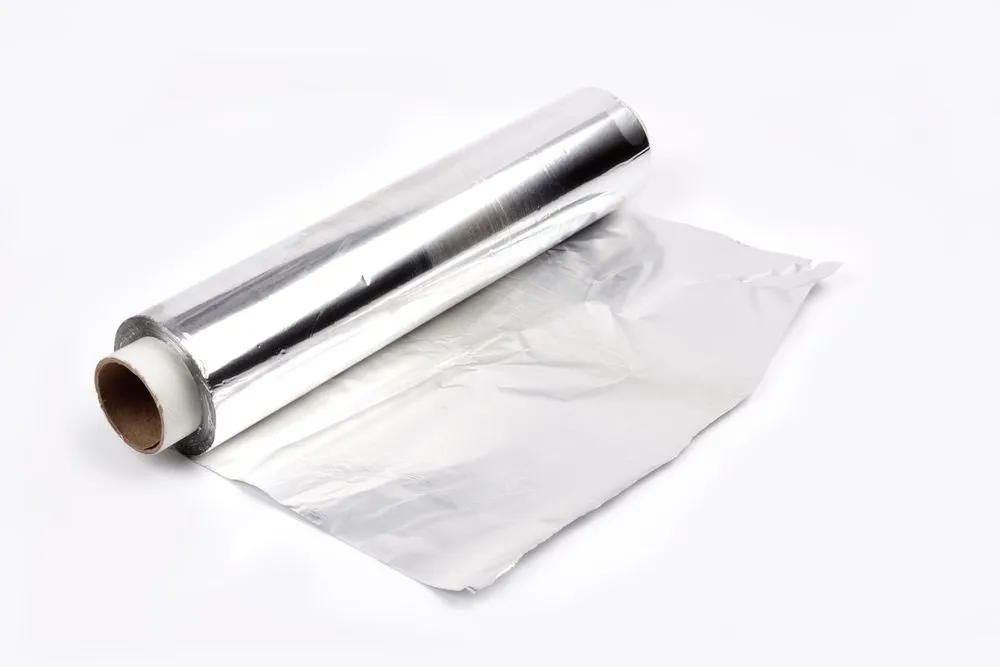
The flatness and high surface area of aluminum foil causes it to have a very low thermal mass.
Now, What’s Thermal Mass?
The thermal mass of an object is its ability to store or absorb heat. Things that are considered ‘difficult’ to heat generally have a high thermal mass. Brick or concrete, for example, heat up only after they’re provided with a lot of heat energy. In contrast, lightweight objects, like wood, have low thermal mass, because they’re not good at absorbing or storing heat.
Aluminum foil has a low thermal mass on account of having such low mass and such a high surface area. That’s why aluminum foil is not able to ‘hold’ much heat.
These factors combine to make aluminum an ideal choice for wrapping things, because it doesn’t hold a lot of heat. And whatever small amount of heat it does hold, it gets transferred out of it quickly due to the high thermal conductivity of metal.
Another important factor that’s often associated with the effectiveness of aluminum foil is specific heat capacity.
Specific Heat Capacity Of Aluminum
Specific heat capacity measures the amount of heat energy required to increase the temperature of 1 kg of an object by 1 kelvin (SI unit of temperature).
It’s a common misconception that aluminum has a low specific heat capacity. In reality, aluminum has a relatively high specific heat, as compared to certain other metals, such as copper and iron (Source). In fact, this is why certain cookware is made of aluminum.
However, aluminum foil is too thin and has a very high surface area to effectively transfer enough heat to an individual’s hand.
Think of it this way… a very small container can hold only a little water. If you empty the water-filled container over your head, you won’t get drenched, because the water in the container is too low in volume.
In a nutshell, aluminum foil doesn’t feel hot to the touch because it loses its heat rapidly to the surrounding air after it’s removed from the oven; whatever little heat it still has is only enough to heat a small portion of your finger (but not your whole hand).
How Hot Can Aluminum Foil Actually Get?
Here’s a point that often gets muddled: the fact that foil feels cool in your hand doesn’t mean it never gets hot. Inside the oven, a sheet of foil is sitting in roughly the same hot air as your pizza, so it reaches a similar temperature. What changes the moment you take it out is how fast it sheds that heat (almost instantly), not how hot it was a second earlier.

So what’s the actual ceiling? Pure aluminum melts at about 660 °C (1,220 °F), and household foil (which is mostly aluminum) melts in the same ballpark. Crucially, a thin foil melts at essentially the same temperature as a thick block of the same metal; geometry changes how quickly something heats or cools, not the temperature at which it finally turns to liquid.
That number is the reassuring part. A typical home oven tops out near 290 °C (550 °F) even on its highest broil setting, which is less than half of aluminum’s melting point. That’s exactly why you can wrap a tray in foil, bake at full heat, and pull out a sheet that is intact (and only briefly warm) rather than a puddle of metal. You would need a foundry furnace, not a Sunday roast, to actually melt it.
Why Doesn’t A 90 °C Sauna Burn You, But 90 °C Metal Would?
Here’s a thought experiment that turns the foil question inside out. A traditional Finnish sauna is typically held between 80 and 100 °C (176 to 212 °F), at a relative humidity of only 10 to 20%. People sit in that air for pleasure. Now picture the same room fitted with a metal bench instead of a wooden one, at that same temperature. You would be nursing a burn before you could stand up again.

Same temperature, opposite outcome. The reason is that your skin has no thermometer in it. Your nerve endings respond to the rate at which heat flows into them, and that rate depends on what the hot thing is made of. Air conducts heat at roughly 0.024 W/m·K. Aluminum manages about 205 W/m·K, some 8,500 times higher. The sauna’s air has plenty of temperature but hands it to your skin at a trickle. Metal at the identical temperature delivers it in a rush. The wooden benches you actually sit on land near air’s end of that scale, at about 0.04 to 0.12 W/m·K, which is why they are no more alarming than the air itself. (For the atomic-level reason metals are such good conductors of heat, the free electrons are the culprits.)
Physicists have a name for the property that settles this: thermal effusivity, written e = √(kρCp). It bundles thermal conductivity together with volumetric heat capacity, and so long as both bodies are thick enough to act as effectively bottomless reservoirs of heat, it is the only thermophysical property that governs the heat they exchange on contact. The temperature where they meet doesn’t split the difference evenly; it settles at an average weighted by the two effusivities. Touch something whose effusivity dwarfs your skin’s (any metal) and the contact temperature lands almost on top of the metal’s. Touch something whose effusivity is far below your skin’s (air, wood) and your skin barely moves from where it started.
That matters because skin injury has a threshold. Below roughly 44 °C, cells repair themselves fast enough that no burn accumulates. Between 44 and 51 °C, each additional 1 °C halves the exposure time needed to kill epidermal cells. Sauna air leaves your skin near its starting point, comfortably under that line. A 90 °C metal bench pulls your skin surface up toward 90 °C the instant you make contact, which is far on the wrong side of it. Note what this explanation does not need: sweat. The wooden bench in that same sauna is equally safe to sit on, and wood doesn’t sweat at all.
And here’s the twist that leads back to foil. Aluminum foil has precisely the same effusivity as a solid aluminum bar, because effusivity is a property of the material, not the shape. What spares your fingers is that the effusivity picture above assumes both bodies are thick enough to keep supplying heat. Foil isn’t. A thicker layer holds more thermal energy and can therefore sustain a high heat flux for longer, whereas foil’s vanishing store is spent almost the moment it touches you. So the sauna and the foil are the same lesson from opposite ends: what burns you isn’t temperature, it’s how much heat a material can push into your skin, and for how long. A solid aluminum bar pulled from that same oven would have both, and it would burn you exactly like the metal bench.
Why Does The Baking Tray Burn You But The Foil Doesn’t?
Here’s an experiment you have already run without meaning to. You pull a tray of roast potatoes out of the oven, peel back the sheet of foil covering them with your bare fingers, and think nothing of it. Then your knuckle grazes the rim of the tray underneath, and you are suddenly reaching for a towel. Same oven, same length of time, same temperature. One piece of metal is harmless, the other one absolutely isn’t.

This is the comparison that settles the whole question, because it strips out every variable but one. If that tray is aluminum, then the metal in your fingers and the metal that just burned you have identical thermal conductivity, identical specific heat capacity, and identical thermal effusivity. Every material property on the list is the same. The only thing that differs is how much metal is sitting there.
And that gap is wider than it looks. Standard household foil is only about 0.016 mm thick, while a baking tray runs from roughly 0.8 mm for a light home sheet up to about 1 mm for a heavy commercial pan. Even at the thin end, that is some fifty times more aluminum packed into the same footprint. Stored heat scales with mass (Q = mcΔT), so pulled from a 200 °C (392 °F) oven, that tray carries about fifty times more heat energy per square centimeter than the foil does. Lay your hand on a 10 cm square of foil and the whole patch is holding only around 70 joules above room temperature. The same square of a 0.8 mm tray is holding roughly 3,500 joules.
Which is exactly why the popular answer, that aluminum simply doesn’t conduct heat well, gets things backwards. Aluminum is one of the best heat conductors in your kitchen, at about 205 W/m·K, against roughly 50 W/m·K for steel and a mere 0.024 W/m·K for air. Foil is not sparing your fingers by refusing to move heat. It is moving heat superbly, and then running out of it almost immediately. Temperature on its own never tells you whether something will burn you, which is also the trick behind walking barefoot across hot coals, though there the culprit is the coals’ poor conductivity rather than foil’s vanishing mass.
Does Aluminum Foil Reflect Heat?
Conduction (the heat that flows when two things touch) is only part of the story. Heat also travels as thermal radiation, the invisible infrared glow that every warm object emits, and here aluminum behaves very differently. A bright, shiny foil surface is a poor emitter and a superb reflector of that radiation. In engineering terms its emissivity is only about 0.04, which means it radiates barely 4% of the heat a perfect black surface would, and bounces back the rest.

This is why a thin sheet of metal makes such an effective heat shield. It’s the same trick behind the crinkly emergency blankets handed out at marathons: the aluminized film reflects a runner’s own infrared radiation straight back rather than letting it radiate away. Builders use the identical idea as radiant barriers in attics. According to the U.S. Department of Energy, these foil-faced barriers “reflect radiant heat rather than absorbing it,” and in a warm, sunny climate they can trim cooling costs by roughly 5% to 10%.
So aluminum foil plays two quite different heat-transfer games, and it pays to keep them apart. Reflection is what makes foil valuable as a radiant barrier, whether it is facing a fire, a runner’s escaping body heat, or a sunlit attic. It is not what saves your fingers, and this is where a lot of people go wrong. A surface that emits only about 4% of what a black one would also radiates away only about 4% as fast, because the Stefan-Boltzmann law scales radiated power directly with emissivity (P = eσAT4). Low emissivity therefore slows a hot sheet’s radiative cooling slightly rather than speeding it up. And whatever the foil bounces back on the way in, it still comes out of the oven at roughly oven temperature, as we saw earlier. The reason a sheet feels harmless in your hand is the plainer one: there is barely any metal there to store heat, and the little it does store is gone the moment it meets cooler air and skin.
References (click to expand)
- JG Cook. The Thermal and Electrical Conductivity of Aluminum. The University of North Texas Libraries
- Thermal Conductivity - Hyperphysics. Georgia State University
- Is metal a good heat shield?. West Texas A&M University
- Our Specific Heat of Household Materials Experiment. Suffolk University
- Aluminium - Element information, properties and uses. Royal Society of Chemistry Periodic Table
- Radiant Barriers. U.S. Department of Energy, Energy Saver
- Attic Radiant Barriers. Building America Solution Center, Pacific Northwest National Laboratory
- Ankur Jain. The role of thermal effusivity in heat exchange between finite-sized bodies. International Journal of Heat and Mass Transfer, Vol. 202, 123721 (2023)
- Springborg AD et al. Methodology and applicability of the human contact burn injury model: A systematic review. PLoS One (2021). NCBI PMC
- Laukkanen JA, Kunutsor SK. The multifaceted benefits of passive heat therapies, with a focus on Finnish sauna. Temperature (2024). NCBI PMC
- Table of Specific Heats. HyperPhysics, Georgia State University
- The Stefan-Boltzmann Law. HyperPhysics, Georgia State University
- Aluminium Foil (thickness of standard household foil). Wikipedia