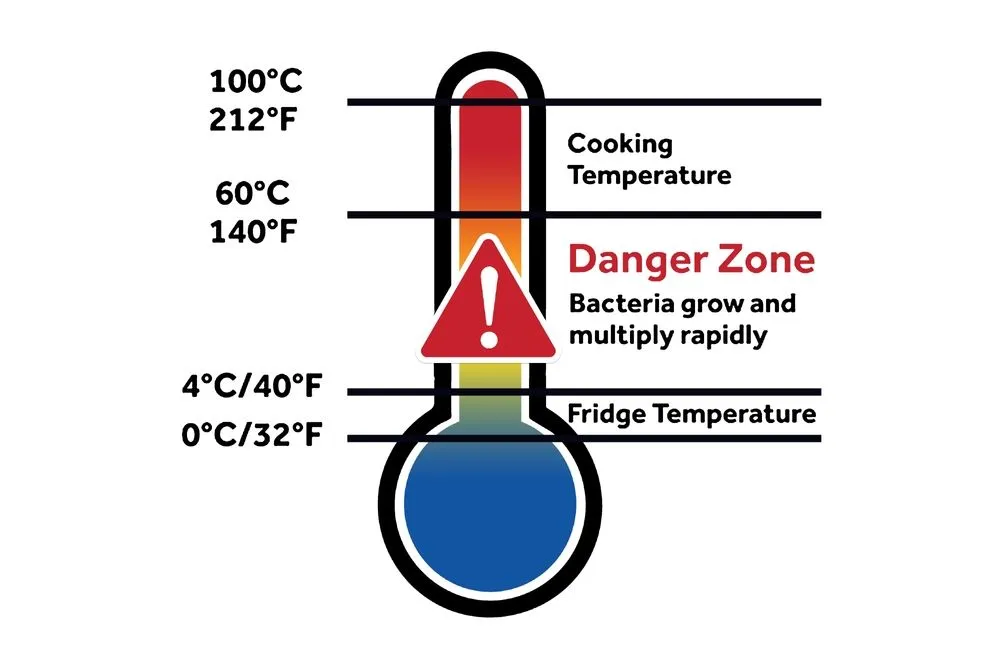
Contrary to popular belief, the US FDA, USDA, and CDC actually recommend refrigerating hot food within 2 hours of cooking, rather than waiting until it cools to room temperature. Letting cooked food sit out for longer than 2 hours (or 1 hour above 90 °F / 32 °C) gives bacteria like Salmonella and Staphylococcus time to multiply in the 40–140 °F (4–60 °C) “danger zone.” Divide hot food into shallow containers so it cools quickly inside the fridge.
Those of you who have helped with household chores or cooking know that we often put leftover food in the fridge. However, sometimes your parents might tell us to wait and not put hot food in the fridge. Clearly, there are some rules to follow when it comes to the fridge, and one of them is not to put hot food inside!
However, if fridges are meant to keep food fresh and cool it down, why do we have to wait for food to reach a normal temperature before refrigerating it? If you leave food out, bacteria can grow and make it go bad, so we put the food in the fridge instead, right?
So what’s the story here? What will happen if we put hot food inside the fridge?
Let’s see how it works!
We keep food in the fridge to prevent it from getting spoiled, which could result in food poisoning and other health-related issues. Leaving food out to cool down makes it more likely for bacteria to grow.
Why People Worry About Putting Hot Food In The Refrigerator
You may have heard from a parent or grandparent that hot food belongs on the counter to cool first, not in the fridge. This advice is partly true and partly a myth. The kernel of truth: putting a large, piping-hot pot directly into a packed fridge does briefly raise the interior temperature, makes the compressor work harder, and can cause condensation that affects nearby food. Some fridge manuals do explicitly recommend cooling food a little first.
However, the bigger food-safety concern is the opposite one. The US FDA, USDA, and CDC all advise that perishable cooked food should not sit out at room temperature for more than 2 hours (or 1 hour if the room is above 90 °F / 32 °C). Bacteria such as Salmonella, Staphylococcus aureus, and Clostridium perfringens multiply rapidly in the so-called “Danger Zone” of 40–140 °F (4–60 °C). Leaving food out to cool fully on the counter often means leaving it in that bacterial sweet spot for hours.
So if you store hot food in the fridge, the temperature inside the fridge will rise temporarily, which makes everything inside hotter. The fridge compressor must therefore work harder to keep the temperature inside at the level you want.
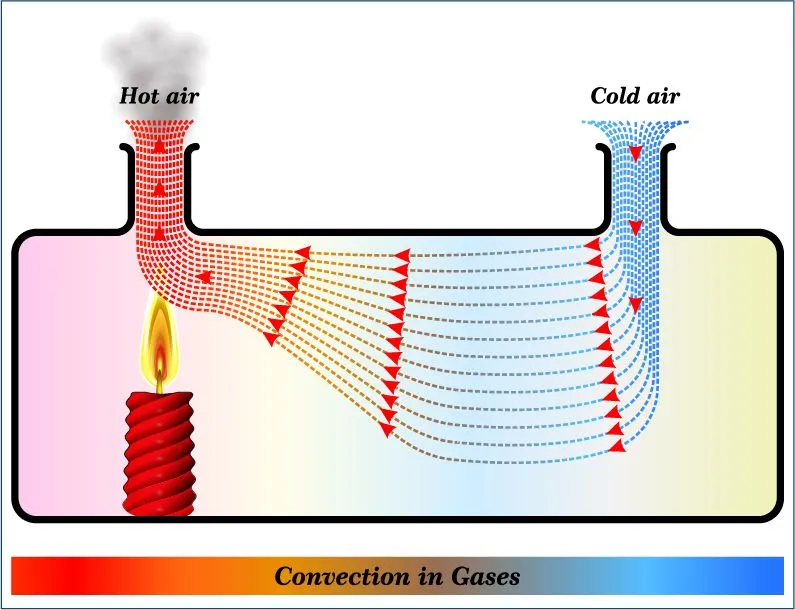
Now, the air of the surrounding environment is getting warmer, but think about how that is actually happening. We’ve all read about the second law of thermodynamics, which says that heat moves from places of a higher temperature to places with a lower temperature. This is what convection does.
Convection
Convection is a mode of heat transfer that occurs in states that are free to move, like liquid and gas. When a hot liquid or gas warms up, it gets lighter and rises, while cooler air comes in to replace it below.
Condensation
Second, when we put hot things in the fridge, the temperature difference between the two systems causes condensation. The droplets may end up on the back wall of the fridge, where they can freeze food that touches them. Also, condensation adds moisture to the fridge environment, which is not advisable for food preservation.
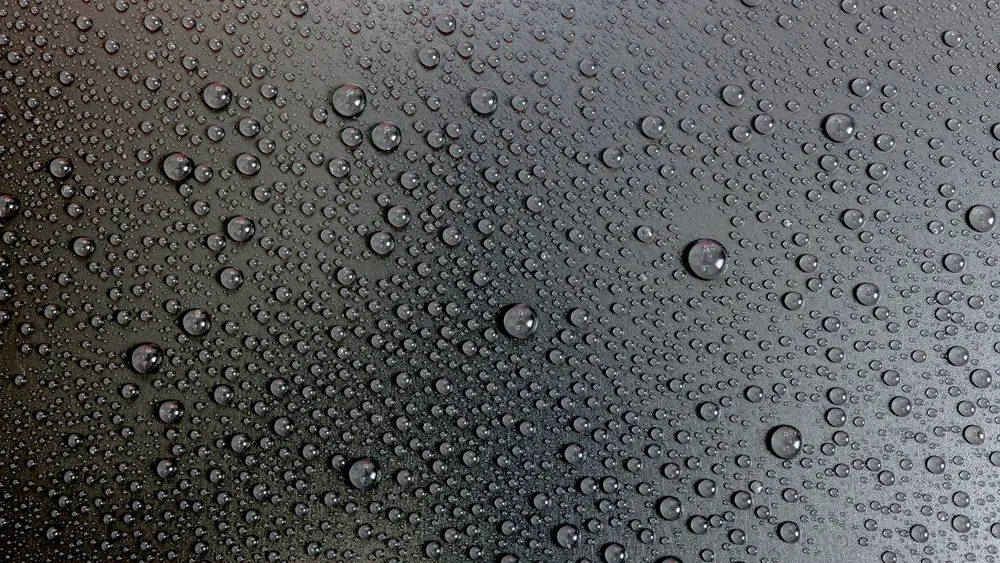
The whole process of heat transfer via convection and condensation into the form of droplets resembles a very important natural process.
Rain is caused by evaporation and condensation, and when we put warm food in the fridge, we see a small version of this natural process take place.
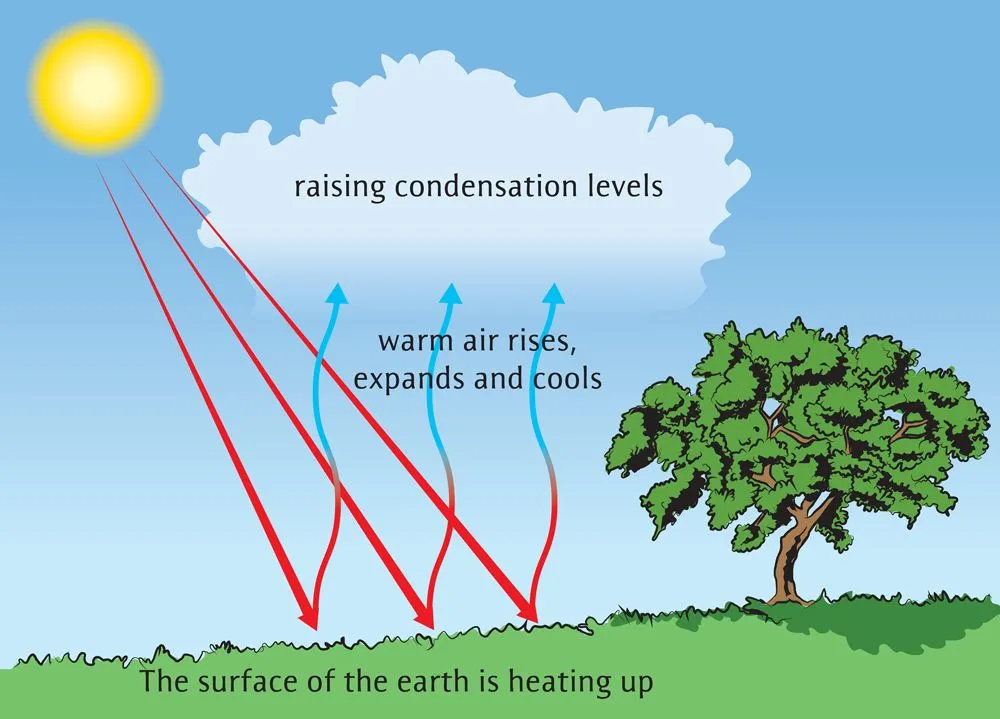
As a result of the combined process of convection and condensation after we put hot food inside, the interior environment of the refrigerator becomes unfavorable for preservation and reduces the optimum functioning due to increased internal temperature and humidity inside the fridge.
Where Does The Heat From Your Hot Food Actually Go?
Here is a question worth pausing on: a fridge cannot make heat vanish, so where does the warmth from your leftovers actually end up? A refrigerator does not "create cold" at all. It simply moves heat from one place to another. A liquid refrigerant flows through coils inside the cabinet, soaks up heat from the food and air, and then carries that heat outside the fridge, where it is released into your kitchen through the condenser coils.

The compressor is the pump that drives this cycle, and the US Department of Energy notes that the very same vapor-compression principle runs both refrigerators and air conditioners. On older fridges the warm coils sit on the back; on many newer models they are tucked underneath at the front. That is why the area around a hard-working fridge feels warm to the touch.
So when you slide in a pot of hot curry, all of that extra heat has to be pumped out into the room, together with the heat the compressor itself gives off as it works. Your kitchen ends up very slightly warmer, and your fridge simply runs longer to shift it. Nothing has been destroyed; the heat has just been relocated from your dinner to the air around you.
Will Putting Hot Food In The Fridge Break Or Damage It?
This fear sits behind a lot of the old advice, but the honest answer is reassuring: a hot dish will not break a modern refrigerator. What actually happens is far more modest. Adding a large amount of warm food raises the temperature inside the compartment for a while, and the fridge responds by running its compressor longer until things settle. Whirlpool's own guidance notes that after you add large quantities of unfrozen food it can take several hours for the temperature to stabilize, and it suggests not loading big warm batches all at once.

The parts doing the extra work are the compressor and those condenser coils. They are designed to cycle on and off for years, so a bowl of hot soup now and then is well within their limits. The realistic downsides are small: a slightly higher electricity bill, a temporary warm spell that can soften ice cream or nudge nearby items toward the danger zone, and a little extra frost from the added moisture. None of that counts as damage.
The one habit worth avoiding is cramming a single enormous, steaming pot into a tightly packed fridge, which traps heat against everything around it. Splitting that pot into smaller, shallow containers solves the problem completely: the food cools faster and the fridge barely notices.
Which Foods Are Riskiest, And Why Is Rice A Special Case?
For most cooked leftovers (meat, poultry, soup, stews, and cooked vegetables) the rule is the same one we started with: get them refrigerated within 2 hours, or within 1 hour if the kitchen is above 90 °F (32 °C), and divide them into shallow containers so they chill quickly and stay fresh. But one everyday food deserves a special mention: cooked rice.

Uncooked rice can carry spores of a bacterium called Bacillus cereus, and here is the catch: as the Cleveland Clinic explains, those spores can survive the boiling water that cooks the rice, and even a quick fry or a spin in the microwave. If cooked rice is then left standing at room temperature, the surviving bacteria multiply and release a toxin, so simply reheating the rice later does not reliably make it safe again. Doctors even have a memorable nickname for the resulting illness: "fried rice syndrome."
The fix is simply speed. The Cleveland Clinic advises the same limit that applies to any leftover (no more than 2 hours out, or 1 hour above 90 °F / 32 °C), then transferring the rice into shallow containers, putting it straight in the fridge, and reheating it thoroughly to 165 °F (74 °C) only once. It is a tidy example of why "refrigerate it promptly" beats "let it cool on the counter."
Conclusion: What You Should Actually Do
The full story is more nuanced than “never put hot food in the fridge.” Yes, dumping a large boiling pot directly into a packed fridge can cause some short-term issues like condensation, extra compressor strain, and warming nearby food. But the food-safety hazard of leaving food out at room temperature is far worse than the modest inefficiency of an overworked compressor.
CDC and USDA guidance is consistent: refrigerate cooked food within 2 hours (1 hour if it is hot outside, above 90 °F or 32 °C). Don't wait until the food reaches room temperature before refrigerating; you can place hot food directly into the fridge.
To minimize the temperature impact on your fridge:
- Divide the food into smaller, shallow portions so it cools faster (USDA recommends containers no deeper than 2 inches / 5 cm).
- Leave space around the container so cold air can circulate.
- For very hot pots, you can put them in a shallow ice or cold-water bath for a few minutes first.
- Loosely cover the container so steam can escape without flooding the fridge with humid air.
Bottom line: get hot food refrigerated quickly, but do it smart. Your food safety almost always trumps your fridge's electricity bill.
References (click to expand)
- Danger Zone 40-140 °F. USDA Food Safety and Inspection Service.
- Refrigerate Food Quickly. CDC Food Safety.
- Leftovers and Food Safety. US Food and Drug Administration.
- Lagendijk, E. et al. (2008). Domestic Refrigeration Practices with Emphasis on Hygiene. Journal of Food Protection.
- Towns, R. E. et al. (2006). Food Safety-Related Refrigeration and Freezer Practices. Journal of Food Protection.
- Clean Refrigerator Condenser Coils. US DOE / PNNL Building America Solution Center.
- How Adding a Large Amount of Food Can Impact Temperature. Whirlpool Product Help.
- How To Prevent Fried Rice Syndrome (Bacillus cereus). Cleveland Clinic.