Table of Contents (click to expand)
A microwave oven cooks by emitting microwave radiation at 2.45 GHz from a device called a magnetron. These electromagnetic waves penetrate the food and flip its polar water molecules back and forth billions of times per second. The resulting molecular friction heats the food from the inside out. Fats and sugars also absorb some energy, but water is by far the most efficient absorber, which is why moist foods heat fastest.
One day, after walking past a microwave radar he’d been working on, American engineer Percy Spencer found that the chocolate bar in his pocket had melted. Spencer realized that the intense microwave energy put out by magnetrons could not only be used to hunt enemies in war, but also cook pasta once in a while.
This discovery was revolutionary and purely accidental, a combination of adjectives we find irresistibly delightful. The first food item Spencer then deliberately cooked with microwaves – and I doubt this comes as a surprise – was popcorn. The second item he cooked without resting it on a flame, from a distance as though by sheer magic, was an egg, which exploded in the face of one of the experimenters. The moment was historic.
However, it is still unclear how the heat is distributed throughout the food being subjected to the waves. Microwaves are extremely adept at exciting and vibrating water molecules, and since food is mostly water, the vigorous motion of the molecules creates intermolecular friction, which generates the heat to cook the food item. Although, why the water molecule? Well, because it’s an excellent dipole.
Radiation
Of the three ways heat can travel (conduction, convection, and radiation), a microwave oven uses the third. The magnetron inside the oven puts out electromagnetic radiation at a frequency of about 2.45 GHz (a wavelength of roughly 12 cm). That sits comfortably in the microwave band of the electromagnetic spectrum, between radio waves and infrared light. The waves are far too low-energy to ionize molecules or damage DNA, so the only thing they do to food is heat it up.
The radiation is steered into the oven cavity by a small antenna and a waveguide. A rotating turntable (or, in some models, a hidden stirrer fan) keeps the food moving through hot spots and cold spots in the standing-wave pattern, so it heats more evenly.
Why Microwaves Target Water Molecules
A water molecule is formed when two hydrogen atoms bond to a single oxygen atom. The molecule, however, is shaped like an upside-down “Y”; the two positive hydrogen atoms are squeezed together on one end, while the highly negative oxygen atom clings to the other. One end of the molecule therefore exhibits a positive charge, while the opposite end exhibits a negative charge: the molecule forms a di-pole.
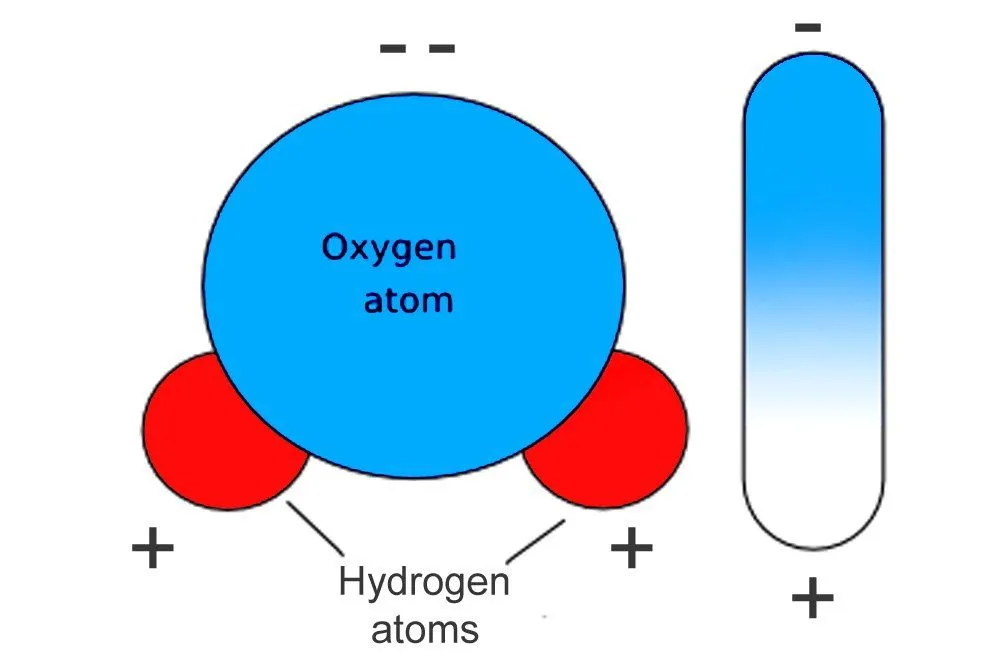
When an electric field contacts a dipole, the dipole tries to align itself with the field’s charge, but microwaves are not just any electric field; they are a rapidly alternating one. As the field alternates, so does the dipole’s alignment, which is to say, the dipole rotates. The water molecule set in such vigorous rotation by the microwaves sets off other molecules in vigorous rotation. Soon, every water molecule is excited and rotating. The vibrational energy dispersed raises the temperature of the food item.
Why Microwaves?
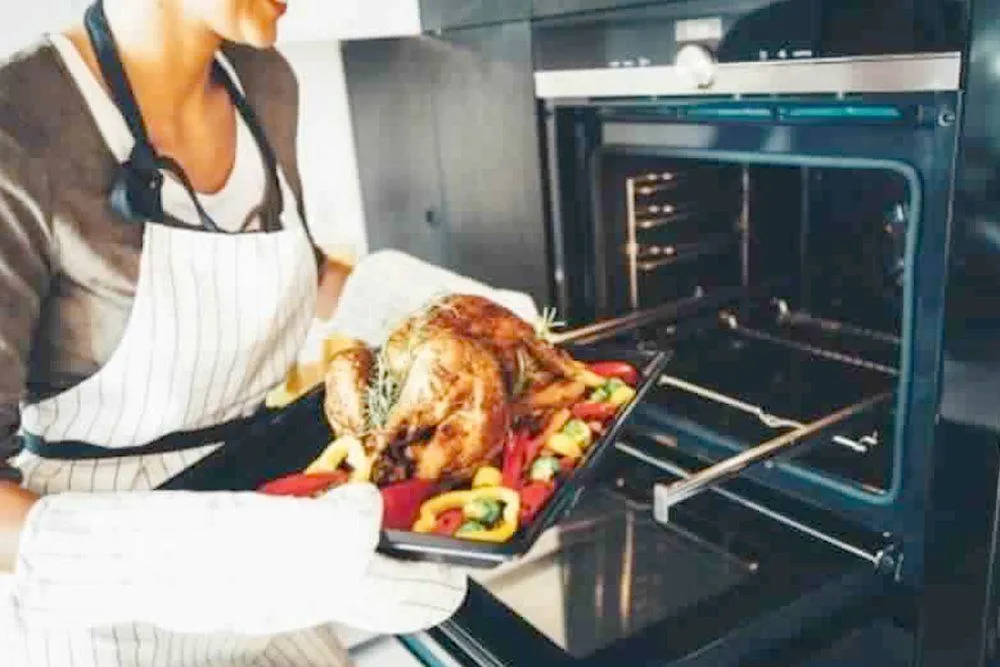
The energy of an electromagnetic wave increases with an increase in its frequency, so why don’t we use infrared or ultraviolet rays to cook food more quickly and efficiently? Infrared or ultraviolet rays aren’t used because they are absorbed by the food item’s surface before they reach the water beneath. Microwaves, however, can penetrate to greater depths, where the water lies. Heating the meat with infrared or ultraviolet might make it ‘look’ hot, but the flesh beneath will remain uncooked. That being said, prolonged infrared heating will eventually heat the meat as well, something that is evident in regular heating, when one cooks on a stove. In fact, many ovens are infrared-based.
Then there are radio waves – electromagnetic waves of even lower frequencies. Why don’t we use them? Wouldn’t they be, inferring from the trend, even more penetrative? Radio waves were actually used to heat food even before microwaves! However, because most of modern communication technology came to be based on radio waves, continuing to use them to heat food would have definitely caused electronic interference.
Lastly, while microwave heating is the quickest and most efficient way to cook food, not every food can be heated with equal ease. Obviously, food items suffused with moisture are the easiest to heat. Food items containing sugar or fat, however, require greater effort. This is because the dipole movement of their molecules is much less than the dipole movement of water molecules.

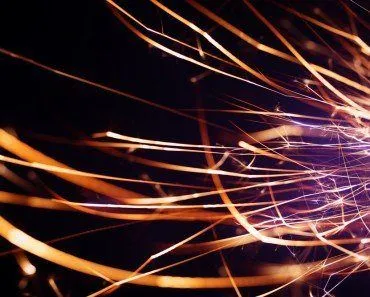
Also, you should avoid microwaving most metal containers. Metals reflect electromagnetic waves, which is the very working principle of radar. A smooth, blunt metal object such as a small spoon usually just bounces the waves around without harm, but anything with thin edges, sharp points, or crumpled corners (forks, twist-ties, balled-up aluminum foil) is dangerous. The strong electric field concentrates at those points and ionizes the air around them, producing visible arcs and sparks. Those arcs can damage the magnetron or ignite anything flammable nearby. The interior cavity is shielded so that the microwaves themselves cannot escape, which is why the metallic mesh on the door is also crucial. If you have to ask whether a particular dish is safe, the safest bet is to stick to microwave popcorn.