Aluminum foil has a shiny side and a dull side because two sheets are rolled together during the final pass through the mill. The side touching the polished steel rollers comes out shiny, while the side facing the other sheet comes out dull. For standard foil, it makes no real difference which side you cook on.
Have you ever wondered why the piece of aluminum foil your mother uses to wrap leftovers has two different-looking sides?
Well, this is one of the most asked questions that even Michelin Star chefs might not have the answer to. Let’s dive into this strange manufacturing fact and learn more about this foil, which finds use not only in your kitchen, but also in industries, decorations, electronics, and so much more.
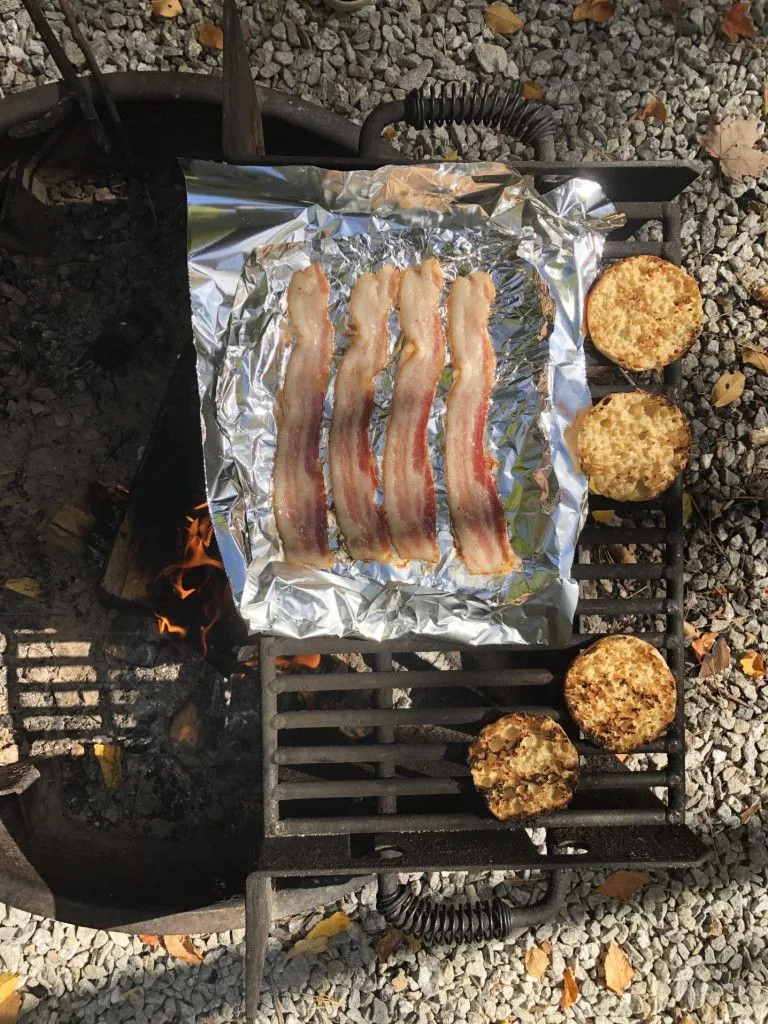
Rise Of Aluminum Foil
In the past, people used tin foil for packing food, but it wasn’t malleable enough and also left a subtle taste of tin in the food. It was only in the 1910s that aluminum foil came to the rescue, replacing tin foil because it was cheaper and more durable. In 1910, Robert Victor Neher patented a process for the continuous rolling of aluminum, which led to the first aluminum rolling plant being set up in Kreuzlingen, Switzerland. Its popularity grew in 1911, when the Bern-based chocolatier Tobler started wrapping its chocolate bars (including the Toblerone) in aluminum foil. By 1912, Maggi was using it to package its soups and stock cubes. Soon its uses were widely exploited and aluminum foil entered the US markets in the following years, which was a further boon for its popularity.
Today, consumers and businesses have benefited from the use of aluminum foil in countless ways. The market for aluminum foil is growing and expanding all the time with increasing research and new uses being found every day.

Why Is Aluminum Foil So Useful?
Aluminum foil provides a complete barrier to light, oxygen, moisture, and microorganisms like bacteria and viruses. That’s why aluminum foil is used in food and pharmaceutical packing and wrapping. It is also a good conductor of heat, so it’s used for cooking microwave and convection oven meals.

Aluminum foil is also used in aseptic packaging, which allows perishable goods to stay fresh without refrigeration. It is non-toxic and resists corrosion.
Aluminum foil is almost 88% reflective and is therefore used for thermal insulation, photography, and heat exchange.
Aluminum foil is also recyclable, so it is considered environmentally friendly.
Why Is One Side Of The Aluminum Foil Shiny While The Other Is Dull?
This is not a marketing gimmick or any secret technique, but simply a result of the way aluminum foil is made. The two-sided look is baked into the manufacturing process, which is why one side comes out shiny and the other comes out dull or matte.
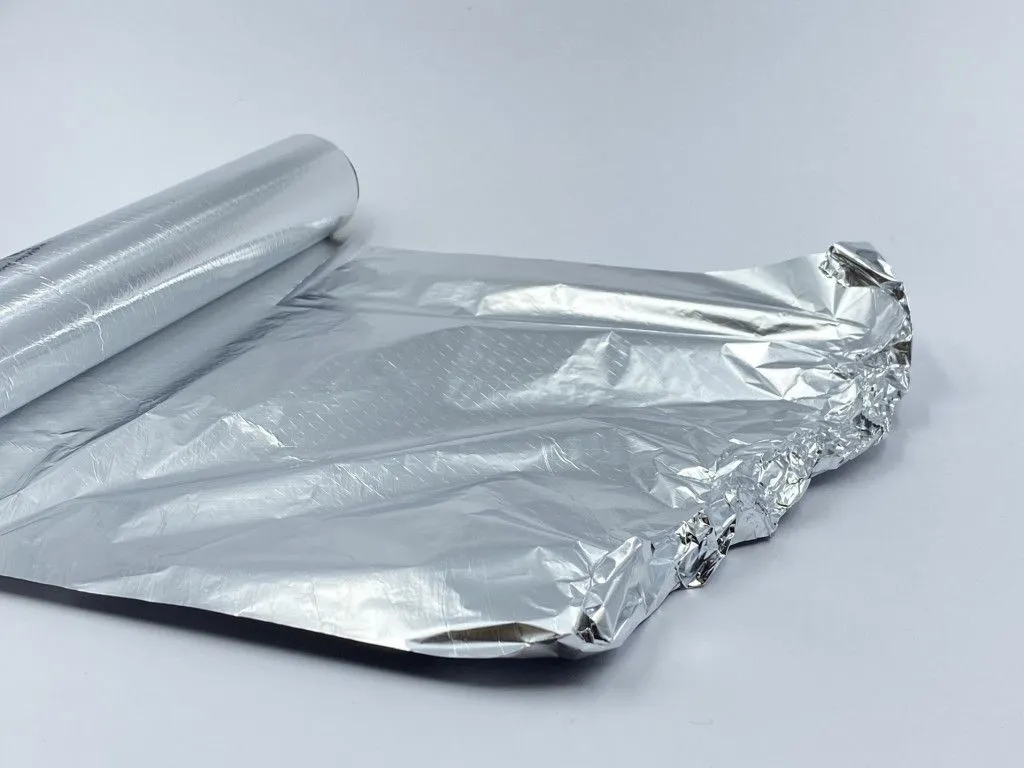
Manufacturing aluminum foil starts with slabs cast from molten aluminum, which are passed through a rolling mill again and again until they reach the desired thickness. This step is called “milling,” and it is exactly what creates the difference between the two sides. The finished foil is incredibly thin, often less than a thousandth of an inch (under about 0.025 mm), and a single sheet that fine would simply tear under the tension of the rollers. So during the final pass, two sheets of foil are stacked and milled together at the same time. Once they come off the mill, the two sheets are peeled apart and are then ready to use.
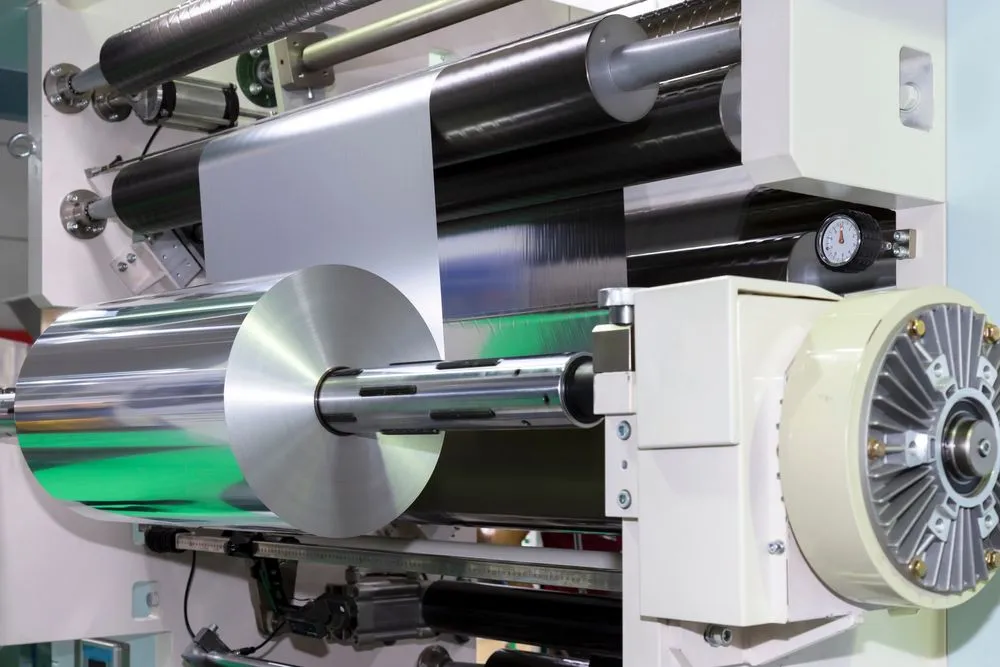
The side that pressed directly against the mill’s highly polished steel rollers picks up their mirror finish and becomes the “shiny” side. The side that faced the other sheet of foil never touched those smooth rollers, so it ends up slightly rougher, which is the “dull” or matte side. In other words, the shiny side and the dull side are purely a byproduct of milling two sheets together, nothing more.
Is There Any Actual Difference Between The Two Sides?
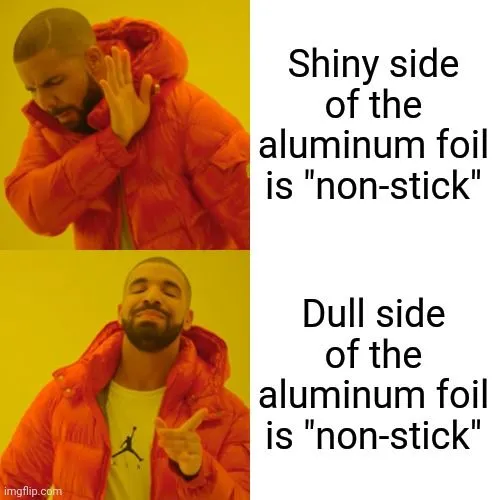
The debate has been ongoing for a long time regarding the two sides of aluminum foil. People have been fighting over which is the “correct” side to use, and you may have heard that the shiny side reflects more heat and should face your food. As it turns out, there is no “correct” side for ordinary foil. For standard kitchen foil, both sides are equally food-safe and work just as well for cooking, wrapping, or anything else.
What about the reflective-heat idea? It is true that the shiny side bounces light back like a mirror (specular reflection) while the dull side scatters it (diffuse reflection), which is why they look so different. But the total amount of light and heat each side reflects is almost the same, roughly 86 to 88 percent, so the gap is far too small to change how your food cooks. Whether you put the shiny side up or down, the result on the plate is the same.
There is just one exception, and it is not standard foil at all. Some brands sell a separate non-stick foil that has a food-safe non-stick coating applied to one side only, the dull side. That side is usually stamped with the words “Non-Stick Side” so you know which way to face it. Plain foil has no such coating on either side, so this only matters if you specifically bought non-stick foil.
A Final Word
The aluminum foil industry has emerged as a major industry over time and continues to grow at a high rate. New technological advancements and extensive research is paving the way for new opportunities for the exploitation of aluminum foil.
Aluminum foil is being mixed with flexible films to create lightweight and durable packaging that allows the foil to expand during production and contract after consumption of the product, resulting in a reduction of waste.
Aluminum foil manufacturing and distribution require less energy than many other processes. Methods are in the developing stages to improve the processes involved in order to reduce air pollution and hazardous waste.

In other words, the market for aluminum foil is on an upward curve. Many new advancements and hybrids of aluminum foil might be entering the market in the near future… the sky is the limit for this versatile and unique material!