Table of Contents (click to expand)
That shiny gold or silver wrap on satellites isn’t real gold or silver. It’s multi-layer insulation (MLI), made from polyimide film (Kapton) coated with a very thin, vapor-deposited layer of aluminum. The aluminum side reflects the Sun’s radiation; the gold-yellow tint you see is just the natural color of the polyimide on the outside.
If you’re one of those space nerds who derive pleasure from looking up at the pictures of artificial satellites and space rockets, then you’ve probably noticed that many artificial satellites are covered with what seems to be gold or silver foil. In fact, it’s not just satellites; you can see this in most space-related equipment (i.e., the equipment that actually goes into space).
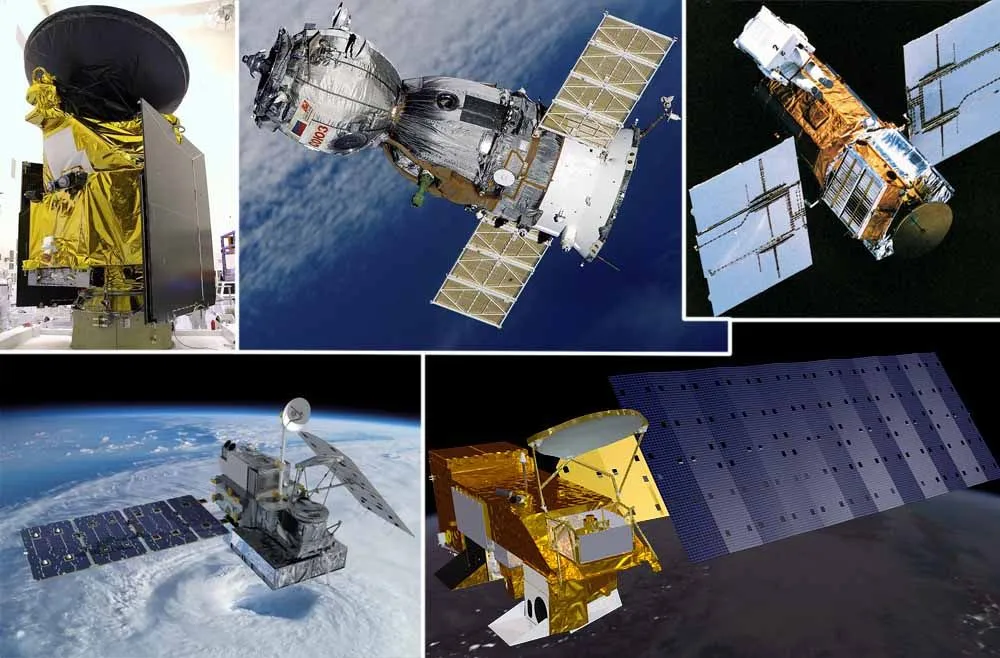
Do you know what it is? Is it real gold (or silver)? If not, then what is it made of? And more importantly, why is it used?
Before we get to that part, it helps if we understand the underlying issue here.
Is Space Hot Or Cold?
That’s a trick question, if you ask me. Technically, space is not a thing in itself, and as such, it doesn’t really have its own temperature.
However, the things that inhabit it, like planets, stars, asteroids, satellites etc., do have their own respective temperature values (because they’re made of atoms). However, as observational data shows, the temperature in outer space is 2.73 Kelvin (-270.42 Celsius, -454.75 Fahrenheit), which is actually the temperature of Cosmic Microwave Background Radiation, which is spread throughout the universe.
In a nutshell, therefore, it would be fair to say that space is cold. Thus, does that mean artificial satellites don’t have to worry about (over)heating problems?
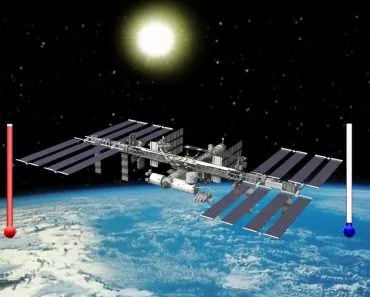
No, it doesn’t mean that… not by a long shot. In fact, artificial satellites, such as the ISS (International Space Station), carry specially-designed systems that help maintain an optimal temperature aboard the ISS, i.e., ensure that it neither gets too cold nor too hot, because the ISS can experience a drastic variety of temperatures at the same time.
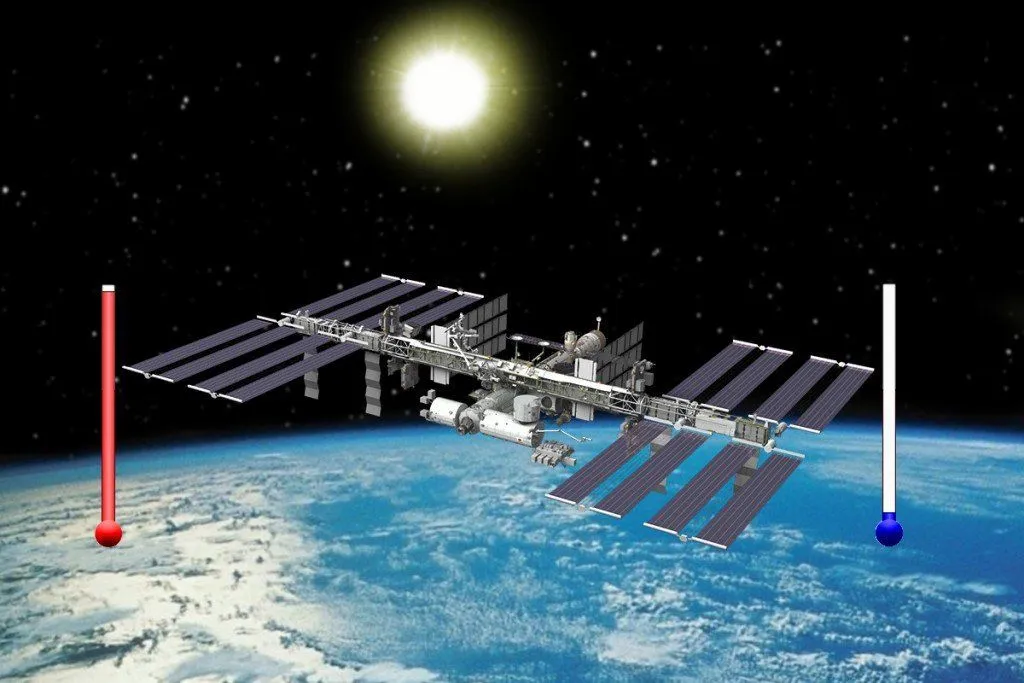
One of the systems, or rather, things, that help such satellites maintain an optimum temperature is the MLI, or the gold/silver plating draped over satellites and other space equipment.
What Is The Multi-Layer Insulation?
Multi-layer Insulation, or simply MLI, is a type of high-performance insulator that uses multiple radiation-heat transfer barriers to restrict the flow of (heat) energy. In simple terms, it’s a form of thermal insulation made of multiple layers of thin sheets that is used to cover spacecraft and other space equipment in order to reduce heat loss by way of thermal radiation.
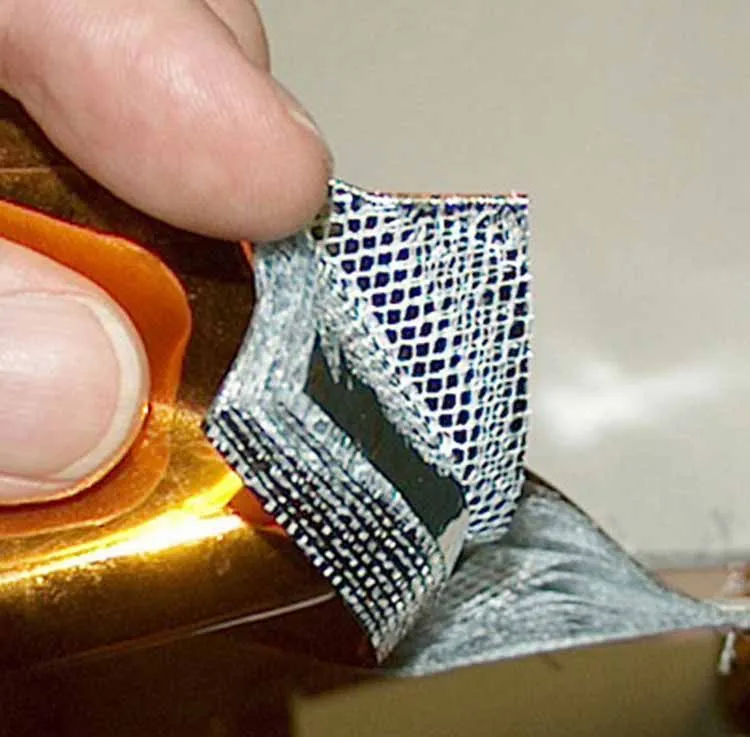
MLI is composed of multiple lightweight reflective films that are put together to form layers that range in thickness. Although the exact composition of these layers depends on where the satellite (which is going to be coated with MLI) is going to be orbiting, how much sunlight it will be exposed to, and what the insulation will be protecting, but these layers are usually made of polyimide or polyester films (these are certain types of plastics), which are coated with particularly thin, vapor-deposited aluminum layers (Source).
Is That Real Gold/silver?
No, the gold/silver foils you see on space equipment are not real gold/silver films. They are, in fact, a single layer of aluminized polyimide with the silver aluminum facing in. It’s the gold-yellowish hue of the polyimide on the outside that makes it look as if the satellite is wrapped in a golden film.
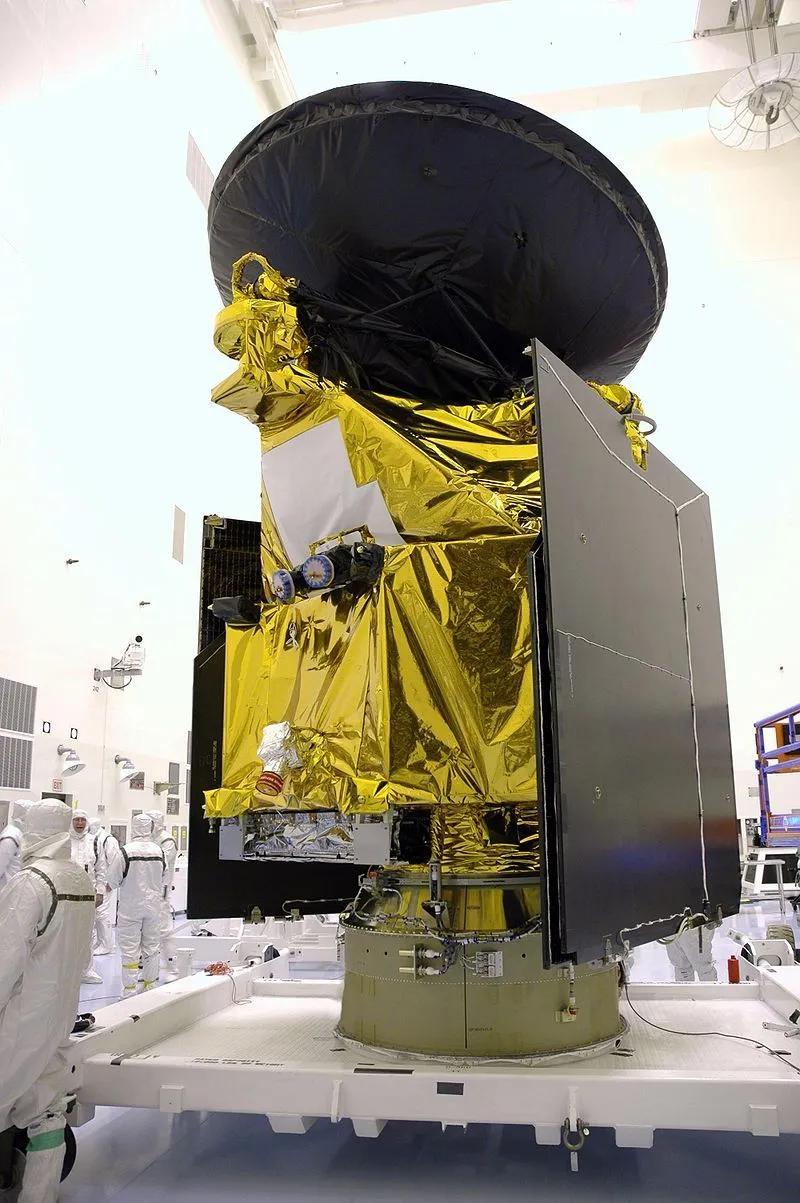
Note that an MLI sheet does not protect its ‘host’ equipment from heat transfer through conduction or convection, but that’s alright, because it doesn’t really matter in the near-vacuum of space. Since there is little to no air in space, radiation is the primary way that satellites heat up. Fortunately, MLI sheets do a great job at insulating those satellites from heat transfer (from the sun) through radiation.
Where Is Real Gold Actually Used In Space?
So if that golden glow is just tinted plastic, does that mean engineers never bother with the real thing? Not at all. Real gold genuinely does fly to space, just not as those big draped blankets. As NOAA’s satellite service puts it, sheets of gold are not used to cover entire satellite bodies, but gold is used on certain components, because the metal earns its (considerable) price in a few very specific jobs.

The first is on the visors of astronaut helmets. The sun visor on a spacewalk suit is coated with a microscopically thin layer of gold that works like a pair of sunglasses: it reflects the Sun’s harsh infrared radiation away from the astronaut’s eyes while still letting visible light through, so the wearer can see comfortably. Gold is unusually good at this trick. NASA notes that in the near-infrared, a polished gold coating can reflect roughly 99 percent of the incoming radiation.
The same reflective property shows up on electronics and thermal hardware. Spacecraft carry vapor-deposited gold tape and gold coatings, and many satellites use gold-coated mylar sheets to fend off solar heat, while gold-plated connectors resist corrosion and stay reliable as electrical contacts in the extreme environment of orbit. The most famous example, though, is the James Webb Space Telescope. Each of its 18 beryllium mirror segments is coated with a layer of gold only about 100 nanometers thick (roughly one-thousandth the thickness of a sheet of paper) to maximize the reflection of faint infrared light from distant galaxies. Add it all up and the entire telescope wears only about 50 grams (less than 2 ounces) of gold, about the mass of a golf ball, with a thin protective layer of glass deposited on top to keep the soft metal from scratching. So gold absolutely belongs in space. It just shows up by the gram, not by the blanket.
References (click to expand)
- (2018) Thermal analysis and control of small satellites in low Earth orbit. Missouri University of Science and Technology
- As Good As Gold: Are Satellites Covered in Gold Foil? | NESDIS. The National Environmental Satellite, Data, and Information Service
- National Aeronautics andSpace AdministrationAT01 - www.dept.aoe.vt.edu
- Webb’s Mirrors. NASA Science
- Gold Coating. NASA Spinoff