Table of Contents (click to expand)
Rubbing alcohol kills germs by dissolving the fatty membranes that hold microbial cells together and denaturing (unraveling) the proteins inside them, destroying bacteria, fungi and many viruses from the inside out. A 60–90% solution (70% is the sweet spot) works best, because the water it contains helps the alcohol soak in before it evaporates.
Before any injection or blood test that you may have taken in the past, you have likely noticed the phlebotomist (the fancy word for the person that draws your blood) wipe the skin region to be injected with rubbing alcohol or a surgical spirit. Why is that?
It’s because alcohol is a germicide, meaning that it kills most of the germs sitting on the surface of your skin. This property is why alcohol is added to sanitizers.
So… what makes alcohol an effective germ-killing liquid?
Alcohol Breaks Open And Destroys Microbial Cells
First, to understand how alcohol kills germs, we need to know exactly what alcohol is.
Alcohol is an organic compound that has both water and fat-loving properties. These properties are because alcohol has both an alkyl group (a chain of carbon and hydrogen atoms, such as the -CH2CH3 in ethanol) and a hydroxyl group (-OH). The alkyl group gives alcohol its fat-loving properties, letting it dissolve lipids. On the other end, the -OH group gives alcohol its water-soluble property.
The most commonly used alcohol is ethanol, also known as ethyl alcohol (the same stuff one might drink on a Friday night after work).
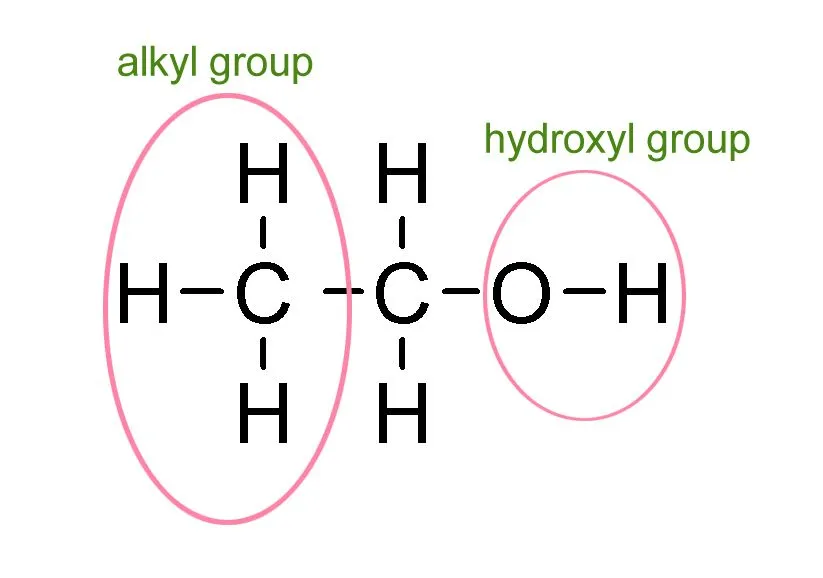
Because of the -OH group, ethanol is a polar molecule. The oxygen pulls electrons more strongly than the hydrogen attached to it, so the molecule ends up with a slightly negative end and a slightly positive end (a tiny built-in tug-of-war chemists call a dipole). The molecule itself carries no net charge, but that lopsided pull is what lets it grab onto the parts of a microbe it needs to.
These properties give alcohol its germicidal activity.
When alcohol is applied to the skin or any other surface, it dissolves the bacterial cell membranes, as they are made of lipids (fat molecules). It also denatures the bacteria’s proteins, meaning it unravels them from their carefully folded working shapes into useless tangles. It basically breaks down bacteria by dissolving their body’s components. Sounds gruesome!
Alcohol doesn’t just kill bacteria. It works the same way on fungi and on viruses that are wrapped in a fatty envelope, which is exactly why a quick squirt of sanitizer is so handy during cold and flu season.
Why Doesn’t Alcohol Kill Your Own Skin Cells?
Here’s the obvious follow-up. If alcohol dissolves fatty membranes and unravels proteins, and our own cells are also wrapped in fatty membranes and packed with proteins, why doesn’t that swab before an injection kill our skin too?
The short answer is that the part of your skin it touches is built to take the hit. The outermost layer of your skin, the stratum corneum, is made of cells called corneocytes. These are skin cells at the very end of their life cycle: they have lost their nuclei, flattened out, and swapped their normal cell membrane for a tough, cornified envelope. Around 15 layers of them are stacked in what anatomists describe as a “bricks and mortar” arrangement, with fats acting as the mortar between the keratin-filled bricks (StatPearls).

So when rubbing alcohol hits your arm, it’s mostly working on a wall of cells that have already finished their jobs. Bacteria, on the other hand, are single living cells sitting right on the surface, fully exposed. On top of that, alcohol evaporates quickly (the CDC actually lists rapid evaporation as one of its shortcomings), so it doesn’t linger on your skin for long.
That doesn’t mean our cells are immune. Take away the protective wall and alcohol is just as brutal to us. In a 2022 lab study, 70% ethanol applied to cultured human skin cells (keratinocytes and fibroblasts) left no living cells by the third day of treatment. That’s why rubbing alcohol stings so much in a fresh cut, and why doctors at the Cleveland Clinic advise against using it (or hydrogen peroxide) to clean a wound, since it can irritate the tissue and delay healing. Mild soap and clean, warm running water are the better bet.
What Is The Right Concentration Of Alcohol?
If you’ve ever read the contents of rubbing alcohol or sanitizers, you would have seen that 100% alcohol is not used. Instead, it is diluted with water because the water also helps in the disinfection process.
Let’s go back to our applying rubbing alcohol to the skin example. The water in the bottle isn’t just filler. According to the CDC, proteins are denatured more quickly when water is present, which is why pure (absolute) alcohol is actually a weaker germ killer than an alcohol-water mix.
Additionally, ethanol evaporates very easily and water’s presence slows down the evaporation rate, increasing the contact time with the germs and making it more effective.
You’ll find rubbing alcohol with different concentrations, but 70% is usually the go-to. In fact, even at the laboratory I worked at, before doing any work that needed sterile conditions, I’d wipe down my workspace with 70% ethanol.
It’s important to not over-dilute the alcohol. The CDC recommends hand sanitizers with at least 60% alcohol, and the CDC notes that alcohol’s killing power drops sharply below 50%. On the other end of the spectrum, using too much alcohol (90-100%) isn’t the most effective either. Part of the problem is that it evaporates before it has had time to act, and, as we just saw, it lacks the water that speeds up the protein-unraveling that does the actual killing. The CDC puts the sweet spot at 60–90% alcohol in water.
What Kinds Of Alcohol Are Used?
Rubbing alcohol consists of mainly two types; ethyl alcohol (ethanol) and isopropyl alcohol (isopropanol). Methanol (wood alcohol) is not on the list. The FDA says methanol is not an acceptable ingredient in hand sanitizers or other drugs, because it can be toxic when absorbed through the skin and life-threatening when swallowed.
Ethanol is a compound you may be familiar with, as that’s the compound present in alcoholic beverages. Isopropanol, however, is not drinkable at all (not that the ethanol in hand sanitizers are) and is also a germicide.
Both work as effective germicides, and which one wins depends on the target. Isopropanol is a touch better at killing common bacteria such as E. coli and Staphylococcus aureus, while ethanol has the edge against viruses, especially the tougher ones that don’t have a fatty envelope. For everyday skin and surface use, though, the difference is small enough that you can reach for whichever bottle is closest.
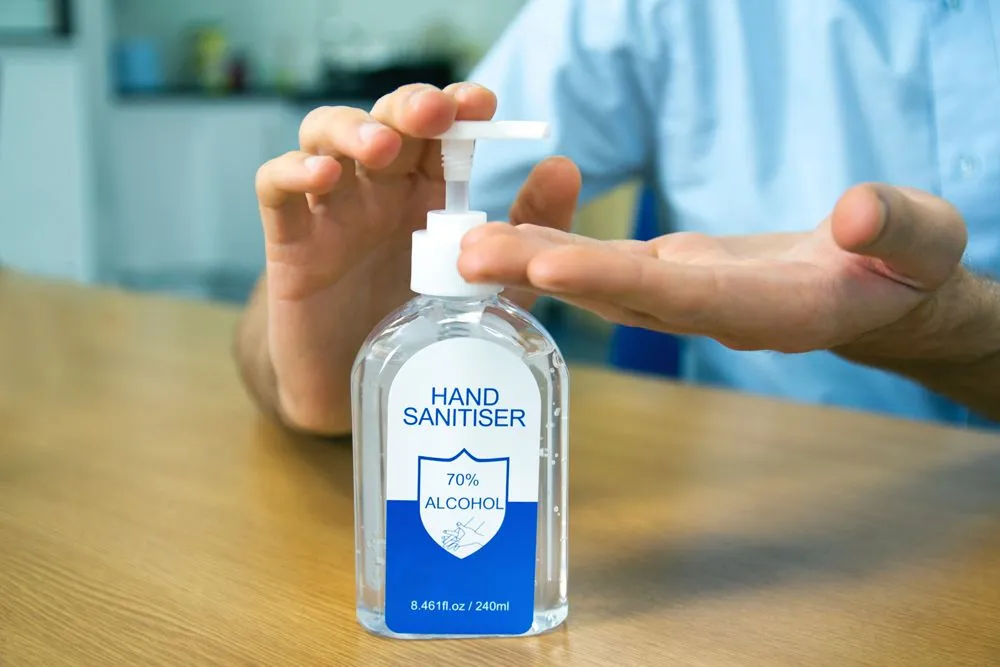
When we apply any sanitizer or rubbing alcohol on our skin, we feel that slight cooling effect as it evaporates away. In doing so, it also dehydrates our skin by stripping away whatever oils and moisture were on it, leaving it dry. Both alcohols do this, which is why repeated use leaves your hands feeling parched. Isopropanol is also the go-to for cleaning electronics, not because it dries faster (it actually boils at 82.6 °C / 180.7 °F versus ethanol’s 78.4 °C / 173.1 °F, so it lingers a touch longer), but because it leaves almost no residue behind and doesn’t conduct electricity.
Where Else Is Alcohol Used As A Germicide?
Apart from applying alcohol on the skin before injections, it is also used as a surface disinfectant to clean floors and surfaces. Hospitals also use alcohol to wipe down small surgical instruments, thermometers and ventilator surfaces.
However, wiping down surgical instruments isn’t enough because there is one thing alcohol is not good at killing: spores. Spores have a hard coating, making it difficult for alcohol to penetrate and destroy them. That’s why the CDC does not recommend alcohol for sterilizing medical and surgical materials. Instruments that can handle heat are instead sterilized with steam under pressure (autoclaving), which the CDC calls the most widely used and most dependable sterilization method.
Additionally, alcohol is a germicide, meaning that it kills the germs with which it comes in contact. It can’t prevent microbial growth that may arise after it evaporates away.
What Can Rubbing Alcohol Not Kill?
For all its talents, rubbing alcohol is not a cure-all. We’ve already met its biggest blind spot, bacterial spores, but there’s another important one: viruses that lack a fatty outer envelope. Since alcohol’s opening move is to dissolve those lipid coatings, naked viruses like norovirus (the infamous “stomach flu” bug) shrug it off. That’s why hand sanitizer is no match for a norovirus outbreak, and why health agencies tell you to wash with soap and water instead, where the friction physically scrubs the virus off your skin.
Two other questions come up a lot, so let’s settle them. Is rubbing alcohol an acid or a base? Neither, really. Isopropyl alcohol is, for all practical purposes, neutral. PubChem lists its pKa at about 17, and since a higher pKa means a weaker acid, that makes it an extremely feeble one. So it won’t eat through surfaces the way a strong acid or alkali would. And is rubbing alcohol the same thing as hydrogen peroxide? No, though it’s an easy mix-up since both live in the bathroom cabinet as disinfectants. They’re completely different chemicals: alcohol denatures proteins and dissolves membranes, while hydrogen peroxide is an oxidizer that produces destructive hydroxyl free radicals, which attack a germ’s membrane fats, DNA and other essential parts.
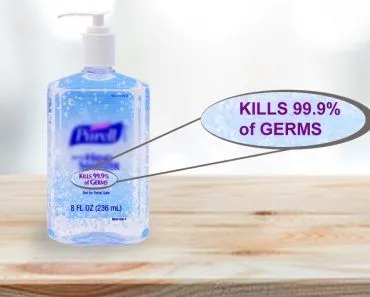
This is also why the famous “kills 99.9% of germs” line on a label deserves an asterisk. (We’ve unpacked what that 99.9% really means before.) The CDC points out that sanitizers do not eliminate all types of germs, and that soap and water beat them at removing Cryptosporidium, norovirus and Clostridium difficile. Sanitizers also may not work well when hands are heavily soiled or greasy, so after gardening or fixing a bike chain, head for the sink.
Is Rubbing Alcohol Safe To Use?
Used the way the label says, on intact skin and on surfaces, yes. But that bottle in your bathroom cabinet deserves a little respect, and there are three mistakes worth avoiding.

1. Keep it away from flames. Alcohol is flammable. The CDC says it must be stored in a cool, well-ventilated area, and the FDA tells people to keep hand sanitizer away from heat and flames. When you use sanitizer, rub it in until your hands are completely dry, as the CDC recommends, and don’t use it right next to the stove, a candle or a lit cigarette.
2. Never drink it. According to the CDC, even ethanol-based sanitizers can cause alcohol poisoning if a person swallows more than a couple of mouthfuls, and the FDA warns that drinking even a small amount can cause alcohol poisoning in children, so keep bottles out of reach of kids and pets. Methanol-contaminated products are worse still: the FDA lists nausea, vomiting, blurred vision, permanent blindness, seizures, coma and death among the possible effects of methanol exposure. If someone swallows any of these products, call a doctor or, in the US, the Poison Help line at 1-800-222-1222.
3. Never mix it with bleach. It’s tempting to think two disinfectants must be better than one, but this combination is genuinely dangerous. The New Jersey Department of Health warns that mixing bleach with rubbing alcohol forms chloroform, which can cause dizziness, nausea, headaches and even loss of consciousness. Its advice is blunt: never mix cleaning products, especially anything containing bleach, and work in a well-ventilated space.
Conclusion
Now that you know why rubbing alcohol is such a good germicide, you still shouldn’t go rubbing your hands with it all the time. Remember, too much of it causes dry skin. That’s why some sanitizers have added moisturizers and emollients that trap the moisture and keep it in the skin.
Rubbing alcohol isn’t the only chemical used as a germicide. Other chemicals like hydrogen peroxide, sodium hypochlorite (bleach) and formaldehyde are also excellent germicides. However, alcohols are usually the preferred choice, as they are cheaper and less harsh for everyday use.
References (click to expand)
- Chemical Disinfectants | Guidelines Library | CDC. The Centers for Disease Control and Prevention
- Nerandzic, M. M., Sunkesula, V. C. K., C., T. S., Setlow, P., & Donskey, C. J. (2015, July 15). Unlocking the Sporicidal Potential of Ethanol: Induced Sporicidal Activity of Ethanol against Clostridium difficile and Bacillus Spores under Altered Physical and Chemical Conditions. (M. R. Popoff, Ed.), Plos One. Public Library of Science (PLoS).
- Morton, H. E. (1950, August). The Relationship Of Concentration And Germicidal Efficiency Of Ethyl Alcohol. Annals of the New York Academy of Sciences. Wiley.
- Do hand sanitizers really work?. utoronto.ca
- Ribeiro, M. M., Neumann, V. A., Padoveze, M. C., & Graziano, K. U. (2015, August). Efficacy and effectiveness of alcohol in the disinfection of semi-critical materials: a systematic review. Revista Latino-Americana de Enfermagem. FapUNIFESP (SciELO).
- Tilley, F. W., & Schaffer, J. M. (1926, November). Relation Between The Chemical Constitution And Germicidal Activity Of The Monohydric Alcohols And Phenols. Journal of Bacteriology. American Society for Microbiology.
- (2020) Use of disinfectants: alcohol and bleach - NCBI Bookshelf. The National Center for Biotechnology Information
- Alcohol Sanitizer. StatPearls. NCBI Bookshelf. National Center for Biotechnology Information.
- About Norovirus. Centers for Disease Control and Prevention.
- Histology, Stratum Corneum. StatPearls. NCBI Bookshelf. National Center for Biotechnology Information.
- Cytotoxicity and Wound Closure Evaluation in Skin Cell Lines after Treatment with Common Antiseptics for Clinical Use. Cells (2022). MDPI.
- How To Clean a Wound: Basic Wound Care. Cleveland Clinic.
- Steam Sterilization | Guidelines Library | CDC. The Centers for Disease Control and Prevention.
- Hand Sanitizer Facts | Clean Hands | CDC. The Centers for Disease Control and Prevention.
- Safely Using Hand Sanitizer. U.S. Food and Drug Administration.
- FDA Takes Action to Place All Alcohol-Based Hand Sanitizers from Mexico on Import Alert. U.S. Food and Drug Administration.
- Hazard Alert: Mixing Bleach with Other Cleaning Products Can Be Deadly. New Jersey Department of Health.
- Isopropyl Alcohol. PubChem. National Library of Medicine.