Table of Contents (click to expand)
UV light kills germs because short-wavelength UVC (most effective near 254 nm) is high-energy enough to be absorbed directly by the DNA inside bacteria and viruses. That absorbed energy fuses neighboring bases into thymine dimers, which block DNA replication. Unable to copy themselves, the microbes can no longer multiply and are inactivated.
With many establishments like clinics, restaurants and offices following extra hygiene protocols since the COVID pandemic, you may have seen ultraviolet (UV) sanitization boxes around. A UV sanitization box is an enclosed box with a UV lamp inside where you can place your belongings like phones, car keys, AirPods, etc. for a few minutes. Manufacturers claim that exposure to UV light will disinfect your items up to 99.9%!
UV light does kill germs and has been used to sterilize objects and surfaces for decades! But how does it work? Why is UV light bad for germs?
Before we get to that answer, let’s first review what UV light is.
What Is UV Light?
Light is a small part of the electromagnetic spectrum, which covers all types of electromagnetic radiation. However, not all of this radiation is visible to our eyes. The colors we see make up the visible light section of the spectrum. This spectrum is organized based on each radiation type’s energy, wavelength, and frequency.
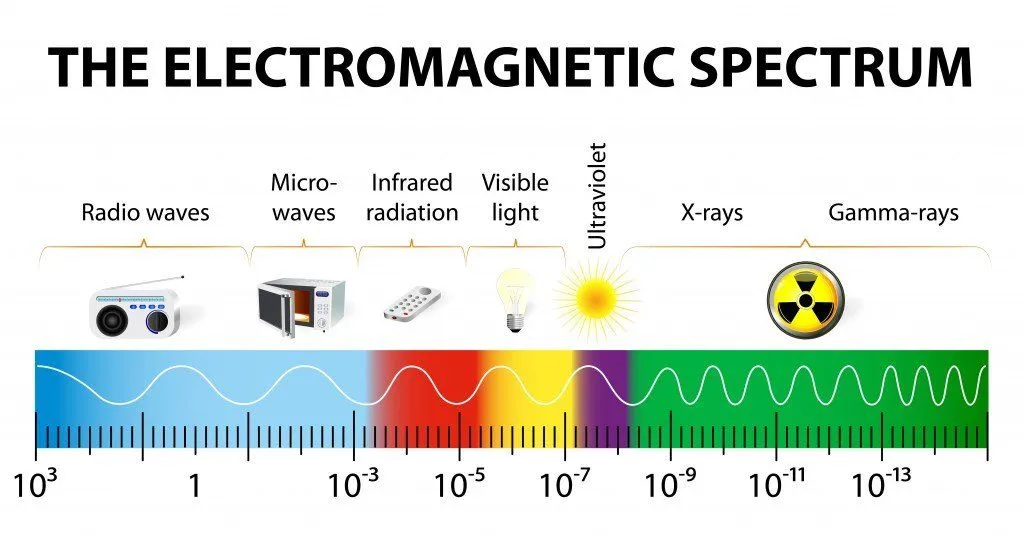
Now, ultraviolet basically means ‘beyond violet’, so it’s light with a shorter wavelength than visible light, but it’s longer than X-rays. UV light has a wavelength range of 200-400 nm. Additionally, there are subcategories; UVA, UVB, and UVC.
UVC light has the shortest wavelength (100-280 nm), followed by UVB (280-315 nm) and then UVA (315-400 nm). The germicidal sweet spot sits in the UVC band, near 254 nm, the wavelength that low-pressure mercury lamps emit and that DNA absorbs most strongly.
What also makes UV light different from regular visible light is how much energy each photon carries. An important point to note is that energy is inversely proportional to wavelength. This means that the shorter the wavelength, the more energy the light rays possess. Therefore, UVC rays have the most energy and are quite harmful to living organisms. (UV is actually classed as non-ionizing radiation, so it doesn’t strip electrons off atoms the way X-rays and gamma rays do. Instead, its photons are energetic enough to be absorbed by molecules like DNA and drive chemical reactions inside them, which turns out to be just as deadly for a microbe.)
Now, you may have heard that UV rays are generally harmful, which is why we need our sunscreen when we’re on the beach. In fact, UVB rays are responsible for sunburn, but limited exposure to UVB light helps our body synthesize vitamin D. That’s why doctors say that we need sunlight exposure to a certain degree, in order to boost or maintain our vitamin D levels.
Now, the sun produces many light forms, including the 3 UV light forms. Fear not, the most harmful UVC rays and some UVB rays are reflected by the Earth’s atmosphere’s ozone layer. As a result, most of the UV light reaching the planet’s surface is 95% UVA, which is the least harmful to us.

Now, back to answering the main question… it is UVC’s high energy that gives it such an impressive microbial-killing ability.
How Does It Kill Germs?
DNA is made of nitrogenous bases called purines and pyrimidines; adenine (A), thymine (T), guanine (G) and cytosine (C). A and G are purines, while C and T are pyrimidines.
These bases work in pairs, where A is complementary or opposite to T on the DNA molecule, and vice versa with G and C. Together, billions of them are bound to one another in all possible combinations to make up DNA strands.
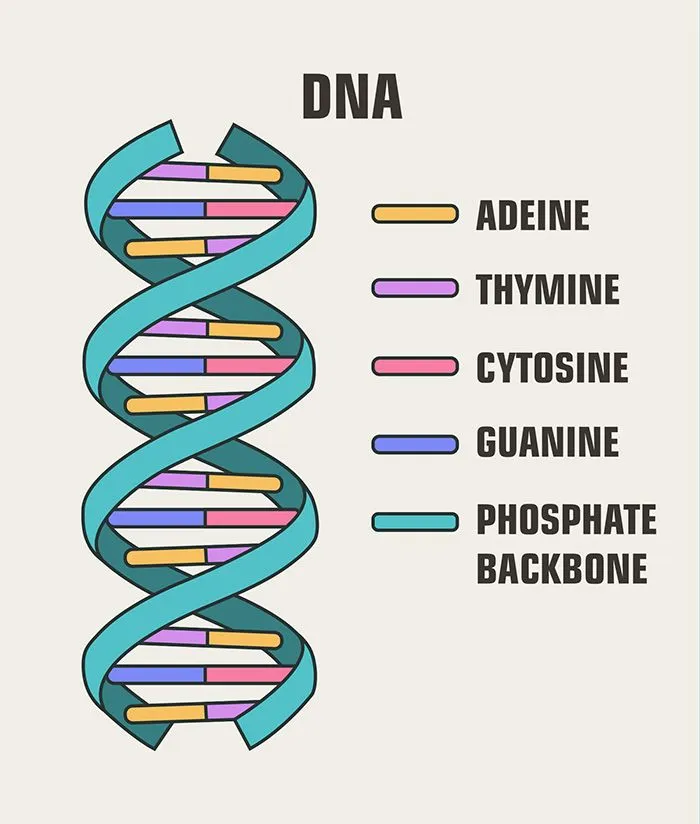
DNA and some proteins inside the microbes can absorb these high-energy UVC rays, causing structural damage. The regions affected the most are where there are adjacent pyrimidines. This causes two thymines that are next to each other to bind together and ‘dimerize’, rather than binding with the base opposite. Other bases are also affected, but T-T dimers are the most commonly formed. This leads to bumps in the DNA strands that block the enzymes carrying out natural DNA processes like replication and transcription.
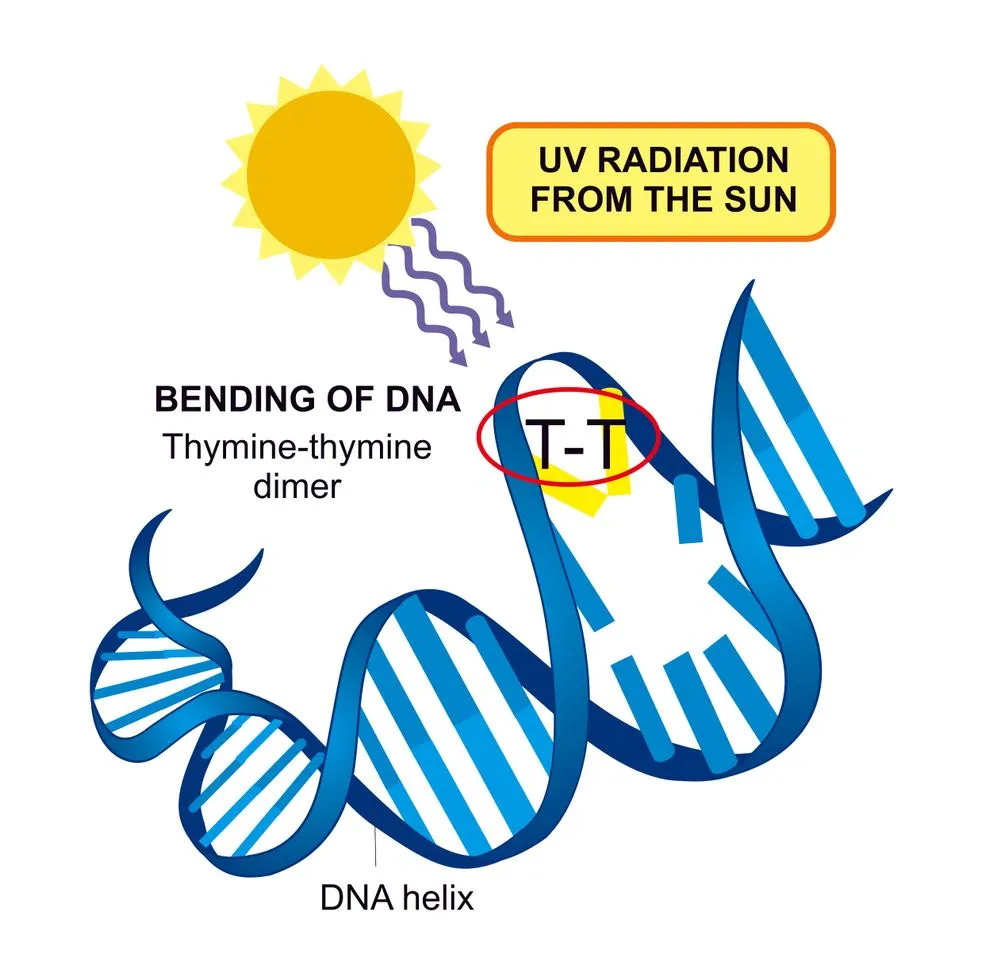
If DNA can’t be copied, the microbes can’t multiply, and a microbe that can’t reproduce is effectively dead. In short, exposure to UVC rays riddles the genome with DNA damage faster than the cell can patch it up. Bacteria do have repair enzymes that can snip out some of these dimers, but pile on enough damage and the repair crew is simply overwhelmed.
It’s a slightly different story in our own cells. When a human (or other animal) cell accumulates too much UV damage, it can trigger its own self-destruct program, called apoptosis, rather than risk passing on a mangled genome. Bacteria don’t run this exact program, but the bottom line is the same: damaged DNA means no more healthy copies!
UVA and UVB rays can also cause DNA damage, but not as bad or quickly. UVC rays can cause mutations in only a few minutes!
How Effective Is UVC Sterilization?
So, this ability doesn’t mean you can just take your keys, shine a UV light on them for a few seconds and have them become sterile. The exposure time and the object’s material also matter.
For example, UVB and UVC rays are blocked by glass, which is why we can’t get sunburnt through glass. Only UVA rays can pass through, as the wavelength is similar to visible light. Thus, shining UVC light through a glass window or door is pointless.
UVC light is most effective on hard and flat surfaces. For it to disinfect thoroughly, the UVC rays should reach all surface areas. This means that bumpy surfaces or objects with ridges will have some areas that the UVC rays can’t reach. Germs can reside there safely, hiding from the doom-bringing UVC rays.
Another critical factor is exposure time. You need to expose your desired surfaces or objects to UV light for a couple of minutes. Shining a UV wand over your kitchen tabletop for 5-10 seconds isn’t going to sterilize it. You’ll need a few minutes of exposure to effectively eliminate all microbes.
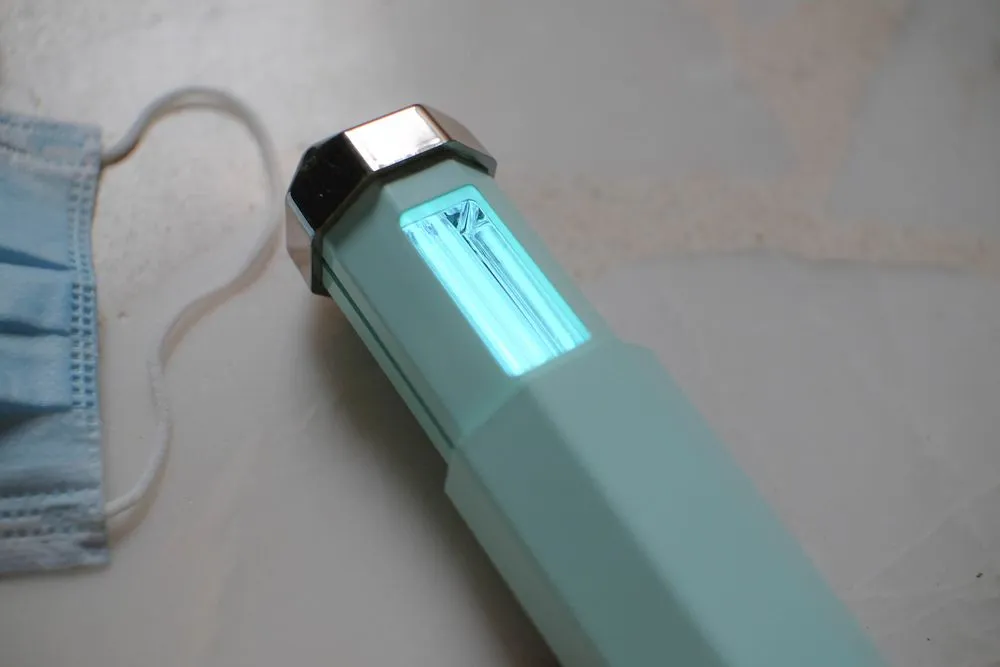
Many household UV appliances are not as effective as the manufacturers claim them to be. Studies have found that they don’t always kill 99.9% of germs in a matter of seconds. In reality, many of these appliances have weak lights and often kill only 50% of microbes. If you want to improve the efficiency, increase the exposure time. Leave your keys, wallet, etc., in the UV box for 10-15 minutes, not 5 minutes, to fully sterilize them.
There’s also a newer wrinkle worth knowing about: far-UVC light at 222 nm. Conventional germicidal lamps at 254 nm are great at killing microbes, but they’re harmful to skin and eyes, so they can only run in empty rooms. Far-UVC at 222 nm is the interesting exception: it still inactivates bacteria and viruses, yet its shorter wavelength can’t penetrate past the dead outer layer of your skin or the tear film of your eyes. Filtered krypton-chloride lamps using this wavelength are now being tested for disinfecting air and surfaces in occupied spaces like offices and waiting rooms, with studies finding no significant eye or skin irritation at recommended doses. It’s an active area of research, not a finished verdict, so the usual advice still stands: don’t stare into any UV source.
Conclusion
If you were hesitant to purchase a UV appliance, take the plunge! It does help and can also put your mind at ease if you’re a germophobe. UV light does kill germs by damaging their DNA and proteins.
However, be careful! Never look into the light directly, as it can be quite damaging to our eyes. This light is bad for bacteria and viruses, which means it can also be bad for our cells. This is not just about our eyes; this light shouldn’t come in direct contact with any body part!
The best advice I can give is to research any UV device thoroughly before buying one. Select one based on the manufacturer’s reliability and third-party confirmation of its effectiveness.
References (click to expand)
- Does UV Light Actually Disinfect and Kill Viruses?. The Beckman Laser Institute
- Maverakis, E., Miyamura, Y., Bowen, M. P., Correa, G., Ono, Y., & Goodarzi, H. (2010, May). Light, including ultraviolet. Journal of Autoimmunity. Elsevier BV.
- Kappes, U. P., Luo, D., Potter, M., Schulmeister, K., & Rünger, T. M. (2006, March). Short- and Long-Wave UV Light (UVB and UVA) Induce Similar Mutations in Human Skin Cells. Journal of Investigative Dermatology. Elsevier BV.
- Raeiszadeh, M., & Adeli, B. (2020, October 14). A Critical Review on Ultraviolet Disinfection Systems against COVID-19 Outbreak: Applicability, Validation, and Safety Considerations. ACS Photonics. American Chemical Society (ACS).
- (2020) Use of ultraviolet-C in environmental sterilization in hospitals. The National Center for Biotechnology Information
- Reed, N. G. (2010). The History of Ultraviolet Germicidal Irradiation for Air Disinfection. Public Health Reports. NCBI PMC.
- 222 nm Far-UVC from filtered Krypton-Chloride excimer lamps does not cause eye irritation when deployed in a simulated office environment (2024). Photochemistry and Photobiology. NCBI PMC.