Table of Contents (click to expand)
- Why Do Tightrope Walkers Always Carry A Pole While Doing Their Stunt?
- Carrying A Balancing Pole Increases The Moment Of Inertia (Rotational Inertia) Of The Tightrope Walker
- The Balancing Pole Lowers The Center Of Gravity Of The Tightrope Walker
- What Do Tightrope Walkers Actually Walk On?
- Why Are The Best Balance Poles Long And Slightly Flexible?
The pole is used to help increase the rotational inertia of the tightrope walker, which helps with maintaining stability while walking on the narrow rope. The pole also lowers the center of gravity of the tightrope walker, making them more stable while performing the stunt.
When I first saw a tightrope-walking performer doing his thing with a pole in his hand, I thought that he was carrying the pole to make the task of walking on a thin rope appear even more daunting. Then, while watching another performance (this time on TV), I assumed that the pole could be used as a prop (for juggling and other tricks), making it more of a part of the tightrope-walking performance.
I’m sure that there are many people out there who attribute the presence of a pole in the walker’s hands to one of these two reasons.
While the pole might make the task appear more daunting to viewers, and certain performers do use it to perform tricks, that’s not the only reason why poles are used during tightrope walks.
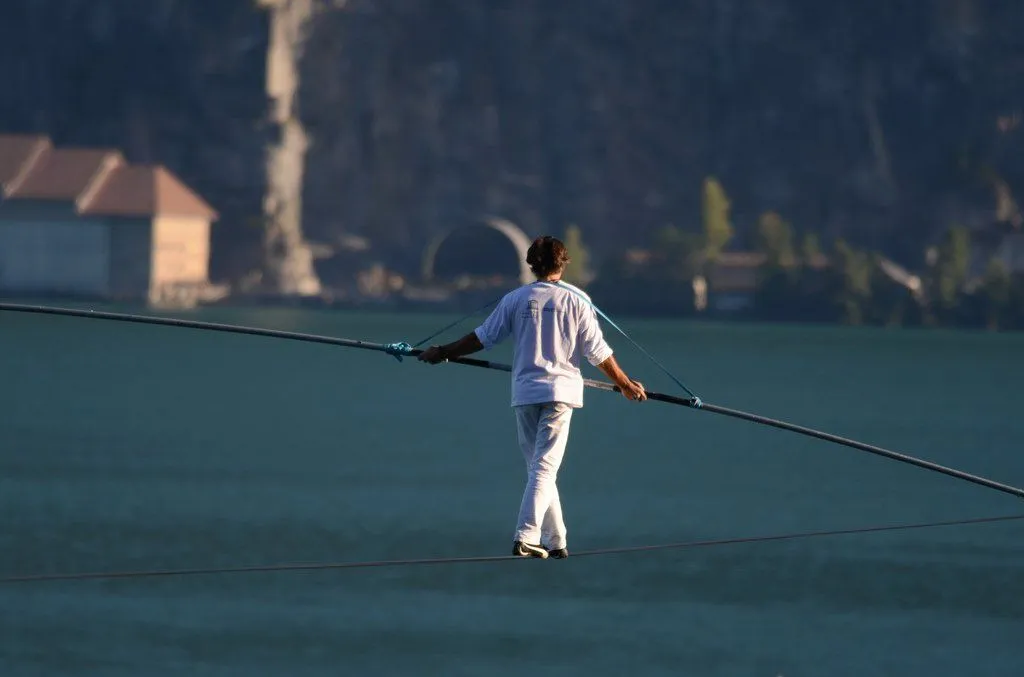
Why Do Tightrope Walkers Always Carry A Pole While Doing Their Stunt?
Short answer: Carrying a pole helps the walker increase their rotational inertia, which aids in maintaining stability while walking over the narrow rope. The pole also adds more weight below the center of gravity of the walker, which is another bonus for maintaining balance.
What Is The Moment Of Inertia?
The moment of inertia is the measure of an object’s opposition/resistance to change in its direction of rotation. Also referred to as rotational inertia, it is a parameter of how difficult it is to change the rotational velocity of an object about a particular rotational axis.
There are numerous instances when rotational inertia is seen in our daily lives. For instance, it’s easy to push open a swinging screen door, as its rotational inertia is low. Similarly, a bicycle doesn’t fall over when it’s moving due to the rotational inertia of the wheels. Figure skaters pull their arms in to reduce their rotational inertia (moment of inertia) in order to spin faster.
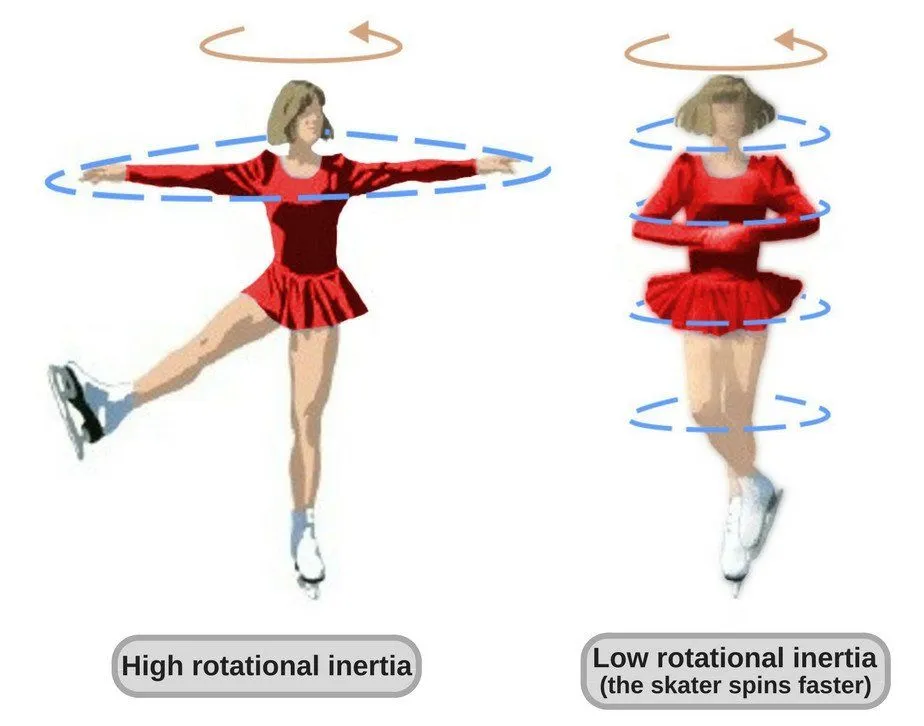
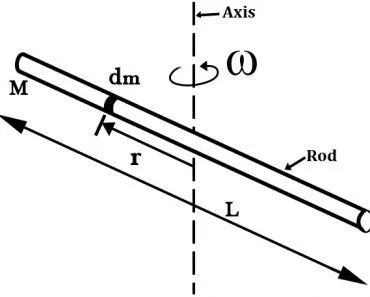
The moment of inertia depends not only on the mass of the object, but also on how that mass is distributed relative to the rotational axis. The moment of inertia of a system tends to be bigger if more mass is located farther away from the rotational axis. In simple words, this means that it becomes more difficult to alter the rotational velocity of a system if the object is kept far away from the center of the axis. Here’s an example to illustrate this phenomenon:
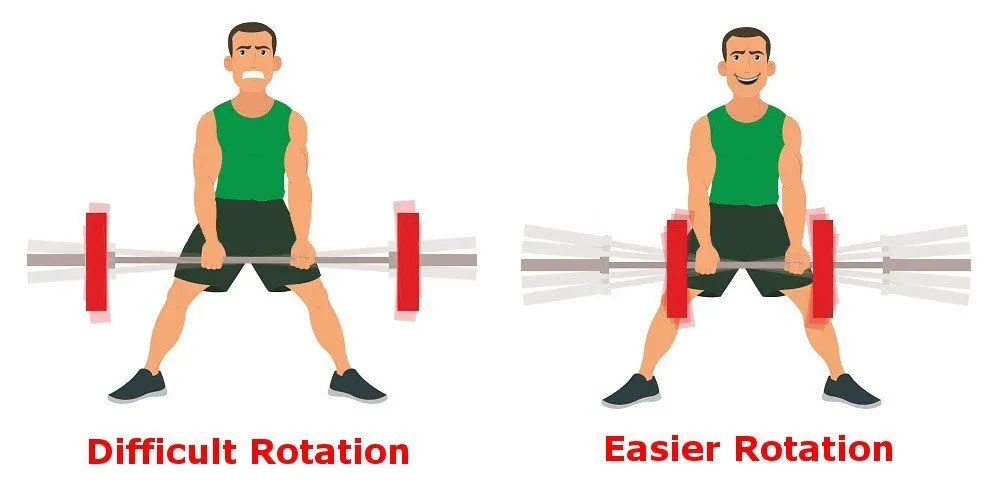
Carrying A Balancing Pole Increases The Moment Of Inertia (Rotational Inertia) Of The Tightrope Walker
By carrying a pole (it’s called a balancing pole, more specifically) horizontally in their hands, the tightrope walker increases his moment of inertia, i.e., he minimizes his body’s “rotation” around the rope. The length of the pole also plays an important role: the longer the pole, the better it is for stability. This is because it spreads the combined mass over the rope (weight of the walker + weight of the pole) far away from the pivot point (the feet of the walker). The bar reduces angular acceleration of the tightrope walker as more torque is required to rotate the walker. This means that if the walker tips over, he would do that very slowly and therefore have more time to correct his stance/gait.
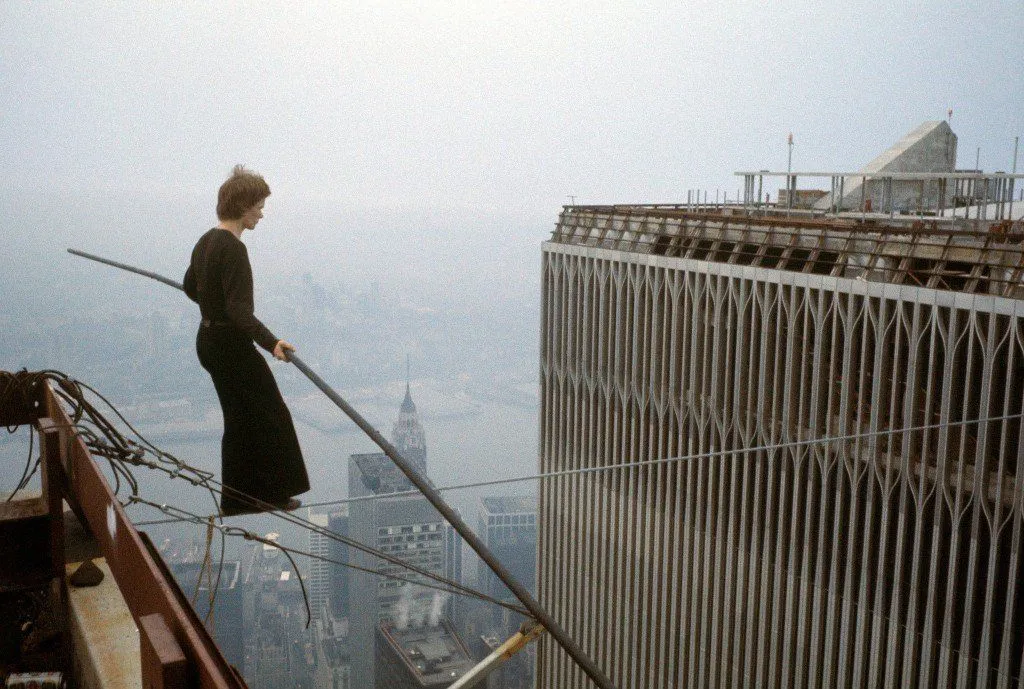
The Balancing Pole Lowers The Center Of Gravity Of The Tightrope Walker
Apart from increasing the moment of inertia of the walker, the balancing pole also lowers the walker’s center of gravity, which is key to doing this whole thing right. Not only in the case of tightrope walkers, but anything with a lower center of gravity (closer to the ground) is typically more stable than something with a high center of gravity. That’s one of the reasons why sports/racing cars have such low ground clearance.
Tightrope walkers usually hold the bar at or below their center of gravity (at or below waist level). This adds more weight below their center of gravity, lowering it even further and making the walker more stable over the rope during the arduous process.
What Do Tightrope Walkers Actually Walk On?
Here’s something I always assumed was simple until I looked closer: the thing underfoot isn’t always a “rope” at all, and the sport has a whole vocabulary of its own. The umbrella term for walking along a thin wire or rope is tightrope walking, also called funambulism. A person who does it is a funambulist.

From there the terms split based on how the line is set up. Tightwire refers to balancing along a wire pulled taut between two points; when that wire is strung at a serious height (generally above about 6 meters, or 20 feet), the act is called highwire. A highwire stretched outdoors across a gorge, a waterfall, or between skyscrapers is sometimes labeled a skywalk. The line itself is usually not a fiber rope at all but a steel cable: when Nik Wallenda crossed near the Grand Canyon in 2013, he walked on a cable roughly 2 inches (5 cm) thick.
That taut, near-rigid cable is what separates tightrope work from slack rope walking and slacklining, where the webbing is deliberately left under low tension so it stretches and bounces like a long, narrow trampoline. A tightrope barely moves; a slackline sways and sags with every step, which is why the two demand quite different balancing skills.
Why Are The Best Balance Poles Long And Slightly Flexible?
If a pole helps because it spreads mass away from the body, you might think any long stick would do. In practice, performers are fussy about two things: length and a hint of flex. Both come straight out of the physics we’ve already met.

Length wins because moment of inertia depends on mass times the square of its distance from the axis of rotation. Doubling the reach of the mass quadruples its contribution, so a long pole buys far more rotational inertia than a short one of the same weight. As mathematician John D. Barrow has put it, the longer the pole, the slower any small wobble plays out: the time period of those oscillations grows with the square root of the moment of inertia, so the walker simply gets more time to react and correct. Professional wire walkers settle on genuinely big poles for this reason. One peer-reviewed study notes poles around 12 meters (39 feet) long and 13 kilograms (29 pounds) in weight, a choice the authors found to be biomechanically justified rather than just for show.
The slight flex matters for a different reason. A long pole bows downward under its own weight, and that droop carries its mass lower, pulling the combined center of gravity of walker-plus-pole closer to the cable. Since a lower center of gravity is more stable, the sag is a feature, not a flaw. In the theoretical extreme, a pole weighted heavily enough at its drooping ends could drag the combined center of mass right down to or below the wire, at which point the walker would be hanging in stable equilibrium rather than perched in unstable balance. Real performers never reach that limit, but every bit of droop nudges them toward it, which is the same instinct behind why we throw our arms out to keep our balance.

So, now you understand that tightrope walking is more than just a circus stunt. It represents a perfect example of how art and physical forces, if understood well and executed properly, can help us achieve things that seem impossible, and survive to tell the tale!
References (click to expand)
- The Physics of Tightrope Walking - ffden-2.phys.uaf.edu
- review: torque - University of Iowa Physics. The University of Iowa
- Rotational Inertia Rotational Momentum Conservation of rotational momentum - www2.physics.uiowa.edu
- Tightrope walking - Wikipedia
- Walking the tightrope - Plus Magazine, University of Cambridge
- Centre of pressure versus centre of mass stabilization strategies: the tightrope balancing case. Royal Society Open Science (2020)
- Grand Canyon tightrope walk: What was that huge pole for? - The Christian Science Monitor